How to Stay Grounded During Stressful Seasons of Life
Written by
on
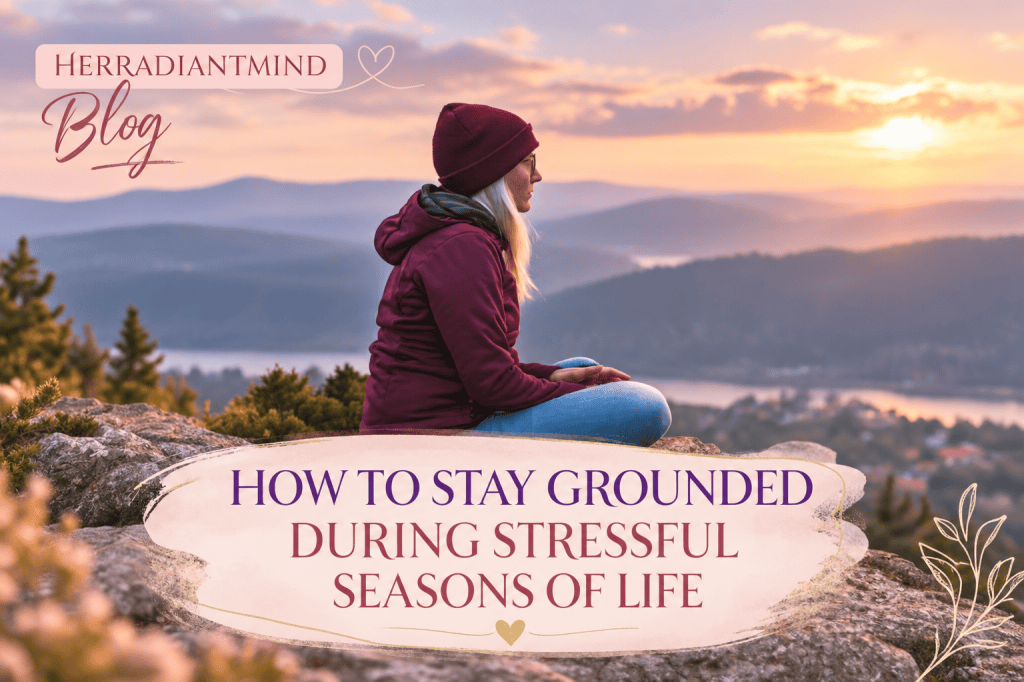
There are seasons of life when it feels like everything is happening at once.
Your responsibilities keep piling up. Your mind is racing. Your patience feels thinner than usual. Even simple things—answering a message, making dinner, getting through your to-do list—can suddenly feel like too much.
And when you are already overwhelmed, the last thing you may need is another long list of things you should be doing.
Sometimes, you need an anchor.
Something that brings you back to yourself.
That is what grounding is really about.
Grounding does not mean pretending everything is okay. It does not mean forcing yourself to stay positive when life feels difficult. And it certainly does not mean having everything figured out.
It means learning how to come back to the present when stress pulls you into fear, overthinking, urgency, or emotional exhaustion.
Think of it like standing with both feet firmly on the ground while the weather around you is unsettled. You may not be able to control the storm, but you can give yourself something steady to return to.
If you have been feeling scattered, overwhelmed, emotionally drained, or simply tired of holding everything together, this is your reminder:
You are not failing. You may simply need a little more support, space, and steadiness.
What Does It Mean to Stay Grounded?
Being grounded means staying connected to yourself even when life feels uncertain.
It is the practice of bringing your attention back to what is happening right now instead of becoming consumed by everything that could happen next.
Grounding can look surprisingly simple.
It might mean:
- Taking a breath before responding to a difficult message.
- Drinking a glass of water when you realize you have barely paused all day.
- Sitting quietly for five minutes before starting your morning.
- Taking a short walk without your phone.
- Saying, “I need a moment.”
- Reminding yourself, “I only need to handle what is in front of me right now.”
When stress builds, your body and mind can become more reactive. You may notice racing thoughts, irritability, difficulty concentrating, muscle tension, fatigue, or feeling emotionally disconnected.
Grounding gives you an opportunity to pause instead of automatically reacting.
It creates a little space between what is happening and how you respond to it.
And sometimes, that small space is where your sense of choice returns.
Why Stress Can Make Everything Feel Bigger
Have you ever noticed that when you are already overwhelmed, one small inconvenience can feel like the final straw?
A delayed response feels frustrating.
A small mistake feels enormous.
An unexpected request feels impossible.
A normal conversation suddenly feels exhausting.
Stress can shrink your emotional margin. When you are carrying too much for too long, there is simply less room for life’s unexpected moments.
You may also find yourself focusing more intensely on problems, mistakes, uncertainty, or what could go wrong.
That is why telling yourself to “just relax” rarely works.
Instead, grounding helps you interrupt the cycle.
You pause.
You breathe.
You notice what is actually happening.
You separate the present moment from everything your mind is predicting.
And you remind yourself:
“I don’t have to solve everything right now.”
Start With the Smallest Possible Anchor
When life feels overwhelming, it is tempting to think you need a complete reset.
A new routine.
A new morning ritual.
A new mindset.
A completely different version of yourself.
But grounding often begins much smaller.
In fact, the smallest actions can sometimes be the most sustainable.
Try:
- Putting both feet on the floor and taking three slow breaths.
- Sitting on the edge of your bed before reaching for your phone.
- Drinking a glass of water.
- Opening a window and taking a few breaths of fresh air.
- Stepping outside for two minutes.
- Putting your hand over your heart.
- Saying, “One thing at a time.”
These actions may seem almost too simple to matter.
But simple is often exactly what you need when your mind is overloaded.
You are not trying to fix your entire life in one moment.
You are simply giving yourself a pause.
And a pause can be powerful.
Bring Yourself Back Into Your Body
Grounding is not only something you do with your thoughts.
Your body can become part of the process too.
When you are stressed, you may not realize how much tension you are carrying. Your jaw may be clenched. Your shoulders may be raised. Your breathing may be shallow. Your body may feel like it is constantly preparing for the next thing.
Try gently checking in with yourself:
What is my body doing right now?
Then experiment with:
- Relaxing your jaw.
- Dropping your shoulders.
- Taking a slow breath and making your exhale slightly longer.
- Stretching your arms and neck.
- Placing both feet firmly on the floor.
- Holding a warm mug in your hands.
- Washing your face with cool water.
- Taking a slow walk.
- Sitting somewhere quiet for a few minutes.
These practices are not magic solutions, and they will not make every stressful situation disappear.
But they can help shift your attention away from the constant noise in your mind and back toward the present moment.
And sometimes, that is exactly where you need to begin.
When You Feel Untethered, Come Back to the Moment
Imagine this.
You have had a long day.
Something went wrong first thing in the morning. Then another problem came up. Your phone keeps buzzing. Your to-do list is still waiting. You have been answering messages, taking care of responsibilities, and trying to convince yourself that you are fine.
By evening, you feel strangely disconnected from yourself.
You are physically present, but mentally somewhere else.
So you stop.
You put your phone down.
You notice your feet against the floor.
You take a slow breath.
You look around the room.
You notice the light coming through the window. The warmth of your drink. The quiet hum of the room.
Nothing outside of you has necessarily changed.
But for a moment, you have come back to yourself.
That is grounding.
It is not always dramatic.
Sometimes it is simply a quiet return.
Protect Your Energy Without Feeling Guilty
Stressful seasons can make it easy to give away more energy than you actually have.
You may keep saying yes because you do not want to disappoint anyone.
You may keep answering messages because you feel like you should always be available.
You may keep pushing because slowing down feels irresponsible.
But sometimes, staying grounded means recognizing that your energy is a resource.
You are allowed to protect it.
That might mean:
- Saying no without writing a paragraph to explain yourself.
- Responding to a message later instead of immediately.
- Turning down an invitation when you need rest.
- Taking a quiet evening for yourself.
- Stepping away from conversations that are becoming overwhelming.
- Asking someone you trust for support.
- Letting yourself have a slower day.
Boundaries are not rejection. They are protection.
And you do not have to wait until you are completely depleted before you start honoring your limits.
You do not need to earn rest by collapsing first.
Make Your Day Smaller When Life Feels Bigger
One of the most grounding things you can do during a stressful season is simplify.
When everything feels urgent, ask yourself:
What actually needs my attention today?
Not everything.
Just today.
Maybe your list looks like this:
- Eat something nourishing.
- Drink some water.
- Complete one important task.
- Take a short walk.
- Return one important message.
- Take a shower.
- Get into bed at a reasonable time.
That’s enough.
You do not have to use a difficult season to become more productive.
Sometimes the goal is simply to get through the day with care.
There is wisdom in knowing when to push forward and when to make life a little gentler.
Change the Way You Speak to Yourself
Stress can make your inner voice surprisingly harsh.
You might catch yourself thinking:
“Why can’t I handle this?”
“I should be doing better.”
“I am falling apart.”
“Everyone else seems to have it together.”
But imagine speaking to yourself the way you would speak to someone you deeply love.
You probably would not tell her that she is weak because she is overwhelmed.
You would probably remind her that she is human.
Try replacing harsh self-talk with something more compassionate:
Instead of: “I’m falling apart.”
Try: “I’m having a really difficult moment.”
Instead of: “I should be handling this better.”
Try: “I’m doing the best I can with what I’m carrying.”
Instead of: “Why am I like this?”
Try: “This is hard, and I can give myself some compassion.”
Gentle self-talk does not mean avoiding reality.
It means facing reality without becoming your own source of additional pressure.
Separate What Is Happening From What You Fear Might Happen
One of the easiest ways to become overwhelmed is to live too far ahead of the present moment.
Your mind starts asking:
What if this happens?
What if everything gets worse?
What if I can’t handle it?
What if I make the wrong decision?
Sometimes these questions are useful.
But sometimes they simply create more anxiety without giving you anything you can act on right now.
When you notice yourself spiraling, try asking:
- What is actually happening right now?
- What do I know for certain?
- What am I assuming?
- What is within my control today?
- What can wait until tomorrow?
- What is the next small step?
You do not need to solve every possible future problem from today’s emotional state.
Come back to what is real.
The present moment may not be perfect.
But it is where your choices actually live.
Create One Steady Ritual
When life feels unpredictable, familiar routines can provide a sense of steadiness.
Your ritual does not have to be elaborate.
Maybe it is:
- Tea before bed.
- A morning walk.
- Five minutes of journaling.
- Prayer before starting your day.
- Sitting quietly before opening your laptop.
- Reading a few pages before bed.
- Listening to calming music while you tidy your space.
The power is not necessarily in the activity itself.
It is in the familiarity.
When everything else feels uncertain, a small ritual reminds you:
“This is something I can count on.”
And sometimes, that sense of consistency is exactly what your mind needs.
Let Grounding Be Imperfect
There will be days when you forget everything you know.
You may overthink.
You may lose your patience.
You may shut down.
You may have a difficult conversation you wish you had handled differently.
That does not mean you have failed.
Being grounded does not mean being calm every minute of every day.
It means noticing when you have become disconnected from yourself and finding your way back.
Sometimes that return takes one breath.
Sometimes it takes a walk.
Sometimes it takes a good cry.
Sometimes it means asking for help.
Sometimes it means going to bed early and starting again tomorrow.
The return is what matters.
You do not have to get it right every time.
When the Stressful Season Lasts Longer Than Expected
Some stressful seasons pass quickly.
Others don’t.
Maybe you expected things to settle down by now, but they haven’t.
Maybe you are tired of being tired.
Maybe you keep wondering when you will finally feel like yourself again.
If that is where you are, try not to turn your exhaustion into another reason to criticize yourself.
Long seasons of stress often require ongoing care.
Not perfection.
Not constant self-improvement.
Not pressure to “bounce back.”
Care.
That may mean:
- Resting whenever you reasonably can.
- Eating regularly.
- Staying hydrated.
- Taking breaks before you reach your limit.
- Asking for help sooner.
- Reducing unnecessary commitments.
- Creating quiet moments throughout the day.
- Giving yourself permission to do less.
You are allowed to care for yourself while life is still messy.
You do not have to wait for everything to be resolved before you deserve peace.
A Simple Grounding Practice for Overwhelming Moments
The next time you feel overwhelmed, try this:
Pause.
Stop what you are doing for a moment.
Breathe.
Take a slow breath and allow your exhale to lengthen.
Notice.
Feel your feet against the floor. Notice what you can see, hear, and physically feel around you.
Name.
Ask yourself: “What am I feeling right now?”
You do not need to judge the answer.
Narrow.
Ask: “What is the one thing I need to do next?”
Not the next ten things.
Just one.
Return.
Remind yourself:
“I am here. I can take this one moment at a time.”
Then take your next step.
You Don’t Have to Outrun the Storm
If life feels unsteady right now, remember this:
You do not have to outrun the storm to take care of yourself.
You can slow down.
You can breathe.
You can set a boundary.
You can ask for help.
You can make your day smaller.
You can choose a kinder thought.
You can rest without having everything finished.
Grounding is not about controlling everything around you.
It is about staying connected to yourself while life unfolds around you.
Your breath can be an anchor.
Your routines can be an anchor.
Your boundaries can be an anchor.
Your support system can be an anchor.
Your faith can be an anchor.
And sometimes, the most powerful thing you can do in a difficult season is simply remind yourself:
“I don’t have to figure everything out today. I just need to take the next gentle step.”
So wherever you are today, take a breath.
Feel your feet beneath you.
Release your shoulders.
Come back to this moment.
You are allowed to move through this season slowly.
You are allowed to be human.
And even when life feels like waves are coming from every direction, you can keep finding your footing—one breath, one choice, and one moment at a time.
Your peace does not have to wait for life to become perfect.
Radiant Reminder: You don’t have to have everything under control to be grounded. Sometimes strength looks like slowing down, coming back to yourself, and taking the next step with care.
Thank you for spending this time with me.
Remember—healing is not linear, and growth doesn’t have to be loud to be powerful.
Keep choosing yourself, one gentle moment at a time.💖
Until next time, stay radiant and take tender care of your beautiful mind and body.
With love,
— Christabel, HerRadiantMind
Stay Radiant-Subscribe!
Discover more from herradiantmind
Subscribe to get the latest posts sent to your email.


Leave a Comment