Tag: mindfulness

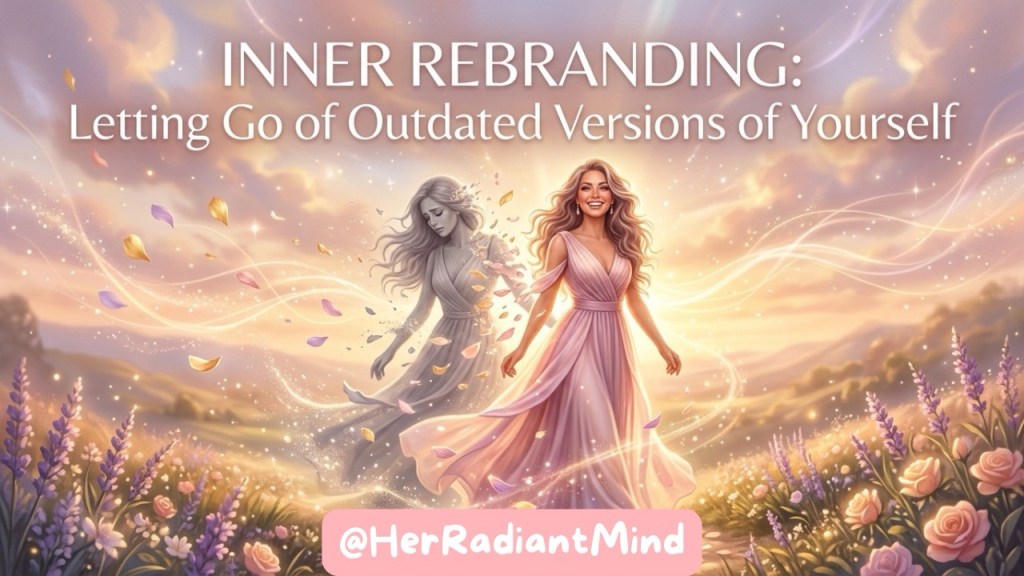
  • Inner Rebranding: Letting Go of Outdated Versions of Yourself

    Inner Rebranding: Letting Go of Outdated Versions of Yourself

    There comes a quiet moment in life when you pause and think,

    “Wait… who am I even trying to be anymore?”

    Not in a dramatic, movie-scene kind of way.

    More like a random Tuesday washing dishes, scrolling your phone, or catching your reflection after a long day.

    You feel it in your chest.

    A subtle tug.

    The version of you that once fit so comfortably now feels misaligned.

    Like wearing shoes you used to love, but now they just hurt.

    That is inner rebranding.

    It’s the courageous act of letting go of outdated versions of yourself so you can grow into the woman you are becoming.

    Not the one you were told to be.

    Not the one who survived by being “easy,” “strong,” “perfect,” or “small.”

    But the one who is real now.

    And yes—it can feel uncomfortable. Even scary.

    Because changing your life externally is one thing…

    Changing your internal identity is something else entirely.

    What Inner Rebranding Really Means

    Inner rebranding isn’t about becoming fake, polished, or perfect.

    It’s not a personality makeover for appearances.

    It’s deeper than that.

    It’s about updating:

    • the way you see yourself
    • the way you speak to yourself
    • the way you move through the world

    It’s noticing when an old version of you is still in control…

    even though she was built for a life you no longer live.

    Maybe she was:

    • the people-pleaser who kept everyone happy
    • the overworker who believed rest had to be earned
    • the quiet one who learned speaking up was “too much”
    • the achiever who tied worth to performance

    That version of you wasn’t wrong.

    She helped you survive.

    But survival is not the same as living.

    Inner rebranding is choosing to stop dragging old coping mechanisms into a new season—and making space for a version of you that feels softer, safer, stronger, and more honest.

    Why Outdated Versions Stick Around

    Ever wondered,

    “Why do I keep doing this even though I know better?”

    You’re not alone.

    Your brain is wired for familiarity—even when familiarity isn’t healthy.

    Through a process called neuroplasticity, your brain builds pathways based on repetition. The more you think or behave a certain way, the more automatic it becomes.

    So if you spent years:

    • staying quiet
    • fixing everyone’s problems
    • chasing perfection

    Your brain learned:

    “This is how we stay safe.”

    That’s why growth feels uncomfortable.

    You’re not just changing behavior—

    you’re asking your brain to let go of an old map.

    And the brain? It doesn’t give those up easily.

    4 Signs You’re Ready for a New Version of You

    You don’t need a life crisis to begin.

    Often, the signs are quiet.

    1. Your old role feels heavy

    What once felt normal now feels exhausting.

    2. You’re outgrowing your own life

    Your habits, routines, or even relationships no longer feel aligned.

    3. You feel guilty for changing

    Like evolving means disappointing others.

    4. You’re craving something deeper

    Not more noise—more truth, peace, and alignment.

    That craving?

    It’s your inner self whispering:

    “We’re ready.”

    The Grief No One Talks About

    Letting go of who you used to be can feel… emotional.

    Sometimes even like a quiet kind of grief.

    Because you’re not just releasing habits.

    You’re releasing an identity.

    A version of you that:

    • kept you safe
    • helped you feel accepted
    • protected you in ways you needed

    So yes—you may grieve:

    • the comfort of being liked
    • the safety of predictability
    • the identity built around being needed

    This doesn’t mean you’re going backward.

    It means you’re being honest.

    And honesty is part of healing.

    How Identity Gets Stuck

    Here’s the truth:

    You are not your:

    • overthinking
    • perfectionism
    • fear of rejection
    • people-pleasing

    Those are patterns, not your identity.

    But when patterns repeat long enough, they feel like who you are.

    That’s when we say things like:

    “That’s just how I am.”

    But often, what we really mean is:

    “That’s how I learned to survive.”

    Inner rebranding asks a powerful question:

    What if this isn’t who I am…

    but who I had to be?

    The Science of Change

    Your brain is always learning.

    Every time you:

    • choose a new response
    • interrupt an old pattern
    • speak to yourself differently

    You create a new neural pathway.

    But here’s the key:

    change happens through repetition, not pressure.

    Not one big moment—

    but small, consistent shifts:

    • pausing before saying yes
    • resting without guilt
    • speaking kindly to yourself
    • choosing honesty over comfort

    Research also shows that self-compassion reduces stress and increases emotional resilience.

    So no—being hard on yourself won’t speed up growth.

    It actually slows it down.

    What You May Need to Let Go Of

    Sometimes it’s not people you need to release—

    it’s the version of you that keeps showing up.

    Maybe it’s:

    • The overgiver — always pouring from an empty cup
    • The perfectionist — afraid to get it wrong
    • The silent one — afraid to take up space
    • The “strong” one — who never rests
    • The chameleon — who adapts to everyone else

    If this resonates, pause.

    That discomfort?

    It’s awareness.

    And awareness is the first step toward change.

    How to Begin Inner Rebranding

    You don’t need to reinvent your life overnight.

    Start small. Start gently.

    1. Name the old version

    Be honest:

    “I’m letting go of the part of me that thinks love must be earned.”

    2. Notice your triggers

    When do you shrink? Overgive? Overthink?

    Those moments are clues.

    3. Choose one new response

    Try:

    • “Let me think about it” instead of yes
    • pausing instead of apologizing
    • self-compassion instead of criticism

    4. Let your body catch up

    Growth isn’t just mental—it’s physical.

    New ways of being can feel unfamiliar.

    That doesn’t mean they’re wrong.

    It means you’re learning.

    Inner Rebranding in Real Life

    Picture this:

    Two versions of you walk into the same room.

    The old version scans for approval.

    She wonders who’s judging her.

    The new version?

    She enters grounded. Present. Honest.

    She doesn’t perform.

    Same room.

    Different energy.

    That’s inner rebranding.

    The Role of Self-Trust

    To evolve, you need to trust yourself.

    And self-trust is built through small promises:

    • “I won’t ignore my needs.”
    • “I’ll rest before I burn out.”
    • “I’ll speak truth with kindness.”

    Every time you follow through, you reinforce:

    “I’ve got me.”

    What Happens When You Don’t Let Go

    Holding onto an outdated identity can feel… heavy.

    You might feel:

    • stuck
    • resentful
    • emotionally drained
    • disconnected

    Like something is missing.

    Because something is:

    you.

    What You Gain When You Release

    When you let go, you make space for:

    • peace
    • clarity
    • boundaries
    • deeper relationships
    • emotional freedom

    You gain permission to be:

    • evolving
    • imperfect
    • real

    And that’s where true freedom lives.

    A Gentle Truth to Hold Onto

    You don’t have to hate who you used to be to outgrow her.

    She helped you survive.

    But she doesn’t get to lead your future.

    You can honor her…

    and still release her.

    That’s not betrayal.

    That’s growth.

    Final Thoughts

    Inner rebranding isn’t about becoming someone new.

    It’s about coming home to who you’ve been all along—

    beneath the expectations, the pressure, and the noise.

    It’s about gently releasing what no longer fits…

    and stepping into what does.

    You are allowed to:

    • change
    • evolve
    • outgrow old versions of yourself

    And if you’re standing in that in-between space right now…

    this is your sign.

    You don’t have to navigate it alone.

    Ready to Begin Your Inner Rebrand?

    At HerRadiantMind, I help women release old patterns, rebuild self-trust, and step into a more grounded, confident, and radiant version of themselves.

    If this spoke to your heart, consider this your invitation to take the next step.

    Your next chapter isn’t waiting for you to be perfect.

    It’s waiting for you to be real.

    Thank you for spending this time with me.

    Remember—healing is not linear, and growth doesn’t have to be loud to be powerful.

    Keep choosing yourself, one gentle moment at a time.💖

    Until next time, stay radiant and take tender care of your beautiful mind and body.

    With love,

    — Christabel, HerRadiantMind

  • Why We’re Afraid to Be Seen (And How to Finally Show Up as Yourself)

    Why We’re Afraid to Be Seen (And How to Finally Show Up as Yourself)

    Have you ever wondered why you pull back right when you’re about to share something real?

    You’re not actually afraid of being seen. You’re afraid of what people will think once they really see you.

    So you filter yourself. Tone it down. Keep parts of you hidden.

    Not because you’re fake — but because somewhere along the way, you learned it was safer that way.

    Why Are We Afraid to Be Seen?

    Picture this: you’re sitting at your laptop, your finger hovering over the “post” button. You’ve poured your heart into a caption, your truth into a story — and yet, something inside whispers, “Don’t do it. People will think you’re too much.”

    So you delete it. Again.

    Sound familiar?

    That tiny, sneaky voice telling you to stay small is the same one that keeps so many of us hiding — not from others, but from ourselves. And the truth is, many of us spend so much energy trying to be invisible while secretly craving to be seen.

    The Real Reason We Fear Being Seen

    Let’s be honest: we’re not just afraid of being seen — we’re afraid of being judged once we are.

    We worry about how others will react if we show:

    • our real personality
    • our sensitive side
    • our opinions and truth

    We fear being labeled as “too much” or “not enough.”

    But here’s the deeper truth: these fears are not about the present moment. They are rooted in past experiences and emotional conditioning.

    The Psychology of Visibility and Vulnerability

    Our brains are wired for survival. The amygdala — the part of the brain responsible for detecting danger — doesn’t distinguish between physical threats and emotional risks like rejection.

    Historically, being excluded from a group meant danger. So today, when you try to show up authentically, your brain may interpret it as a threat.

    That’s why:

    • posting something vulnerable feels scary
    • speaking your truth feels risky
    • being fully seen feels unsafe

    This isn’t weakness — it’s biology.

    The Mask We Wear to Feel Safe

    Instead of hiding physically, we now hide emotionally.

    We:

    • filter our words
    • soften our opinions
    • present “acceptable” versions of ourselves

    We trade authenticity for approval.

    Over time, this becomes so normal that we forget who we really are. But that inner pull you feel when you see someone being unapologetically themselves? That’s your authentic self asking to be expressed.

    The Cost of Hiding Your True Self

    Avoiding visibility doesn’t just protect you — it limits you.

    When you hide:

    • you miss opportunities
    • you suppress your voice
    • you attract misaligned relationships

    This often leads to feeling stuck, disconnected, or unfulfilled.

    The reality is: you cannot build a fulfilling life while hiding who you are.

    How Fear Keeps You Stuck

    Fear often disguises itself as logic:

    • “I’ll start when I’m more confident.”
    • “It’s not the right time.”
    • “I’m not ready yet.”

    But this is simply avoidance.

    You don’t feel fear when you’re playing small — you feel it when you’re stepping into growth and purpose.

    How to Overcome the Fear of Being Seen

    1. Understand Your Fear

    Ask yourself:

    Where did this fear come from?

    Often, it traces back to a past experience where being seen felt unsafe. Recognizing this helps you separate past conditioning from present reality.

    2. Start Small With Visibility

    Your nervous system learns through experience, not logic.

    Try:

    • sharing one honest thought
    • speaking up in small settings
    • expressing your true feelings with someone you trust

    Small steps build safety over time.

    3. Stop Performing and Start Being

    Authenticity isn’t something you create — it’s something you return to.

    Practice presence:

    • pause before responding
    • speak naturally instead of perfectly
    • allow yourself to be human

    People connect with realness, not perfection.

    4. Accept Imperfection

    You will feel awkward at first. That’s normal.

    Confidence is built by:

    • taking action despite fear
    • allowing discomfort
    • showing up anyway

    Growth happens through imperfect action.

    5. Remember You’re Not Alone

    Everyone experiences fear of judgment.

    The difference is not confidence — it’s willingness.

    People who show up authentically have simply decided that fear will not control them.

    The Science Behind Authenticity

    Being authentic isn’t just emotionally freeing — it’s biologically beneficial.

    • Authenticity releases oxytocin (connection hormone)
    • Inauthenticity increases cortisol (stress hormone)

    This is why being yourself feels energizing, while pretending feels exhausting.

    What Happens When You Finally Show Up

    At some point, hiding becomes more painful than being seen.

    That’s when everything changes.

    You:

    • express yourself honestly
    • connect more deeply
    • feel lighter and more aligned

    You begin to realize that the real danger was never being seen — it was staying hidden.

    Authentic Living Attracts the Right People

    When you show up as your true self, you naturally attract:

    • aligned relationships
    • meaningful opportunities
    • deeper connections

    Your life begins to feel more natural and less forced.

    That’s the power of alignment.

    You Can’t Be Loved If You’re Not Seen

    You cannot be fully loved for who you are if you hide who you are.

    Vulnerability may feel risky, but hiding comes at a greater cost: disconnection.

    So ask yourself:

    Are you avoiding judgment — or avoiding being truly known?

    Simple Daily Steps to Build Confidence

    Start with small, consistent actions:

    • Share one honest thought each day
    • Notice when you’re performing and gently pause
    • Rest when needed — growth takes energy
    • Celebrate small acts of courage

    Over time, these moments rebuild trust within yourself.

    You’re Not Too Much — You’re Being Real

    If you’ve ever been told you’re too sensitive, too emotional, or too much — understand this:

    Those qualities are not flaws. They are strengths.

    Your depth, your honesty, your heart — that’s your power.

    If you’ve been nodding along, it’s time to take the next step. The Radiant Reset is my 12-week coaching program designed to help women just like you reclaim energy, confidence, and resilience. 

    Thank you for spending this time with me.

    Remember—healing is not linear, and growth doesn’t have to be loud to be powerful.

    Keep choosing yourself, one gentle moment at a time.💖

    Until next time, stay radiant and take tender care of your beautiful mind and body.

    With love,

    — Christabel, HerRadiantMind
  • How to Be Content With Your Life While Still Growing

    How to Be Content With Your Life While Still Growing

    5 Powerful Lessons From My Younger Self

    There was a time when I believed happiness was hiding just beyond the next big thing.

    The next job.

    The next relationship.

    The next version of me.

    I used to whisper to myself:

    “Once I get there, everything will feel right.”

    But here’s the plot twist — “there” never came.

    Every time I got close, the finish line quietly moved a few steps ahead.

    Sound familiar?

    It’s like chasing mirages in the desert: beautiful, tempting, and completely untouchable the moment you think you’ve arrived.

    The truth I eventually learned — the one my younger self didn’t yet understand — is this:

    Contentment and growth don’t live on opposite sides of the road. They can walk side by side.

    Today, I want to share five lessons I wish I could whisper to my younger self — lessons that helped me stop postponing happiness and start feeling content where I am, even while continuing to grow.

    1. Life Isn’t Something You Arrive At— It’s Something You Experience

    Let’s start with a confession.

    When I was younger, I treated life like a scavenger hunt. Every milestone was supposed to unlock the next level of happiness.

    Graduation.

    Career success.

    Relationships.

    Personal achievement.

    But here’s the sneaky thing about “arrival thinking.”

    You never actually get there.

    There’s always something else to fix, improve, or chase. And before you know it, life quietly passes while you’re busy waiting for “someday.”

    I remember one afternoon walking home from work, mentally replaying everything I still hadn’t accomplished.

    Then I passed a park.

    A group of kids were laughing uncontrollably at absolutely nothing.

    They weren’t trying to be happy.

    They simply were.

    That moment hit me hard.

    Because I realized I had been missing life’s smallest joys — the moments that don’t appear on a goal list but give life its meaning.

    Psychologists call this the arrival fallacy — the belief that happiness begins only after achieving a certain milestone.

    But research from the Harvard Study of Adult Development — the longest-running study on happiness — shows that joy grows from:

    • meaningful relationships
    • presence in everyday moments
    • emotional connection

    Not just achievements.

    So here’s what my younger self needed to hear:

    Stop waiting for life to start. You’re already in it.

    2. Growth Doesn’t Mean You Have to Be Unhappy With Now

    For years I believed something that many of us secretly believe:

    If I become content…

    I might lose my drive.

    But that’s not how growth actually works.

    Think of it like a garden.

    You can love the flowers blooming today while still planting seeds for tomorrow.

    Gratitude doesn’t make you stagnant.

    It actually fuels sustainable growth.

    A study published in the Journal of Positive Psychology found that people who practice:

    • gratitude
    • self-compassion
    • emotional awareness

    are more motivated long-term, not less.

    Why?

    Because their growth comes from wholeness, not pressure.

    When I finally gave myself permission to enjoy my current chapter, something shifted.

    I stopped chasing goals to fix myself.

    I started pursuing them because I genuinely liked who I was becoming.

    You can love your life and still want to grow.

    You can be both:

    A masterpiece.

    And a work in progress.

    At the same time.

    3. Comparison Steals the Joy of Your Own Journey

    Let’s be honest.

    Social media makes it incredibly easy to feel behind.

    Someone’s launching a business.

    Someone just bought a house.

    Someone else is glowing on vacation like it’s their full-time job.

    And there you are… sitting in your leggings wondering if cereal for dinner is a life choice or a cry for help.

    I’ve been there too.

    Comparison whispers:

    “You should be further by now.”

    But here’s the truth our brains conveniently forget:

    You’re comparing your behind-the-scenes to someone else’s highlight reel.

    Scientific research shows that social comparison activates the same brain regions associated with pain.

    Yes — it literally hurts your brain.

    That’s when I started asking myself a better question:

    What’s blooming in my lane?

    Maybe it’s:

    • emotional growth
    • resilience
    • deeper self-awareness
    • patience

    These things don’t photograph well on Instagram.

    But they build the strongest version of you.

    So the next time comparison invites you to the pity party…

    Politely decline.

    And go water your own garden.

    4. Peace Comes From Trusting Yourself

    My younger self was a professional overthinker.

    I had a mental spreadsheet for every possible “what if.”

    What if I fail?

    What if I embarrass myself?

    What if I make the wrong choice?

    Spoiler alert.

    Most of those fears never happened.

    But the anxiety still stole my peace.

    Eventually I realized something important:

    Life will surprise you no matter how carefully you plan it.

    And that’s okay.

    Confidence isn’t about having all the answers.

    It’s about trusting that you can handle whatever comes next.

    Psychologists call this self-efficacy — the belief that you are capable of navigating life’s challenges.

    And the only way to build that trust is through experience.

    Think about toddlers learning to walk.

    They wobble.

    They fall.

    They try again.

    They don’t quit because falling is part of learning.

    Somewhere along the way, we forget that kind of courage.

    But it’s still inside us.

    Trusting yourself isn’t about knowing the future — it’s believing you can face it.

    5. Happiness Is Something You Practice

    Here’s a myth worth breaking.

    Happiness is not the reward for building a perfect life.

    It’s the foundation that helps build it.

    The field of positive psychology, pioneered by Martin Seligman, shows that people who cultivate happiness regularly experience:

    • greater resilience
    • more creativity
    • stronger relationships
    • higher long-term success

    Happiness is a practice, not a finish line.

    Here are a few ways to build it into everyday life:

    Gratitude Check-Ins

    Pause once a day and ask yourself:

    What went right today?

    Even small wins matter.

    Joy Moments

    Do one thing daily simply because it makes you smile.

    A walk.

    A good cup of tea.

    Music in the car.

    Quiet Mind Time

    Put your phone down for five minutes and just sit in stillness.

    No scrolling.

    No distractions.

    Just breathing.

    These tiny habits may seem simple.

    But they slowly retrain your brain to notice joy.

    Looking Back

    When I think about my younger self, I see someone trying desperately to earn a sense of “enough.”

    She believed peace was something you won after fixing everything.

    But she didn’t yet understand this:

    You don’t have to fix your life before you’re allowed to enjoy it.

    You can grow.

    You can evolve.

    You can dream big.

    And you can still feel grateful for the moment you’re living right now.

    Because personal growth isn’t about becoming someone new.

    It’s about reconnecting with who you already are.

    Practical Ways to Feel Content While Still Growing

    If you want to balance personal growth with inner peace, try these simple mindset shifts:

    Set Soft Goals

    Focus on how you want to feel — not just what you want to achieve.

    Examples:

    • peaceful
    • aligned
    • curious

    Reduce Comparison Time

    Swap 10 minutes of scrolling for 10 minutes of journaling.

    Track Emotional Wins

    Each week, write down three ways you grew emotionally.

    Growth isn’t always visible.

    But it matters.

    Savor Your Progress

    Celebrate steps along the journey — not just the final result.

    Create a Contentment Ritual

    Anchor happiness into your day with something simple:

    • morning tea
    • evening gratitude journaling
    • quiet nature walks

    These small moments teach your nervous system that life is happening now.

    The Quiet Art of Enough

    Being content doesn’t mean settling.

    It means you stop fighting the moment you’re in.

    You learn to appreciate your life while still growing into your potential.

    And that’s real power.

    A peaceful heart that’s still hungry for growth.

    From My Heart to Yours

    If you’ve been living in the cycle of:

    “Once I achieve this… then I’ll be happy.”

    I want you to hear this.

    You are allowed to:

    • appreciate your present
    • pursue your dreams
    • grow at your own pace

    Your contentment and your ambition can coexist beautifully.

    And if you’re ready to explore that deeper balance — learning how to grow without burning yourself out — that’s exactly what I help women do inside HerRadiantMind.

    Through coaching, mindset work, and guided reflection, you can stop postponing happiness and start building a life that feels good right now.

    You don’t have to trade peace for progress.

    You deserve both.

    Ready to grow without losing your joy?

    Explore my 1:1 coaching sessions at HerRadiantMind and begin becoming the most grounded, confident version of yourself — exactly where you are today.

    Thank you for spending this time with me.

    Remember—healing is not linear, and growth doesn’t have to be loud to be powerful.

    Keep choosing yourself, one gentle moment at a time.

    Until next time, stay radiant and take tender care of your beautiful mind and body.

    With love,

    — Christabel, HerRadiantMind

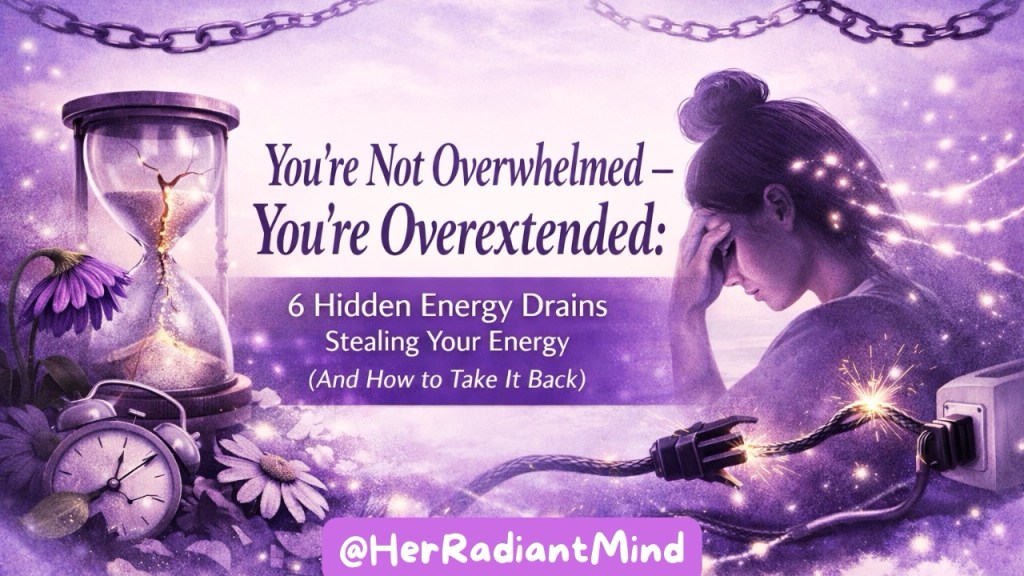
  • You’re Not Overwhelmed — You’re Overextended: 6 Hidden Energy Drains Stealing Your Energy (And How to Take It Back)

    You’re Not Overwhelmed — You’re Overextended: 6 Hidden Energy Drains Stealing Your Energy (And How to Take It Back)

    Have you ever stared at your to-do list and felt your chest tighten… before you’ve even started?

    You’re not lazy.

    You’re not incapable.

    You’re not behind.

    You’re overextended.

    What we call “overwhelm” is often something quieter: too many invisible energy leaks running in the background of your life. You can’t always see them — but your nervous system feels every single one.

    And when too many things are plugged into your power source, of course your light feels dim.

    But dim doesn’t mean depleted beyond repair.

    It means it’s time to unplug what was never yours to carry.

    Let’s uncover the six hidden drains quietly exhausting you.

    1. Emotional Overcommitment

    Saying yes when your body is whispering no.

    Every time you override your boundaries, your nervous system registers stress. Research shows that suppressing your own needs increases cortisol — the same hormone released during physical threat.

    This is how people-pleasing becomes physiological exhaustion.

    Before responding to a request, pause and ask:

    Am I saying yes from love… or from guilt?

    One expands you.

    The other empties you.

    2. Inefficient Rest

    Scrolling is not restoration.

    Your body might be still, but your brain remains stimulated. Blue light, constant novelty, emotional content — it keeps your nervous system subtly activated.

    True rest looks like:

    • Quiet breathing
    • A slow walk without input
    • Reading without multitasking
    • Sitting in stillness long enough for your body to soften

    If your “self-care” leaves you drained, it isn’t care — it’s distraction.

    Your nervous system doesn’t recharge through noise.

    It recharges through safety.

    3. Decision Fatigue

    Your brain has a limited daily supply of decision-making energy.

    Every small choice — what to wear, what to eat, what to reply — pulls from the same cognitive reservoir.

    When that reservoir runs low, everything feels harder than it should.

    Simplify where you can:

    • Rotate meals
    • Pre-plan outfits
    • Create routines instead of reinventing your day

    Save your decision energy for what truly matters.

    Not every choice deserves your full cognitive power.

    4. Environmental Clutter

    Your environment speaks to your brain all day long.

    Visual clutter acts as background stress. Studies show that disorganized spaces increase cortisol levels, especially in women.

    It’s not about perfection.

    It’s about reducing subconscious tension.

    Start small:

    One drawer.

    One counter.

    One surface.

    A calm space creates breathing room in your mind.

    5. Emotional Absorption

    If you’re empathetic, you likely carry more than your share.

    Listening, supporting, advising — these are beautiful traits. But empathy without boundaries becomes emotional depletion.

    Before engaging in heavy conversations, ask:

    Do I have capacity right now?

    Afterwards, discharge the energy:

    • Step outside
    • Move your body
    • Wash your hands slowly
    • Take three deep breaths

    Your empathy is a gift.

    Protect it like one.

    6. Mental Multitasking

    Multitasking feels productive — but it fragments your focus.

    The brain doesn’t truly multitask; it switch-tasks. Each switch burns micro-bursts of energy, which accumulate into mental fatigue.

    When everything gets partial attention, your brain never settles.

    Choose one task.

    Complete it.

    Then move on.

    Single-tasking quiets the mind in ways you don’t realize you’ve been craving.

    The Nervous System Factor

    Here’s what’s happening biologically.

    When you are constantly “on,” your sympathetic nervous system (fight or flight) dominates. Cortisol rises. Adrenaline circulates. Your body stays braced.

    But when you create small pockets of safety — boundaries, rest, simplicity — you activate your parasympathetic system.

    That’s where:

    • Healing happens
    • Digestion improves
    • Creativity returns
    • Calm feels natural again

    Peace isn’t indulgent.

    It’s a physiological reset.

    A Gentle Energy Audit

    Tonight, ask yourself:

    • Where did my energy go today?
    • Did I override my boundaries?
    • Was my rest actually restorative?
    • What can I release tomorrow?

    Awareness closes leaks.

    The Truth About Overwhelm

    Overwhelm is rarely about time.

    It’s about capacity.

    You can manage your schedule perfectly and still feel depleted if what fills it drains you.

    You are not a machine.

    You are not designed for constant output.

    You are a human nervous system that requires cycles — exertion and restoration.

    Reclaiming Your Energy

    Start small.

    • Say no once this week.
    • Create 10 minutes of real quiet.
    • Clear one surface.
    • Choose nourishment over numbing.
    • Protect your focus like currency.

    Bit by bit, your body will begin to trust that it’s safe to soften.

    And when your nervous system feels safe, your energy returns naturally.

    You’re Not Overwhelmed

    You’re overextended.

    And the solution isn’t more productivity.

    It’s wiser energy stewardship.

    When you protect your energy, everything shifts — your clarity, your mood, your confidence.

    You don’t need to push harder.

    You need to close a few tabs.

    And come back to yourself.

    If this resonated, share it with a woman who’s quietly carrying too much.

    And if you’re ready to rebuild your resilience from the inside out, explore coaching at HerRadiantMind.com.

    Because peace isn’t something you earn.

    It’s something you protect. 

    Thank you for spending this time with me.

    Remember—healing is not linear, and growth doesn’t have to be loud to be powerful.

    Keep choosing yourself, one gentle moment at a time.💖

    Until next time, stay radiant and take tender care of your beautiful mind and body.

    With love,

    — Christabel, HerRadiantMind

  • How to Stay Grounded During Waiting Seasons: Trusting the Process Without Losing Faith

    How to Stay Grounded During Waiting Seasons: Trusting the Process Without Losing Faith

    You know that space between “almost” and “not yet”?

    That quiet, maddening gap where you’ve done everything you can — and now life says wait.

    It’s one of the hardest emotional spaces to hold.

    Because waiting doesn’t just test your patience.

    It tests your identity. Your faith. Your self-worth.

    When outcomes are delayed, doubt gets louder.

    Maybe I’m behind.

    Maybe I missed my chance.

    Maybe I’m not enough.

    If you’ve ever felt the emotional heaviness of waiting — this is for you.

    Today we’re unpacking:

    • Why waiting feels so emotionally intense
    • What’s happening in your brain during uncertainty
    • How to stay grounded in the in-between
    • And how to trust the process without losing yourself

    Because waiting isn’t wasted time.

    It’s a becoming season.

    When Waiting Feels Like Emotional Quicksand

    Waiting can feel like quicksand.

    You’ve done the work.

    Sent the application.

    Had the difficult conversation.

    Started the healing.

    Launched the offer.

    And then… silence.

    Uncertainty triggers a very real stress response in the body.

    When we care deeply about an outcome, the amygdala — your brain’s emotional alarm center — activates. It reads uncertainty as potential danger. That’s why waiting doesn’t just feel uncomfortable mentally — it feels uncomfortable physically.

    Tight chest.

    Racing thoughts.

    Restlessness.

    Overthinking.

    Your nervous system is bracing.

    But here’s the truth: uncertainty is not the same as danger.

    And when we understand that, we begin to reclaim power.

    Why Your Brain Hates Waiting

    We’re wired for immediate feedback.

    Action gives us dopamine — the “progress chemical.” Checking something off a list, getting a reply, seeing visible movement — it feels rewarding.

    But waiting removes visible proof of progress.

    And the brain interprets that as loss of control.

    However, neuroscience shows that during slower seasons, your brain’s default mode network activates — the system responsible for reflection, integration, emotional processing, and long-term learning.

    Translation?

    While it looks like nothing is happening, deep internal work is unfolding.

    Waiting isn’t empty.

    It’s integration.

    A Client Story: When “Not Yet” Felt Like Rejection

    One of my clients — let’s call her Sarah — came to me feeling completely defeated.

    She had applied for a leadership role she deeply wanted. She had the experience. The qualifications. The vision.

    And then she received the email:

    “We’ve decided to move forward with another candidate.”

    She didn’t just feel disappointed. She felt rejected.

    Her inner narrative shifted quickly:

    Maybe I’m not as capable as I thought.

    Maybe I’m not leadership material.

    Maybe I’ve plateaued.

    What made it harder? She saw colleagues advancing. Moving. Growing. Meanwhile, she felt stuck.

    In our sessions, we didn’t immediately jump to strategy. We focused on regulation.

    We worked on:

    • Naming the grief instead of suppressing it
    • Challenging the narrative that delay equals inadequacy
    • Rebuilding identity separate from outcomes

    Here’s what shifted everything:

    Instead of asking, “Why didn’t I get it?”

    She began asking, “Who am I becoming in this season?”

    Over the next few months, something subtle happened.

    She strengthened her communication.

    She clarified her leadership philosophy.

    She stopped seeking validation externally.

    And six months later — a different opportunity opened. A role that aligned more deeply with her long-term goals, offering more flexibility and influence than the first one ever would have.

    The first “no” wasn’t failure.

    It was redirection — and preparation.

    But she couldn’t see that while she was in it.

    That’s the emotional weight of waiting. It clouds perspective.

    The Psychology of “Not Yet”

    Humans struggle with something called temporal discounting — we value immediate rewards more than delayed ones.

    So when life says “not yet,” it can feel like rejection.

    But psychologically speaking, delayed outcomes often increase long-term satisfaction and stability because they require internal expansion first.

    Growth expands capacity.

    And capacity determines sustainability.

    Sometimes the delay isn’t punishment.

    It’s preparation.

    How to Stay Grounded While You Wait

    Grounding is not about pretending everything is fine.

    It’s about creating internal stability when external outcomes are uncertain.

    Here are grounded, research-backed tools you can use:

    1. Regulate Before You Reframe

    Before positive thinking, regulate your nervous system.

    Try this breathing pattern:

    Inhale for 4

    Hold for 4

    Exhale for 6

    Longer exhales activate the vagus nerve and signal safety.

    Calm body → clearer thoughts.

    2. Separate Identity from Outcome

    You are not your timeline.

    Delays do not define your worth.

    Ask yourself:

    If this outcome never happened, who would I still be?

    Detach identity from achievement.

    That’s emotional resilience.

    3. Shift from “When?” to “Who?”

    Instead of obsessing over when it will happen, ask:

    Who am I becoming in this season?

    Am I:

    • More patient?
    • More self-aware?
    • More grounded?
    • Less reactive?

    Invisible growth still counts.

    4. Limit Comparison

    Comparison intensifies waiting.

    Someone else’s acceleration doesn’t mean you’re behind.

    Different timing. Different path. Different preparation.

    The Power of Surrender (Without Giving Up)

    Surrender isn’t quitting.

    It’s releasing the illusion of total control.

    It sounds like:

    “I will keep showing up, but I will not force what isn’t aligned.”

    When Sarah stopped trying to control the timeline and focused on strengthening herself internally, opportunities flowed differently.

    Because grounded energy attracts aligned opportunities.

    Desperate energy repels them.

    Rest Is Still Progress

    We measure progress by movement.

    But emotional growth often happens in stillness.

    During waiting seasons, you might:

    • Heal faster
    • React less
    • Recover quicker from disappointment
    • Speak up more clearly

    That is progress.

    Repeat this:

    Rest is also forward.

    When Waiting Feels Unfair

    Let’s be honest.

    Sometimes trusting the process feels naive.

    You’ve done the affirmations. The mindset work. The therapy. The journaling.

    And you’re tired.

    If that’s you, let me say this gently:

    You are allowed to feel exhausted and still trust.

    Trust doesn’t require constant positivity.

    It requires quiet consistency.

    Reclaiming Power in Uncertain Seasons

    If you feel stuck right now, try these perspective shifts:

    From:

    “Why is this happening to me?”

    To:

    “What is this strengthening within me?”

    From:

    “I have nothing to show for it.”

    To:

    “I am building what cannot yet be seen.”

    From:

    “Everyone is ahead of me.”

    To:

    “My timing is building sustainability.”

    The Emotional Science of Hope

    Hope activates the prefrontal cortex — the brain region responsible for planning and future vision.

    Hope fuels forward movement.

    That’s why losing hope feels heavy — your brain interprets it as depletion.

    Hope isn’t naive.

    It’s neurological fuel.

    Cultivate it intentionally:

    • Through gratitude
    • Through reflection
    • Through evidence of past resilience
    • Through supportive community

    Transformation Has Its Own Timeline

    Waiting is rarely about stagnation.

    It’s about internal alignment.

    You are not late.

    You are expanding.

    And when the opportunity meets the version of you that’s grounded enough to hold it — it will feel steady, not chaotic.

    That’s the difference between rushed success and aligned growth.

    Your Invitation

    If you’re in a waiting season right now — whether it’s career, healing, relationships, or clarity — you don’t have to navigate it alone.

    At HerRadiantMind, I help women build emotional resilience so that uncertainty doesn’t shake their foundation.

    Through mindset coaching, nervous system regulation tools, and grounded self-trust practices, we turn waiting seasons into strengthening seasons.

    Ready to feel steady even when life feels uncertain?

    Visit HerRadiantMind.com to book a clarity call.

    Because your journey isn’t on hold.

    It’s unfolding.

    And you are becoming stronger than you realize.

    Thank you for spending this time with me.

    Remember—healing is not linear, and growth doesn’t have to be loud to be powerful.

    Keep choosing yourself, one gentle moment at a time.💖

    Until next time, stay radiant and take tender care of your beautiful mind and body.

    With love,

    — Christabel, HerRadiantMind
  • When Growth Is Invisible: Trusting the Work You’re Doing Even When Nothing Looks Different

    When Growth Is Invisible: Trusting the Work You’re Doing Even When Nothing Looks Different

    Have you ever looked at your life and thought, “Shouldn’t I be further along by now?”

    You’ve been showing up.

    Doing the work.

    Journaling. Meditating. Setting boundaries. Trying to communicate better.

    And yet… nothing looks different.

    Same job. Same patterns. Same quiet ache that whispers, “What am I missing?”

    That heavy feeling — the one that shows up when nothing seems to be changing — is often where invisible growth lives. And it’s sneaky, because it hides in plain sight.

    The Quiet Season of Becoming

    There’s something about winter that most people misunderstand.

    When the ground looks frozen and lifeless, it’s easy to assume nothing is happening.

    But beneath the surface, the soil is resting, restoring, preparing.

    Roots aren’t gone.

    They’re conserving energy.

    Waiting for the right moment.

    Then spring arrives — and what looks like sudden growth is really the result of patience, not luck.

    Healing works the same way.

    Not every season is meant for blooming.

    Some are meant for slowing down, letting go, and gathering strength where no one can see.

    So if your life feels quiet right now…

    If progress feels invisible…

    It doesn’t mean you’re behind.

    It may mean you’re in a season of preparation.

    And that season still counts.

    You may not see dramatic changes, but inside — in the way you pause before reacting, or breathe instead of spiraling — something is shifting. Quietly. Powerfully.

    The Myth of “Visible” Progress

    We live in a world obsessed with before-and-after transformations:

    • Weight loss
    • Career upgrades
    • Picture-perfect glow-ups

    But emotional and mental growth doesn’t fit neatly into a swipe or a reel.

    You can’t post a side-by-side of your improved emotional regulation.

    No one double-taps your ability to stay calm during conflict.

    There’s no applause for the boundary you held when it would’ve been easier to stay silent.

    And yet — that’s where real transformation happens.

    If it feels like nothing’s changing, maybe the growth isn’t missing.

    Maybe it’s just not loud.

    The Brain Science Behind Invisible Growth

    When you practice new thoughts, behaviors, or emotional responses, your brain is literally rewiring itself.

    This process — called synaptic plasticity — is how new neural pathways form. Think of it like creating a hiking trail. The more often you walk it, the clearer and easier it becomes.

    Your old patterns (shaped by fear, stress, or survival) are like highways — fast and familiar.

    Your new mindset? A quiet gravel road.

    At first, it feels awkward. Slower. Less natural.

    But every pause, every self-reminder, every gentle choice strengthens that path.

    Science confirms this truth: growth almost always happens before it becomes visible.

    “But Nothing Feels Different…” — The Emotional Plateau

    Let’s be honest — growth can feel frustrating.

    You meditate… then snap at someone you love.

    You practice gratitude… and still wake up irritated.

    You go to therapy… and cry on your lunch break.

    This isn’t failure.

    It’s an emotional plateau.

    Just like strength training, early changes happen quickly, then progress seems to stall. In reality, your nervous system is stabilizing and integrating. This phase is about maintenance, not magic.

    Invisible growth often looks boring.

    But boring doesn’t mean broken.

    The Story the Mirror Can’t Tell

    A client once said to me, half-laughing, half-teary:

    “I thought I wasn’t growing until my mom said, ‘You didn’t explode this time — who are you?’”

    That’s the thing — growth often shows up in hindsight.

    • The argument you didn’t escalate
    • The “no” that felt uncomfortable but honest
    • The moment you chose rest instead of rumination

    Those don’t show up in selfies, but they change everything.

    Why Your Brain Tells You You’re Not Progressing

    Your brain is wired for survival, not satisfaction.

    Thanks to negativity bias, it scans for problems and threats — even when things are improving. That’s why it’s easier to notice what’s missing than what’s healing.

    The fix isn’t forcing positivity.

    It’s awareness.

    Try asking yourself daily: “What did I handle differently today?”

    That question alone begins to retrain your brain to recognize progress.

    The Slow Burn of Real Transformation

    Quick fixes are tempting.

    But the growth that truly lasts — the kind that heals self-worth, builds resilience, and changes how you relate to yourself — is slow and quiet.

    It looks like:

    • Trust after heartbreak
    • Compassion replacing defense
    • Knowing your worth without proving it

    Not fireworks.

    Candlelight.

    Steady. Lasting. Real.

    Signs You’re Growing (Even If You Can’t See It Yet)

    • You pause instead of panic
    • Your boundaries wobble, but hold
    • You recover faster after setbacks
    • You keep showing up — even when motivation fades

    That’s not small progress.

    That’s foundational change.

    Trusting the Process Without Proof

    When progress hides, the work isn’t to push harder — it’s to trust deeper.

    You can’t rush a seed.

    Your job isn’t speed — it’s care.

    You are the gardener, not the stopwatch.

    When Doubt Creeps In

    Doubt is part of growth.

    When it shows up, ground yourself in evidence, not emotion. Remind yourself:

    “Things have changed before — just slower than I expected.”

    Every invisible shift becomes visible eventually.

    The only risk is quitting too soon.

    Some Seasons Aren’t About Blooming

    Not every season is meant to produce visible results.

    Some are about restoring roots.

    Winter doesn’t question spring — it rests.

    If life feels still right now, maybe that is the work.

    A Personal Reflection

    When I began my own mindset work, I thought growth meant feeling good all the time.

    It didn’t. But one day, I was cut off in traffic and didn’t react the way I used to. That’s when I knew I was healing. That moment, I realized: growth is rarely dramatic.

    It’s subtle. Nervous-system deep. Life-altering.

    Keep Going — Even When It Feels Quiet

    Simplify your routines.

    Release constant measuring.

    Return to your why.

    Surround yourself with truth, not perfection.

    And when it feels heavy — step outside. Nature understands patience better than we ever will.

    Final Thoughts: Growth Doesn’t Need an Audience

    You don’t need proof to trust your becoming.

    The most meaningful changes happen quietly — in breath, boundaries, and second chances.

    You’re not stuck.

    You’re becoming.

    And invisible growth?

    That’s often the kind that lasts.

    A Gentle Invitation

    If this resonated — if you’re doing the work but struggling to see results — you’re not alone.

    At HerRadiantMind, I help women recognize invisible progress, build emotional resilience, and trust their healing journey.

    You don’t have to do this alone.

    Your growth isn’t gone.

    It’s just quietly blooming — right on time 

    Thank you for spending this time with me.

    Remember—healing is not linear, and growth doesn’t have to be loud to be powerful.

    Keep choosing yourself, one gentle moment at a time.💖

    Until next time, stay radiant and take tender care of your beautiful mind and body.

    With love,

    — Christabel, HerRadiantMind

  • Healing the Busy Woman Wound: Why Rest Feels Unsafe & How to Relearn It Without Guilt

    Healing the Busy Woman Wound: Why Rest Feels Unsafe & How to Relearn It Without Guilt

    Ever find yourself lying in bed, heart pounding, mind racing, with a to-do list screaming louder than any lullaby?

    Rest sounds like a dream — yet somehow it feels like stepping into quicksand, something unsafe, indulgent, or undeserved.

    If that hits a little too close to home, you’re not alone.

    So many women carry what I call the “Busy Woman” Wound — a deep inner knot of guilt, fear, and hypervigilance around slowing down.

    This blog is your gentle map to unravelling that knot and learning how real, soulful rest isn’t just healing… it’s transformational.

    The Busy Woman Wound: When Rest Feels Like a Trap

    Maybe you grew up with an unspoken rule:

    “If you’re not working, doing, or hustling… you’re falling behind.”

    This is the Busy Woman Wound.

    It’s not just exhaustion — it’s the way rest feels unsafe, weak, or even dangerous.

    Your nervous system might still be stuck in survival mode, whispering:

    “If you stop, everything will fall apart.”

    Even when your mind knows you need rest, your body remembers something different:

    Keep going. Stay alert. Be useful. Don’t let anyone down.

    This wound hides beneath the surface, leaving you feeling “off” the moment you try to slow down.

    You may feel restless, anxious, or heavy with guilt, convinced that stillness equals failure.

    When Rest Becomes the Enemy Instead of the Medicine

    Here’s a compassionate truth:

    Your brain and body don’t automatically know how to rest when they’ve spent years running at full speed.

    Chronic busyness rewires your nervous system into constant alertness.

    When rest finally comes, peace feels foreign — even threatening.

    Instead of sinking into stillness, your body may respond with:

    • racing thoughts
    • tension in the chest
    • the urge to get up and “do something”
    • the automatic pull to scroll, clean, or work

    Not because you don’t want rest…

    but because your system doesn’t feel safe in rest.

    Movement feels familiar.

    Quiet feels overwhelming.

    The Neurobiology of Rest Resistance: What’s Really Happening in Your Brain and Body

    If you’ve ever wondered why you struggle to rest even when you’re exhausted, there’s a deeply scientific reason — and it has everything to do with your nervous system, your brain’s protective wiring, and the hormones your body has learned to depend on for survival.

    Rest resistance isn’t a personality flaw.

    It’s biology.

    1. Your Nervous System May Be Stuck in Survival Mode (Hyperarousal)

    When your body spends years in “go-mode,” it adapts to that pace. The sympathetic nervous system  your fight-or-flight state  becomes your baseline.

    So when you try to rest, your body may respond with:

    • racing heart
    • muscle tension
    • intrusive thoughts
    • the urge to get up and “do something”

    Your nervous system is simply doing what it believes keeps you safe.

    2. Cortisol and Adrenaline Become Your Fuel

    Chronic busyness floods your body with stress hormones designed to keep you alert. Over time, your system becomes dependent on them.

    When you slow down, these hormones drop…

    and your body panics because high alert has become its “normal.”

    Stillness feels like withdrawal.

    3. The Brain Associates Rest with Vulnerability

    If rest was never modeled as safe in childhood or adulthood, your limbic system can associate it with danger or disapproval.

    Even when you want to rest, a deeper part of your brain whispers:

    • “You’re disappointing someone.”
    • “You’re falling behind.”
    • “You’re being lazy.”

    These beliefs aren’t logic — they’re protection patterns.

    4. The Prefrontal Cortex Shuts Down During Stress

    When you’re overwhelmed, the calm-thinking part of your brain goes offline. Instead of relaxing, you may experience:

    • looping thoughts
    • overthinking
    • worst-case scenarios
    • emotional heaviness

    Your brain isn’t sabotaging you — it’s trying to keep you safe with the tools it knows.

    5. Your Body Remembers What Your Mind Forgot

    Trauma, chronic stress, and generational conditioning live in the body.

    Even if you mentally know you deserve rest, your body may still carry memories of times when rest wasn’t possible or welcome.

    This is why rest requires gentleness, repetition, and safety — not pressure.

    Signs You’re Carrying the Busy Woman Wound

    • You feel anxious the moment you sit down.
    • Rest comes with guilt, shame, or discomfort.
    • You find “productive” distractions instead of relaxing.
    • Your mind races at night even when exhausted.
    • You feel more alive when busy than when still.
    • Caring for yourself feels selfish or indulgent.

    If any of this resonates, consider it a compassionate invitation — not a diagnosis.

    Relearning Rest: Small, Soulful Steps Forward

    Healing this wound isn’t about flipping a switch.

    It’s about nervous system re-training — tiny moments of safety layered over time.

    1. Celebrate Mini-Breaks Like Big Victories

    Start with one-minute pauses.

    Breathe deeply.

    Feel your feet on the ground.

    Allow stillness to become familiar again.

    2. Create a Rest Ritual That Speaks Your Soul’s Language

    Rest should invite you, not shame you.

    • tea
    • soft music
    • stretching
    • journaling
    • quiet moments under the sky

    Find what feels like comfort and let it become sacred.

    3. Name the Guilt and Gently Talk Back

    Ask yourself:

    • Where did this story come from?
    • Is it true?
    • Does this belief belong to me, or did I inherit it?

    Respond with softness.

    4. Protect Your Rest Like a Non-Negotiable

    Treat rest like a meeting with your future self.

    Honor it.

    Defend it.

    Nurture it.

    A Story of Rest Reclaimed

    A client once told me she was terrified of naps because her inner voice screamed:

    “You’re lazy! You’re failing!”

    We started with five quiet minutes a day.

    No pressure.

    No expectations.

    Just breath and presence.

    Months later she shared:

    “Rest doesn’t drain me anymore — it restores me.”

    Because rest didn’t weaken her.

    It brought her back to herself.

    Soulful Rest Is Radical Self-Love — Not Laziness

    Soulful rest is rebellion against burnout culture.

    It’s saying:

    “I deserve softness. I deserve peace. My worth is not measured by my productivity.”

    Rest heals your nervous system.

    It fuels clarity, creativity, and emotional stability.

    It brings you back into your body in the gentlest way.

    With time, your body learns what your soul already knows:

    Rest is home.

    Your Invitation: Choose Rest as Your Radical Act Today

    Dear beautiful soul reading this — with the full schedule and tender heart…

    What would it feel like to rest without guilt?

    To rewrite the story you tell yourself about slowing down?

    To let your body feel safe, supported, and held?

    At HerRadiantMind, I guide women through this exact transformation — from survival mode to soulful living, from burnout to radiance.

    If the Busy Woman Wound echoes in your journey, you don’t have to walk this path alone.

    Together, we can explore:

    ✨ your unique rest rituals

    ✨ nervous system regulation

    ✨ releasing guilt and old narratives

    ✨ reclaiming rest as your birthright

    Rest is waiting.

    Your softness is waiting.

    Your radiance is waiting.

    Will you answer?

    Thank you for spending this time with me.

    Remember—healing isn’t linear, and growth doesn’t have to be loud to be powerful.

    Keep choosing yourself, one gentle moment at a time.💖

    Until next time, stay radiant and take tender care of your beautiful mind and body.

    With love,

    — Christabel, HerRadiantMind

  • De-Weaponize Your Past—Turn Old Wounds into Wings of Empowerment

    De-Weaponize Your Past—Turn Old Wounds into Wings of Empowerment

    Your past is not a prison—it’s a teacher. When you learn to lay down your sword, you discover wings.

    Let’s be real for a moment.

    Your past isn’t a prison sentence.

    It’s a teacher — sometimes a tough one, sometimes a gentle one.

    And the moment you stop swinging old weapons at yourself, something incredible happens:

    your wounds grow wings.

    Picture this with me:

    A warrior comes home from battle. The war is over, but the sword is still in their hand — heavy, familiar, almost comforting. Every scar tells a story. But now, walking through everyday life, that same sword that once kept them safe starts cutting them instead.

    That’s what our past does when we don’t put the sword down.

    Pain that once protected us ends up slicing into our joy, relationships, and dreams.

    But here’s the truth:

    You can set the sword down. You can heal. You can rise.

    Why We Hold On to the Past

    Sometimes our past clings to us like ivy — beautiful in memory, but wrapped so tightly it slows our growth.

    Take Emma, for example.

    She grew up in a home where love had conditions and approval was currency. Now, as an adult, every bit of criticism feels like childhood all over again. Her past wasn’t just following her — it was speaking for her.

    Your past may have helped you survive.

    But if you’re not careful, it can start sabotaging your present.

    How Old Wounds Turn Into Weapons

    Old wounds often show up as automatic reactions that feel bigger than the moment.

    Common triggers:

    • Someone raises their voice → feels like childhood criticism
    • Rejection at work → feels like you’re failing again
    • Achieve something → still feel unworthy

    Quick science moment:

    Trauma gets stuck in the brain’s alarm system (the amygdala). When something reminds you of the past, your body reacts before your mind can even think.

    Try this:

    When you feel triggered, say internally:

    “This is an old weapon activating.”

    That tiny pause helps your nervous system calm down.

    Mapping Your Inner Weapons

    Healing starts with awareness.

    Step 1 — Make Your “Weapon Inventory”

    Grab your journal and write down patterns you notice.

    Examples:

    • Betrayal → you shut down
    • Abandonment → you over-give
    • Perfectionism → you beat yourself up

    Step 2 — Name the Weapons

    This makes them less scary:

    • The Hypervigilance Sword — always on guard
    • The Shame Grenade — explodes after every mistake
    • The People-Pleasing Rifle — saying yes to stay safe

    When you understand your triggers, you stop getting blindsided by them.

    The Four Pillars of De-Weaponization

    1. Safety First

    Before anything else — feel safe in your body.

    Try grounding: feet on the floor, hand on your belly, slow breathing.

    This literally calms your nervous system.

    2. Witness Without War

    Look at your past, but don’t fight it.

    Write for 10 minutes about the wound, then 10 minutes about how you survived it.

    It’s like reading an old diary: no judgment, just awareness.

    3. Strength Forging

    Every old wound hides a superpower.

    Examples:

    • Fear of abandonment → deep empathy and loyalty
    • Perfectionism → incredible attention to detail

    4. Ritual Release

    Write down the “weapon” on a piece of paper.

    Burn it safely, breathe deeply, release it.

    “Every flame, every exhale, signifies liberation.”

    Turning Scars Into Superpowers

    Did you know? About 70% of trauma survivors develop deeper empathy, resilience, and purpose once they work through it.

    Your wounds aren’t proof of weakness.

    They’re proof you lived, learned, and kept going.

    Daily Rituals to Support Your Healing

    • Morning Reset: 5-minute body scan
    • Midday Mantra: “My past informs me, but it doesn’t imprison me.”
    • Evening Reflection: Celebrate one win
    • Weekly Audit: Look at your patterns + progress
    • Share Safely: Talk about your journey in a judgment-free space

    Give yourself 21 days.

    It’s wild how much can change.

    When You Slip Back — Be Gentle

    Healing isn’t linear.

    Some days you’ll feel strong. Some days you’ll feel triggered.

    But relapses aren’t failures — they’re feedback.

    Say this to yourself:

    “I am human. I am healing. This moment is refinement.”

    Real People. Real Healing. Real Transformation.

    There’s Maya, who spent years doubting herself.

    Once she mapped her inner weapons and practiced daily grounding, she found her voice again.

    Jordan, who thought failure defined him.

    His perfectionism turned into a thriving project.

    Lisa, who was raised to stay silent.

    Now she teaches young women how to speak their truth.

    Your story can shift just like theirs.

    Your Past Isn’t Your Enemy — It’s Your Training Ground

    Your past doesn’t define you.

    It equips you.

    It sharpens your intuition.

    Deepens your compassion.

    Strengthens your boundaries.

    And guides you toward purpose.

    Your scars are not the end of your story —

    they’re the beginning of your becoming.

    If you’re ready to truly de-weaponize your past and step into your power, I’d love to walk that journey with you.

    Book a 1:1 Coaching Session at HerRadiantMind — let’s map your patterns, unlock your strengths, and build your wings.

    Thank you for spending this time with me.

    Healing doesn’t have to be loud to be powerful.

    Choose yourself gently, daily, and bravely.

    Until next time, stay radiant and take tender care of your beautiful mind and body.

    — Christabel, HerRadiantMind

  • Your Past Is Not Your Enemy—It’s the Key to Healing and Growth.

    Your Past Is Not Your Enemy—It’s the Key to Healing and Growth.

    There’s a hush that settles over the world at dawn—the moment before light pours onto the earth, when everything seems to pause, to listen. Picture yourself in that stillness, fingertips curled around a steaming mug, wrapped in the quiet comfort of morning. You watch as grey becomes rose, as darkness dissolves into gentle gold. And as the new day awakens, so does something within you—a flood of memories: the “could-have-beens,” the heartbreaks, the words unsaid.

    If your chest clenches at that recollection, you’re far from alone. The past can haunt like an uninvited shadow, whispering, “You’re behind,” “You should be further,” “It’s too late for me.” The soul grows weary under that weight, caught in the tug-of-war between wistful nostalgia and painful regret.

    But let’s pause. What if the past isn’t an enemy lurking in the shadows? What if it is, in fact, your wisest companion—your teacher, not your jailer?

    This gentle unraveling is the journey we’re embarking on today. In this post, you’ll discover why the story you carry is not a chain but a compass, and how your greatest struggles can become stepping stones. Through metaphors, real-life stories, science-backed insights, and loving action steps, you’ll feel empowered to embrace your history, release self-limiting beliefs, and transform your life by reclaiming your power.

    The Weight of Carrying History

    Life has a way of layering experiences, moment by moment, year by year, much like a tree that silently accumulates rings beneath its bark. Each ring—sunlit days or storm-tossed months—tells a part of your story. Yet, so often, we carry the past not as beautiful history, but as a burden.

    Imagine hiking up a mountain with a backpack. With every disappointment, every misstep, another stone slips inside. Sometimes, that weight is obvious—like betrayal or loss. Other times, it’s subtle: a glance of disapproval, a childhood expectation, an old dream deferred. Eventually, the backpack becomes heavy. We find ourselves out of breath, legs quivering—not from the climb but from the invisible load.

    When Past Mistakes Dictate Today

    Do you notice yourself hesitating at the brink of something new—a romance, a creative leap, a career aspiration—chilled by echoes of old failures? Maybe a voice pipes up: “Remember when you tried and failed?” That voice is your history, showing up without an invitation. But remember: history is not destiny.

    Picture the past as a wise, if sometimes awkward, tutor trailing beside you. Every misstep, heartbreak, or missed opportunity is not a condemnation—it’s data. It’s insight. The voice that reminds you of your setbacks can also highlight your growth if you listen with compassion, not criticism.

    The Enemy Misconception

    Why do so many of us treat our past as a villain? Society rarely celebrates the beauty in our bruises. From early childhood, we learn that perfection is rewarded and mistakes quietly shamed. Family stories, well-meaning advice, and even the fast-paced highlight reels on social media conspire to convince us: “If you’re still struggling, you’re failing.”

    But this is a myth. You are not the sum of your mistakes. You are the sum of the courage it took to keep going.

    Think of a mosaic crafted from shattered glass. Alone, each shard is sharp, perhaps even dangerous. Combined thoughtfully, those once-broken pieces refract the light in ways smooth glass never could. Your mosaic—your history—gives you depth, complexity, and beauty.

    How the Past Becomes a Teacher

    When you breathe, step back, and observe your story with curiosity instead of dread, transformation takes root. The lens through which you view your past can turn thorny brambles into blooming gardens.

    Recognizing Lessons Hidden in Pain

    Every difficult experience contains a treasure—sometimes buried, but always there.

    • A failed relationship may be your first lesson in boundaries or reveal a deep yearning for authenticity.
    • A career disappointment may illuminate your neglected passions or expose values misaligned with your path.
    • Emotional wounds may spotlight self-defeating patterns, inviting you to choose differently.

    Consider how a forest fire, devastating as it may seem, clears space for new life to flourish. Likewise, pain burns away illusions and makes way for resilience.

    Instead of the disempowering “Why did this happen to me?” gently shift the question: “What can I learn here? What is this experience showing me about what I truly want, and who I’m becoming?”

    Transforming Regret into Guidance

    Regret often feels like an endless storm—a sky dark with the weight of “I should have…” But recall that even the wildest thunderstorm brings rain to seeds buried beneath the surface.

    Suppose you passed up a long-desired opportunity years ago. The regret gnaws at you. But ask: Did that decision teach you about discernment? Did it reveal old fears you are now brave enough to challenge? Reframed, regret transforms from a tormentor into a beacon, illuminating what you truly value and what you’re at last ready to choose.

    The Science Behind Learning from the Past

    This isn’t just airy inspiration—psychology confirms what intuition whispers. Science tells us that reflective self-examination actually changes the structure of our brains.

    Researchers call it “narrative reframing.” When you consciously reinterpret past events, you soften their emotional grip, reduce stress, and boost resilience. The brain begins building new neural pathways. Over time, you learn to meet present challenges more like a seasoned guide than a frightened wanderer.

    Think of your brain as a garden. For years, you may have watered the weeds of shame and fear. But with intention, you can cultivate wisdom, plant seeds of compassion, and harvest clarity—one day, one reflection, at a time.

    Practical Steps to Embrace Your Past

    So, how do you turn experience into fuel, not fear? Here are gentle, actionable ways to transform your narrative and let your history be your greatest mentor.

    1. Journal Your Lessons

    Set aside time weekly to write out difficult memories or regrets. Under each, list at least one thing the experience taught you (even indirectly). Did a broken friendship teach you to value honesty? Did a missed chance reveal your true priorities? Journaling provides objectivity—like seeing your life story as a compassionate observer, not a judge.

    2. Reframe Your Narrative

    Words have magic. Instead of “I failed,” try, “I learned.” Instead of “I’m broken,” whisper, “I’m evolving.” When you change your self-talk, you rewire your brain and lighten your spirit.

    3. Practice Gratitude for Growth

    Gratitude works backward, too. See if you can thank your past for resilience, even if you’re not ready to thank it for the pain itself.

    • “I’m grateful that betrayal showed me my strength.”
    • “Thank you, setback—you introduced me to my creative fire.”

    4. Seek the Silver Lining

    Ask: “What hidden gifts did my most painful moments deliver?” Maybe fear of failure built your resourcefulness. Maybe loss awakened compassion for others. Over time, you transform each burden into a stone of wisdom to pave your path forward.

    5. Integrate Reflection Into Daily Life

    Each morning, spend a few minutes recalling a hard moment and identify one thing it taught you. This tiny ritual dissolves the unconscious power old shame holds over you.

    Letting Go of the “Behind” Mentality

    Too often, we measure our progress by someone else’s yardstick. It’s the comparison trap: “She’s more successful, he’s happier, I should be further along.” But life is not a race—it’s a garden, and every blossom follows its own clock.

    Imagine two trees—one on a sun-kissed hill, another tucked deep in the forest shade. One bursts into flower in spring; the other roots down, quietly gathering strength. Is the latter “behind,” or simply aligning with its own rhythm? Similarly, your journey doesn’t have an expiration date. Growth is growth, no matter how slow.

    Release the urge to compare. Embrace your unique timeline. Each season, each step, is part of what makes your results yours—irreplaceable and beautiful.

    Real-Life Example: Turning History Into Growth

    Meet Mary—a woman with a heart full of dreams and hands callused by attempts that didn’t pan out. After her bakery failed, she shrank from new risks. Each morning, the echo of “what if” drowned out hope. But with support, Mary began journaling her lessons—not the losses, but what they had given her: grit, creativity, courage.

    She started a new venture, wiser and more attuned to her values. When doubts arose, instead of, “I failed,” she reminded herself, “I learned how to adapt. I learned what matters.” Success found her not despite her past, but because of how she honored it.

    The Role of Self-Compassion

    Embracing your past as a teacher is possible only when you lay down the whip of self-recrimination. Guilt might have kept you cautious, but it cannot foster growth. Compassion does.

    Treat yourself as you would a beloved child: with patience, tenderness, and belief in the possibility of change.

    • Speak kindly to yourself, as you would to a friend.
    • Recognize your courage to continue, even through hardship.
    • Celebrate each step, regardless of how awkward or slow.

    Self-compassion softens old scars and opens space for new learning and radiant transformation.

    Using Your Past as a Launchpad

    Once you begin seeing your past as a mentor, you gather power. Ask gentle questions to turn insights into action:

    • What patterns keep repeating, and how can I shift them now?
    • Which strengths have I grown from past struggles—a resilience, a tenderness, a fierce determination?
    • What choices, informed by these lessons, will I make today?

    Reflection without action stirs up stagnation; action without reflection repeats old mistakes. Together, they create momentum for a life fully alive.

    Daily Practices to Strengthen the Teacher Mindset

    • Morning reflection: Spend 5 minutes revisiting a challenge and uncovering its lesson.
    • Reframe your language: Counter self-critical words with learning-focused mantras.
    • Gratitude journaling: Write nightly about one way your past has refined your resilience.
    • Mindful pauses: When old pain resurfaces, ask, “What wisdom is this moment offering me?”
    • Share your story: Speak or write your experiences—externalizing them transforms shame into learning.

    A Gentle Reminder

    Your past is not a chain but a compass, tuned to your unique north star. Every stone you carry can be set down, examined, and—if you wish—transformed into one of the stepping stones toward who you are becoming.

    Today, if your backpack feels impossibly heavy, know that each “stone” you unpack is a lesson reclaimed. Healing and growth ask not to erase your history, but to honor and learn from it. As dawn breaks each day, let your past light instead of shadow your path.

    Take the First Step Toward Transformation

    Ready to turn your history from a weight into wings? At HerRadiantMind, guidance and compassion walk beside you. Together, we will harvest the wisdom from your story, loosen the grip of self-limiting beliefs, and ignite your journey into authenticity and power.

    🌱 Book a 1:1 Coaching Session Today—and let your past become your wisest mentor.

    Looking Ahead: Part 2

    In Part 2, we’ll explore how to stop using your history against yourself and start letting it propel you forward. You’ll learn actionable steps to de-weaponize your past, uncover hidden strengths, and embrace a mindset that transforms old wounds into fuel for your most empowered life.

    Thank you for spending this time with me.

    Remember—healing isn’t linear, and growth doesn’t have to be loud to be powerful.

    Keep choosing yourself, one gentle moment at a time.💖

    Until next time, stay radiant and take tender care of your beautiful mind and body.

    With love & light

    — Christabel, HerRadiantMind

    Stay Radiant-Join the list!

  • The Inner Child Speaks: Connecting with the Wounded Younger You

    The Inner Child Speaks: Connecting with the Wounded Younger You

    Opening the Door to Your Inner Child’s Voice

    Imagine that inside you—quietly tucked beneath the layers of adult life—lives a younger version of yourself.

    This little one carries the echoes of joy and wonder, but also the pain and unmet needs of childhood.

    For many of us, those early wounds silently shape our relationships, self-worth, and emotional well-being in adulthood.

    But what if you could finally hear that inner child’s voice—the one that’s been waiting patiently to be seen, heard, and held?

    This post invites you on a heartfelt journey to meet your wounded younger self, listen deeply, and begin the transformative work of inner child healing—a path toward wholeness, peace, and radiant self-compassion.

    The Silent Cry: A Story of Lost Innocence

    Once upon a winter night, a little girl sat curled beside a frosted window, watching the snowflakes swirl.

    She wished for warmth, for safety, for someone to notice the silent tears that slipped down her cheeks.

    That little girl grew up, carrying that quiet ache into adulthood.

    Maybe that same little girl—or boy—still lives quietly inside you, waiting to be noticed, to be held, to be loved.

    Understanding Your Inner Child: The Keeper of Childhood Memories

    Your inner child is a deeply authentic part of you that holds memories, emotions, and experiences from your earliest years.

    Like a worn diary, it carries both joy and sorrow—moments that continue to shape how you see yourself and the world.

    If your childhood included neglect, trauma, or emotional pain, your inner child may still feel unsafe or unheard—carrying those unmet needs into your adult life.

    But this part of you isn’t just wounded—it’s also wonder-filled: creative, spontaneous, and full of light.

    Reconnecting with your inner child means learning to meet that vulnerability with patience, kindness, and warmth.

    Why Connecting Matters: How a Wounded Inner Child Shapes Adult Life

    Unhealed childhood pain can quietly influence your behaviors and emotions in surprising ways:

    • Fear of abandonment
    • Chronic people-pleasing
    • Difficulty trusting others
    • Deep shame or guilt
    • Overreactions to small disappointments

    These patterns aren’t flaws—they’re echoes of early wounds asking to be healed.

    When you listen to your inner child, you begin to recognize emotional triggers as messages from your past, not failures in your present. This awareness is where healing begins.

    How to Hear Your Inner Child’s Voice

    1. Acknowledge Their Presence

    Simply start by recognizing that your inner child exists.

    It may feel unfamiliar, but imagine greeting a shy part of yourself that has been waiting for your attention all along.

    2. Listen with Open Ears and Heart

    When emotions feel intense—anger, sadness, anxiety—pause and ask:

    “Is this my inner child trying to speak?”

    Reflect on what your younger self might be feeling beneath those reactions. Offer validation instead of judgment.

    3. Engage in Loving Dialogue Through Writing

    Write a heartfelt letter to your inner child.

    Offer reassurance, explain what happened from your adult perspective, and give the comfort you once needed.

    Ask gentle questions like:

    “How do you feel?”

    “What do you need from me right now?”

    Writing creates a bridge between your present self and your younger self—one built on empathy and love.

    4. Heal Through Meditation and Visualization

    Visualize a safe, nurturing space and imagine your younger self there.

    Speak softly, offer warmth, and let them know they are loved and protected.

    This meditative practice helps regulate emotions and fosters a sense of inner safety over time.

    5. Express Through Play and Creativity

    Revisit childhood joys—painting, dancing, singing, or playing in nature.

    These acts awaken your inner child’s creativity and remind them that it’s safe to feel joy again.

    You might also journal as your inner child, letting their voice speak freely.

    6. Practice Compassionate Reparenting

    Healing often means learning to “reparent” yourself—offering the love, structure, and safety you may have missed.

    Set healthy boundaries, honor your needs, and remind yourself daily:

    “I deserve care, rest, and understanding.”

    Inner Child Healing as a Path to Growth and Recovery

    For many, inner child work is life-changing.

    It can ease anxiety, improve relationships, and restore emotional stability.

    When you begin nurturing this inner connection, you break generational patterns and reclaim your authentic, radiant self.

    A Personal Story: From Darkness to Light

    Consider Maya’s story.

    She grew up feeling invisible, often blamed for conflicts she didn’t cause. As an adult, she battled anxiety and self-doubt—until she realized her wounded inner child was still calling for safety and love.

    Through writing, meditation, and creative expression, Maya learned to comfort that little girl within.

    Over time, the fog lifted. Confidence and peace replaced fear.

    Her story reminds us: when you heal the child within, you awaken the woman you were always meant to become.

    Embracing Healing as a Lifelong Journey

    Healing your inner child isn’t a one-time task—it’s a relationship you nurture over time.

    As deeper layers surface, meet them with gentleness and patience.

    If the process feels heavy, therapy or compassionate coaching can help you navigate it with expert care and emotional safety.

    Invitation to Your Radiant Healing Journey

    Your wounded younger self is waiting—with open arms and endless hope.

    When you choose to connect, you open the door to profound transformation and radiant self-compassion.

    At HerRadiantMind, compassionate coaching offers personalized guidance to help you heal, rebuild trust with yourself, and live with more authenticity and peace.

    ✨ Take the first step today.

    Embrace your inner child’s voice.

    Begin your radiant journey toward wholeness and self-love—because your story deserves to be heard, and your radiant mind is ready to shine. 🌷

    Thank you for spending this time with me.

    Remember—healing isn’t linear, and growth doesn’t have to be loud to be powerful.

    Keep choosing yourself, one gentle moment at a time.💖

    Until next time, stay radiant and take tender care of your beautiful mind and body.

    With love,

    — Christabel, HerRadiantMind