Tag: women’s empowerment

  • 5 Signs You’ve Outgrown the Version of Yourself You Once Needed

    5 Signs You’ve Outgrown the Version of Yourself You Once Needed

    There’s a moment that happens quietly.

    Maybe you’re washing the dishes after a long day. Driving home from work. Lying in bed scrolling your phone when you suddenly realize something has changed.

    You said no without explaining yourself.

    You chose rest without feeling guilty.

    You walked away from an argument instead of trying to prove your point.

    You noticed an old trigger—and instead of spiraling, you paused.

    And suddenly you wonder:

    When did I become someone who does that?

    That moment matters.

    Because sometimes growth doesn’t arrive with a dramatic breakthrough. Sometimes it arrives quietly, almost unnoticed, as you realize that the things you once did to protect yourself no longer fit the woman you’re becoming.

    You may still be carrying the habits, beliefs, and coping strategies of an older version of yourself.

    But you’re not her anymore.

    And that’s where things can get complicated.

    Because outgrowing yourself isn’t always exciting. Sometimes it feels like grief.

    You’re becoming someone new while learning how to release the version of you who got you here.

    If you’ve been feeling unsettled lately—like your old coping mechanisms don’t fit quite right, or you’re craving something different without knowing exactly what—perhaps you’re not falling apart.

    Perhaps you’re growing.

    Here are five quiet signs that you may have outgrown the version of yourself you’ve been trying so hard to protect.

    1. You Explain Yourself Less

    Remember when every “no” needed a full explanation?

    You couldn’t decline an invitation without an excuse.

    You couldn’t change your mind without defending your decision.

    You couldn’t set a boundary without worrying about whether the other person understood it.

    Maybe that’s beginning to change.

    Now, you’re able to say:

    “That doesn’t work for me.”

    And leave it there.

    No three-paragraph explanation.

    No apology.

    No frantic attempt to make sure everyone is comfortable with your decision.

    And strangely enough, it might not feel empowering at first.

    It might feel wrong.

    That’s because over-explaining can become a deeply ingrained way of seeking safety and approval. If you’ve spent years believing that keeping people happy protects you from conflict, rejection, or disappointment, suddenly choosing yourself can feel uncomfortable.

    But discomfort doesn’t necessarily mean you’re doing something wrong.

    Sometimes it means you’re doing something new.

    A gentle reminder:

    You don’t have to make your boundaries easier for other people to accept.

    You are allowed to make decisions simply because they are right for you.

    2. Your Old Triggers Don’t Hit the Same Way

    Think about something that used to completely derail you.

    Maybe it was criticism.

    Someone’s silence.

    Being left out.

    A change in someone’s tone.

    Feeling misunderstood.

    A difficult conversation.

    There may have been a time when one small interaction could consume your entire day.

    You’d replay the conversation.

    Analyze every word.

    Wonder what you did wrong.

    Maybe even abandon your own needs just to restore the peace.

    But now?

    The trigger happens, and you notice it.

    You may still feel something—but you don’t automatically become the old version of yourself.

    You pause.

    You breathe.

    You think.

    You respond differently.

    That’s growth.

    It doesn’t mean you never get triggered again. It means the trigger no longer automatically gets to decide what happens next.

    Your body may remember the old pattern, but you’re learning that you have choices now.

    And that’s a powerful shift.

    3. You Feel Restless in Places That Used to Feel Like Home

    This one can be particularly confusing.

    Nothing is necessarily wrong.

    The friendship isn’t toxic.

    The job isn’t terrible.

    The routine is familiar.

    The environment is comfortable.

    And yet…

    Something feels different.

    You feel restless.

    Unfulfilled.

    Disconnected.

    You find yourself craving deeper conversations, different experiences, more meaningful work, or simply more space to be yourself.

    A client once described this beautifully.

    I’ll call her Maya.

    Maya came to coaching feeling guilty because she couldn’t understand why she no longer felt connected to a group of friends she’d known for years.

    “They’re good people,” she told me. “Nothing happened. I just don’t feel like I belong there anymore.”

    At first, she wondered if something was wrong with her.

    But as we explored what had changed, she realized that she had changed.

    She had spent years building her identity around being agreeable, dependable, and available. Her friendships had naturally formed around that version of her.

    But she was beginning to want something different.

    She wanted conversations about purpose.

    Growth.

    Creativity.

    Boundaries.

    The future.

    She didn’t necessarily need to walk away from everyone.

    She needed to stop forcing herself to remain the same person simply because other people were familiar with her old identity.

    That realization changed everything.

    Sometimes restlessness isn’t a sign that you need to run.

    Sometimes it’s an invitation to pay attention.

    You may not have outgrown the people around you.

    You may simply be discovering that you need different things now.

    4. Your Definition of Safety Has Changed

    For many of us, safety once meant:

    • Keeping the peace
    • Staying agreeable
    • Avoiding difficult conversations
    • Not making anyone uncomfortable
    • Being needed
    • Staying small
    • Keeping our feelings to ourselves

    But growth can completely redefine safety.

    Suddenly, safety begins to look like:

    Being honest.

    Having boundaries.

    Taking up space.

    Saying what you actually think.

    Walking away when something doesn’t feel right.

    Choosing yourself without needing permission.

    You begin to realize that being liked isn’t the same as being safe.

    Keeping everyone happy isn’t the same as being at peace.

    And avoiding conflict isn’t the same as having healthy relationships.

    You may even notice yourself choosing temporary discomfort over long-term self-abandonment.

    You’d rather have the difficult conversation than silently resent someone.

    You’d rather disappoint someone than disappoint yourself.

    You’d rather be misunderstood than continue pretending to be someone you’re not.

    That’s not recklessness.

    That’s self-trust.

    5. You Grieve the Woman You Used to Be

    This is the part nobody talks about enough.

    Sometimes you can be deeply grateful for who you’re becoming and still feel tenderness toward who you used to be.

    Because that version of you wasn’t stupid.

    She wasn’t weak.

    She wasn’t “too much.”

    She wasn’t incapable.

    She was adapting.

    Maybe she learned to over-apologize because it helped keep the peace.

    Maybe she became a people-pleaser because being agreeable felt safer.

    Maybe she stopped expressing her needs because no one seemed to listen.

    Maybe she became fiercely independent because depending on others had disappointed her.

    Maybe she learned to stay busy because slowing down gave her too much space to feel.

    Those patterns may no longer serve you.

    But they probably served a purpose once.

    And instead of judging that woman, you can thank her.

    She got you here.

    You don’t have to hate your old self to love your new one.

    You can look back and say:

    “I understand why you became this way.”

    “You were doing the best you could with what you knew.”

    “You don’t have to carry this anymore.”

    That’s not regression.

    That’s compassion.

    So, What Do You Do When You Realize You’ve Outgrown Yourself?

    You don’t have to reinvent your entire life overnight.

    You don’t need to become a completely different person.

    And you certainly don’t need to turn personal growth into another project where you’re constantly trying to “fix” yourself.

    Start smaller.

    The next time you notice yourself slipping into an old protective pattern, pause.

    Ask yourself:

    “Is this protecting me now—or is it protecting who I used to be?”

    Maybe you’re over-explaining.

    Maybe you’re shrinking.

    Maybe you’re saying yes when you mean no.

    Maybe you’re staying somewhere because it’s familiar rather than because it’s fulfilling.

    Maybe you’re avoiding a conversation because the old version of you learned that silence was safer.

    Pause.

    Notice.

    Choose.

    You don’t have to get it right every time.

    Growth isn’t about never returning to old patterns.

    It’s about recognizing them sooner and giving yourself permission to choose differently.

    You Are Allowed to Become Someone New

    There is a version of you that worked incredibly hard to get you here.

    Honor her.

    Thank her.

    Love her.

    But you don’t have to keep living from the survival strategies she needed.

    You can become softer without becoming weaker.

    You can become more assertive without becoming unkind.

    You can become independent without shutting everyone out.

    You can choose yourself without becoming selfish.

    And you can outgrow an old version of yourself without being ashamed that she existed.

    Maybe the restlessness you’re feeling isn’t telling you that something is wrong.

    Maybe it’s telling you that something is ready to change.

    Maybe you’re not lost.

    Maybe you’re simply standing at the edge of a new chapter, realizing that the woman who once needed so much protection is finally learning that she can protect herself differently now.

    And perhaps the most beautiful part is this:

    You don’t have to become someone else.

    You simply have to give yourself permission to become more fully you.

    ✨ A Radiant Reminder

    You are allowed to outgrow the version of yourself that once kept you safe.

    You are allowed to change your mind.

    You are allowed to want more.

    You are allowed to need less approval.

    You are allowed to take up space.

    You are allowed to choose peace.

    And you are allowed to become a woman your old self couldn’t yet imagine.

    She got you here. Now you get to take it from here.

    Reflection Prompt

    Take a quiet moment and ask yourself:

    What am I still doing to protect a version of me that I have already outgrown?

    Then ask:

    What would change if I trusted the woman I’m becoming?

    You don’t need to have all the answers.

    Just start listening.

    If This Resonated With You

    Save this post for the days when growth feels more like grief than celebration. Share this with someone who needs this reminder! 

    And if you’re in a season of rebuilding your confidence, reconnecting with yourself, or learning to trust your own voice again, remember:

    You don’t have to do it all alone.

    At HerRadiantMind, we’re creating a space for women to slow down, reconnect with themselves, build resilience, and create lives that feel aligned—not just successful from the outside.

    Your next chapter doesn’t require a new you.

    It requires a more honest relationship with the woman you already are.

  • The Art of Letting Yourself Be Seen Without Shrinking

    The Art of Letting Yourself Be Seen Without Shrinking

    Have you noticed the particular kind of exhaustion that comes from constantly editing yourself?

    You may not even realize how often you do it.

    You soften your opinion before sharing it. You rehearse a simple text message three times before sending it. You laugh when something actually hurt. You say, “It’s okay,” when it isn’t. You wait until your idea is perfectly formed before speaking. You make yourself agreeable so no one has a reason to be disappointed in you.

    From the outside, you may look calm, capable, kind, and easygoing.

    But inside, there can be a quiet loneliness that comes from wondering:

    Does anyone really know me?

    Not because you have no people around you.

    But because the version of you they see may be the version you have carefully learned is safest to show.

    The less complicated version.

    The version that doesn’t need much.

    The version that doesn’t take up too much space.

    The version that knows how to make everyone else comfortable.

    Learning to let yourself be seen without shrinking is not about becoming louder, more outspoken, or fearless.

    It is about developing the courage to remain connected to yourself while allowing other people to see more of who you really are.

    And psychologically, that is a much deeper process than simply “being confident.”

    Why Do We Shrink Ourselves?

    Shrinking often begins as protection.

    Human beings are deeply wired for connection and belonging. Our relationships influence how we understand ourselves, how safe we feel, and how willing we are to express our needs.

    When you repeatedly experience criticism, rejection, dismissal, conflict, conditional approval, or emotional unpredictability, you may begin adapting your behavior to reduce the possibility of those experiences happening again.

    You learn to read the room.

    You monitor other people’s moods.

    You anticipate what they might need.

    You become careful about what you say.

    You may even begin asking yourself:

    “Who do I need to be for this person to stay?”

    Psychology sometimes describes this kind of pattern through concepts such as self-silencing, people-pleasing, rejection sensitivity, and conditional self-worth.

    The important thing to understand is that these patterns usually aren’t signs that something is wrong with you.

    They can be learned strategies.

    At some point, your brain may have connected being agreeable with being safe, being useful with being valued, or being quiet with avoiding conflict.

    And once a pattern becomes familiar, you may continue using it even when your current circumstances are much safer.

    This is one reason changing these patterns can feel surprisingly difficult.

    Your conscious mind may say:

    “I know I can speak up.”

    While another part of you says:

    “But what if they don’t like me afterward?”

    That tension is real.

    Your Brain Can Learn to Fear Disapproval

    Think about what happens when you are about to say something that might disappoint someone.

    Your heart may beat faster.

    Your stomach may tighten.

    You might suddenly feel an urge to explain yourself.

    You may start imagining every possible negative reaction.

    Then comes the familiar solution:

    “Never mind.”

    “I’m fine.”

    “Whatever works for you.”

    “It’s not a big deal.”

    The immediate discomfort decreases.

    And that matters psychologically.

    When a behavior reduces anxiety in the short term, the brain can learn to repeat it.

    This is part of a process called negative reinforcement.

    You feel anxious about speaking up → you stay quiet → your anxiety decreases → your brain learns that staying quiet helped you feel safer.

    The problem is that what provides short-term relief can create long-term costs.

    You may avoid conflict, but you also avoid being known.

    You avoid rejection, but you may also avoid genuine connection.

    You avoid discomfort, but you may slowly lose touch with your own preferences, needs, and voice.

    That is why people-pleasing can become exhausting.

    It works in the moment.

    But it can become expensive over time.

    Self-Silencing Can Disconnect You From Yourself

    One of the less obvious consequences of constantly adapting yourself to other people is that you can become disconnected from your own internal signals.

    You may become very good at knowing what everyone else wants while having difficulty answering:

    “What do I want?”

    You may know when your partner is upset.

    You may know when your friend needs support.

    You may know what your family expects.

    You may know how your coworkers prefer things done.

    But when someone asks, “What would make you happy?” you might genuinely not know.

    This can happen when external approval becomes more important than internal guidance.

    Psychologists sometimes refer to this as an external locus of evaluation—when we increasingly look outside ourselves to determine whether our choices, feelings, or identity are acceptable.

    Healthy confidence involves developing a stronger internal reference point.

    Instead of constantly asking:

    “Will they approve of this?”

    you gradually learn to ask:

    “Does this feel aligned with who I am and what matters to me?”

    That shift can be transformative.

    Being Seen Is Not the Same as Being Exposed

    There is an important distinction here.

    Authenticity does not mean telling everyone everything.

    Vulnerability does not mean having no boundaries.

    And being seen does not mean giving everyone access to the most private parts of you.

    You are allowed to have privacy.

    You are allowed to be selective.

    You are allowed to decide who has earned your trust.

    Psychological safety matters.

    Healthy vulnerability happens when you have enough trust, choice, and emotional safety to share something meaningful without feeling that you have surrendered control.

    Being authentic might simply mean:

    • Saying what you actually think.
    • Wearing something that makes you feel like yourself.
    • Sharing your work before it feels perfect.
    • Telling someone when their comment hurt you.
    • Accepting a compliment without immediately minimizing it.
    • Asking for help instead of automatically saying, “I’ve got it.”
    • Saying no without writing a five-paragraph explanation.
    • Allowing yourself to be proud without making the achievement smaller.

    Authenticity isn’t being unfiltered.

    It is being congruent.

    Your outside life begins to reflect more honestly what is happening inside you.

    The Psychology of Perfectionism and Hiding

    Sometimes shrinking doesn’t look like being quiet.

    Sometimes it looks like perfectionism.

    You tell yourself you will share your work when it is better.

    You’ll apply when you’re more qualified.

    You’ll speak when you know exactly what to say.

    You’ll start the business when you feel confident.

    You’ll post the picture when you lose a little more weight.

    You’ll express your opinion when you know everyone will understand it correctly.

    Perfectionism can create the illusion of protection.

    If everything is perfect, perhaps no one can criticize you.

    But perfectionism often keeps you hidden.

    It turns visibility into a performance where you feel you must get everything right before you are allowed to be seen.

    Psychologically, this can become a form of avoidance.

    And avoidance can make fear stronger because your brain never gets the opportunity to discover:

    “I can do this imperfectly and still be okay.”

    You don’t build confidence by waiting until fear disappears.

    You build it by taking manageable actions while fear is present.

    Confidence Often Comes After the Action

    We often assume confidence comes first.

    We think:

    “Once I feel confident, I’ll speak up.”

    But psychological change often works in the opposite direction.

    You act.

    You experience the discomfort.

    You discover that you can tolerate it.

    You learn from the experience.

    Your confidence grows.

    This is closely connected to self-efficacy—the belief that you can handle challenges and influence your own life.

    Every time you express yourself and discover that you can survive someone’s disagreement, disappointment, or misunderstanding, you gather evidence that you can trust yourself.

    You don’t need to become fearless.

    You need to become more confident in your ability to handle what happens next.

    That is a very different kind of confidence.

    It is quieter.

    More grounded.

    And much more sustainable.

    A Small Story About Taking Up Space

    Think of Maya.

    Maya had always been described as “the quiet one.”

    She wasn’t actually without opinions.

    She had plenty of them.

    But at work, she often waited too long to speak during meetings. She would think through every possible way her idea could be challenged. By the time she was ready, the conversation had moved on.

    Later, she would replay the meeting in her head.

    I should have said something.

    Why didn’t I just speak?

    Maybe my idea wasn’t that good anyway.

    One afternoon, her manager asked for feedback on a new project.

    Maya felt the familiar anxiety rise.

    Her first instinct was to stay quiet.

    Instead, she took a breath and said:

    “I have a thought. I think we may be missing something.”

    Her voice shook slightly.

    Nothing dramatic happened.

    No one applauded.

    No one suddenly understood her entire story.

    People simply listened.

    Her idea led to a useful conversation.

    And afterward, Maya noticed something important.

    She wasn’t fearless.

    She was proud.

    Not because everyone agreed with her, but because she had stayed with herself.

    That is often what growth looks like.

    Not becoming a completely different person.

    But making one small choice not to abandon yourself.

    How to Stop Shrinking Yourself

    You don’t need to reinvent your personality.

    You don’t need to become louder.

    You don’t need to stop being sensitive.

    You need to begin practicing something much simpler:

    Staying on your own side.

    1. Notice Your Shrinking Patterns

    Start with curiosity rather than criticism.

    Pay attention to the moments when you make yourself smaller.

    Do you apologize when you haven’t done anything wrong?

    Do you automatically agree?

    Do you minimize your accomplishments?

    Do you change your opinion when someone disagrees?

    Do you overexplain your boundaries?

    Do you become uncomfortable when attention is placed on you?

    Do you say “I don’t care” when you actually care very deeply?

    Ask yourself:

    • Where do I feel safest being fully myself?
    • Where do I notice myself becoming smaller?
    • Whose approval am I most afraid of losing?
    • What do I predict will happen if I speak honestly?
    • Is that prediction based on my present reality—or an older experience?

    That last question is especially powerful.

    Not every fear is a forecast.

    Sometimes it is an old memory wearing today’s clothes.

    2. Practice Small Acts of Authenticity

    You don’t need to begin with your deepest vulnerability.

    Start small.

    Tell your friend what restaurant you actually want.

    Say, “I would rather not.”

    Share the opinion you normally keep to yourself.

    Accept the compliment without explaining why it isn’t true.

    Post the piece of work you’ve been hiding in your drafts.

    Tell someone, “That actually hurt my feelings.”

    These are small behavioral experiments.

    You are giving your brain new evidence.

    I expressed myself, and I survived.

    Someone disagreed, and I was still okay.

    I said no, and the relationship didn’t automatically end.

    I allowed myself to be proud, and nothing bad happened.

    This is how self-trust grows.

    3. Learn to Tolerate the Discomfort of Being Seen

    One of the most important psychological shifts is learning that discomfort does not automatically mean danger.

    You may feel anxious after setting a boundary.

    You may replay a conversation after expressing your opinion.

    You may feel guilty after saying no.

    Before rushing to undo what you said, pause.

    Ask:

    “Did I do something wrong, or am I simply uncomfortable doing something new?”

    Those are not the same thing.

    Sometimes guilt points toward a value we have violated.

    But sometimes what feels like guilt is actually discomfort from breaking an old people-pleasing pattern.

    You can feel uncomfortable and still make a healthy choice.

    You can feel anxious and still speak.

    You can feel uncertain and still move forward.

    Self-Compassion Makes Visibility Safer

    There is another psychological tool that deserves more attention: self-compassion.

    If you have spent years criticizing yourself for being “too sensitive,” “too emotional,” “too quiet,” or “too needy,” then asking yourself to suddenly become confident can create another form of pressure.

    Instead, try responding to yourself with kindness.

    Rather than:

    “Why am I so afraid to speak up?”

    try:

    “Of course this feels difficult. I’ve spent a long time learning to protect myself this way.”

    Rather than:

    “I shouldn’t care what people think.”

    try:

    “It makes sense that I care about belonging. I can care about other people’s opinions without letting them determine my worth.”

    Self-compassion doesn’t make you passive.

    Research on self-compassion suggests that treating yourself with understanding can support emotional resilience and help you respond to setbacks without becoming consumed by self-criticism.

    You don’t have to bully yourself into becoming brave.

    You can become braver by creating an internal environment where mistakes are survivable.

    Boundaries Help You Feel Safer Being Seen

    This may sound surprising, but boundaries can actually make vulnerability easier.

    When you trust yourself to say no, leave a conversation, change your mind, or protect your privacy, being authentic becomes less frightening.

    You know you have options.

    You are not completely dependent on another person’s approval.

    A boundary might sound like:

    “I’m not ready to talk about that yet.”

    “That doesn’t work for me.”

    “I need some time to think about it.”

    “I appreciate your concern, but I’ve made my decision.”

    “I don’t need advice right now. I just need to be heard.”

    If you are accustomed to overexplaining, these statements may feel uncomfortable.

    You may feel an urge to soften them.

    To justify them.

    To make sure nobody is disappointed.

    But you can be kind without becoming invisible.

    A boundary is not a rejection of another person. It is information about where you end and they begin.

    Choose Safe People for Real Connection

    Not everyone deserves full access to you.

    This is important.

    Your goal isn’t to become vulnerable with everyone.

    Your goal is to become more discerning about where vulnerability belongs.

    Safe relationships tend to have qualities such as respect, reciprocity, emotional responsiveness, and room for disagreement.

    Safe people don’t require you to be endlessly cheerful.

    They don’t punish you for having needs.

    They don’t use your vulnerability as ammunition.

    They can hear “no” without making you pay for it emotionally.

    And they can allow you to grow without insisting that you remain the version of yourself they are most comfortable with.

    Sometimes letting yourself be seen begins with one person.

    One honest conversation.

    One relationship where you realize:

    “I don’t have to perform here.”

    That experience can become a powerful corrective emotional experience—a new relational experience that challenges an old expectation about what happens when you show up as yourself.

    You Don’t Need Everyone to Understand You

    This may be one of the hardest lessons of becoming more authentic.

    Some people may not understand your growth.

    They may prefer the version of you who never said no.

    The version who always helped.

    The version who never challenged them.

    The version who was endlessly available.

    When you change, the relationship may change too.

    That doesn’t automatically mean you are doing something wrong.

    Sometimes your growth changes the role you have always played in someone’s life.

    And that can be uncomfortable.

    You can care about someone and still disappoint them.

    You can love someone and still have boundaries.

    You can listen to someone’s opinion without adopting it.

    You can be misunderstood without immediately rushing to prove yourself.

    This is part of developing a more stable sense of self.

    Your worth cannot depend entirely on whether everyone approves of your choices.

    A Gentle Practice: “Stay With Yourself”

    The next time you notice yourself shrinking, pause.

    Put both feet on the floor.

    Take one slow breath.

    Notice what is happening inside you without immediately trying to fix it.

    Then ask:

    “What would it look like to stay with myself right now?”

    Maybe it means speaking.

    Maybe it means saying no.

    Maybe it means allowing yourself to receive a compliment.

    Maybe it means admitting that something hurt.

    Maybe it means not laughing at a joke that made you uncomfortable.

    Maybe it means letting yourself be proud.

    Maybe it means saying nothing because you genuinely don’t want to share.

    Remember: being authentic does not always mean speaking.

    Sometimes authenticity is honoring your choice to remain private.

    The goal isn’t constant visibility.

    The goal is choice.

    Try This: Your “No More Shrinking” Journal Prompts

    If you want to explore this pattern more deeply, spend a few quiet minutes with these questions:

    1. Where in my life do I feel most like myself?
    2. Where do I notice myself performing, pleasing, or becoming smaller?
    3. What am I afraid might happen if people see more of the real me?
    4. Where did I learn that being easy, quiet, helpful, or agreeable was safer?
    5. What part of myself am I ready to stop apologizing for?

    You don’t need to answer all ten.

    Choose one.

    Sometimes one honest question can open a door.

    Let Your Presence Be Enough

    You do not need to become more polished before you are worthy of being seen.

    You don’t need to become more productive.

    You don’t need to lose weight.

    You don’t need to become more confident.

    You don’t need to heal every wound.

    You don’t need to become the loudest person in the room.

    You don’t even need to stop feeling afraid.

    You simply need to begin practicing the belief that your presence is allowed to take up space.

    There may still be moments when you second-guess yourself.

    There may still be rooms where you feel uncomfortable.

    There may still be people who misunderstand you.

    That is okay.

    The goal isn’t to become someone who never shrinks.

    The goal is to notice when you’re doing it—and gently return to yourself.

    Because confidence isn’t always standing tall without fear.

    Sometimes confidence is the quiet decision to say:

    “I am still here.”

    “My voice matters.”

    “My needs matter.”

    “I don’t have to disappear to belong.”

    And perhaps most importantly:

    “I don’t have to become smaller to be loved.”

    You are allowed to be thoughtful and still have an opinion.

    You are allowed to be kind and still have boundaries.

    You are allowed to be sensitive and still be strong.

    You are allowed to be imperfect and still be visible.

    You are allowed to take up the space your life naturally gives you.

    So let yourself be seen—not all at once, not by everyone, and not in ways that compromise your safety.

    Just a little more honestly.

    A little more courageously.

    A little more like yourself.

    Because every time you choose not to abandon yourself for approval, you strengthen the relationship that matters most:

    the one you have with yourself.

    A HerRadiantMind Reminder

    You don’t have to become louder to become more visible.

    You don’t have to become fearless to become more confident.

    You don’t have to give everyone access to you to be authentic.

    You simply have to stop abandoning yourself in the moments when being yourself feels uncomfortable.

    Your voice deserves room.
    Your needs deserve consideration.
    Your presence deserves space.
    And you never needed to shrink to deserve any of it.

    Thank you for spending this time with me.

    Remember—healing is not linear, and growth doesn’t have to be loud to be powerful.

    Keep choosing yourself, one gentle moment at a time.💖

    Until next time, stay radiant and take tender care of your beautiful mind and body.

    With love,

    — Christabel, HerRadiantMind

  • You Don’t Need a New Life to Find More Joy

    You Don’t Need a New Life to Find More Joy

    There are seasons when your life looks perfectly fine from the outside, yet something inside you feels… off.

    You wake up. You work. You take care of things. You answer the messages. You show up for the people you love.

    And still, somewhere underneath it all, you find yourself wondering:

    Is this it?

    Why don’t I feel happier?

    Maybe I need to change everything.

    Maybe you’ve imagined quitting your job, moving somewhere new, ending a relationship, changing your appearance, reinventing yourself, or simply disappearing for a while and starting over somewhere nobody knows you.

    And honestly?

    Sometimes a major change is necessary.

    But sometimes, what we’re really craving isn’t a completely different life.

    We’re craving a different experience of the life we already have.

    Because joy isn’t always waiting for you on the other side of a promotion, a relationship, a new home, a smaller body, a bigger bank account, or a dramatic fresh start.

    Sometimes joy is already here.

    Quietly.

    In the sunlight coming through your window.
    In music that makes you smile unexpectedly.
    In a conversation that leaves you feeling seen.
    In the first sip of your morning coffee.
    In laughing until your stomach hurts.
    In clean sheets, warm showers, familiar songs, peaceful mornings, and five uninterrupted minutes to yourself.

    The challenge is learning to notice it.

    Why We Keep Looking for Joy Somewhere Else

    We live in a culture that constantly tells us that more is better.

    More money.
    More success.
    More experiences.
    More followers.
    More beauty.
    More productivity.
    More excitement.

    We’re also surrounded by the idea of the fresh start.

    New year.
    New job.
    New city.
    New relationship.
    New body.
    New version of you.

    There’s nothing wrong with wanting change. Growth is beautiful.

    But when we start believing that happiness can only arrive after our circumstances change, we unintentionally place our joy on hold.

    We tell ourselves:

    “I’ll be happy when…”

    When I lose the weight.
    When I find the right partner.
    When I make more money.
    When I leave this job.
    When my children are older.
    When I finally get my life together.

    And suddenly, happiness becomes something that belongs to future you.

    Meanwhile, present you is waiting.

    But what if your life doesn’t need to become perfect before you allow yourself to experience moments of goodness?

    What if joy can coexist with uncertainty?

    What if you can be working toward something better and still appreciate something beautiful today?

    Joy Doesn’t Always Look Like Happiness

    This is an important distinction.

    Joy doesn’t mean walking around feeling cheerful all day.

    It doesn’t mean ignoring grief, disappointment, stress, loneliness, or the things in your life that genuinely need to change.

    You can have a difficult day and still enjoy a song.

    You can be worried about the future and still laugh with a friend.

    You can be exhausted and still appreciate a warm shower.

    You can be grieving and still notice a beautiful sunset.

    You can be unhappy with certain parts of your life and still experience moments that feel deeply good.

    Joy doesn’t require the absence of pain.

    It simply asks for a little room beside it.

    And sometimes, that’s enough.

    The Ordinary Moments We’re Too Busy to Notice

    Think about how many small beautiful moments happen in an ordinary day.

    The smell of your favorite meal cooking.

    The warmth of sunlight on your skin.

    A child laughing.

    Your favorite song coming on unexpectedly.

    Freshly washed sheets.

    A quiet house after a busy day.

    Someone checking in because they were thinking about you.

    The feeling of taking your shoes off after a long day.

    A delicious first bite of food when you were genuinely hungry.

    A deep breath that makes your shoulders drop.

    The feeling of getting into bed knowing you made it through another day.

    None of these moments may look significant on Instagram.

    But your life is made of them.

    This is the part we sometimes forget:

    A meaningful life isn’t only created through major milestones.

    It is also created through hundreds of tiny moments that make you feel present, connected, safe, grateful, curious, peaceful, or alive.

    Your Attention Shapes What You Experience

    Your mind naturally pays attention to what feels important, threatening, unfinished, or urgent.

    That’s useful for survival.

    But it also means you can become incredibly skilled at noticing everything that’s wrong while barely registering what’s going right.

    You notice the unanswered email.

    The bill.

    The traffic.

    The awkward conversation.

    The mistake you made three years ago.

    The thing you still haven’t accomplished.

    The person who seems to be ahead of you.

    Meanwhile, you may completely overlook the five-minute conversation that made you smile.

    The meal you enjoyed.

    The beautiful sky.

    The friend who showed up.

    The fact that your body carried you through another demanding day.

    This isn’t about forcing yourself to “think positive.”

    It’s about expanding your attention.

    Instead of asking only:

    “What’s wrong?”

    Try asking:

    “What’s also here?”

    Maybe there is stress.

    And maybe there is music playing.

    Maybe you’re disappointed.

    And maybe someone loves you deeply.

    Maybe today didn’t go as planned.

    And maybe there was one moment that made you laugh.

    Both can be true.

    Stop Waiting for the Big Moments

    We often imagine joy as something dramatic.

    The dream vacation.

    The engagement.

    The promotion.

    The new house.

    The perfect body.

    The big achievement.

    But if we only allow ourselves to feel joyful during major life events, we’re giving ourselves very few opportunities to experience it.

    The ordinary deserves a place too.

    Because eventually, you may look back and realize that your life wasn’t only the big milestones.

    It was the Tuesday mornings.

    The random phone calls.

    The family dinners.

    The walks.

    The inside jokes.

    The quiet evenings.

    The songs you played on repeat.

    The coffee before work.

    The spontaneous laughter.

    The little rituals nobody else knew mattered to you.

    Your life is happening in the ordinary.

    Don’t miss it while waiting for something extraordinary.

    6 Simple Ways to Invite More Joy Into Your Everyday Life

    You don’t need to overhaul your life.

    Start small.

    1. Create one tiny ritual you genuinely enjoy

    Give yourself something to look forward to.

    Maybe it’s drinking your coffee from your favorite mug without scrolling your phone.

    Maybe it’s lighting a candle while you shower.

    Maybe it’s taking a ten-minute evening walk.

    Maybe it’s playing music while you cook.

    Small rituals tell your brain:

    “My experience matters too.”

    2. Practice the art of noticing

    Once or twice a day, pause and ask:

    What feels good right now?

    It doesn’t have to be profound.

    Maybe it’s the temperature of the room.

    The taste of your food.

    The sound of rain.

    The comfort of your clothes.

    The person sitting beside you.

    The fact that you finally have five quiet minutes.

    Let yourself actually experience it.

    Don’t rush past it.

    3. Bring something back that used to make you happy

    Think about the version of you who existed before life became so busy.

    What did she love?

    Reading?

    Dancing?

    Painting?

    Cooking?

    Walking?

    Writing?

    Listening to music?

    Calling friends?

    You don’t have to become that person again.

    But maybe there’s something she knew about joy that you’ve forgotten.

    Bring one small piece of it back.

    4. Protect your joy with boundaries

    Sometimes the problem isn’t that joy is missing.

    It’s that your life is too crowded for you to notice it.

    Too many commitments.

    Too many notifications.

    Too many conversations.

    Too many favors.

    Too much comparison.

    Too much access to your time and energy.

    A simple “I can’t take that on right now” can create more space than you realize.

    Boundaries don’t make you selfish.

    Sometimes they make room for you to actually be present in your own life.

    5. Give yourself permission to enjoy things without earning them

    You don’t have to finish everything before you rest.

    You don’t have to accomplish everything before you celebrate.

    You don’t have to be productive before you have fun.

    You don’t have to “deserve” a peaceful evening.

    Joy isn’t a prize you receive for being good.

    You are allowed to experience pleasure simply because you are human.

    6. Put your phone down long enough to experience your actual life

    This one is simple—and surprisingly powerful.

    Sometimes we’re physically present but mentally somewhere else.

    Scrolling.

    Comparing.

    Checking.

    Refreshing.

    Consuming someone else’s life while our own is happening quietly beside us.

    Try creating small pockets of phone-free presence.

    Look around.

    Listen.

    Talk.

    Walk.

    Eat without scrolling.

    Watch the sunset.

    Be bored for a few minutes.

    Your life deserves your attention too.

    But What If I Really Do Need a Change?

    Here’s where I want to be careful.

    Finding joy in your current life does not mean staying in a life that isn’t right for you.

    You can appreciate your morning coffee and still know you need a new career.

    You can love yourself and still want to grow.

    You can be grateful for your home and still dream of moving.

    You can love someone and recognize that a relationship isn’t healthy for you.

    You can appreciate how far you’ve come and still want something different.

    Gratitude and ambition can coexist.

    Contentment doesn’t mean complacency.

    And finding joy in ordinary moments isn’t an invitation to settle.

    Sometimes small moments of joy actually give you the clarity and emotional space to recognize what needs to change.

    You don’t have to choose between:

    “I appreciate my life.”

    and

    “I want something more.”

    You can hold both.

    You Don’t Need to Become a Different Person to Feel Better

    Maybe you’ve spent years believing that happiness will come when you finally become a better version of yourself.

    More disciplined.

    More confident.

    More successful.

    More attractive.

    More productive.

    More healed.

    More accomplished.

    But perhaps the next chapter isn’t about becoming someone completely different.

    Perhaps it’s about becoming more present with the person you already are.

    Noticing what makes you laugh.

    Honoring what drains you.

    Making room for what nourishes you.

    Listening to your body.

    Protecting your peace.

    Spending time with people who make you feel like yourself.

    Your Life Is Happening Now

    If you’ve been waiting for your life to finally begin, I want to gently remind you:

    This is your life.

    Not the life you’ll have after you lose the weight.

    Not the life you’ll have after you get the promotion.

    Not the life you’ll have after you move.

    Not the life you’ll have when everything finally makes sense.

    This moment counts too.

    This ordinary Wednesday.

    This cup of coffee.

    This conversation.

    This walk.

    This song.

    This breath.

    This version of you who is still figuring things out.

    There may be things you want to change.

    Change them.

    There may be dreams you’re ready to pursue.

    Pursue them.

    There may be parts of your life that no longer fit.

    Give yourself permission to outgrow them.

    But don’t let the desire for a better tomorrow rob you of the possibility of experiencing something beautiful today.

    A Gentle Invitation

    Today, don’t ask yourself:

    “How can I completely change my life?”

    Ask something smaller:

    “What would make this moment feel a little more beautiful?”

    Maybe it’s stepping outside.

    Calling someone you love.

    Playing your favorite song.

    Taking a slower shower.

    Making a meal you enjoy.

    Putting your phone away.

    Sitting in the sunshine.

    Laughing without worrying about how you look.

    Resting without feeling guilty.

    Or simply taking one deep breath and realizing:

    I’m here.

    I’m alive.

    This moment is mine.

    Joy doesn’t always arrive with fireworks.

    Sometimes it arrives quietly.

    And sometimes, the most beautiful thing you can do is stop rushing past it.

    You don’t need a new life to find more joy.

    You may simply need to slow down enough to notice the life that’s already happening around you.

    And perhaps, somewhere in the middle of the ordinary, you’ll discover something extraordinary:

    You were never waiting for life to begin.

    You were already living it.

    If you’ve been nodding along, it’s time to take the next step. The Radiant Reset is my 12-week coaching program designed to help women just like you reclaim energy, confidence, and resilience. 

    Thank you for spending this time with me.

    Remember—healing is not linear, and growth doesn’t have to be loud to be powerful.

    Keep choosing yourself, one gentle moment at a time.💖

    Until next time, stay radiant and take tender care of your beautiful mind and body.

    With love,

    — Christabel, HerRadiantMind

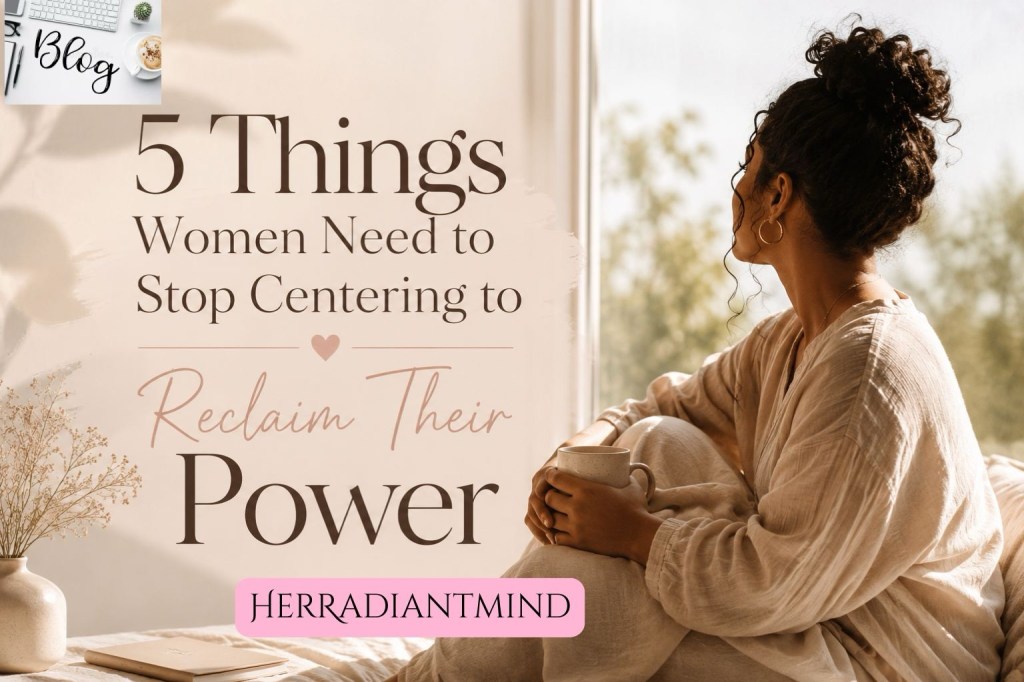
  • 5 Things Women Need to Stop Centering to Reclaim Their Power

    5 Things Women Need to Stop Centering to Reclaim Their Power

    You can love others deeply, care about what people think, desire a relationship, and still choose yourself.

    Last week, we explored the art of decentering—what it means to stop making everything outside of yourself the center of your life.

    This week, we’re taking that conversation deeper.

    Because sometimes, reclaiming your power isn’t about adding something new to your life. It’s about recognizing what has been taking up too much space in the first place.

    For many women, that space has been occupied by other people’s opinions, expectations, approval, relationships, and the pressure to constantly achieve.

    We learn to be dependable.
    We learn to be accommodating.
    We learn to anticipate everyone’s needs.
    We learn to keep the peace.
    We learn to be successful without making anyone uncomfortable.

    And somewhere along the way, we can become so focused on being everything for everyone else that we lose touch with ourselves.

    At first, it can look like strength.

    You’re the person everyone can count on. You’re caring, capable, responsible, successful, and always willing to show up.

    But eventually, you may find yourself asking:

    “What do I actually want?”

    Not what your family wants.
    Not what your partner wants.
    Not what society expects.
    Not what will make everyone else comfortable.

    What do I want?

    Reclaiming your power begins with asking that question—and being willing to listen to the answer.

    Here are five things many women need to stop centering in order to reconnect with themselves.

    1. Other People’s Opinions

    How much of your life is shaped by what you think other people will think?

    It can be subtle.

    You make a decision and immediately wonder whether people will approve.

    You share an idea but look for reassurance before trusting your own judgment.

    You choose something for yourself and feel compelled to explain or justify it.

    You may not even realize you’re doing it because seeking approval can become so automatic.

    But when you constantly center other people’s opinions, your life can slowly become a performance instead of an expression of who you are.

    Of course, connection matters. Humans are wired to belong.

    But there is a difference between considering other people’s perspectives and allowing their approval to determine your choices.

    When approval becomes your compass, you begin asking:

    “Will they approve of this?”

    Instead of:

    “Does this feel right for me?”

    Try this instead:

    • Pause before automatically seeking reassurance.
    • Notice your first instinct before asking everyone else what they think.
    • Give yourself permission to make decisions without over-explaining them.
    • Remember that disagreement does not automatically mean you made the wrong choice.

    You do not need everyone to understand your choices for those choices to be valid.

    2. The Need to Be Liked

    Being liked feels good.

    But constantly needing to be liked can become exhausting.

    Many women learn to shape themselves around what makes other people comfortable.

    They soften their opinions.
    They avoid difficult conversations.
    They say yes when they mean no.
    They overextend themselves to prove they are kind, helpful, dependable, or worthy.

    The problem isn’t kindness.

    The problem is when being liked requires you to abandon yourself.

    Because being liked isn’t the same as being respected.

    And being accepted by everyone often requires you to hide the parts of yourself that might challenge, disappoint, or inconvenience them.

    You are not here to be everyone’s favorite person.

    You are here to live honestly enough that the people who belong in your life can actually know you.

    Sometimes authenticity will make you less comfortable for others.

    That’s okay.

    You don’t need to be universally liked. You need to be deeply connected to yourself.

    3. External Expectations About Who You Should Be

    Many women grow up surrounded by messages about who they are supposed to become.

    Be beautiful—but don’t care too much about your appearance.

    Be successful—but don’t intimidate anyone.

    Be independent—but always be available.

    Be confident—but don’t be “too much.”

    Be nurturing—but don’t neglect your ambitions.

    Be strong—but don’t make other people feel weak.

    The expectations can be contradictory, impossible, and exhausting.

    Over time, they can become an invisible rulebook that tells you how to dress, speak, behave, succeed, love, age, parent, work, and live.

    And eventually, you may begin seeing yourself through the eyes of others instead of experiencing yourself from within.

    You might notice yourself:

    • Measuring your worth through appearance or achievement.
    • Choosing things based on how they will be perceived.
    • Comparing your life to someone else’s timeline.
    • Questioning whether you’re “enough.”
    • Feeling guilty when your choices don’t fit expectations.

    Decentering external expectations doesn’t mean rejecting beauty, ambition, relationships, or success.

    It means deciding which values are actually yours.

    Instead of asking:

    “Will this make me more acceptable?”

    Try asking:

    “Does this feel authentic to me?”

    Your worth was never dependent on how well you fit into someone else’s definition of who you should be.

    4. Romantic Relationships as the Source of Your Worth

    Romantic love can be beautiful.

    A healthy relationship can bring connection, companionship, support, growth, laughter, and joy.

    But when romantic love becomes the center of your identity or the primary source of your worth, you can slowly lose connection with yourself.

    Many women receive the message—directly or indirectly—that being chosen by a partner is a measure of success.

    That being in a relationship makes you more valuable.

    That finding “the one” should be the ultimate goal.

    That someone else’s love will finally make you feel complete.

    But here’s the truth:

    You were already whole before anyone chose you.

    When romantic relationships become the center of your life, you may find yourself:

    • Ignoring your own dreams and priorities to maintain a relationship.
    • Accepting less than you deserve because you’re afraid of starting over.
    • Losing touch with who you are outside of being someone’s partner.
    • Looking to another person to heal wounds that require your own care.
    • Measuring your life progress by your relationship status.

    Decentering romantic relationships does not mean rejecting love.

    It means creating a life that is meaningful, fulfilling, and connected—with or without a partner.

    It means asking:

    Who am I when I am not being chosen by someone else?

    What dreams, friendships, passions, and experiences matter to me?

    How can I choose myself while still loving someone deeply?

    A relationship should add to your life—not become the foundation of your entire identity.

    Healthy relationships aren’t about two people completing each other.

    They’re about two people who are connected to themselves choosing to share their lives.

    Your relationship status is part of your story. It is not a measure of your worth.

    5. Perfection and Constant Productivity

    Many women carry an invisible pressure to do everything well.

    Be productive.
    Be organized.
    Be emotionally available.
    Be successful.
    Keep everything together.

    And if you’re resting?

    You should probably be doing something else.

    Perfectionism can create a life where you’re constantly chasing an ever-moving definition of “enough.”

    You accomplish something, but immediately move the goalpost.

    You rest, but feel guilty.

    You make a mistake and criticize yourself more harshly than you would ever criticize someone else.

    You achieve something meaningful, but instead of celebrating it, you immediately wonder what’s next.

    But your worth was never meant to be measured by your output.

    You are a human being—not a productivity machine.

    Rest isn’t something you have to earn by exhausting yourself first.

    Instead of asking:

    “Did I do this perfectly?”

    Try asking:

    “Did I show up honestly and intentionally?”

    Growth doesn’t require perfection.

    It requires compassion, patience, and a willingness to keep becoming.

    A Client Story: The Woman Who Realized She Was Missing From Her Own Life

    One of my clients came to me feeling completely drained.

    She was the person everyone called when they needed something.

    Her family depended on her.
    Her coworkers trusted her.
    Her friends knew she would always show up.

    And she was proud of being that person.

    But underneath it all, she felt exhausted and disconnected.

    During one of our conversations, she said:

    “I don’t even know what I want anymore. I know what everyone else needs from me, but I don’t know what I need.”

    That moment was powerful.

    Because it revealed something so many women experience:

    She had spent so much time being everything for everyone else that she had forgotten to include herself.

    Through our work together, she began noticing the moments when she automatically put herself last.

    She practiced pausing before saying yes.

    She started setting small boundaries without over-explaining.

    She began making choices based on what felt aligned rather than what would earn approval.

    And slowly, something changed.

    She didn’t become a different person.

    She became more herself.

    She stopped asking:

    “Will everyone be okay with this?”

    And started asking:

    “Is this right for me?”

    That question changed everything.

    What Happens When You Start Reclaiming Your Power?

    Reclaiming your power isn’t about controlling everything around you.

    It isn’t about becoming selfish, disconnected, or indifferent to other people.

    It’s about reconnecting with yourself.

    And at first, that can feel uncomfortable.

    You may feel guilty when you set a boundary.

    You may feel strange when you say no.

    You may worry that people will see you differently.

    You may even question yourself because you’re no longer following the patterns that once kept everyone comfortable.

    But discomfort doesn’t always mean you’re doing something wrong.

    Sometimes, it simply means you’re doing something new.

    Over time, you may notice:

    • You trust yourself more.
    • Your decisions become clearer.
    • Your relationships become more honest.
    • Your boundaries become easier to communicate.
    • You feel less dependent on external validation.
    • Your life begins to feel more like yours.

    That’s what reclaiming your power can look like.

    Not becoming harder.

    Not caring less.

    Coming home to yourself.

    Small Ways to Start Choosing Yourself Again

    You don’t need to transform your entire life overnight.

    Start small.

    Try:

    • Pausing before automatically saying yes.
    • Giving yourself permission to rest without earning it.
    • Noticing when you’re seeking approval.
    • Making one choice each day based on what you genuinely want.
    • Practicing expressing your needs without apologizing for having them.
    • Spending time doing things that have nothing to do with productivity.
    • Asking yourself, “What do I need right now?” and actually listening to the answer.

    Small moments of self-trust build a stronger relationship with yourself.

    And that relationship matters.

    Because the more connected you are to yourself, the less likely you are to abandon yourself simply to keep someone else comfortable.

    You Don’t Have to Shrink Yourself to Be Loved

    Many women carry the belief that being easier, quieter, more accommodating, or less demanding makes them more worthy of love.

    But real connection doesn’t require you to disappear.

    The right relationships don’t ask you to abandon yourself.

    They make room for your voice.

    Your needs.

    Your boundaries.

    Your dreams.

    Your growth.

    You are allowed to take up space in your own life.

    You are allowed to change your mind.

    You are allowed to disappoint people.

    You are allowed to want something different.

    You are allowed to choose yourself.

    Because the goal was never to become someone everyone approves of.

    The goal is to become someone you can trust.

    And maybe that tired, disconnected feeling you’ve been carrying isn’t a sign that something is wrong with you.

    Maybe it’s an invitation.

    An invitation to slow down.

    To listen.

    To reconnect.

    To come back to yourself.

    To choose yourself—not once, but again and again.

    Because your power was never gone.

    You were simply taught to place it everywhere except within yourself.

    Now, you get to bring it home.

    A Question to Carry With You

    As you move through this week, ask yourself:

    “Where in my life am I making someone or something else more important than my relationship with myself?”

    You don’t need to have the answer immediately.

    Just notice.

    Awareness is where change begins.

    And sometimes, reclaiming your power starts with one quiet decision:

    I will no longer abandon myself to be accepted, loved, or enough.

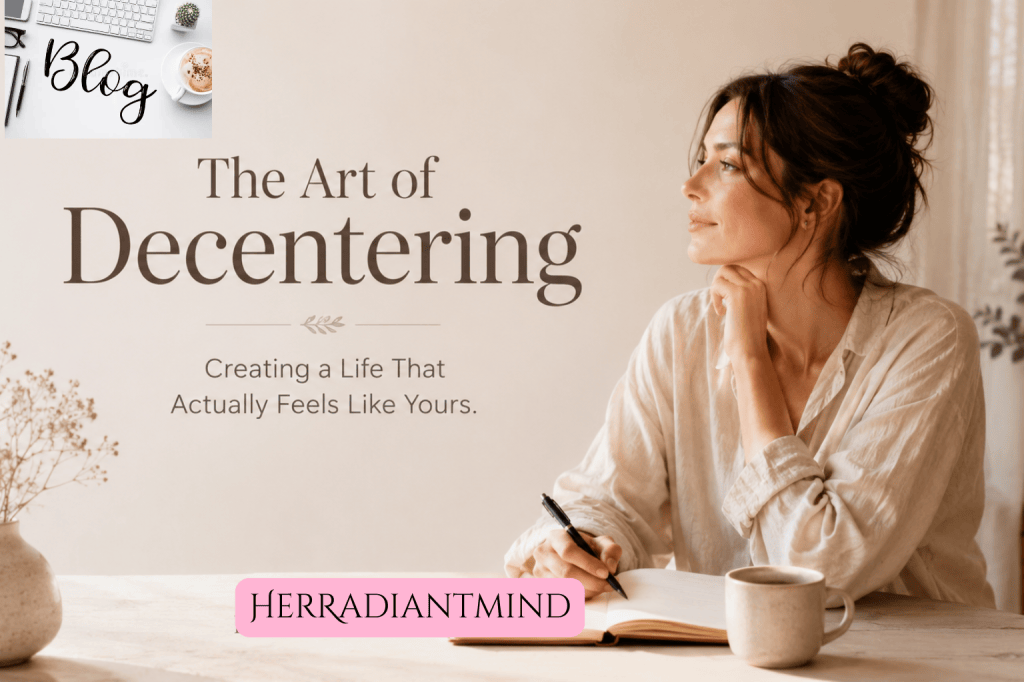
  • The Art of Decentering: Creating a Life That Actually Feels Like Yours

    The Art of Decentering: Creating a Life That Actually Feels Like Yours

    What If the Missing Person in Your Life Is You?

    One of the most common things I hear from women is this:

    “I don’t know who I am anymore.”

    Not because they’ve failed.

    Not because they’re weak.

    But because they’ve spent years becoming exactly who everyone else needed them to be.

    They’ve become the dependable one.

    The peacemaker.

    The caregiver.

    The woman who anticipates everyone else’s needs before anyone has to ask.

    From the outside, their lives often look successful.

    They have careers.

    Families.

    Friendships.

    Responsibilities.

    But beneath all of that is a quiet grief.

    They’ve become so skilled at managing everyone else’s emotional world that they’ve lost touch with their own.

    Psychologists sometimes refer to this as self-abandonment—a pattern of repeatedly dismissing your own needs, emotions, and values to maintain harmony, gain approval, or avoid conflict.

    It doesn’t happen overnight.

    It happens one small compromise at a time.

    One “yes” when you meant no.

    One boundary you ignored.

    One dream you postponed.

    Until one day you realize you’re living a life that looks good from the outside but doesn’t quite feel like yours on the inside.

    That is where decentering begins.

    Not as an act of selfishness.

    But as an act of remembering.

    What Does It Mean to Decenter?

    Decentering means intentionally removing other people’s expectations, opinions, needs, or approval from the center of your identity and decision-making—and returning yourself to that place.

    It isn’t about caring less about others.

    It’s about caring about yourself enough that you no longer disappear while caring for everyone else.

    Healthy relationships are built on connection—not self-erasure.

    One concept in family psychology, called self-differentiation, describes the ability to remain connected to the people you love without losing your own thoughts, emotions, values, and identity.

    Highly differentiated people can say:

    “I love you, and I still disagree.”

    “I care about you, and I still need this boundary.”

    “Your feelings matter, but so do mine.”

    That is what emotional maturity looks like.

    Not emotional distance.

    Why Women So Often Lose Themselves

    This pattern isn’t simply a personality trait.

    It’s learned.

    Many girls receive subtle messages throughout childhood:

    Be nice.

    Don’t be difficult.

    Don’t upset people.

    Be grateful.

    Keep the peace.

    Smile.

    Help.

    These messages become internalized.

    Over time, your brain begins associating acceptance with self-sacrifice.

    According to attachment theory, our earliest relationships teach us what feels necessary to remain connected.

    If love or approval felt inconsistent, many people learn to become hyper-aware of other people’s moods, needs, and expectations.

    As adults, this may look like:

    • People-pleasing
    • Overexplaining
    • Fear of disappointing others
    • Difficulty saying no
    • Feeling responsible for everyone’s emotions

    Your nervous system isn’t trying to make your life harder.

    It’s trying to keep you safe using strategies that once worked.

    The beautiful news is that the brain is capable of change.

    Thanks to neuroplasticity, repeated healthy choices gradually build new emotional habits.

    Self-trust can be learned.

    Boundaries can become easier.

    Choosing yourself can begin to feel safe.

    The Psychology of External Validation

    Humans are wired for belonging.

    Our brains evolved in communities where social rejection could threaten survival.

    That’s why approval feels rewarding.

    When someone praises us or accepts us, the brain releases dopamine—the neurotransmitter associated with motivation and reward.

    There’s nothing wrong with enjoying approval.

    The problem begins when approval becomes your primary source of worth.

    Instead of asking:

    “What feels true for me?”

    You begin asking:

    “What will make everyone else happy?”

    Your internal compass slowly becomes quieter than the voices around you.

    Psychologists call this having an external locus of evaluation—looking outside yourself to determine whether your choices, feelings, or identity are acceptable.

    Decentering helps you strengthen your internal locus of evaluation, where your values—not other people’s opinions—become your guide.

    When Your Nervous System Is Always Watching Everyone Else

    Have you ever walked into a room and immediately noticed everyone’s mood?

    Did someone seem upset?

    Are they disappointed?

    Are they angry with me?

    Many women spend years unconsciously scanning their environment for emotional cues.

    This is called hypervigilance, and it’s common among people who grew up feeling responsible for keeping relationships stable.

    When your nervous system is constantly monitoring everyone else, your own body becomes background noise.

    You stop noticing:

    Your fatigue.

    Your hunger.

    Your frustration.

    Your sadness.

    Your joy.

    This reduced awareness of your body’s internal signals is called low interoceptive awareness.

    Rebuilding that connection starts with simple questions:

    What am I feeling?

    What do I need?

    What is my body trying to tell me right now?

    Those questions may sound simple.

    For many women, they’re revolutionary.

    Signs You’re Living Off-Center

    Living off-center rarely looks dramatic.

    Instead, it quietly steals your energy.

    You may notice:

    • You apologize for having needs.
    • You replay conversations for hours afterward.
    • You struggle to answer, “What do you want?”
    • Rest feels uncomfortable or undeserved.
    • You constantly seek reassurance before making decisions.
    • You feel guilty when someone is disappointed with you.
    • You feel emotionally exhausted despite “doing everything right.”

    These aren’t signs that you’re failing.

    They’re signs your attention has been directed outward for a very long time.

    The Hidden Stress of Constant Self-Monitoring

    Every decision requires mental energy.

    When you’re constantly asking yourself:

    “Will they approve?”

    “Will this upset someone?”

    “How should I say this?”

    Your brain carries an enormous cognitive load.

    Decision-making becomes exhausting because you’re processing your own needs and everyone else’s possible reactions at the same time.

    No wonder so many women describe feeling mentally tired.

    Decentering reduces that burden.

    Not because life becomes easier.

    But because you’re no longer carrying responsibilities that were never yours.

    Why Boundaries Feel So Uncomfortable

    Many women assume boundaries feel wrong because they’re doing something wrong.

    Actually, psychology tells us something different.

    When you’ve spent years equating self-sacrifice with love, boundaries create temporary discomfort because they’re unfamiliar—not because they’re unhealthy.

    Your nervous system often interprets unfamiliarity as danger.

    That’s why saying no can create guilt, anxiety, or the urge to explain yourself.

    Those feelings are normal.

    You don’t need to obey them.

    Each healthy boundary teaches your brain a new lesson:

    “I can disappoint someone and still be safe.”

    That is how emotional resilience grows.

    Creating a Life That Reflects You

    One of the strongest predictors of psychological well-being comes from Self-Determination Theory, which suggests people flourish when three needs are consistently met:

    • Autonomy — feeling free to make choices aligned with your values.
    • Competence — believing you can influence your own life.
    • Connection — experiencing healthy relationships where you can be yourself.

    Notice that connection is only one part of the equation.

    You also need autonomy.

    You need a life that reflects your own values—not only everyone else’s expectations.

    Gentle Ways to Begin Decentering

    This isn’t about becoming less compassionate.

    It’s about becoming more connected to yourself.

    Practice asking:

    • What do I want?
    • What does my body need today?
    • Am I acting from love—or fear?
    • Would I make this same decision if nobody judged me?
    • Am I seeking connection, or approval?

    Small moments of honesty create profound change over time.

    A Quiet Return to Yourself

    Decentering isn’t loud.

    It rarely happens through dramatic life changes.

    Instead, it happens in ordinary moments.

    You pause before saying yes.

    You stop apologizing for resting.

    You trust your own opinion before asking for someone else’s.

    You allow people to feel disappointed without rushing to fix it.

    Little by little, your nervous system begins to learn a new truth:

    You do not have to abandon yourself to belong.

    And perhaps that’s what coming home to yourself really means.

    Not becoming someone new.

    But remembering the woman who was always there—beneath the expectations, the people-pleasing, and the pressure to be everything for everyone.

    She has been waiting patiently.

    Now it’s your turn to choose her.

    If you’ve been nodding along, it’s time to take the next step. The Radiant Reset is my 12-week coaching program designed to help women just like you reclaim energy, confidence, and resilience. 

    Thank you for spending this time with me.

    Remember—healing is not linear, and growth doesn’t have to be loud to be powerful.

    Keep choosing yourself, one gentle moment at a time.💖

    Until next time, stay radiant and take tender care of your beautiful mind and body.

    With love,

    — Christabel, HerRadiantMind

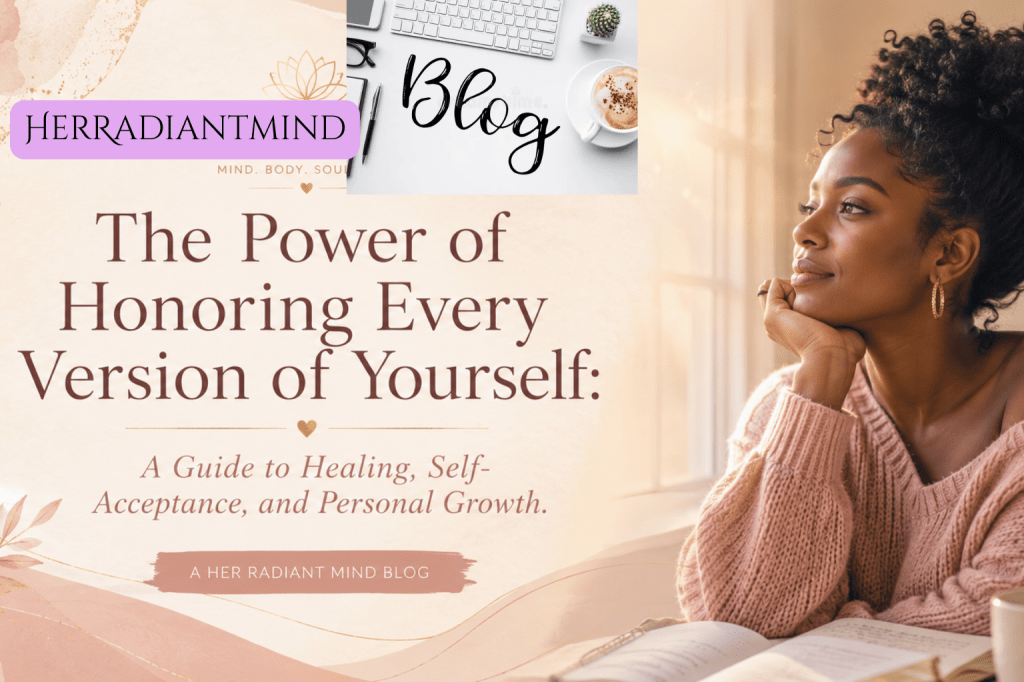
  • The Power of Honoring Every Version of Yourself: A Guide to Healing,Self-Acceptance, and Personal Growth

    The Power of Honoring Every Version of Yourself: A Guide to Healing,Self-Acceptance, and Personal Growth

    Lately, I’ve been thinking about the versions of me I don’t fully recognize anymore.

    The one who stayed quiet when she had something to say.

    The one who held on longer than she should have.

    The one who kept giving, hoping that eventually it would feel like enough.

    For a long time, I didn’t understand her.

    If anything, I judged her.

    I thought she should have known better. I thought she made things harder than they needed to be. I thought growth meant becoming nothing like her.

    But the more I’ve slowed down and really looked at her, the more something shifted.

    She wasn’t failing.

    She was trying.

    And this version of me—the one who sees things more clearly now—isn’t better because she’s perfect.

    She simply knows more.

    That realization changes how you see everything.

    Why It’s So Hard to Accept Who You Used to Be

    There’s a quiet pressure to outgrow your past in a way that almost feels like you have to erase it.

    To become “better.” Stronger. More aware.

    And while growth is important, the way we often approach it can create distance instead of healing.

    We look back and say:

    • “I can’t believe I accepted that.”
    • “I should have left sooner.”
    • “That wasn’t really me.”

    But it was you.

    And when you speak about your past self with criticism, you create a subtle disconnection from your own story.

    Your mind often tries to protect you from painful experiences by separating you from them. It becomes easier to criticize who you were than to understand what that version of you was experiencing.

    But growth doesn’t come from rejection.

    It comes from integration.

    The Quiet Damage of Self-Judgment

    When you constantly criticize who you used to be, it doesn’t stay in the past.

    It follows you into the present.

    It can show up as:

    • Doubting your decisions
    • Overthinking your choices
    • Seeking constant reassurance
    • Questioning whether you can trust yourself

    Because somewhere inside, there may be a belief saying:

    “What if I get it wrong again?”

    That’s what self-judgment does.

    It weakens self-trust.

    Not because you are incapable, but because you’ve taught yourself that your past choices are something to fear instead of something to learn from.

    Self-acceptance doesn’t mean agreeing with everything you’ve done.

    It means understanding the version of you who made those choices.

    And that understanding creates trust.

    A Truth That Changes How You See Your Growth

    You made the best decisions you could with what you knew at the time.

    Not the best decisions possible.

    The best decisions available to you then.

    There’s a difference.

    The person you were back then didn’t have the awareness you have today.

    She didn’t have your boundaries.

    She didn’t have your confidence.

    She didn’t have your clarity.

    She was working with what she had.

    And that version of you deserves compassion—not dismissal.

    A Story That Might Feel Familiar

    There’s a version of this story many people experience.

    Someone stays in a situation that drains them—a relationship, a job, or a dynamic where they continue giving more than they receive.

    They tell themselves they’re being patient. Understanding. Loyal.

    But underneath it all, they’re exhausted.

    Later, when they finally step away, everything becomes clearer.

    The signs they ignored.

    The boundaries they didn’t set.

    The moments they abandoned themselves to keep the peace.

    And then comes the question:

    “Why didn’t I leave sooner?”

    But here’s what often gets missed:

    At that time, they didn’t fully understand their needs. They didn’t yet know how to choose themselves. They didn’t have the emotional tools they have now.

    So they stayed.

    Not because they were weak.

    Because they were still learning.

    And that matters.

    Honoring Your Past Self Without Staying Stuck

    Honoring your past self doesn’t mean excusing everything or staying attached to what happened.

    It means recognizing the effort behind your choices—even when the outcome wasn’t what you needed.

    It sounds like:

    • “I understand why I made that choice.”
    • “I didn’t have the awareness I have now.”
    • “I was doing what I thought was right at the time.”

    This shift may seem small, but it can be deeply transformative.

    Instead of creating separation between who you were and who you are, you create connection.

    And connection is where healing begins.

    How Self-Acceptance Supports Personal Growth

    Many people believe being hard on themselves is what motivates them to improve.

    But constant self-criticism often keeps people trapped in cycles of shame and doubt.

    Self-compassion allows you to respond to yourself with understanding rather than punishment.

    Why does this matter?

    Because you stop wasting energy fighting yourself.

    When you accept your past, you stop seeing it as something you need to fix.

    You begin to see it as something that shaped you.

    And that’s where meaningful personal growth begins.

    Small Shifts That Change Your Relationship With Yourself

    You don’t have to completely transform your mindset overnight.

    Small, intentional shifts can change the way you relate to yourself.

    1. Ask Better Questions

    Instead of asking:

    “Why did I do that?”

    Try asking:

    “What did I need at that time?”

    This moves you from blame into understanding.

    2. Speak to Yourself With Compassion

    You wouldn’t expect someone to know something they had never learned.

    You deserve that same patience.

    3. Notice Your Growth in Real Time

    Growth doesn’t always look dramatic.

    Sometimes it looks like:

    • Pausing before reacting
    • Setting a boundary without guilt
    • Recognizing a pattern sooner
    • Choosing yourself in small ways

    These moments matter.

    4. Let Your Past Inform You, Not Define You

    Your past is part of your story.

    But it is not your identity.

    There is space between those two things.

    Emotional Healing Is Not Linear

    Some days, you’ll feel clear, grounded, and connected to who you are becoming.

    Other days, old thoughts or familiar patterns may return.

    That doesn’t mean you’ve failed.

    It means you are human.

    Healing and emotional resilience are not about never struggling again.

    They’re about learning how to respond to yourself differently when challenges arise.

    Every time you choose understanding over judgment, you strengthen a new relationship with yourself.

    Rebuilding Self-Trust From the Inside Out

    Self-trust isn’t built by always making perfect choices.

    It’s built by how you treat yourself when things don’t go as planned.

    When you stop attacking your past…

    When you start listening to your present…

    When you allow yourself to learn without shame…

    You create emotional safety within yourself.

    And from that place, your decisions become clearer.

    Not because life becomes easier—but because you are no longer working against yourself.

    You Are Allowed to Evolve Without Erasing Yourself

    There is no version of you that had everything figured out.

    Not before.

    Not now.

    And that’s okay.

    Some versions of you were surviving.

    Some were coping.

    Some were learning.

    And this version of you?

    She is learning how to hold all of those experiences with compassion.

    Without turning them into something to be ashamed of.

    A Grounded Way to Move Forward

    If you’ve been feeling disconnected from parts of your past or frustrated with who you used to be, try this:

    Slow down.

    Look at yourself with honesty—but also kindness.

    Not the kind of honesty that criticizes.

    The kind that understands.

    That version of you didn’t have what you have now.

    But she still showed up.

    She still tried.

    She still carried you here.

    And that counts for something.

    You don’t have to reject her to grow.

    You don’t have to erase your past to become someone new.

    You can hold both.

    You can acknowledge what didn’t work while still respecting the person who lived through it.

    Maybe that is what self-acceptance truly means:

    Not becoming someone completely different…

    But learning how to stand beside every version of yourself—and not turn away.

    If you’ve been nodding along, it’s time to take the next step. The Radiant Reset is my 12-week coaching program designed to help women just like you reclaim energy, confidence, and resilience. 

    Thank you for spending this time with me.

    Remember—healing is not linear, and growth doesn’t have to be loud to be powerful.

    Keep choosing yourself, one gentle moment at a time.💖

    Until next time, stay radiant and take tender care of your beautiful mind and body.

    With love,

    — Christabel, HerRadiantMind

  • Why You Don’t Have to Be Okay All the Time: Breaking Free from Toxic Positivity and Embracing Emotional Wellness

    Why You Don’t Have to Be Okay All the Time: Breaking Free from Toxic Positivity and Embracing Emotional Wellness

    Have you ever noticed how quickly the words “I’m fine” leave your mouth?

    Someone asks how you’re doing.

    You smile.

    You say the expected words.

    And the conversation moves on.

    Meanwhile, beneath that smile, you’re carrying stress, disappointment, overwhelm, grief, burnout, or simply the weight of being human.

    Many women have become experts at appearing okay.

    We show up.

    We keep going.

    We take care of everyone else.

    We meet deadlines, manage responsibilities, and push through exhaustion.

    From the outside, it may look like strength.

    But inside, we’re often running on empty.

    The truth is, many of us were never taught how to acknowledge difficult emotions. We were taught how to hide them.

    We learned that being positive was admirable.

    That being resilient meant never breaking down.

    That asking for help was a sign of weakness.

    That if we were grateful enough, motivated enough, or optimistic enough, difficult emotions would simply disappear.

    But emotions don’t disappear because they’re ignored.

    They wait.

    And over time, the effort it takes to constantly appear okay can become emotionally exhausting.

    What if real emotional wellness isn’t about always feeling positive?

    What if true strength is allowing yourself to be honest about what you’re feeling?

    Not because you’re weak.

    But because you’re human.

    Why High-Achieving Women Struggle to Admit They’re Not Okay

    For many women, emotional suppression doesn’t begin as a conscious choice. It develops slowly through conditioning and environment.

    You may have been:

    • Praised for being “the strong one”
    • Rewarded for staying calm and composed
    • Encouraged to “stay positive” no matter what
    • Taught that other people’s needs come first
    • Made to feel that emotional expression is “too much”

    Over time, these experiences shape a belief system:

    “If I stay strong, I will be valued. If I struggle, I will burden others.”

    This creates a cycle where emotional honesty feels unsafe or inconvenient.

    So instead, you push through.

    You normalize exhaustion.

    You downplay your stress.

    You convince yourself that you’ll rest later—once everything is done.

    But “later” rarely comes.

    And your emotional needs stay quietly unmet.

    The Myth of Always Being Okay

    We live in a culture that often confuses positivity with emotional health.

    Messages like:

    • “Good vibes only”
    • “Just think positive”
    • “It could be worse”
    • “Stay strong”

    may sound encouraging, but they can unintentionally invalidate real emotional experiences.

    This is where toxic positivity begins.

    Toxic positivity is the pressure to maintain a positive mindset even when you’re hurting, overwhelmed, or struggling emotionally.

    The problem is not positivity itself.

    The problem is when positivity is used to avoid emotional truth.

    Because emotions are not obstacles to happiness.

    They are part of being alive.

    What Happens When You Suppress Your Emotions

    Emotions don’t disappear when they are ignored.

    They move inward.

    Psychologically and physiologically, emotional suppression can increase stress in the body and disrupt emotional regulation.

    You might notice this showing up as:

    • Feeling emotionally drained for no clear reason
    • Becoming easily irritated or overwhelmed
    • Numbness or disconnection from yourself
    • Difficulty relaxing, even during rest
    • Overthinking or mental fatigue

    This isn’t a personal flaw.

    It’s your nervous system communicating with you.

    Emotions are not random—they are signals.

    • Sadness often signals a need for rest or support
    • Anger often signals a boundary has been crossed
    • Anxiety often signals perceived lack of safety or control
    • Overwhelm often signals too much demand, too little space

    When these signals are ignored, the body continues to speak—just in louder ways.

    The Quiet Harm of Toxic Positivity

    Toxic positivity rarely shows up in obvious ways.

    It often sounds like care.

    But underneath, it can feel like dismissal.

    Phrases like:

    • “Everything happens for a reason”
    • “Just be grateful”
    • “Don’t think about it too much”
    • “Stay positive”

    can unintentionally communicate:

    “Your current emotions are not acceptable.”

    And when that message is internalized, it often becomes self-talk:

    • “I shouldn’t feel like this.”
    • “Other people are handling things better.”
    • “I need to get it together.”
    • “Why am I not stronger?”

    This internal pressure can become heavier than the emotion itself.

    Because now you’re not only carrying what you feel—

    you’re also judging yourself for feeling it.

    A Simple Real-Life Moment

    Imagine this:

    You’ve had a long, demanding day.

    You sit in your car before going inside.

    The engine is off.

    The silence is loud.

    You feel tired—not just physically, but emotionally.

    And your mind immediately starts:

    • “It wasn’t even that bad.”
    • “Other people have it worse.”
    • “I need to stop overreacting.”

    So you inhale, reset your face, and go inside.

    Functioning.

    Smiling.

    Continuing.

    Now imagine a small shift instead.

    You pause.

    And you allow one honest sentence:

    “This day felt heavy.”

    No fixing. No judgment. No explanation.

    Just truth.

    And in that moment, something inside softens.

    Not because anything changed externally—

    but because you stopped abandoning yourself internally.

    Emotional Validation: What It Really Means

    Emotional validation is the practice of acknowledging your feelings without immediately trying to change them.

    It sounds like:

    • “This is hard right now.”
    • “It makes sense I feel this way.”
    • “I’m allowed to feel this.”
    • “I don’t need to rush past this feeling.”

    Validation is not about staying stuck.

    It’s about staying connected.

    Research in emotional regulation shows that when emotions are acknowledged, they tend to move through more effectively. When they are suppressed, they often linger longer and intensify.

    Validation tells your nervous system:

    “You are safe to feel this.”

    And safety is what allows regulation to happen.

    The Connection Between Burnout and Emotional Suppression

    Burnout is often seen as purely physical exhaustion.

    But emotionally, it runs deeper.

    Many people experiencing burnout have spent long periods ignoring their internal signals in order to meet external demands.

    This creates:

    • Emotional fatigue
    • Reduced stress tolerance
    • Loss of motivation
    • Detachment from joy or meaning
    • A sense of emotional “flatness”

    Burnout is not simply about doing too much.

    It is often about feeling too much—and having nowhere safe to put it.

    Gentle Ways to Support Your Emotional Wellness

    You don’t need a complete life overhaul to begin healing your relationship with your emotions.

    Small, consistent practices matter most.

    1. Name what you feel

    Even one word helps:

    “tired,” “sad,” “overwhelmed,” “irritated”

    2. Lower the emotional pressure

    Not every feeling needs to be fixed today.

    3. Speak to yourself with compassion

    Ask:

    “What would I say to someone I love right now?”

    4. Create small moments of regulation

    • A quiet walk
    • Deep breathing
    • A pause without stimulation
    • A warm drink in silence

    5. Let emotions exist without urgency

    You don’t have to rush your healing.

    How Self-Compassion Changes Everything

    Self-compassion is not about avoiding responsibility or ignoring growth.

    It is about shifting from self-criticism to self-understanding.

    Instead of:

    • “I shouldn’t feel this way”

    You begin to say:

    • “This is what I’m feeling right now, and it makes sense.”

    This shift changes how you relate to yourself internally.

    And over time, it changes how you move through life externally.

    Because when you are no longer fighting your emotions, you have more energy to understand them.

    Letting Go of the “Always Positive” Identity

    If you’ve been the strong, positive, or reliable one for a long time, this shift can feel unfamiliar.

    You may worry:

    “If I stop being positive, will everything fall apart?”

    But emotional honesty does not take away your strength.

    It refines it.

    True positivity is not forced.

    It returns naturally when it is not being used to cover emotional pain.

    You are not becoming a negative person.

    You are becoming an honest one.

    Mental Health Is Not Meant to Look Perfect

    There is no perfect emotional state.

    Mental health is not a constant feeling of happiness or calm.

    It includes:

    • Emotional highs and lows
    • Moments of uncertainty
    • Days of rest
    • Times of overwhelm
    • Periods of healing and rebuilding

    And still—within all of that—continuing to show up for yourself in small, meaningful ways.

    That is what emotional resilience actually looks like.

    Not perfection.

    Presence.

    A Grounding Reminder to Carry With You

    If today feels heavy, you don’t need to fix it immediately.

    You don’t need to justify it.

    You don’t need to compare it.

    You don’t need to turn it into a lesson.

    You can simply say:

    “This is where I am right now.”

    And let that be enough.

    Because sometimes, the most powerful form of healing is not changing how you feel—

    but finally allowing yourself to feel it without abandonment.

    And in that space, something quietly shifts:

    You come back to yourself.

    If you’ve been nodding along, it’s time to take the next step. The Radiant Reset is my 12-week coaching program designed to help women just like you reclaim energy, confidence, and resilience. 

    Thank you for spending this time with me.

    Remember—healing is not linear, and growth doesn’t have to be loud to be powerful.

    Keep choosing yourself, one gentle moment at a time.💖

    Until next time, stay radiant and take tender care of your beautiful mind and body.

    With love,

    — Christabel, HerRadiantMind

  • Why You Feel Guilty Choosing Yourself  (And How to Finally Let It Go)

    Why You Feel Guilty Choosing Yourself  (And How to Finally Let It Go)

    If you’ve ever felt guilty for choosing yourself… you’re not alone.

    You say yes… when every part of you wants to say no.

    You reply to the message.

    You show up.

    You give your time, your energy, your presence—again.

    And for a moment, it feels easier.

    No tension. No awkwardness. No guilt.

    But later?

    You feel it.

    The heaviness.

    The quiet resentment.

    The subtle disconnection from yourself.

    And then that thought slips in—soft, but piercing:

    “Why do I keep abandoning myself like this?”

    Here’s the part no one really explains:

    That guilt you feel when you choose yourself?

    It didn’t come from nowhere.

    And it’s not proof that you’re selfish.

    It’s something you learned.

    Let’s gently unpack that.

    ❓ Why Do I Feel Guilty for Choosing Myself?

    Feeling guilty for choosing yourself often comes from learned patterns like people-pleasing, fear of disappointing others, and nervous system responses tied to connection and safety.

    It’s not a sign you’re doing something wrong.

    It’s a sign you’re doing something different.

    The Real Reason You Feel Guilty for Choosing Yourself

    Guilt isn’t always a sign you’ve done something wrong.

    Sometimes… it’s a sign you’ve stepped outside what’s familiar.

    If you grew up being the “good one,” the helper, the peacemaker—then choosing yourself can feel like breaking an unspoken rule.

    You may have learned:

    • Keep the peace
    • Don’t upset anyone
    • Be easy to love
    • Don’t need too much

    Maybe no one said it directly.

    But you felt it.

    Love felt safer when you were helpful.

    Approval came when you were agreeable.

    Connection felt stronger when you put yourself second.

    So now, when you try to rest… set a boundary… say no…

    It doesn’t feel calm.

    It feels wrong.

    Not because it is—

    but because it’s unfamiliar.

    Why You Feel Guilty Setting Boundaries (Even When You Need Them)

    Here’s where psychology quietly supports what you’ve been feeling all along:

    Your brain is wired for safety—not fulfillment.

    So when you step outside an old pattern—like setting a boundary—your brain reads it as a potential threat to connection.

    And to your nervous system, connection equals safety.

    So your body responds:

    • Your chest tightens
    • Your thoughts spiral
    • The guilt rises
    • You feel the urge to “fix it”

    That guilt?

    It’s not your truth.

    It’s your nervous system asking:

    “Are we still safe if we do this?”

    Of course it feels intense.

    You’re not doing something wrong.

    You’re doing something new.

    You’re Not Selfish—You’re Just Not Used to It

    Choosing yourself isn’t selfish.

    But if you’ve spent years putting yourself last… it will feel that way at first.

    It’s like wearing shoes that never quite fit—uncomfortable, but familiar.

    Now you’re trying something different.

    Something that actually supports you.

    And suddenly it feels…

    Too firm.

    Too quiet.

    Too unfamiliar.

    So your mind jumps in:

    “Am I being difficult?”

    “Is this too much?”

    “What if they’re upset?”

    But here’s a truth many people avoid:

    People who are used to you having no boundaries… will notice when you create them.

    Their discomfort doesn’t mean you’re wrong.

    It means the dynamic is changing.

    The Hidden Cost of Always Saying Yes

    At first, it seems harmless.

    Being available. Being kind. Being “easy.”

    But over time, something builds beneath the surface.

    Resentment.

    And resentment doesn’t come from being selfish.

    It comes from being too selfless for too long.

    You may start to feel:

    • Drained, even after resting
    • Irritated by small things
    • Disconnected from yourself
    • Like you’re constantly giving, but rarely receiving

    And slowly, you stop asking:

    “What do I need?”

    The Shift (It’s Subtle, But It Changes Everything)

    The first time you choose yourself, it might not feel empowering.

    It might feel uncomfortable.

    Guilty.

    Unsettling.

    But underneath all of that?

    There’s something quieter.

    Something steady.

    Peace.

    And that’s how you know you’re moving in the right direction.

    The guilt may be loud—

    but the peace is honest.

    Why Letting Go of Guilt Feels So Hard

    Because this isn’t just about behavior.

    It’s about identity.

    If you’ve always been:

    • The strong one
    • The reliable one
    • The one everyone leans on

    Then choosing yourself raises a deeper question:

    “Who am I if I’m not that person anymore?”

    Growth can feel like loss before it feels like freedom.

    You’re not just letting go of guilt.

    You’re letting go of a version of yourself that kept you safe.

    And that takes time.

    How to Stop Feeling Guilty for Choosing Yourself

    You don’t need to rush this.

    You just need to begin—gently.

    1. Notice the guilt—without obeying it

    Guilt can exist without controlling your actions.

    2. Pause before you automatically say yes

    Even a few seconds creates space for a different choice.

    3. Remind yourself what’s true

    • I’m allowed to rest
    • I can say no
    • I don’t have to abandon myself to be loved

    4. Expect some discomfort

    Discomfort isn’t danger. It’s growth in motion.

    5. Build self-trust slowly

    Every time you honor yourself, you reinforce:

    “I’ve got me.”

    You Don’t Have to Earn Your Worth

    Your worth was never meant to be something you prove.

    Not through overgiving.

    Not through exhaustion.

    Not through being everything for everyone.

    It’s something you carry.

    Even when you say no.

    Even when you rest.

    Even when you choose yourself.

    A Gentle Truth to Sit With

    If choosing yourself feels wrong…

    It’s not because you’re doing life wrong.

    It’s because you’re finally doing it differently.

    And different takes getting used to.

    You’re Allowed to Take Up Space

    Not just when it’s convenient.

    Not just when it keeps everyone else comfortable.

    But fully.

    Honestly.

    Without apology.

    You’re allowed to rest.

    To say no.

    To grow.

    Without guilt being the price you pay.

    ❓ FAQs

    Is it normal to feel guilty when setting boundaries?

    Yes. If you’re used to prioritizing others, guilt is a natural response. It doesn’t mean you’re wrong—it means you’re changing patterns.

    How do I stop feeling guilty for saying no?

    Pause before responding, remind yourself your needs matter, and allow the discomfort without immediately fixing it.

    Does feeling guilty mean I’m selfish?

    No. Guilt often shows up when you step outside old roles. Choosing yourself is not selfish—it’s necessary.

    Ready to Go Deeper?

    If this stirred something in you—if you’re tired of feeling guilty for simply honoring your needs—you don’t have to figure it out alone.

    Inside Her Radiant Mind, this is the work we do together.

    We gently untangle the patterns, rebuild your self-trust, and help you feel safe choosing yourself—without guilt running the show.

    Because that kind of peace?

    It’s not out of reach.

    It’s something you can come home to. 

    Thank you for spending this time with me.

    Remember—healing is not linear, and growth doesn’t have to be loud to be powerful.

    Keep choosing yourself, one gentle moment at a time.💖

    Until next time, stay radiant and take tender care of your beautiful mind and body.

    With love,

    — Christabel, HerRadiantMind

  • The Hidden Grief of Outgrowing People, Places, and Versions of You

    The Hidden Grief of Outgrowing People, Places, and Versions of You

    You don’t always notice the moment it happens.

    There’s no loud goodbye.

    No big fight.

    No clear ending.

    Just a quiet shift.

    One day, a place that used to feel like home starts to feel… off.

    A conversation that once lit you up now drains you.

    A version of yourself you once fought so hard to become suddenly feels too small.

    And that’s when it lands—soft, but undeniable:

    Something is ending.

    But no one really talks about this kind of ending.

    Because this isn’t a loss you can point to.

    It’s the invisible, often unspoken grief of outgrowing people, places… and even yourself.

    The Grief No One Sees

    We’re taught how to deal with obvious loss.

    Breakups.

    Death.

    Major life changes.

    There are rituals for those.

    People show up. They bring comfort. There’s space to grieve.

    But what about the losses that don’t have a name?

    The friend you slowly stop relating to.

    The city that no longer feels like yours.

    The version of you that once kept you safe… but now feels like a cage.

    There’s no ceremony for that.

    No one says, “I’m sorry you outgrew your old life.”

    So you carry it quietly.

    And here’s the part that can feel confusing:

    Your life might actually be getting better.

    You’re healing.

    Growing.

    Becoming more you.

    And still… it hurts.

    That’s not a contradiction.

    That’s grief.

    Why Growth Feels Like Loss

    Growth is often sold to us as exciting.

    A fresh start. A better mindset. A new life.

    But what’s rarely said is this:

    Every level of growth requires a level of letting go.

    And your brain doesn’t always welcome that.

    It’s wired for familiarity, not fulfillment.

    It prefers what is known over what is aligned.

    So when your inner world begins to shift before your outer world catches up, you feel it.

    That tension.

    That discomfort.

    That quiet pull backward.

    You might find yourself missing things you’ve already outgrown.

    Questioning decisions that once felt clear.

    Feeling anxious in moments that should feel freeing.

    Not because you’re doing something wrong…

    But because you’re stepping into something new—and your system is still adjusting.

    Growth stretches you.

    And stretching, even when it’s good, can feel uncomfortable.

    When You Outgrow People

    This is often the most tender part.

    Because it’s not about losing love.

    It’s about losing alignment.

    You still care.

    You still remember what you shared.

    But something feels different now.

    Like trying to wear something you once loved… but it no longer fits the person you’ve become.

    At first, you try to ignore it.

    You show up the same way.

    You have the same conversations.

    You try to keep things as they were.

    But internally, something feels quieter.

    Or heavier.

    Or simply… off.

    And then the guilt creeps in.

    “Am I changing too much?”

    “Why can’t I just be who I was before?”

    “Maybe I’m the problem.”

    But here’s the truth:

    You are not meant to stay the same so others can feel comfortable.

    Some relationships grow with you.

    Some don’t.

    And choosing honesty over shrinking yourself…

    is not selfish.

    It’s self-respect.

    When “Home” No Longer Feels Like Home

    Have you ever returned to a place you once loved—

    and it just didn’t feel the same?

    Same streets.

    Same energy.

    Same everything.

    But something inside you had shifted.

    That’s because “home” isn’t just a place.

    It’s a version of you that existed there.

    And when you evolve, your connection to that place evolves too.

    It can feel disorienting.

    Even a little lonely.

    Like you no longer fit into spaces that once held you so effortlessly.

    But you’re not lost.

    You’ve expanded.

    And expansion doesn’t always feel comfortable inside old environments.

    When You Outgrow Yourself

    This is the quietest shift… but the most profound.

    Because this time, it’s not about what’s around you.

    It’s about who you’re leaving behind.

    The people-pleaser.

    The overthinker.

    The version of you who stayed small to stay safe.

    The one who accepted less than she deserved.

    At one point, she protected you.

    She helped you survive.

    So when you begin to outgrow her, there’s often a softness… even a sadness.

    You’re proud of who you’re becoming.

    But you’re also grieving who you had to be.

    And that’s something we don’t talk about enough.

    You don’t just become a new version of yourself overnight.

    You release the old one slowly.

    Gently.

    Layer by layer.

    The In-Between Phase

    This is where things feel the most uncertain.

    You’re not who you used to be…

    But you’re not fully who you’re becoming yet.

    So you exist in this space in between.

    It can feel like:

    • Disconnection
    • Restlessness
    • Loneliness
    • Doubt

    And if you don’t understand it, it can feel like something is wrong.

    But this phase?

    It’s not failure.

    It’s transformation.

    You’ve stepped away from what was familiar.

    You’re just not fully anchored in what’s next—yet.

    Most people turn back here.

    Not because they want to…

    But because the unknown feels uncomfortable.

    But going back to what you’ve outgrown doesn’t bring peace.

    It just delays your growth.

    How to Move Through It (Gently)

    You don’t need to rush this process.

    You don’t need to force clarity.

    But you do need to allow yourself to experience it.

    Let yourself feel both

    You can feel gratitude and grief at the same time. That’s emotional depth—not confusion.

    Release the need for perfect explanations

    Not everything needs closure. Sometimes, growth is the only reason.

    Create space for what’s next

    Holding onto what no longer fits only blocks what’s trying to enter.

    Speak to yourself with compassion

    This isn’t you losing your way.

    This is you finding it.

    A Moment You Might Recognize

    There was a woman who returned to a café she used to love.

    Same table.

    Same drink.

    Same quiet corner by the window.

    But something felt different.

    Not the place.

    Her.

    She sat there for a moment, noticing the shift.

    Her thoughts had deepened.

    Her desires had expanded.

    Her energy had changed.

    And she realized something simple, but powerful:

    This place hadn’t changed.

    She had.

    So she stood up and left.

    Not out of rejection.

    But out of growth.

    You’re Not Losing Your Life—You’re Expanding It

    It may feel like things are falling away.

    Like you’re losing people.

    Places.

    Pieces of yourself.

    But look again.

    You’re not losing.

    You’re refining.

    Choosing alignment over comfort.

    Truth over habit.

    Depth over familiarity.

    And that kind of growth?

    It requires courage.

    A Gentle Reminder

    If things feel different lately…

    If you feel a quiet sadness you can’t fully explain…

    If you’re questioning where you belong…

    Pause here for a moment.

    There is nothing wrong with you.

    You are not broken.

    You are evolving.

    And sometimes, even the most beautiful growth…

    comes wrapped in grief.

    Ready to Step Into What’s Next?

    If this resonated with you, you don’t have to navigate this season alone.

    Inside HerRadiantMind, this is the work we do together.

    The identity shifts.

    The emotional release.

    The in-between phase that feels uncertain and heavy.

    Together, we gently rebuild:

    • A grounded, confident sense of self
    • Emotional resilience without self-judgment
    • The clarity to move forward with trust

    You’re not just becoming someone new.

    You’re becoming someone true.

    And you deserve support in that process 

    Thank you for spending this time with me.

    Remember—healing is not linear, and growth doesn’t have to be loud to be powerful.

    Keep choosing yourself, one gentle moment at a time.💖

    Until next time, stay radiant and take tender care of your beautiful mind and body.

    With love,

    — Christabel, HerRadiantMind

  • The Confidence Myth: Why You Don’t Feel Ready (and That’s Okay)

    The Confidence Myth: Why You Don’t Feel Ready (and That’s Okay)

    Let’s be honest—have you ever stared at an opportunity that made your stomach flip and thought,

    “I’d do it… if only I felt ready”?

    We’ve all been there. Standing at the edge of something new, clutching our nerves like they’re a life vest. Waiting for that magical moment when confidence finally arrives—when you feel calm, certain, unstoppable.

    But here’s the truth:

    That moment almost never comes.

    And that’s not a flaw.

    It’s actually a sign you’re growing.

    The Secret Nobody Tells You About Confidence

    Confidence isn’t a starting point—it’s a side effect.

    It shows up after you take messy, imperfect, slightly terrifying action… not before.

    We’ve been sold this idea that confidence comes first. That one day you’ll wake up feeling bold enough to finally go after what you want.

    But real confidence?

    It looks more like shaky hands, a racing heart, and doing it anyway.

    Think about learning to ride a bike.

    You didn’t wait until you felt ready—you got on, wobbled, maybe fell… and learned balance through movement.

    Confidence is built the same way. In motion—not in waiting.

    Why You Keep Waiting to Feel “Ready”

    Your brain isn’t designed to make you successful.

    It’s designed to keep you safe.

    So when something feels new or uncertain, your brain sounds the alarm:

    “Danger ahead!”

    Even if the “danger” is just posting a video, starting a business, or speaking up.

    Here’s what’s happening behind the scenes:

    Your brain’s alarm system, the amygdala, can’t tell the difference between real danger and emotional discomfort. So it reacts the same way—flooding your body with fear signals.

    You’re not scared because you’re weak.

    You’re scared because you’re human.

    And that fear?

    It doesn’t mean you’re not ready. It means you’re stretching.

    The Loop That Keeps You Stuck

    It usually sounds like this:

    “I’ll start when I feel more confident.”

    But confidence only comes from… starting.

    So you wait.

    And wait.

    And wait.

    It’s like expecting a fire to appear before you light the match.

    Feeling ready is an illusion.

    And chasing it quietly steals your momentum.

    The Real Definition of Readiness

    Readiness isn’t about feeling ready.

    It’s about deciding you’re ready.

    It’s a shift—from waiting to choosing.

    Most people think confidence is loud and bold.

    But often, it’s quiet.

    It sounds like:

    “I’ll figure it out as I go.”

    Science Says Action Creates Confidence

    Your brain is constantly adapting—a process called neuroplasticity.

    Every time you take a small risk, you teach your brain:

    “This is safe. I can handle this.”

    Over time, what once felt terrifying becomes familiar.

    Even simple things—like standing tall or taking a deep breath—can shift how your body responds to stress.

    But the real transformation?

    It comes from action.

    The Myth of Perfect Timing

    There’s no perfect moment.

    No magical day where your fears disappear and everything aligns.

    That’s a fantasy.

    Real confidence is built in the middle of the mess—in the uncertainty, the awkwardness, the growth.

    It’s not waiting at the top of the mountain.

    It’s learning how to climb.

    The Hidden Cost of Waiting

    Waiting to feel ready doesn’t just delay you—it quietly costs you:

    • Opportunities
    • Growth
    • Self-trust
    • Time you can’t get back

    So many ideas never come to life because someone felt “not ready yet.”

    But confidence doesn’t come from knowing everything.

    It comes from trusting yourself to learn along the way.

    Imperfection Is Where Confidence Is Built

    Confidence isn’t the absence of fear.

    It’s the decision to keep going with fear in the room.

    You will have awkward moments.

    You will have imperfect starts.

    That’s not failure—that’s training.

    Every confident person you admire started unsure.

    They just chose to begin anyway.

    How to Start Before You Feel Ready

    Try this:

    • Name the fear → “I’m scared.” (It loses power when you face it.)
    • Reconnect to your why → Purpose is stronger than fear
    • Take one small step → Not everything has to be a leap
    • Celebrate progress → Not perfection

    Small actions build massive self-trust over time.

    The Power of Soft Confidence

    Confidence doesn’t have to be loud.

    It can be gentle. Grounded. Steady.

    Real confidence sounds like:

    “I’ll be kind to myself while I figure this out.”

    That’s the kind of confidence that lasts.

    You Don’t Need Permission to Begin

    You don’t need validation.

    You don’t need a perfect plan.

    You just need a decision.

    “I’m doing this—even if I’m nervous.”

    That’s where confidence begins.

    You Can Be Scared and Still Succeed

    Both things can be true:

    • You feel scared
    • You are capable

    Fear doesn’t cancel your potential.

    It’s often a sign you’re stepping into it.

    A Gentle Reminder Before You Leap

    You don’t need to feel ready to begin.

    You just need to be willing.

    So the next time your mind says:

    “I don’t feel ready yet…”

    Gently respond:

    “That’s exactly why it’s time.”

    Final Thoughts 

    Confidence isn’t something you wait for.

    It’s something you build—moment by moment, step by step.

    So take the step.

    Speak up.

    Start now—even if your hands are shaking.

    Because your courage doesn’t need to be perfect to be powerful.

    Ready to Build Real Confidence?

    If this spoke to you, and you’re tired of waiting to “feel ready,” it might be time for deeper support.

    Inside HerRadiantMind, I help women:

    • Rebuild self-trust
    • Break free from perfectionism
    • Move forward with calm, grounded confidence

    You don’t need to wait to become confident.

    You just need to start practicing it.

    💖 Your version of ready begins today.

    Thank you for spending this time with me.

    Remember—healing is not linear, and growth doesn’t have to be loud to be powerful.

    Keep choosing yourself, one gentle moment at a time.💖

    Until next time, stay radiant and take tender care of your beautiful mind and body.

    With love,

    — Christabel, HerRadiantMind