Tag: mental-health-healing

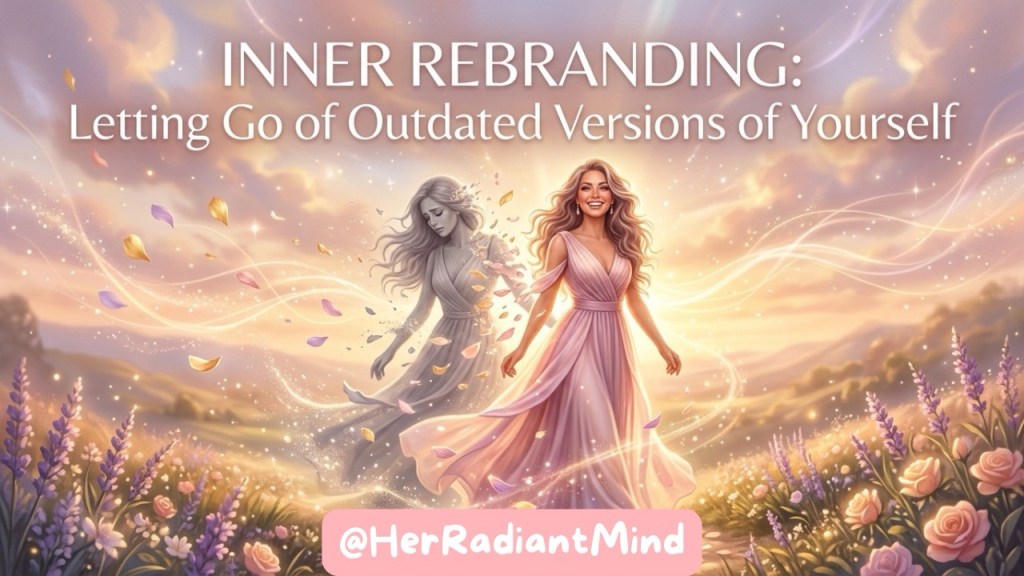
  • Inner Rebranding: Letting Go of Outdated Versions of Yourself

    Inner Rebranding: Letting Go of Outdated Versions of Yourself

    There comes a quiet moment in life when you pause and think,

    “Wait… who am I even trying to be anymore?”

    Not in a dramatic, movie-scene kind of way.

    More like a random Tuesday washing dishes, scrolling your phone, or catching your reflection after a long day.

    You feel it in your chest.

    A subtle tug.

    The version of you that once fit so comfortably now feels misaligned.

    Like wearing shoes you used to love, but now they just hurt.

    That is inner rebranding.

    It’s the courageous act of letting go of outdated versions of yourself so you can grow into the woman you are becoming.

    Not the one you were told to be.

    Not the one who survived by being “easy,” “strong,” “perfect,” or “small.”

    But the one who is real now.

    And yes—it can feel uncomfortable. Even scary.

    Because changing your life externally is one thing…

    Changing your internal identity is something else entirely.

    What Inner Rebranding Really Means

    Inner rebranding isn’t about becoming fake, polished, or perfect.

    It’s not a personality makeover for appearances.

    It’s deeper than that.

    It’s about updating:

    • the way you see yourself
    • the way you speak to yourself
    • the way you move through the world

    It’s noticing when an old version of you is still in control…

    even though she was built for a life you no longer live.

    Maybe she was:

    • the people-pleaser who kept everyone happy
    • the overworker who believed rest had to be earned
    • the quiet one who learned speaking up was “too much”
    • the achiever who tied worth to performance

    That version of you wasn’t wrong.

    She helped you survive.

    But survival is not the same as living.

    Inner rebranding is choosing to stop dragging old coping mechanisms into a new season—and making space for a version of you that feels softer, safer, stronger, and more honest.

    Why Outdated Versions Stick Around

    Ever wondered,

    “Why do I keep doing this even though I know better?”

    You’re not alone.

    Your brain is wired for familiarity—even when familiarity isn’t healthy.

    Through a process called neuroplasticity, your brain builds pathways based on repetition. The more you think or behave a certain way, the more automatic it becomes.

    So if you spent years:

    • staying quiet
    • fixing everyone’s problems
    • chasing perfection

    Your brain learned:

    “This is how we stay safe.”

    That’s why growth feels uncomfortable.

    You’re not just changing behavior—

    you’re asking your brain to let go of an old map.

    And the brain? It doesn’t give those up easily.

    4 Signs You’re Ready for a New Version of You

    You don’t need a life crisis to begin.

    Often, the signs are quiet.

    1. Your old role feels heavy

    What once felt normal now feels exhausting.

    2. You’re outgrowing your own life

    Your habits, routines, or even relationships no longer feel aligned.

    3. You feel guilty for changing

    Like evolving means disappointing others.

    4. You’re craving something deeper

    Not more noise—more truth, peace, and alignment.

    That craving?

    It’s your inner self whispering:

    “We’re ready.”

    The Grief No One Talks About

    Letting go of who you used to be can feel… emotional.

    Sometimes even like a quiet kind of grief.

    Because you’re not just releasing habits.

    You’re releasing an identity.

    A version of you that:

    • kept you safe
    • helped you feel accepted
    • protected you in ways you needed

    So yes—you may grieve:

    • the comfort of being liked
    • the safety of predictability
    • the identity built around being needed

    This doesn’t mean you’re going backward.

    It means you’re being honest.

    And honesty is part of healing.

    How Identity Gets Stuck

    Here’s the truth:

    You are not your:

    • overthinking
    • perfectionism
    • fear of rejection
    • people-pleasing

    Those are patterns, not your identity.

    But when patterns repeat long enough, they feel like who you are.

    That’s when we say things like:

    “That’s just how I am.”

    But often, what we really mean is:

    “That’s how I learned to survive.”

    Inner rebranding asks a powerful question:

    What if this isn’t who I am…

    but who I had to be?

    The Science of Change

    Your brain is always learning.

    Every time you:

    • choose a new response
    • interrupt an old pattern
    • speak to yourself differently

    You create a new neural pathway.

    But here’s the key:

    change happens through repetition, not pressure.

    Not one big moment—

    but small, consistent shifts:

    • pausing before saying yes
    • resting without guilt
    • speaking kindly to yourself
    • choosing honesty over comfort

    Research also shows that self-compassion reduces stress and increases emotional resilience.

    So no—being hard on yourself won’t speed up growth.

    It actually slows it down.

    What You May Need to Let Go Of

    Sometimes it’s not people you need to release—

    it’s the version of you that keeps showing up.

    Maybe it’s:

    • The overgiver — always pouring from an empty cup
    • The perfectionist — afraid to get it wrong
    • The silent one — afraid to take up space
    • The “strong” one — who never rests
    • The chameleon — who adapts to everyone else

    If this resonates, pause.

    That discomfort?

    It’s awareness.

    And awareness is the first step toward change.

    How to Begin Inner Rebranding

    You don’t need to reinvent your life overnight.

    Start small. Start gently.

    1. Name the old version

    Be honest:

    “I’m letting go of the part of me that thinks love must be earned.”

    2. Notice your triggers

    When do you shrink? Overgive? Overthink?

    Those moments are clues.

    3. Choose one new response

    Try:

    • “Let me think about it” instead of yes
    • pausing instead of apologizing
    • self-compassion instead of criticism

    4. Let your body catch up

    Growth isn’t just mental—it’s physical.

    New ways of being can feel unfamiliar.

    That doesn’t mean they’re wrong.

    It means you’re learning.

    Inner Rebranding in Real Life

    Picture this:

    Two versions of you walk into the same room.

    The old version scans for approval.

    She wonders who’s judging her.

    The new version?

    She enters grounded. Present. Honest.

    She doesn’t perform.

    Same room.

    Different energy.

    That’s inner rebranding.

    The Role of Self-Trust

    To evolve, you need to trust yourself.

    And self-trust is built through small promises:

    • “I won’t ignore my needs.”
    • “I’ll rest before I burn out.”
    • “I’ll speak truth with kindness.”

    Every time you follow through, you reinforce:

    “I’ve got me.”

    What Happens When You Don’t Let Go

    Holding onto an outdated identity can feel… heavy.

    You might feel:

    • stuck
    • resentful
    • emotionally drained
    • disconnected

    Like something is missing.

    Because something is:

    you.

    What You Gain When You Release

    When you let go, you make space for:

    • peace
    • clarity
    • boundaries
    • deeper relationships
    • emotional freedom

    You gain permission to be:

    • evolving
    • imperfect
    • real

    And that’s where true freedom lives.

    A Gentle Truth to Hold Onto

    You don’t have to hate who you used to be to outgrow her.

    She helped you survive.

    But she doesn’t get to lead your future.

    You can honor her…

    and still release her.

    That’s not betrayal.

    That’s growth.

    Final Thoughts

    Inner rebranding isn’t about becoming someone new.

    It’s about coming home to who you’ve been all along—

    beneath the expectations, the pressure, and the noise.

    It’s about gently releasing what no longer fits…

    and stepping into what does.

    You are allowed to:

    • change
    • evolve
    • outgrow old versions of yourself

    And if you’re standing in that in-between space right now…

    this is your sign.

    You don’t have to navigate it alone.

    Ready to Begin Your Inner Rebrand?

    At HerRadiantMind, I help women release old patterns, rebuild self-trust, and step into a more grounded, confident, and radiant version of themselves.

    If this spoke to your heart, consider this your invitation to take the next step.

    Your next chapter isn’t waiting for you to be perfect.

    It’s waiting for you to be real.

    Thank you for spending this time with me.

    Remember—healing is not linear, and growth doesn’t have to be loud to be powerful.

    Keep choosing yourself, one gentle moment at a time.💖

    Until next time, stay radiant and take tender care of your beautiful mind and body.

    With love,

    — Christabel, HerRadiantMind

  • Why We’re Afraid to Be Seen (And How to Finally Show Up as Yourself)

    Why We’re Afraid to Be Seen (And How to Finally Show Up as Yourself)

    Have you ever wondered why you pull back right when you’re about to share something real?

    You’re not actually afraid of being seen. You’re afraid of what people will think once they really see you.

    So you filter yourself. Tone it down. Keep parts of you hidden.

    Not because you’re fake — but because somewhere along the way, you learned it was safer that way.

    Why Are We Afraid to Be Seen?

    Picture this: you’re sitting at your laptop, your finger hovering over the “post” button. You’ve poured your heart into a caption, your truth into a story — and yet, something inside whispers, “Don’t do it. People will think you’re too much.”

    So you delete it. Again.

    Sound familiar?

    That tiny, sneaky voice telling you to stay small is the same one that keeps so many of us hiding — not from others, but from ourselves. And the truth is, many of us spend so much energy trying to be invisible while secretly craving to be seen.

    The Real Reason We Fear Being Seen

    Let’s be honest: we’re not just afraid of being seen — we’re afraid of being judged once we are.

    We worry about how others will react if we show:

    • our real personality
    • our sensitive side
    • our opinions and truth

    We fear being labeled as “too much” or “not enough.”

    But here’s the deeper truth: these fears are not about the present moment. They are rooted in past experiences and emotional conditioning.

    The Psychology of Visibility and Vulnerability

    Our brains are wired for survival. The amygdala — the part of the brain responsible for detecting danger — doesn’t distinguish between physical threats and emotional risks like rejection.

    Historically, being excluded from a group meant danger. So today, when you try to show up authentically, your brain may interpret it as a threat.

    That’s why:

    • posting something vulnerable feels scary
    • speaking your truth feels risky
    • being fully seen feels unsafe

    This isn’t weakness — it’s biology.

    The Mask We Wear to Feel Safe

    Instead of hiding physically, we now hide emotionally.

    We:

    • filter our words
    • soften our opinions
    • present “acceptable” versions of ourselves

    We trade authenticity for approval.

    Over time, this becomes so normal that we forget who we really are. But that inner pull you feel when you see someone being unapologetically themselves? That’s your authentic self asking to be expressed.

    The Cost of Hiding Your True Self

    Avoiding visibility doesn’t just protect you — it limits you.

    When you hide:

    • you miss opportunities
    • you suppress your voice
    • you attract misaligned relationships

    This often leads to feeling stuck, disconnected, or unfulfilled.

    The reality is: you cannot build a fulfilling life while hiding who you are.

    How Fear Keeps You Stuck

    Fear often disguises itself as logic:

    • “I’ll start when I’m more confident.”
    • “It’s not the right time.”
    • “I’m not ready yet.”

    But this is simply avoidance.

    You don’t feel fear when you’re playing small — you feel it when you’re stepping into growth and purpose.

    How to Overcome the Fear of Being Seen

    1. Understand Your Fear

    Ask yourself:

    Where did this fear come from?

    Often, it traces back to a past experience where being seen felt unsafe. Recognizing this helps you separate past conditioning from present reality.

    2. Start Small With Visibility

    Your nervous system learns through experience, not logic.

    Try:

    • sharing one honest thought
    • speaking up in small settings
    • expressing your true feelings with someone you trust

    Small steps build safety over time.

    3. Stop Performing and Start Being

    Authenticity isn’t something you create — it’s something you return to.

    Practice presence:

    • pause before responding
    • speak naturally instead of perfectly
    • allow yourself to be human

    People connect with realness, not perfection.

    4. Accept Imperfection

    You will feel awkward at first. That’s normal.

    Confidence is built by:

    • taking action despite fear
    • allowing discomfort
    • showing up anyway

    Growth happens through imperfect action.

    5. Remember You’re Not Alone

    Everyone experiences fear of judgment.

    The difference is not confidence — it’s willingness.

    People who show up authentically have simply decided that fear will not control them.

    The Science Behind Authenticity

    Being authentic isn’t just emotionally freeing — it’s biologically beneficial.

    • Authenticity releases oxytocin (connection hormone)
    • Inauthenticity increases cortisol (stress hormone)

    This is why being yourself feels energizing, while pretending feels exhausting.

    What Happens When You Finally Show Up

    At some point, hiding becomes more painful than being seen.

    That’s when everything changes.

    You:

    • express yourself honestly
    • connect more deeply
    • feel lighter and more aligned

    You begin to realize that the real danger was never being seen — it was staying hidden.

    Authentic Living Attracts the Right People

    When you show up as your true self, you naturally attract:

    • aligned relationships
    • meaningful opportunities
    • deeper connections

    Your life begins to feel more natural and less forced.

    That’s the power of alignment.

    You Can’t Be Loved If You’re Not Seen

    You cannot be fully loved for who you are if you hide who you are.

    Vulnerability may feel risky, but hiding comes at a greater cost: disconnection.

    So ask yourself:

    Are you avoiding judgment — or avoiding being truly known?

    Simple Daily Steps to Build Confidence

    Start with small, consistent actions:

    • Share one honest thought each day
    • Notice when you’re performing and gently pause
    • Rest when needed — growth takes energy
    • Celebrate small acts of courage

    Over time, these moments rebuild trust within yourself.

    You’re Not Too Much — You’re Being Real

    If you’ve ever been told you’re too sensitive, too emotional, or too much — understand this:

    Those qualities are not flaws. They are strengths.

    Your depth, your honesty, your heart — that’s your power.

    If you’ve been nodding along, it’s time to take the next step. The Radiant Reset is my 12-week coaching program designed to help women just like you reclaim energy, confidence, and resilience. 

    Thank you for spending this time with me.

    Remember—healing is not linear, and growth doesn’t have to be loud to be powerful.

    Keep choosing yourself, one gentle moment at a time.💖

    Until next time, stay radiant and take tender care of your beautiful mind and body.

    With love,

    — Christabel, HerRadiantMind

  • You’re Not Overwhelmed — You’re Overextended: 6 Hidden Energy Drains Stealing Your Energy (And How to Take It Back)

    You’re Not Overwhelmed — You’re Overextended: 6 Hidden Energy Drains Stealing Your Energy (And How to Take It Back)

    Have you ever stared at your to-do list and felt your chest tighten… before you’ve even started?

    You’re not lazy.

    You’re not incapable.

    You’re not behind.

    You’re overextended.

    What we call “overwhelm” is often something quieter: too many invisible energy leaks running in the background of your life. You can’t always see them — but your nervous system feels every single one.

    And when too many things are plugged into your power source, of course your light feels dim.

    But dim doesn’t mean depleted beyond repair.

    It means it’s time to unplug what was never yours to carry.

    Let’s uncover the six hidden drains quietly exhausting you.

    1. Emotional Overcommitment

    Saying yes when your body is whispering no.

    Every time you override your boundaries, your nervous system registers stress. Research shows that suppressing your own needs increases cortisol — the same hormone released during physical threat.

    This is how people-pleasing becomes physiological exhaustion.

    Before responding to a request, pause and ask:

    Am I saying yes from love… or from guilt?

    One expands you.

    The other empties you.

    2. Inefficient Rest

    Scrolling is not restoration.

    Your body might be still, but your brain remains stimulated. Blue light, constant novelty, emotional content — it keeps your nervous system subtly activated.

    True rest looks like:

    • Quiet breathing
    • A slow walk without input
    • Reading without multitasking
    • Sitting in stillness long enough for your body to soften

    If your “self-care” leaves you drained, it isn’t care — it’s distraction.

    Your nervous system doesn’t recharge through noise.

    It recharges through safety.

    3. Decision Fatigue

    Your brain has a limited daily supply of decision-making energy.

    Every small choice — what to wear, what to eat, what to reply — pulls from the same cognitive reservoir.

    When that reservoir runs low, everything feels harder than it should.

    Simplify where you can:

    • Rotate meals
    • Pre-plan outfits
    • Create routines instead of reinventing your day

    Save your decision energy for what truly matters.

    Not every choice deserves your full cognitive power.

    4. Environmental Clutter

    Your environment speaks to your brain all day long.

    Visual clutter acts as background stress. Studies show that disorganized spaces increase cortisol levels, especially in women.

    It’s not about perfection.

    It’s about reducing subconscious tension.

    Start small:

    One drawer.

    One counter.

    One surface.

    A calm space creates breathing room in your mind.

    5. Emotional Absorption

    If you’re empathetic, you likely carry more than your share.

    Listening, supporting, advising — these are beautiful traits. But empathy without boundaries becomes emotional depletion.

    Before engaging in heavy conversations, ask:

    Do I have capacity right now?

    Afterwards, discharge the energy:

    • Step outside
    • Move your body
    • Wash your hands slowly
    • Take three deep breaths

    Your empathy is a gift.

    Protect it like one.

    6. Mental Multitasking

    Multitasking feels productive — but it fragments your focus.

    The brain doesn’t truly multitask; it switch-tasks. Each switch burns micro-bursts of energy, which accumulate into mental fatigue.

    When everything gets partial attention, your brain never settles.

    Choose one task.

    Complete it.

    Then move on.

    Single-tasking quiets the mind in ways you don’t realize you’ve been craving.

    The Nervous System Factor

    Here’s what’s happening biologically.

    When you are constantly “on,” your sympathetic nervous system (fight or flight) dominates. Cortisol rises. Adrenaline circulates. Your body stays braced.

    But when you create small pockets of safety — boundaries, rest, simplicity — you activate your parasympathetic system.

    That’s where:

    • Healing happens
    • Digestion improves
    • Creativity returns
    • Calm feels natural again

    Peace isn’t indulgent.

    It’s a physiological reset.

    A Gentle Energy Audit

    Tonight, ask yourself:

    • Where did my energy go today?
    • Did I override my boundaries?
    • Was my rest actually restorative?
    • What can I release tomorrow?

    Awareness closes leaks.

    The Truth About Overwhelm

    Overwhelm is rarely about time.

    It’s about capacity.

    You can manage your schedule perfectly and still feel depleted if what fills it drains you.

    You are not a machine.

    You are not designed for constant output.

    You are a human nervous system that requires cycles — exertion and restoration.

    Reclaiming Your Energy

    Start small.

    • Say no once this week.
    • Create 10 minutes of real quiet.
    • Clear one surface.
    • Choose nourishment over numbing.
    • Protect your focus like currency.

    Bit by bit, your body will begin to trust that it’s safe to soften.

    And when your nervous system feels safe, your energy returns naturally.

    You’re Not Overwhelmed

    You’re overextended.

    And the solution isn’t more productivity.

    It’s wiser energy stewardship.

    When you protect your energy, everything shifts — your clarity, your mood, your confidence.

    You don’t need to push harder.

    You need to close a few tabs.

    And come back to yourself.

    If this resonated, share it with a woman who’s quietly carrying too much.

    And if you’re ready to rebuild your resilience from the inside out, explore coaching at HerRadiantMind.com.

    Because peace isn’t something you earn.

    It’s something you protect. 

    Thank you for spending this time with me.

    Remember—healing is not linear, and growth doesn’t have to be loud to be powerful.

    Keep choosing yourself, one gentle moment at a time.💖

    Until next time, stay radiant and take tender care of your beautiful mind and body.

    With love,

    — Christabel, HerRadiantMind

  • The Right Way to Plan 2026: Less Control, More Alignment

    The Right Way to Plan 2026: Less Control, More Alignment

    You know that weird space between Christmas and New Year’s — when you forget what day it is, your fridge is full of leftovers, and time feels like soup?

    Yeah. That one.

    That’s where the magic happens.

    Not the glittery, New Year’s resolution kind of magic — but the honest kind.

    The kind where you stop trying so hard to figure it all out, and something quieter starts whispering:

    “What if next year didn’t need more control — just more alignment?”

    The Truth About Why You’re Tired of Planning

    Let’s be real.

    You’ve probably written “New Year, New Me” in some form since your early 20s.

    You’ve bought the fresh planner.

    Color-coded the goals.

    Printed the affirmations.

    And by February (okay… January), you’re wondering what went wrong.

    Here’s the truth:

    It’s not you. It’s the method.

    We’ve been taught that planning means control — tightening every screw, mapping every move, and hoping life behaves accordingly.

    But life doesn’t take orders.

    It negotiates.

    Planning from control is exhausting.

    It’s like paddling upstream with a teaspoon — all effort, no ease.

    Alignment, on the other hand, works with the current.

    It doesn’t remove direction — it removes unnecessary resistance.

    What Alignment Actually Means (Not the Woo-Woo Version)

    Alignment isn’t waiting for the Universe to drop opportunities onto your yoga mat.

    It’s understanding:

    • What truly matters to you
    • How your energy actually works
    • What feels honest — not just impressive

    Think of your life like a car pulling slightly to the right.

    No matter how hard you press the gas, you’ll keep drifting unless the alignment is corrected.

    Alignment isn’t lazy.

    It’s intelligent self-leadership.

    The End-of-Year Lie: “You Have to Fix Everything Before January”

    Every December comes with a strange sense of urgency.

    Suddenly you feel pressure to:

    • Declutter your entire home
    • Heal every emotional wound
    • Reinvent your routines
    • Become a completely new person

    …before January 1st.

    Let’s gently call this what it is:

    Unrealistic and unnecessary.

    You don’t become a new human at midnight.

    You simply turn a page.

    This in-between season isn’t for fixing —

    it’s for listening.

    “Maybe I don’t need to control next year.

    Maybe I just need to understand what makes me feel alive.”

    Why “Less Control” Is Actually Neuroscience-Approved

    Your brain hates uncertainty — but it also thrives on curiosity.

    When you over-plan and micromanage, your prefrontal cortex (your decision-making center) goes into overload. Psychologists call this cognitive fatigue.

    In simple terms:

    Your brain gets tired of trying so hard.

    When you plan from alignment instead — focusing on energy, values, and intention — something shifts:

    • Dopamine (motivation) increases
    • Creativity improves
    • Decision-making becomes clearer

    Your brain performs better when you stop gripping so tightly.

    That’s not spiritual fluff.

    That’s biology.

    The Subtle Power of Alignment Planning

    Alignment isn’t chaos — it’s clarity with softness.

    Here’s how to plan 2026 the aligned way.

    1. Reflect Before You Rewrite

    Before asking “What do I want next year?”, ask:

    • What actually worked this year?
    • When did I feel most like myself?
    • Where was I forcing outcomes?

    Patterns will appear.

    The ease points show you alignment.

    The draining moments reveal where control took over.

    2. Choose a Word, Not a List

    Instead of long goal lists, choose one word for 2026.

    Examples:

    • Flow
    • Trust
    • Expand
    • Simplify
    • Light

    Let this word become your filter.

    Before saying yes, before committing, before pushing — ask:

    “Does this align with my word?”

    That’s aligned decision-making.

    3. Plan Around Energy, Not Hours

    Your body runs on natural energy cycles (called ultradian rhythms).

    You are not meant to be “on” all day.

    Ask yourself:

    • When do I feel most creative?
    • When do I need rest?

    Planning around energy — not rigid time blocks — prevents burnout and increases focus.

    4. Choose Direction Over Destination

    Alignment is a compass, not a GPS.

    A compass says:

    “Head north.”

    It doesn’t panic when you stop for coffee or change lanes.

    You still arrive —

    just with more joy and less pressure.

    A Story About Control (Gone Wrong)

    I once coached a woman — let’s call her Sara.

    Brilliant.

    Highly organized.

    Color-coded calendar that looked like modern art.

    But she couldn’t rest.

    She believed everything would fall apart if she loosened her grip.

    When we shifted her focus to alignment, I asked her one daily question:

    “What feels true for me today?”

    At first, she resisted.

    By week three, she said:

    “I can breathe again.”

    Six months later, her business grew — not because she controlled it better, but because she created from flow instead of fear.

    Letting go didn’t weaken her power.

    It revealed it.

    The Illusion of “Balance”

    Life isn’t a scale.

    It’s a dance floor.

    Some seasons move fast.

    Some invite stillness.

    Balance isn’t symmetry —

    it’s adaptability.

    Alignment means choosing the right rhythm, not choreographing every beat.

    Why Control Feels So Addictive

    Control feels safe.

    “If I plan harder, I won’t fail.”

    But your nervous system can’t tell the difference between productivity and panic.

    Constant control keeps stress hormones high.

    The moment you soften into alignment, your body exhales.

    That sigh of relief?

    That’s your nervous system saying:

    “Thank you.”

    Living “Less Control, More Alignment” Daily

    Morning: Begin With Intention

    Instead of opening your to-do list:

    1. Breathe
    2. Ask: “What energy do I want today?”
    3. Choose three aligned intentions

    Midday: Recalibrate, Don’t Push

    Feeling off isn’t failure — it’s information.

    A short walk, deep breathing, or pausing resets creativity far better than forcing productivity.

    Evening: Reflect Without Judgment

    Each night, write one sentence:

    “What felt aligned today?”

    Awareness is where alignment grows roots.

    Why Your 2026 Plan Should Feel Like a Conversation

    Think of 2026 as a dialogue.

    You bring intention.

    Life brings surprise.

    A tree doesn’t apologize for bending toward the light.

    It’s still growing.

    So are you.

    Before You Buy Another Planner…

    Ask yourself:

    Do I want to control next year — or connect with it?

    Control chases.

    Alignment attracts.

    Leave space in your planning.

    That’s where life breathes.

    That’s where miracles land.

    Your Gentle 2026 Invitation

    If this stirred something in you — that quiet “I want this” feeling — trust it.

    At HerRadiantMind, I help women move from over-control into deep alignment with their values, rhythms, and inner wisdom.

    Because when your mind is radiant,

    everything else follows.

    Your 2026 doesn’t need more control.

    It needs more you.

    Thank you for spending this time with me.

    Remember—healing isn’t linear, and growth doesn’t have to be loud to be powerful.

    Keep choosing yourself, one gentle moment at a time.💖

    Until next time, stay radiant and take tender care of your beautiful mind and body.

    With love,

    — Christabel, HerRadiantMind

  • 5 Things to Remember When the Holidays Bring Up Old Wounds

    5 Things to Remember When the Holidays Bring Up Old Wounds

    The smell of cinnamon candles. The sound of a familiar song echoing through a store. The sight of twinkling lights that make the world shimmer for a moment.

    And suddenly… it hits you.

    That old ache in your chest. The one you thought time had softened.

    The holidays have a way of stirring up memories you didn’t ask to remember — the ones tied to loss, loneliness, or the version of you who never felt safe to relax.

    If this season feels heavy instead of merry, you’re not broken. You’re human.

    The truth no one says out loud? Even joy-filled months carry shadows. The trick is learning to care for your heart while the world celebrates around you.

    Before you build emotional armor or hide under a blanket of “I’m fine,” here are five things to remember when the holidays bring up old wounds — because healing doesn’t pause for tinsel and lights.

    1. When Old Feelings Resurface at Unexpected Moments

    You’re chopping vegetables, scrolling gift ideas, or wrapping a present — and then something small cracks you open. A memory. A scent. A song.

    Suddenly, you’re 12 again at the kitchen table, hearing a raised voice, or noticing that empty chair across from you that used to be filled.

    Pain has a funny calendar; it doesn’t check what month it is before saying, “Hey, remember me?”

    Here’s the key: it’s not a setback. It’s communication. Your nervous system is reminding you that you’ve lived through things that mattered — deeply.

    When old emotions rise during the holidays, see them as signals, not setbacks. They’re showing up now because you finally have the safety, space, or softness to feel what couldn’t be felt before.

    You’re not back at square one. You’re revisiting an old chapter with new wisdom in your hands.

    Mini practice:

    When a wave of sadness or frustration comes up:

    1. Pause.
    2. Place your hand over your heart.
    3. Quietly say, “I see you. You’re allowed to be here.”

    That one sentence can transform the moment from self-judgment to self-connection.

    2. You Don’t Have to Fake the Festive

    Somewhere along the way, the holidays turned into a performance — the smiling family photos, the “grateful” posts, the cheerful small talk.

    But pretending everything’s fine when it isn’t? That only deepens the loneliness.

    It’s okay if you can’t summon joy on command. You’re not required to decorate your pain with glitter.

    You can love the season and still want to skip the party. You can laugh over cocoa one day and cry the next. Healing doesn’t mean feeling good all the time. It means being honest.

    Set boundaries that protect your energy:

    • Politely decline events that drain you.
    • Create your own version of celebrating — a quiet dinner, a nature walk, or a cozy night in.
    • Respond with honesty: “Thank you for inviting me. I might need to see how I’m feeling that day.”

    When you stop pretending, you make room for connection that doesn’t require a mask.

    3. The “Perfect” Holiday Is a Myth (and It Always Was)

    The perfect holiday we see in movies or ads? It never really existed. No one’s family is that serene. No one’s table is free of tension.

    Even the person posting matching pajamas on Instagram probably cried in the bathroom ten minutes earlier.

    We chase an image from our childhood — the holiday we wish we had. But comparison is poison. Unrealistic expectations feed disappointment, which feeds shame.

    Instead, ask: What actually feels nurturing to me right now?

    • Bake cookies for yourself, not for show.
    • Play your favorite music while cleaning.
    • Tell your inner child, “This year, I’ll give you the safety you never had.”

    Try this: Each morning, ask, “What would make today feel 1% more peaceful?” Then do that one small thing. Healing is in the quiet gestures.

    4. Your Triggers Aren’t Enemies — They’re Invitations

    The holidays press buttons we didn’t even know were still there:

    • A critical parent comment.
    • A sibling rivalry that never faded.
    • That dinner conversation that makes you want to crawl out of your skin.

    These triggers aren’t proof you’ve failed to heal. They’re reminders that healing is ongoing — a spiral, not a straight line.

    Instead of seeing discomfort as the enemy, get curious:

    • What is this feeling trying to tell me?
    • Whose voice am I hearing — theirs or my own?
    • What would support feel like in this moment?

    Even a small pause — the breath between past and present — is evidence of growth.

    Triggers are teachers. They show which parts of you still crave safety or validation and invite you to bring light into old corners of the heart.

    5. You’re Allowed to Create New Traditions

    Just because something’s “always been done” doesn’t mean it belongs in your life now.

    Maybe old traditions feel like walking through a haunted house — familiar but unsettling. You can let them go and build something new that fits the life you’re growing into.

    Ideas to try:

    • Write a letter to your younger self and burn it safely as a ritual of release.
    • Spend a day volunteering or helping someone in need.
    • Host a “chosen family” dinner with people who make you feel safe.
    • Go somewhere quiet in nature and reflect on what you’re ready to leave behind.

    Traditions aren’t sacred because they’re old — they’re sacred because they hold love. Make new ones that nurture you, not drain you.

    Healing Doesn’t Skip the Holidays

    Many assume personal growth follows a calendar — progress in August, peace by December. But the truth? Healing is messy, nonlinear, and beautifully human.

    You can be grateful and grieving.

    You can forgive and feel anger.

    You can love your family and still need space.

    Both can be true.

    When Grief Joins the Celebration

    The holidays can feel especially heavy if you’re carrying loss — the absence of a loved one, a relationship that ended, or even the life you thought you’d have. Grief doesn’t take a vacation for December. In fact, it often shows up louder, reminding you of what’s missing amid the lights and laughter.

    It’s important to give grief space without guilt. Feeling sad doesn’t mean you’re failing at the season — it means you’re human, and your heart remembers love.

    Gentle ways to honor grief during the holidays:

    • Light a candle or create a small ritual to remember those you’ve lost.
    • Share a memory with someone you trust, or write it in a journal.
    • Allow yourself tears without judgment — they are part of healing, not weakness.
    • Blend joy and sorrow — it’s okay to laugh at a funny story, then feel a pang of longing afterward. Both emotions can coexist.

    Grief and celebration can exist side by side. When you acknowledge your grief instead of pushing it away, you make room for gentle presence, authentic joy, and meaningful connection — the kind of holiday your heart truly needs.

    The holidays don’t have to test your healing; they can deepen it. One quiet boundary, one grounded breath, one honest no at a time — that’s evolution.

    Every emotion that resurfaces — sadness, longing, or even anger — isn’t here to ruin your holiday; it’s asking to be witnessed, finally, with tenderness instead of judgment.

    Gentle Grounding Ritual for When the Season Feels Heavy

    1. Pause and breathe — Inhale for 4 counts, hold 2, exhale 6. Feel your feet on the floor.
    2. Name what’s real — Whisper, “This is just a moment. It will pass.”
    3. Soften your heart — Hand on chest: “I’m doing the best I can.”
    4. Reconnect — Step outside, look at the sky, light a candle, touch your pet. Remind your body life exists beyond the memory.

    Your nervous system doesn’t need perfection; it needs reassurance. Every small act tells your body, “You’re safe now.”

    Quick Reminders

    • Grief can share space with gratitude. Both belong at the table.
    • You’ve already survived the hardest parts. Memories can’t hurt you like they used to.

      It’s okay to unplug. Social media doesn’t define how your holiday should feel.
    • Rest is productive. You’re allowed to pause.
    • You are allowed to choose peace over tradition.

    Say it again: You are allowed to choose peace.

    The Quiet Power of Self-Compassion

    Self-compassion is courage. It’s what allows you to show up honestly, without the tight smile or “I’m fine” script.

    When you talk gently to yourself, you rewrite the tone of painful memories. You give past versions of yourself the love they deserved.

    Imagine sitting by candlelight, whispering, “I forgive you for how hard you tried.”

    That’s healing: soft, real, and enough.

    A Season to Come Home to Yourself

    The most sacred connection is the one you build within.

    You don’t need perfect family moments or a flawless dinner. You just need presence — the kind that says, “I’m here, I’m breathing, I’m learning to love myself through this.”

    When old wounds whisper, remember:

    They’re not reopening to punish you. They’re unfolding to be healed.

    And healing, even in December, is a sacred kind of magic.

    A Gentle Invitation from HerRadiantMind

    If this season feels heavier than your heart can hold alone, you don’t have to carry it without support.

    At HerRadiantMind, our mission is simple — to help women turn pain into presence, and wounds into wisdom.

    Through one-on-one coaching, you’ll learn to:

    • Release emotional patterns that resurface during the holidays.
    • Practice grounded self-care that feels natural, not forced.
    • Rewrite your inner story with compassion and clarity.

    Healing isn’t meant to be done in isolation — it’s meant to be witnessed, gently, by someone who sees you.

    Take this as your sign: it’s time to give yourself the same grace you’ve offered everyone else.

    Thank you for spending this time with me.

    Remember—healing isn’t linear, and growth doesn’t have to be loud to be powerful.

    Keep choosing yourself, one gentle moment at a time.💖

    Until next time, stay radiant and take tender care of your beautiful mind and body.

    With love,

    — Christabel, HerRadiantMind

  • Healing the Busy Woman Wound: Why Rest Feels Unsafe & How to Relearn It Without Guilt

    Healing the Busy Woman Wound: Why Rest Feels Unsafe & How to Relearn It Without Guilt

    Ever find yourself lying in bed, heart pounding, mind racing, with a to-do list screaming louder than any lullaby?

    Rest sounds like a dream — yet somehow it feels like stepping into quicksand, something unsafe, indulgent, or undeserved.

    If that hits a little too close to home, you’re not alone.

    So many women carry what I call the “Busy Woman” Wound — a deep inner knot of guilt, fear, and hypervigilance around slowing down.

    This blog is your gentle map to unravelling that knot and learning how real, soulful rest isn’t just healing… it’s transformational.

    The Busy Woman Wound: When Rest Feels Like a Trap

    Maybe you grew up with an unspoken rule:

    “If you’re not working, doing, or hustling… you’re falling behind.”

    This is the Busy Woman Wound.

    It’s not just exhaustion — it’s the way rest feels unsafe, weak, or even dangerous.

    Your nervous system might still be stuck in survival mode, whispering:

    “If you stop, everything will fall apart.”

    Even when your mind knows you need rest, your body remembers something different:

    Keep going. Stay alert. Be useful. Don’t let anyone down.

    This wound hides beneath the surface, leaving you feeling “off” the moment you try to slow down.

    You may feel restless, anxious, or heavy with guilt, convinced that stillness equals failure.

    When Rest Becomes the Enemy Instead of the Medicine

    Here’s a compassionate truth:

    Your brain and body don’t automatically know how to rest when they’ve spent years running at full speed.

    Chronic busyness rewires your nervous system into constant alertness.

    When rest finally comes, peace feels foreign — even threatening.

    Instead of sinking into stillness, your body may respond with:

    • racing thoughts
    • tension in the chest
    • the urge to get up and “do something”
    • the automatic pull to scroll, clean, or work

    Not because you don’t want rest…

    but because your system doesn’t feel safe in rest.

    Movement feels familiar.

    Quiet feels overwhelming.

    The Neurobiology of Rest Resistance: What’s Really Happening in Your Brain and Body

    If you’ve ever wondered why you struggle to rest even when you’re exhausted, there’s a deeply scientific reason — and it has everything to do with your nervous system, your brain’s protective wiring, and the hormones your body has learned to depend on for survival.

    Rest resistance isn’t a personality flaw.

    It’s biology.

    1. Your Nervous System May Be Stuck in Survival Mode (Hyperarousal)

    When your body spends years in “go-mode,” it adapts to that pace. The sympathetic nervous system  your fight-or-flight state  becomes your baseline.

    So when you try to rest, your body may respond with:

    • racing heart
    • muscle tension
    • intrusive thoughts
    • the urge to get up and “do something”

    Your nervous system is simply doing what it believes keeps you safe.

    2. Cortisol and Adrenaline Become Your Fuel

    Chronic busyness floods your body with stress hormones designed to keep you alert. Over time, your system becomes dependent on them.

    When you slow down, these hormones drop…

    and your body panics because high alert has become its “normal.”

    Stillness feels like withdrawal.

    3. The Brain Associates Rest with Vulnerability

    If rest was never modeled as safe in childhood or adulthood, your limbic system can associate it with danger or disapproval.

    Even when you want to rest, a deeper part of your brain whispers:

    • “You’re disappointing someone.”
    • “You’re falling behind.”
    • “You’re being lazy.”

    These beliefs aren’t logic — they’re protection patterns.

    4. The Prefrontal Cortex Shuts Down During Stress

    When you’re overwhelmed, the calm-thinking part of your brain goes offline. Instead of relaxing, you may experience:

    • looping thoughts
    • overthinking
    • worst-case scenarios
    • emotional heaviness

    Your brain isn’t sabotaging you — it’s trying to keep you safe with the tools it knows.

    5. Your Body Remembers What Your Mind Forgot

    Trauma, chronic stress, and generational conditioning live in the body.

    Even if you mentally know you deserve rest, your body may still carry memories of times when rest wasn’t possible or welcome.

    This is why rest requires gentleness, repetition, and safety — not pressure.

    Signs You’re Carrying the Busy Woman Wound

    • You feel anxious the moment you sit down.
    • Rest comes with guilt, shame, or discomfort.
    • You find “productive” distractions instead of relaxing.
    • Your mind races at night even when exhausted.
    • You feel more alive when busy than when still.
    • Caring for yourself feels selfish or indulgent.

    If any of this resonates, consider it a compassionate invitation — not a diagnosis.

    Relearning Rest: Small, Soulful Steps Forward

    Healing this wound isn’t about flipping a switch.

    It’s about nervous system re-training — tiny moments of safety layered over time.

    1. Celebrate Mini-Breaks Like Big Victories

    Start with one-minute pauses.

    Breathe deeply.

    Feel your feet on the ground.

    Allow stillness to become familiar again.

    2. Create a Rest Ritual That Speaks Your Soul’s Language

    Rest should invite you, not shame you.

    • tea
    • soft music
    • stretching
    • journaling
    • quiet moments under the sky

    Find what feels like comfort and let it become sacred.

    3. Name the Guilt and Gently Talk Back

    Ask yourself:

    • Where did this story come from?
    • Is it true?
    • Does this belief belong to me, or did I inherit it?

    Respond with softness.

    4. Protect Your Rest Like a Non-Negotiable

    Treat rest like a meeting with your future self.

    Honor it.

    Defend it.

    Nurture it.

    A Story of Rest Reclaimed

    A client once told me she was terrified of naps because her inner voice screamed:

    “You’re lazy! You’re failing!”

    We started with five quiet minutes a day.

    No pressure.

    No expectations.

    Just breath and presence.

    Months later she shared:

    “Rest doesn’t drain me anymore — it restores me.”

    Because rest didn’t weaken her.

    It brought her back to herself.

    Soulful Rest Is Radical Self-Love — Not Laziness

    Soulful rest is rebellion against burnout culture.

    It’s saying:

    “I deserve softness. I deserve peace. My worth is not measured by my productivity.”

    Rest heals your nervous system.

    It fuels clarity, creativity, and emotional stability.

    It brings you back into your body in the gentlest way.

    With time, your body learns what your soul already knows:

    Rest is home.

    Your Invitation: Choose Rest as Your Radical Act Today

    Dear beautiful soul reading this — with the full schedule and tender heart…

    What would it feel like to rest without guilt?

    To rewrite the story you tell yourself about slowing down?

    To let your body feel safe, supported, and held?

    At HerRadiantMind, I guide women through this exact transformation — from survival mode to soulful living, from burnout to radiance.

    If the Busy Woman Wound echoes in your journey, you don’t have to walk this path alone.

    Together, we can explore:

    ✨ your unique rest rituals

    ✨ nervous system regulation

    ✨ releasing guilt and old narratives

    ✨ reclaiming rest as your birthright

    Rest is waiting.

    Your softness is waiting.

    Your radiance is waiting.

    Will you answer?

    Thank you for spending this time with me.

    Remember—healing isn’t linear, and growth doesn’t have to be loud to be powerful.

    Keep choosing yourself, one gentle moment at a time.💖

    Until next time, stay radiant and take tender care of your beautiful mind and body.

    With love,

    — Christabel, HerRadiantMind

  • The Hidden Power of Your Words: How Self-Talk Shapes Your Energy and Reality

    The Hidden Power of Your Words: How Self-Talk Shapes Your Energy and Reality

    The Whisper That Shapes Us

    Imagine waking before sunrise — a quiet home, golden light slipping through the blinds. You sit at your window, mug in hand, feeling the soft hum of possibility in the air.

    And then, before your feet truly meet the floor, a whisper arises. Sometimes gentle, sometimes sharp:

    “You’re not enough.”

    Pause.

    Who said that?

    It’s you. It’s me. It’s every woman who’s ever carried the myth that the right words belong to everyone but her.

    Our self-talk — often quiet and unnoticed — weaves through consciousness, shaping the story we live by. This is why our words matter: because the language within us carries an invisible energy, quietly building the foundation of who we become.

     The Invisible Currents: Words as Energy

    The Science of Self-Talk

    Neuroscience now confirms what ancient wisdom has long taught: words are energy.

    Every thought and phrase releases neurochemicals that influence our emotions, focus, and wellbeing.

    Dr. Andrew Newberg’s research shows that positive words activate motivation centers in the brain, while negative words trigger stress responses that cloud judgment and increase anxiety.

    Your words aren’t just air — they’re electrical impulses sculpting your inner landscape.

    Seeds or Shadows: A Metaphor for the Mind

    Think of your mind as a living garden.

    Every word you speak to yourself is a seed.

    Do you plant sunflowers of compassion, patience, and encouragement?

    Or do you sow shadows — words of doubt, criticism, and fear?

    Your inner world will always grow in the direction of your language.

    The Ripple Effect: Everyday Words That Shape Our Energy

    Anna’s Story: The Weight of “Should”

    Anna came to me weary and heavy-hearted.

    “I should have done better,” she sighed — her daily refrain.

    That single word should carried the weight of perfectionism, guilt, and self-judgment.

    Together, we tried a small reframe:

    “I did my best today.”

    Her posture shifted. Her breath deepened.

    The change wasn’t dramatic — but it was energetic.

    What Happens When We Pause the Inner Critic?

    Most of us have that relentless inner narrator. But when we interrupt it — even for a moment — something powerful happens.

    We don’t silence our inner voice; we transform its tone.

    We begin speaking a new language, one infused with gentleness, truth, and growth.

    The Biology Behind Words

    How Self-Talk Shapes the Nervous System

    When you speak kindly to yourself, your parasympathetic nervous system — the body’s calm and connect mode — activates.

    Muscles relax. Breath steadies. The mind clears.

    Harsh language, on the other hand, triggers the stress response — tightening the body and narrowing awareness.

    Words and Emotional Memory

    Research from UCLA’s Mindful Awareness Research Center found that labeling emotions (“I’m anxious,” “I’m hopeful”) helps calm the amygdala, reducing stress and increasing resilience.

    In essence, your words become tools for emotional regulation and nervous system balance.

    The Power of Reframing

    “I Am” Statements: Energy in Identity

    “I am” is one of the most powerful phrases you can speak. Every “I am” statement tells your subconscious who you believe you are.

    • I am strong.
    • I am learning.
    • I am worthy of peace.

    Even whispered, these words rewire your brain toward confidence and calm.

    From Self-Judgment to Self-Compassion

    A subtle shift can change everything:

    • “I failed” → “I learned something new.”
    • “I’m behind” → “I’m moving at my own pace.”
    • “I’m not enough” → “I am enough, as I am.”

    Each reframe sends a new energetic message: one of self-trust and possibility.

    Words in Mindfulness Practice

    Bringing Awareness to Language

    Mindfulness isn’t only silence and stillness — it’s also awareness of language.

    Ask yourself:

    • What tone does my inner voice carry?
    • Would I speak to a friend this way?

    Practices like loving-kindness meditation — where we repeat phrases such as “May I be safe. May I be at peace.” — help reshape neural pathways toward compassion and inner balance.

    Simple Rituals for Renewed Self-Talk

    Try this 3-minute morning ritual:

    1. Say aloud: “I greet this day with kindness.”
    2. Write one gentle truth: “I honor my effort.”
    3. Visualize those words as light entering your body, calming every cell.

    End your day by releasing harsh thoughts, so your mind rests in peace and renewal.

    The Collective Vocabulary: Words That Shape Culture

    The Language We Inherit

    Many of the words we use against ourselves aren’t truly ours.

    They’re echoes — from parents, teachers, culture, and society.

    Through awareness, we can pause, question, and rewrite them.

    When we choose new words, we reclaim our narrative.

    Healing the Inner Narrator

    Healing doesn’t mean erasing old language; it means transforming it.

    When you meet your inner critic with compassion, it softens.

    Each moment of gentle self-talk becomes an act of rewriting your story.

    Why Words Matter for Women’s Empowerment

    Unveiling Radiance Through Self-Talk

    HerRadiantMind was born from this truth:

    Every woman carries radiant strength within her — and language is the key that unlocks it.

    Your words are the mirror that reflects your worth.

    When you choose language rooted in kindness and authenticity, you shift from survival to sovereignty.

    A 7-Day Language Experiment

    Try this gentle challenge:

    • Each morning, choose one empowering word — Brave, Enough, Radiant, Free.
    • Replace every “should” with “I choose.”
    • At the end of the week, notice how your energy feels.

    Radiance begins with awareness — and one kind word at a time.

    The Subtle Energy of Language

    The Quantum View

    Modern physics and ancient wisdom agree: everything is energy — even words.

    Loving language raises your vibration; harsh words lower it.

    Your self-talk is an energetic frequency that influences not just your mood, but your overall wellbeing.

    Change Is Always Possible

    Through neuroplasticity, your brain can rewire itself.

    Every gentle word creates new neural pathways, teaching your mind and body to trust in peace again.

    Gentle Steps to Transform Your Language

    Mindful Listening

    Once a day, pause for two minutes and simply listen to your inner voice.

    Is it hurried or kind? Critical or caring?

    Awareness is the first step toward transformation.

    Daily Affirmation Practice

    Keep a “Radiant Words” journal:

    • Write three affirmations each morning.
    • Speak them aloud, softly.
       Notice the energetic shift in your body as you do.

    Visualization for Healing Words

    When harsh words arise, imagine them as stones.

    Set them down.

    Then, with your next breath, plant flowers — one word at a time.

    This is what self-nurture looks like in motion.

    Radiant Language: A Path to Lasting Transformation

    From This Moment Forward

    If you remember one truth, let it be this:

    Every word is a seed. Every sentence, a choice.

    What you speak — within and without — becomes the world you live in.

    How HerRadiantMind Can Help

    Transforming your self-talk is not a solo journey.

    At HerRadiantMind, we guide women through gentle coaching, mindful awareness, and emotional healing — helping you rewrite your story and restore your radiance.

    Through intentional language and compassionate support, you can reclaim your power, rebuild your confidence, and return home to yourself.

    Begin Your Radiant Transformation Today

    Your words hold energy — the power to soften, to strengthen, to heal.

    You are worthy of language that uplifts you, not diminishes you.

    If you’re ready to begin this transformation, HerRadiantMind Coaching is here to walk beside you — guiding you through mindful language shifts, healing reflections, and emotional renewal.

    Start your journey today.

    Book your first gentle session and discover how one word — kindness — can change everything.

    Thank you for spending this time with me.

    Remember—healing isn’t linear, and growth doesn’t have to be loud to be powerful.

    Keep choosing yourself, one gentle moment at a time.💖

    Until next time, stay radiant and take tender care of your beautiful mind and body.

    With love & light

    — Christabel, HerRadiantMind

    Stay Radiant-Join the list!

  • The Healing Era: Choosing Rest, Boundaries, and Self-Trust Over Hustle

    The Healing Era: Choosing Rest, Boundaries, and Self-Trust Over Hustle

    You were never meant to run on fumes.

    The alarm screams before sunrise. You’re already listing the tasks — emails, deadlines, lunch prep, meetings — before your feet even touch the floor. Somewhere between exhaustion and autopilot, your inner voice whispers: “I can’t keep doing this.”

    But still, you do.  

    Because hustle culture trained you to equate busyness with worth. Slowing down feels like failure. Rest feels like a reward — one you never quite earn.

    Here’s the truth: the more you chase calm, the further it runs. Maybe the problem isn’t that you’re not doing enough — maybe you’ve been doing *too much for too long.

    Welcome to **The Healing Era** — a quiet revolution where women redefine success, reclaim their energy, and finally choose rest, boundaries, and self-trust over relentless hustle.

    We’re Not Just Tired — We’re Soul-Tired

    It’s not just about physical fatigue.  

    It’s that slow, invisible drain — the one that makes even joy feel heavy.

    Picture this:  

    You’re driving home after a long day, your hands tight on the steering wheel. The music’s on, but you’re not listening. You’re so far from yourself you can’t even remember what peace feels like.

    That’s not failure. That’s survival mode.

    We’ve lived there too long — proving, performing, people-pleasing. But there’s a shift happening. Women everywhere are whispering a quiet rebellion:

    “I’m done abandoning myself to keep everyone else comfortable.”

    That’s where healing begins.

    What The Healing Era Really Means

    It’s not about doing less — it’s about doing what matters in ways that nourish rather than deplete.

    The Healing Era is about coming home to yourself. It’s slow mornings with coffee and silence instead of scrolling. It’s no longer postponing your peace until you’ve “earned” it.

    Its foundation rests on three simple, sacred truths:

    • Rest is a necessity — not a luxury.
    • Boundaries are self-respect — not selfishness. 
    • Self-trust is your inner compass — not a luxury for the confident.

    These are not ideals. They’re invitations.

    Rest: The Most Radical Resistance

    Let’s be honest — resting feels rebellious.

    You wake up on a Sunday and think, “Maybe I’ll do nothing today.” Then guilt creeps in like a shadow. You remember laundry, emails, the unfinished list taped to the fridge.

    But rest is not the absence of productivity — it’s the presence of peace.

    Think of yourself as a garden. You can’t bloom on dry soil.  

    Yet we water everything — jobs, friendships, families — while our roots crack with neglect.

    Rest isn’t quitting.  It’s remembering you are human before you are useful.

    Small rest rituals can be your rebellion:

    • Five deep breaths before checking your phone.
    •  A walk without headphones, just listening to your thoughts.
    • A ten-minute “pause pocket” blocked on your calendar, non-negotiable.  

    Rest is a reunion with your body — and that’s where healing starts.

    Boundaries: How You Speak Self-Respect

    •  I hear it all the time:
    •  “I don’t want to seem rude.”
    • “What if they’re upset?”
    • “It’s easier to just say yes.”

    But every “yes” that costs your peace is a debt you’ll later pay with exhaustion.

    Boundaries are not walls — they are riverbanks. They direct your energy, keeping it flowing with intention instead of flooding everywhere.

    Story snapshot:  

    A client once told me she said yes to planning a big family event even though she was overwhelmed. She spent weeks resentful and burnt out. The next time, she kindly said no — and waited for disappointment that never came. Instead, her mom said, “I’m proud of you for resting.”  

    That’s the kind of ripple boundaries create.

    Try these:

    • When resentment tugs at you, pause — a boundary is calling.
    • Keep scripts simple: “That doesn’t work for me right now.”
    • Celebrate small boundary wins like milestones. They’re proof of growth.

    Self-Trust: The Quietest Revolution

    You’ve been taught to trust everyone but yourself — teachers, bosses, social media, “experts.” But your intuition never left; it’s just buried under obedience and overthinking.

    Learning self-trust starts small.

    One woman told me she stopped running every decision by her partner — she began asking her “gut” first. Soon, she realized her inner voice wasn’t reckless; it was wise.  

    That’s what happens when you start believing your own voice again.

    Self-trust practices:

    • Ask your body, not your calendar, when it’s time to rest.
    • Follow your cravings for stillness instead of guilt.
    • Honor the instinct that whispers “not this” — even when logic says yes.

    Each decision rooted in self-trust becomes an anchor.  

    Little by little, you stop abandoning yourself.

    The Hustle Illusion

    Hustle culture stole more than time; it stole intimacy — with yourself, your purpose, your joy.  

    You were never built for constant motion. Nature doesn’t bloom year-round, and neither should you.

    Burnout isn’t evidence of ambition.

    It’s evidence of disconnection.

    What if pausing didn’t mean falling behind?  

    What if it meant falling into alignment?

    When you allow rest and rhythms, your body and spirit sync. Clarity returns. Creativity flows. Progress accelerates.

    You stop chasing — and peace starts finding you.

    The Guilt Spiral

    “If I stop, everything falls apart.”

    That thought has haunted so many of us. But hear this: guilt doesn’t mean you’re doing something wrong; it means you’re rewriting what’s normal.

    Every time you rest without apology, your nervous system learns a new language. It stops scanning for danger. It starts trusting stillness.

    Healing is not passive — it’s powerful.  

    It’s the inner shift from chaos to coherence.

    Living the Healing Era: Where to Start

    Healing isn’t a one-day event. It’s a practice of remembering — daily, messily, imperfectly — that you deserve to feel safe inside your own body.

    Start here:

    1. Morning Stillness: Before you scroll, place a hand on your heart and ask, “What do I need today?”

    2. Schedule Blank Space: Give yourself time that doesn’t have to be productive. That’s where creativity blooms.

    3. Redefine Success: Replace “Did I do enough?” with “Did I honour myself?”

    4. Say No with Grace: “No” is a complete sentence — and sometimes the most loving one.

    5. Celebrate Every Micro-Win: Rested instead of hustled? That’s progress. Said no without guilt? That’s healing in action.

    The Ripple Effect: What Happens When You Choose Healing

    I once prided myself on doing it all — nurse, coach, parent, perfectionist. My planner was colour-coded, but my spirit was cracked.  

    One morning, sitting in my car before a shift, I whispered, “I can’t do this anymore.”

    That moment broke me open. Slowly, I began choosing rest before collapse. I started saying “no” — not as rebellion, but as devotion. My nights grew quieter, my mornings slower. And in that stillness, I finally met myself again.

    Since then, *HerRadiantMind* has become my mission — to guide other women home to themselves too.

    The Healing Era Isn’t Coming — It’s Here

    When you choose rest, boundaries, and self-trust — everything shifts:

    • Your body relaxes; energy feels abundant instead of scarce.
    • Relationships deepen; you connect from presence, not pressure.
    • Work feels meaningful again; you operate from clarity, not chaos.
    • And your life starts to mirror your peace.
    • You become magnetic — not for what you do, but for who you are becoming.

    Your Invitation Into The Healing Era

    If something in your chest softened as you read this, it’s because your soul recognizes truth.

    At HerRadiantMind, I help women heal emotional burnout, rebuild trust in their bodies, and reconnect with their intuition through gentle coaching that works with your nervous system, not against it.

    Book a free Clarity Call  let’s find what’s keeping you stuck and how to move toward sustainable healing.  

    Join the Radiant Reset Coaching Experience— a 1:1 journey to reclaim your energy, peace, and power.  

    Subscribe to the HerRadiantMind Newsletter  weekly reflections and reminders to rest and rise.

    You deserve a life that feels soft, grounded, and radiantly yours.  

    This is your season to breathe.  

    Your season to trust.  

    Your season to heal.  

    Welcome — to The Healing Era.

  • Healing Emotional Blocks & Manifestation Practices That Actually Work

    Healing Emotional Blocks & Manifestation Practices That Actually Work

    “You can see it, almost touch it — yet a quiet voice whispers, ‘Not yet. Not you.’”

    If you’ve ever felt this invisible wall holding you back from your dreams, relationships, or new chapters, you’re not alone. Manifestation isn’t just about asking the Universe — it’s about becoming energetically ready to receive. And that starts with healing the emotional blocks standing in your way.

    This guide is your tender, practical, and transformative roadmap to untangling what holds you back and stepping fully into your power to manifest with ease.

    1. What Are Emotional Blocks?

    Emotional blocks are unconscious patterns, unprocessed feelings, and fears that limit your ability to receive.

    Signs you may have them:

    ✅ You set intentions but feel doubtful or unworthy

    ✅ You self-sabotage or procrastinate before progress

    ✅ You repeat patterns in love, career, or finances

    ✅ You feel disconnected from joy or excitement

    Think of your mind and heart as a garden. Emotional blocks are rocks in the soil. Healing is clearing the rocks so your manifestations can grow without resistance.

    2. The Roots of Emotional Blocks

    • Childhood Conditioning: Messages you absorbed about love, worthiness, and success.
    • Past Relationship Wounds: Heartbreaks or betrayals that leave imprints on your sense of receiving.
    • Trauma & Unprocessed Grief: Unreleased stories quietly limit how much joy you allow.
    • Limiting Beliefs About Deservingness: Thoughts like “I don’t deserve this” or “It’s selfish to want more”.

    Healing isn’t about erasing the past — it’s about creating space for your future.

    3. Why Healing Matters for Manifestation

    Manifestation is energetic alignment. You attract what matches your frequency.

    • Fear, scarcity, or mistrust block your desires
    • Healing creates inner safety, allowing joy, love, and abundance to flow naturally

    Manifestation isn’t perfection — it’s readiness.

    4. Healing Emotional Blocks: Step-by-Step

    Step 1: Inner Dialogue Awareness

    1️⃣ Write your goal

    2️⃣ Journal immediate thoughts

    3️⃣ Gently challenge “I can’t” or “I’m not ready” statements

    Step 2: Somatic Release

    • Shake therapy, yoga, or breathwork to release stored tension
    • Mindful exhalations to signal safety to your nervous system

    Step 3: Inner Child Work

    • Speak to your younger self who first felt the fear
    • Ask what she needs; offer reassurance and compassion

    Step 4: Emotional Alchemy

    • Sit with emotions instead of pushing them away
    • Ask: “What is this emotion protecting me from?”
    • Thank it for its service, then guide it toward release

    Tip: Healing + manifestation = Magnetic Congruence. Heart, mind, and energy all saying yes.

    5. Manifestation Practices That Work

    1. Clarity Mapping

    • Write desires in sensory detail
    • Anchor them in why, not just what

    2. Embodied Visualization

    • Live inside the vision — posture, breath, emotions as if already real
    • Add gratitude to amplify energy

    3. Frequency Alignment Rituals

    • Morning or evening rituals to attune energy

    Music, movement, or dance that mimics joy

    4. The Release Method

    • After setting intentions, engage in joy-filled activities
    • Use the mantra: “It’s already mine; I give it space to arrive.”

    5. Quantum Affirmations

    • Speak in the tense of already having:
      • “I am surrounded by love and support.”
      • “Money flows to me with ease.”

    “I am rooted in my worth; my desires manifest effortlessly.”

    6. Common Mistakes & How to Avoid Them

    ❌ Doing Without Feeling: Energy drops when the routine is mechanical

    ✅ Infuse sincerity and joy

    ❌ Skipping Inner Work: Vision boards can’t override deep wounds

    ✅ Prioritize healing first

    ❌ Micromanaging the Universe: Obsessing over “Where is it?” creates doubt

    ✅ Trust timing and the path

    7. Advanced Practices: Take Manifestation Deeper

    • Timeline Healing: Visualize past, present, future selves connecting in love
    • Manifestation Through Service: Ask, “How can my desire serve others?”
    • Energy Hygiene: Cleanse regularly with sage, sound, or salt baths

    8. Real Story: Healing Changed Everything

    A client wanted love. She lit candles, wrote lists, visualized — nothing shifted. Beneath it all, she believed: I’m not lovable.

    Through inner child work and safety-anchoring meditations, she slowly untangled that belief. Weeks later, a message arrived unexpectedly, leading her straight to a place that felt like home.

    She hadn’t forced magic — she had become ready to receive.

    9. Integrate Healing & Manifestation Daily

    Morning Alignment: Affirmation + breath practice

    Emotional Check-In: Pause midday, notice feelings before they calcify

    Celebrate Wins: Joy fuels more joy

    Small daily acts = big energetic shifts.

    10. Your Invitation

    Healing emotional blocks is tender yet transformative. When paired with aligned manifestation practices, life responds differently. You’ll feel the deep shift of I am safe to have what I want.

    At HerRadiantMind, I guide women through compassionate, body-based healing and soul-aligned manifestation work. Together, we dissolve old patterns and co-create the life you’ve been longing for.

    Are you ready to meet the version of yourself who receives with ease?

    Step into your radiant mind today.

    Thank you for spending this time with me.

    Remember—healing isn’t linear, and growth doesn’t have to be loud to be powerful.

    Keep choosing yourself, one gentle moment at a time.💖

    Until next time, stay radiant and take tender care of your beautiful mind and body.

    With love,

    — Christabel, HerRadiantMind

  • How to Rebuild Your Confidence After Years of Playing Small

    How to Rebuild Your Confidence After Years of Playing Small

    Introduction

    Let’s be real: playing small doesn’t protect you — it just makes you feel like a smaller version of yourself. If you’ve been living in the shadows, shrinking your voice, your power, or your presence just to feel safe or accepted… this is your reminder: you were never meant to play small. You were made to take up space — confidently, boldly, and unapologetically.

    In this blog post, we’re breaking down how to rebuild your confidence — even if it feels like you’ve lost it for good.

    Why You Started Playing Small (And Why It’s Not Your Fault)

    You didn’t wake up one day and decide to dim your light. Playing small often starts with little moments — being told you’re too loud, too ambitious, too much. It’s reinforced by criticism, rejection, and social conditioning, especially for women and marginalized voices.

    Over time, you internalize it. You start second-guessing yourself, holding back, people-pleasing — until your confidence feels like a distant memory.

    But confidence isn’t something you’re born with. It’s something you build — and you can rebuild it.

    Step 1: Reconnect With Yourself

    Before you can rebuild your confidence, you have to get reacquainted with the real you.

    Start by asking:

    • When did I feel most alive?

    • What parts of myself have I been hiding?

    • What lights me up — even if no one else is watching?

    Begin a daily habit of writing 3 things you admire about yourself. These can be traits, experiences, or small wins. Over time, you’ll start to rebuild the internal proof that you are enough — and always have been.

    Step 2: Take Micro-Risks Every Day

    Confidence doesn’t come from waiting. It comes from doing.

    Start taking small actions that stretch you:

    • Speak up when you’d normally stay quiet.

    • Share your ideas, even if they feel imperfect.

    • Say no to things that drain your energy.

    These “micro-risks” teach your nervous system that you can take up space and still be safe. The more you practice, the stronger your inner confidence becomes.

    Step 3: Rewrite the Old Narrative

    The voice in your head telling you you’re not good enough? That’s not your voice. It’s the echo of old experiences, conditioning, or fear-based thinking.

    Start by identifying your most common self-doubt stories. Then, actively rewrite them.

    For example:

    Old thought: “I’m not ready.”

    New belief: “I might be nervous, but I’m capable.”

    Confidence doesn’t require perfection — just the willingness to keep showing up, even when your inner critic gets loud.

    Step 4: Surround Yourself With People Who Reflect Your Light

    Confidence doesn’t grow in isolation — it grows in safe, supportive environments.

    Find your people:

    • Join communities that reflect your values.

    • Limit time with energy-drainers and confidence-shrinkers.

    • Follow creators and mentors who help you feel empowered, not insecure.

    Think of your confidence like a garden. The right people are the sunlight and water it needs to bloom.

    The Hard Truth: Stop Waiting for Permission

    Most people stay stuck because they’re waiting for a green light — someone to say, “Go ahead, it’s your turn.” But here’s the truth:

    No one is coming to give you permission.

    You have to give it to yourself.

    That doesn’t mean you’ll never be afraid. It means you’ll choose to act even with fear in the passenger seat.

    Final Thoughts

    Confidence is not about being the loudest person in the room.

    It’s about being so rooted in who you are that you no longer feel the need to perform, prove, or please.

    If you’ve been playing small, it’s not too late.

    You haven’t missed your chance.

    You just forgot how powerful you are.

    Now’s the time to remember — and rise.

    👉 Ready for the next step?

    Check out this post: [https://youtu.be/6gcrJLP16gQ?si=RV1lxbCfCzTnDszs”] — it’s the perfect next step if you’re reclaiming your confidence.

    Take a deep breath—you’re doing better than you think.
    With love and light,
    Christabel (HerRadiantMind)

    Stay Radiant—Join the List