Your Past Is Not Your Enemy—It’s the Key to Healing and Growth.
Written by
on
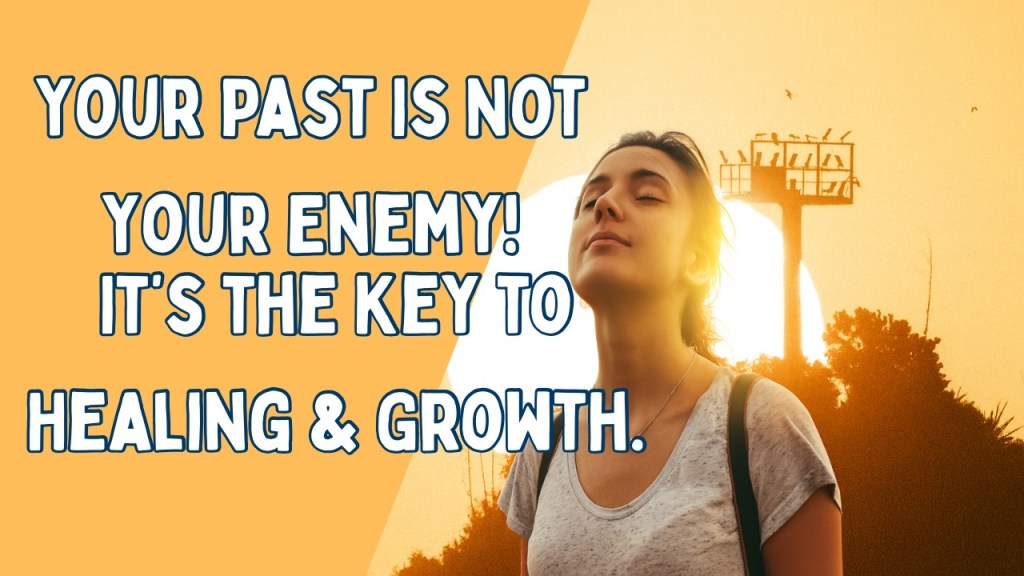
There’s a hush that settles over the world at dawn—the moment before light pours onto the earth, when everything seems to pause, to listen. Picture yourself in that stillness, fingertips curled around a steaming mug, wrapped in the quiet comfort of morning. You watch as grey becomes rose, as darkness dissolves into gentle gold. And as the new day awakens, so does something within you—a flood of memories: the “could-have-beens,” the heartbreaks, the words unsaid.
If your chest clenches at that recollection, you’re far from alone. The past can haunt like an uninvited shadow, whispering, “You’re behind,” “You should be further,” “It’s too late for me.” The soul grows weary under that weight, caught in the tug-of-war between wistful nostalgia and painful regret.
But let’s pause. What if the past isn’t an enemy lurking in the shadows? What if it is, in fact, your wisest companion—your teacher, not your jailer?
This gentle unraveling is the journey we’re embarking on today. In this post, you’ll discover why the story you carry is not a chain but a compass, and how your greatest struggles can become stepping stones. Through metaphors, real-life stories, science-backed insights, and loving action steps, you’ll feel empowered to embrace your history, release self-limiting beliefs, and transform your life by reclaiming your power.
The Weight of Carrying History
Life has a way of layering experiences, moment by moment, year by year, much like a tree that silently accumulates rings beneath its bark. Each ring—sunlit days or storm-tossed months—tells a part of your story. Yet, so often, we carry the past not as beautiful history, but as a burden.
Imagine hiking up a mountain with a backpack. With every disappointment, every misstep, another stone slips inside. Sometimes, that weight is obvious—like betrayal or loss. Other times, it’s subtle: a glance of disapproval, a childhood expectation, an old dream deferred. Eventually, the backpack becomes heavy. We find ourselves out of breath, legs quivering—not from the climb but from the invisible load.
When Past Mistakes Dictate Today
Do you notice yourself hesitating at the brink of something new—a romance, a creative leap, a career aspiration—chilled by echoes of old failures? Maybe a voice pipes up: “Remember when you tried and failed?” That voice is your history, showing up without an invitation. But remember: history is not destiny.
Picture the past as a wise, if sometimes awkward, tutor trailing beside you. Every misstep, heartbreak, or missed opportunity is not a condemnation—it’s data. It’s insight. The voice that reminds you of your setbacks can also highlight your growth if you listen with compassion, not criticism.
The Enemy Misconception
Why do so many of us treat our past as a villain? Society rarely celebrates the beauty in our bruises. From early childhood, we learn that perfection is rewarded and mistakes quietly shamed. Family stories, well-meaning advice, and even the fast-paced highlight reels on social media conspire to convince us: “If you’re still struggling, you’re failing.”
But this is a myth. You are not the sum of your mistakes. You are the sum of the courage it took to keep going.
Think of a mosaic crafted from shattered glass. Alone, each shard is sharp, perhaps even dangerous. Combined thoughtfully, those once-broken pieces refract the light in ways smooth glass never could. Your mosaic—your history—gives you depth, complexity, and beauty.
How the Past Becomes a Teacher
When you breathe, step back, and observe your story with curiosity instead of dread, transformation takes root. The lens through which you view your past can turn thorny brambles into blooming gardens.
Recognizing Lessons Hidden in Pain
Every difficult experience contains a treasure—sometimes buried, but always there.
- A failed relationship may be your first lesson in boundaries or reveal a deep yearning for authenticity.
- A career disappointment may illuminate your neglected passions or expose values misaligned with your path.
- Emotional wounds may spotlight self-defeating patterns, inviting you to choose differently.
Consider how a forest fire, devastating as it may seem, clears space for new life to flourish. Likewise, pain burns away illusions and makes way for resilience.
Instead of the disempowering “Why did this happen to me?” gently shift the question: “What can I learn here? What is this experience showing me about what I truly want, and who I’m becoming?”
Transforming Regret into Guidance
Regret often feels like an endless storm—a sky dark with the weight of “I should have…” But recall that even the wildest thunderstorm brings rain to seeds buried beneath the surface.
Suppose you passed up a long-desired opportunity years ago. The regret gnaws at you. But ask: Did that decision teach you about discernment? Did it reveal old fears you are now brave enough to challenge? Reframed, regret transforms from a tormentor into a beacon, illuminating what you truly value and what you’re at last ready to choose.
The Science Behind Learning from the Past
This isn’t just airy inspiration—psychology confirms what intuition whispers. Science tells us that reflective self-examination actually changes the structure of our brains.
Researchers call it “narrative reframing.” When you consciously reinterpret past events, you soften their emotional grip, reduce stress, and boost resilience. The brain begins building new neural pathways. Over time, you learn to meet present challenges more like a seasoned guide than a frightened wanderer.
Think of your brain as a garden. For years, you may have watered the weeds of shame and fear. But with intention, you can cultivate wisdom, plant seeds of compassion, and harvest clarity—one day, one reflection, at a time.
Practical Steps to Embrace Your Past
So, how do you turn experience into fuel, not fear? Here are gentle, actionable ways to transform your narrative and let your history be your greatest mentor.
1. Journal Your Lessons
Set aside time weekly to write out difficult memories or regrets. Under each, list at least one thing the experience taught you (even indirectly). Did a broken friendship teach you to value honesty? Did a missed chance reveal your true priorities? Journaling provides objectivity—like seeing your life story as a compassionate observer, not a judge.
2. Reframe Your Narrative
Words have magic. Instead of “I failed,” try, “I learned.” Instead of “I’m broken,” whisper, “I’m evolving.” When you change your self-talk, you rewire your brain and lighten your spirit.
3. Practice Gratitude for Growth
Gratitude works backward, too. See if you can thank your past for resilience, even if you’re not ready to thank it for the pain itself.
- “I’m grateful that betrayal showed me my strength.”
- “Thank you, setback—you introduced me to my creative fire.”
4. Seek the Silver Lining
Ask: “What hidden gifts did my most painful moments deliver?” Maybe fear of failure built your resourcefulness. Maybe loss awakened compassion for others. Over time, you transform each burden into a stone of wisdom to pave your path forward.
5. Integrate Reflection Into Daily Life
Each morning, spend a few minutes recalling a hard moment and identify one thing it taught you. This tiny ritual dissolves the unconscious power old shame holds over you.
Letting Go of the “Behind” Mentality
Too often, we measure our progress by someone else’s yardstick. It’s the comparison trap: “She’s more successful, he’s happier, I should be further along.” But life is not a race—it’s a garden, and every blossom follows its own clock.
Imagine two trees—one on a sun-kissed hill, another tucked deep in the forest shade. One bursts into flower in spring; the other roots down, quietly gathering strength. Is the latter “behind,” or simply aligning with its own rhythm? Similarly, your journey doesn’t have an expiration date. Growth is growth, no matter how slow.
Release the urge to compare. Embrace your unique timeline. Each season, each step, is part of what makes your results yours—irreplaceable and beautiful.
Real-Life Example: Turning History Into Growth
Meet Mary—a woman with a heart full of dreams and hands callused by attempts that didn’t pan out. After her bakery failed, she shrank from new risks. Each morning, the echo of “what if” drowned out hope. But with support, Mary began journaling her lessons—not the losses, but what they had given her: grit, creativity, courage.
She started a new venture, wiser and more attuned to her values. When doubts arose, instead of, “I failed,” she reminded herself, “I learned how to adapt. I learned what matters.” Success found her not despite her past, but because of how she honored it.
The Role of Self-Compassion
Embracing your past as a teacher is possible only when you lay down the whip of self-recrimination. Guilt might have kept you cautious, but it cannot foster growth. Compassion does.
Treat yourself as you would a beloved child: with patience, tenderness, and belief in the possibility of change.
- Speak kindly to yourself, as you would to a friend.
- Recognize your courage to continue, even through hardship.
- Celebrate each step, regardless of how awkward or slow.
Self-compassion softens old scars and opens space for new learning and radiant transformation.
Using Your Past as a Launchpad
Once you begin seeing your past as a mentor, you gather power. Ask gentle questions to turn insights into action:
- What patterns keep repeating, and how can I shift them now?
- Which strengths have I grown from past struggles—a resilience, a tenderness, a fierce determination?
- What choices, informed by these lessons, will I make today?
Reflection without action stirs up stagnation; action without reflection repeats old mistakes. Together, they create momentum for a life fully alive.
Daily Practices to Strengthen the Teacher Mindset
- Morning reflection: Spend 5 minutes revisiting a challenge and uncovering its lesson.
- Reframe your language: Counter self-critical words with learning-focused mantras.
- Gratitude journaling: Write nightly about one way your past has refined your resilience.
- Mindful pauses: When old pain resurfaces, ask, “What wisdom is this moment offering me?”
- Share your story: Speak or write your experiences—externalizing them transforms shame into learning.
A Gentle Reminder
Your past is not a chain but a compass, tuned to your unique north star. Every stone you carry can be set down, examined, and—if you wish—transformed into one of the stepping stones toward who you are becoming.
Today, if your backpack feels impossibly heavy, know that each “stone” you unpack is a lesson reclaimed. Healing and growth ask not to erase your history, but to honor and learn from it. As dawn breaks each day, let your past light instead of shadow your path.
Take the First Step Toward Transformation
Ready to turn your history from a weight into wings? At HerRadiantMind, guidance and compassion walk beside you. Together, we will harvest the wisdom from your story, loosen the grip of self-limiting beliefs, and ignite your journey into authenticity and power.
🌱 Book a 1:1 Coaching Session Today—and let your past become your wisest mentor.
Looking Ahead: Part 2
In Part 2, we’ll explore how to stop using your history against yourself and start letting it propel you forward. You’ll learn actionable steps to de-weaponize your past, uncover hidden strengths, and embrace a mindset that transforms old wounds into fuel for your most empowered life.
Thank you for spending this time with me.
Remember—healing isn’t linear, and growth doesn’t have to be loud to be powerful.
Keep choosing yourself, one gentle moment at a time.💖
Until next time, stay radiant and take tender care of your beautiful mind and body.
With love & light
— Christabel, HerRadiantMind
Stay Radiant-Join the list!
Discover more from herradiantmind
Subscribe to get the latest posts sent to your email.
Comments
Response
-
Such a healing perspective. Instead of viewing our past as a threat, you teach us how to embrace it as a guide. This is the kind of wisdom that transforms lives. Thank you for sharing this light. 🌸🌟
LikeLike

 herradiantmind
Leave a Comment