Tag: wellness

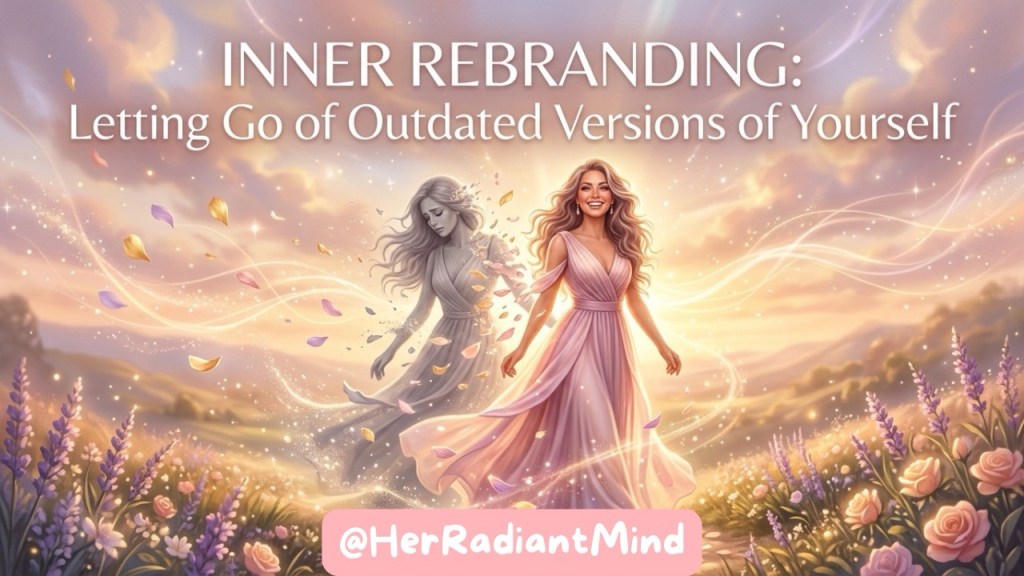
  • Inner Rebranding: Letting Go of Outdated Versions of Yourself

    Inner Rebranding: Letting Go of Outdated Versions of Yourself

    There comes a quiet moment in life when you pause and think,

    “Wait… who am I even trying to be anymore?”

    Not in a dramatic, movie-scene kind of way.

    More like a random Tuesday washing dishes, scrolling your phone, or catching your reflection after a long day.

    You feel it in your chest.

    A subtle tug.

    The version of you that once fit so comfortably now feels misaligned.

    Like wearing shoes you used to love, but now they just hurt.

    That is inner rebranding.

    It’s the courageous act of letting go of outdated versions of yourself so you can grow into the woman you are becoming.

    Not the one you were told to be.

    Not the one who survived by being “easy,” “strong,” “perfect,” or “small.”

    But the one who is real now.

    And yes—it can feel uncomfortable. Even scary.

    Because changing your life externally is one thing…

    Changing your internal identity is something else entirely.

    What Inner Rebranding Really Means

    Inner rebranding isn’t about becoming fake, polished, or perfect.

    It’s not a personality makeover for appearances.

    It’s deeper than that.

    It’s about updating:

    • the way you see yourself
    • the way you speak to yourself
    • the way you move through the world

    It’s noticing when an old version of you is still in control…

    even though she was built for a life you no longer live.

    Maybe she was:

    • the people-pleaser who kept everyone happy
    • the overworker who believed rest had to be earned
    • the quiet one who learned speaking up was “too much”
    • the achiever who tied worth to performance

    That version of you wasn’t wrong.

    She helped you survive.

    But survival is not the same as living.

    Inner rebranding is choosing to stop dragging old coping mechanisms into a new season—and making space for a version of you that feels softer, safer, stronger, and more honest.

    Why Outdated Versions Stick Around

    Ever wondered,

    “Why do I keep doing this even though I know better?”

    You’re not alone.

    Your brain is wired for familiarity—even when familiarity isn’t healthy.

    Through a process called neuroplasticity, your brain builds pathways based on repetition. The more you think or behave a certain way, the more automatic it becomes.

    So if you spent years:

    • staying quiet
    • fixing everyone’s problems
    • chasing perfection

    Your brain learned:

    “This is how we stay safe.”

    That’s why growth feels uncomfortable.

    You’re not just changing behavior—

    you’re asking your brain to let go of an old map.

    And the brain? It doesn’t give those up easily.

    4 Signs You’re Ready for a New Version of You

    You don’t need a life crisis to begin.

    Often, the signs are quiet.

    1. Your old role feels heavy

    What once felt normal now feels exhausting.

    2. You’re outgrowing your own life

    Your habits, routines, or even relationships no longer feel aligned.

    3. You feel guilty for changing

    Like evolving means disappointing others.

    4. You’re craving something deeper

    Not more noise—more truth, peace, and alignment.

    That craving?

    It’s your inner self whispering:

    “We’re ready.”

    The Grief No One Talks About

    Letting go of who you used to be can feel… emotional.

    Sometimes even like a quiet kind of grief.

    Because you’re not just releasing habits.

    You’re releasing an identity.

    A version of you that:

    • kept you safe
    • helped you feel accepted
    • protected you in ways you needed

    So yes—you may grieve:

    • the comfort of being liked
    • the safety of predictability
    • the identity built around being needed

    This doesn’t mean you’re going backward.

    It means you’re being honest.

    And honesty is part of healing.

    How Identity Gets Stuck

    Here’s the truth:

    You are not your:

    • overthinking
    • perfectionism
    • fear of rejection
    • people-pleasing

    Those are patterns, not your identity.

    But when patterns repeat long enough, they feel like who you are.

    That’s when we say things like:

    “That’s just how I am.”

    But often, what we really mean is:

    “That’s how I learned to survive.”

    Inner rebranding asks a powerful question:

    What if this isn’t who I am…

    but who I had to be?

    The Science of Change

    Your brain is always learning.

    Every time you:

    • choose a new response
    • interrupt an old pattern
    • speak to yourself differently

    You create a new neural pathway.

    But here’s the key:

    change happens through repetition, not pressure.

    Not one big moment—

    but small, consistent shifts:

    • pausing before saying yes
    • resting without guilt
    • speaking kindly to yourself
    • choosing honesty over comfort

    Research also shows that self-compassion reduces stress and increases emotional resilience.

    So no—being hard on yourself won’t speed up growth.

    It actually slows it down.

    What You May Need to Let Go Of

    Sometimes it’s not people you need to release—

    it’s the version of you that keeps showing up.

    Maybe it’s:

    • The overgiver — always pouring from an empty cup
    • The perfectionist — afraid to get it wrong
    • The silent one — afraid to take up space
    • The “strong” one — who never rests
    • The chameleon — who adapts to everyone else

    If this resonates, pause.

    That discomfort?

    It’s awareness.

    And awareness is the first step toward change.

    How to Begin Inner Rebranding

    You don’t need to reinvent your life overnight.

    Start small. Start gently.

    1. Name the old version

    Be honest:

    “I’m letting go of the part of me that thinks love must be earned.”

    2. Notice your triggers

    When do you shrink? Overgive? Overthink?

    Those moments are clues.

    3. Choose one new response

    Try:

    • “Let me think about it” instead of yes
    • pausing instead of apologizing
    • self-compassion instead of criticism

    4. Let your body catch up

    Growth isn’t just mental—it’s physical.

    New ways of being can feel unfamiliar.

    That doesn’t mean they’re wrong.

    It means you’re learning.

    Inner Rebranding in Real Life

    Picture this:

    Two versions of you walk into the same room.

    The old version scans for approval.

    She wonders who’s judging her.

    The new version?

    She enters grounded. Present. Honest.

    She doesn’t perform.

    Same room.

    Different energy.

    That’s inner rebranding.

    The Role of Self-Trust

    To evolve, you need to trust yourself.

    And self-trust is built through small promises:

    • “I won’t ignore my needs.”
    • “I’ll rest before I burn out.”
    • “I’ll speak truth with kindness.”

    Every time you follow through, you reinforce:

    “I’ve got me.”

    What Happens When You Don’t Let Go

    Holding onto an outdated identity can feel… heavy.

    You might feel:

    • stuck
    • resentful
    • emotionally drained
    • disconnected

    Like something is missing.

    Because something is:

    you.

    What You Gain When You Release

    When you let go, you make space for:

    • peace
    • clarity
    • boundaries
    • deeper relationships
    • emotional freedom

    You gain permission to be:

    • evolving
    • imperfect
    • real

    And that’s where true freedom lives.

    A Gentle Truth to Hold Onto

    You don’t have to hate who you used to be to outgrow her.

    She helped you survive.

    But she doesn’t get to lead your future.

    You can honor her…

    and still release her.

    That’s not betrayal.

    That’s growth.

    Final Thoughts

    Inner rebranding isn’t about becoming someone new.

    It’s about coming home to who you’ve been all along—

    beneath the expectations, the pressure, and the noise.

    It’s about gently releasing what no longer fits…

    and stepping into what does.

    You are allowed to:

    • change
    • evolve
    • outgrow old versions of yourself

    And if you’re standing in that in-between space right now…

    this is your sign.

    You don’t have to navigate it alone.

    Ready to Begin Your Inner Rebrand?

    At HerRadiantMind, I help women release old patterns, rebuild self-trust, and step into a more grounded, confident, and radiant version of themselves.

    If this spoke to your heart, consider this your invitation to take the next step.

    Your next chapter isn’t waiting for you to be perfect.

    It’s waiting for you to be real.

    Thank you for spending this time with me.

    Remember—healing is not linear, and growth doesn’t have to be loud to be powerful.

    Keep choosing yourself, one gentle moment at a time.💖

    Until next time, stay radiant and take tender care of your beautiful mind and body.

    With love,

    — Christabel, HerRadiantMind
  • How to Be Content With Your Life While Still Growing

    How to Be Content With Your Life While Still Growing

    5 Powerful Lessons From My Younger Self

    There was a time when I believed happiness was hiding just beyond the next big thing.

    The next job.

    The next relationship.

    The next version of me.

    I used to whisper to myself:

    “Once I get there, everything will feel right.”

    But here’s the plot twist — “there” never came.

    Every time I got close, the finish line quietly moved a few steps ahead.

    Sound familiar?

    It’s like chasing mirages in the desert: beautiful, tempting, and completely untouchable the moment you think you’ve arrived.

    The truth I eventually learned — the one my younger self didn’t yet understand — is this:

    Contentment and growth don’t live on opposite sides of the road. They can walk side by side.

    Today, I want to share five lessons I wish I could whisper to my younger self — lessons that helped me stop postponing happiness and start feeling content where I am, even while continuing to grow.

    1. Life Isn’t Something You Arrive At— It’s Something You Experience

    Let’s start with a confession.

    When I was younger, I treated life like a scavenger hunt. Every milestone was supposed to unlock the next level of happiness.

    Graduation.

    Career success.

    Relationships.

    Personal achievement.

    But here’s the sneaky thing about “arrival thinking.”

    You never actually get there.

    There’s always something else to fix, improve, or chase. And before you know it, life quietly passes while you’re busy waiting for “someday.”

    I remember one afternoon walking home from work, mentally replaying everything I still hadn’t accomplished.

    Then I passed a park.

    A group of kids were laughing uncontrollably at absolutely nothing.

    They weren’t trying to be happy.

    They simply were.

    That moment hit me hard.

    Because I realized I had been missing life’s smallest joys — the moments that don’t appear on a goal list but give life its meaning.

    Psychologists call this the arrival fallacy — the belief that happiness begins only after achieving a certain milestone.

    But research from the Harvard Study of Adult Development — the longest-running study on happiness — shows that joy grows from:

    • meaningful relationships
    • presence in everyday moments
    • emotional connection

    Not just achievements.

    So here’s what my younger self needed to hear:

    Stop waiting for life to start. You’re already in it.

    2. Growth Doesn’t Mean You Have to Be Unhappy With Now

    For years I believed something that many of us secretly believe:

    If I become content…

    I might lose my drive.

    But that’s not how growth actually works.

    Think of it like a garden.

    You can love the flowers blooming today while still planting seeds for tomorrow.

    Gratitude doesn’t make you stagnant.

    It actually fuels sustainable growth.

    A study published in the Journal of Positive Psychology found that people who practice:

    • gratitude
    • self-compassion
    • emotional awareness

    are more motivated long-term, not less.

    Why?

    Because their growth comes from wholeness, not pressure.

    When I finally gave myself permission to enjoy my current chapter, something shifted.

    I stopped chasing goals to fix myself.

    I started pursuing them because I genuinely liked who I was becoming.

    You can love your life and still want to grow.

    You can be both:

    A masterpiece.

    And a work in progress.

    At the same time.

    3. Comparison Steals the Joy of Your Own Journey

    Let’s be honest.

    Social media makes it incredibly easy to feel behind.

    Someone’s launching a business.

    Someone just bought a house.

    Someone else is glowing on vacation like it’s their full-time job.

    And there you are… sitting in your leggings wondering if cereal for dinner is a life choice or a cry for help.

    I’ve been there too.

    Comparison whispers:

    “You should be further by now.”

    But here’s the truth our brains conveniently forget:

    You’re comparing your behind-the-scenes to someone else’s highlight reel.

    Scientific research shows that social comparison activates the same brain regions associated with pain.

    Yes — it literally hurts your brain.

    That’s when I started asking myself a better question:

    What’s blooming in my lane?

    Maybe it’s:

    • emotional growth
    • resilience
    • deeper self-awareness
    • patience

    These things don’t photograph well on Instagram.

    But they build the strongest version of you.

    So the next time comparison invites you to the pity party…

    Politely decline.

    And go water your own garden.

    4. Peace Comes From Trusting Yourself

    My younger self was a professional overthinker.

    I had a mental spreadsheet for every possible “what if.”

    What if I fail?

    What if I embarrass myself?

    What if I make the wrong choice?

    Spoiler alert.

    Most of those fears never happened.

    But the anxiety still stole my peace.

    Eventually I realized something important:

    Life will surprise you no matter how carefully you plan it.

    And that’s okay.

    Confidence isn’t about having all the answers.

    It’s about trusting that you can handle whatever comes next.

    Psychologists call this self-efficacy — the belief that you are capable of navigating life’s challenges.

    And the only way to build that trust is through experience.

    Think about toddlers learning to walk.

    They wobble.

    They fall.

    They try again.

    They don’t quit because falling is part of learning.

    Somewhere along the way, we forget that kind of courage.

    But it’s still inside us.

    Trusting yourself isn’t about knowing the future — it’s believing you can face it.

    5. Happiness Is Something You Practice

    Here’s a myth worth breaking.

    Happiness is not the reward for building a perfect life.

    It’s the foundation that helps build it.

    The field of positive psychology, pioneered by Martin Seligman, shows that people who cultivate happiness regularly experience:

    • greater resilience
    • more creativity
    • stronger relationships
    • higher long-term success

    Happiness is a practice, not a finish line.

    Here are a few ways to build it into everyday life:

    Gratitude Check-Ins

    Pause once a day and ask yourself:

    What went right today?

    Even small wins matter.

    Joy Moments

    Do one thing daily simply because it makes you smile.

    A walk.

    A good cup of tea.

    Music in the car.

    Quiet Mind Time

    Put your phone down for five minutes and just sit in stillness.

    No scrolling.

    No distractions.

    Just breathing.

    These tiny habits may seem simple.

    But they slowly retrain your brain to notice joy.

    Looking Back

    When I think about my younger self, I see someone trying desperately to earn a sense of “enough.”

    She believed peace was something you won after fixing everything.

    But she didn’t yet understand this:

    You don’t have to fix your life before you’re allowed to enjoy it.

    You can grow.

    You can evolve.

    You can dream big.

    And you can still feel grateful for the moment you’re living right now.

    Because personal growth isn’t about becoming someone new.

    It’s about reconnecting with who you already are.

    Practical Ways to Feel Content While Still Growing

    If you want to balance personal growth with inner peace, try these simple mindset shifts:

    Set Soft Goals

    Focus on how you want to feel — not just what you want to achieve.

    Examples:

    • peaceful
    • aligned
    • curious

    Reduce Comparison Time

    Swap 10 minutes of scrolling for 10 minutes of journaling.

    Track Emotional Wins

    Each week, write down three ways you grew emotionally.

    Growth isn’t always visible.

    But it matters.

    Savor Your Progress

    Celebrate steps along the journey — not just the final result.

    Create a Contentment Ritual

    Anchor happiness into your day with something simple:

    • morning tea
    • evening gratitude journaling
    • quiet nature walks

    These small moments teach your nervous system that life is happening now.

    The Quiet Art of Enough

    Being content doesn’t mean settling.

    It means you stop fighting the moment you’re in.

    You learn to appreciate your life while still growing into your potential.

    And that’s real power.

    A peaceful heart that’s still hungry for growth.

    From My Heart to Yours

    If you’ve been living in the cycle of:

    “Once I achieve this… then I’ll be happy.”

    I want you to hear this.

    You are allowed to:

    • appreciate your present
    • pursue your dreams
    • grow at your own pace

    Your contentment and your ambition can coexist beautifully.

    And if you’re ready to explore that deeper balance — learning how to grow without burning yourself out — that’s exactly what I help women do inside HerRadiantMind.

    Through coaching, mindset work, and guided reflection, you can stop postponing happiness and start building a life that feels good right now.

    You don’t have to trade peace for progress.

    You deserve both.

    Ready to grow without losing your joy?

    Explore my 1:1 coaching sessions at HerRadiantMind and begin becoming the most grounded, confident version of yourself — exactly where you are today.

    Thank you for spending this time with me.

    Remember—healing is not linear, and growth doesn’t have to be loud to be powerful.

    Keep choosing yourself, one gentle moment at a time.

    Until next time, stay radiant and take tender care of your beautiful mind and body.

    With love,

    — Christabel, HerRadiantMind
  • Emotional Minimalism: Clearing Mental Clutter to Make Space for Peace This New Year

    Emotional Minimalism: Clearing Mental Clutter to Make Space for Peace This New Year

    A Fresh Year, a Clearer Mind

    A new year always brings a sense of possibility. A chance to leave the past behind, hit “reset,” and reclaim your inner peace. But here’s the truth—changing the calendar doesn’t automatically clear your mental and emotional clutter.

    Have you ever walked into a room so messy you couldn’t think? The piles of clothes, papers, dishes—it’s overwhelming. Now imagine that room is your mind. Emotional clutter feels the same: crowded, noisy, suffocating.

    Most of us carry mental junk—old grudges, constant worries, self-doubt, unfinished guilt—as if it’s part of being human. But peace isn’t something you have to “find” or “earn.” It’s already there, waiting under all that clutter.

    That’s what emotional minimalism is about. Not cutting people off, not pretending nothing bothers you—but creating breathable space for calm and clarity. And what better time to start than at the beginning of a new year, when reflection and renewal are in the air?

    The Hidden Cost of Emotional Clutter

    Picture your brain like a closet. Every memory, responsibility, and relationship is a piece of clothing. Over time, it gets overcrowded: too many “I should’ve” outfits, too many “what ifs,” and not enough room to breathe.

    When your mental closet is jammed:

    • You wake up exhausted, even after sleep.
    • You snap at the people you love.
    • You scroll endlessly online, trying to feel better—but it only adds more noise.

    Science backs this up. Princeton University researchers found that physical clutter limits your brain’s ability to focus. Emotional clutter—unresolved feelings, negative self-talk, guilt, fear—can feel even heavier. It’s like having too many browser tabs open. Eventually, something freezes.

    Why We Hold On to Mental Clutter

    Letting go sounds beautiful, but it’s hard in real life.

    We hold onto emotions because they once felt useful:

    • Anger protected us.
    • Worry kept us alert.
    • Guilt reminded us to care.

    But when these emotions overstay their welcome, they stop helping and start haunting.

    It’s like carrying suitcases from trips you never finished: regret from high school, leftover heartbreak, and a little bag labeled “What If I Fail.”

    Here’s the truth: you’re not your clutter. You’re the space beneath it.

    Emotional Minimalism: Curate Your Inner World

    Emotional minimalism isn’t about suppressing feelings or pretending nothing bothers you. It’s about being intentional with the feelings, thoughts, and people you give space to.

    Think of it as curating your emotional home. Keep what nourishes peace. Release what drains it.

    Ask yourself:

    • Does this thought help me or hurt me?
    • Am I replaying the past or learning from it?
    • Does this relationship feel mutual or one-sided?

    Answering these questions starts the decluttering automatically. Peace stops being something you chase—it becomes your default.

    The Science of Letting Go

    Neuroscience shows your brain rewires itself when you change thought patterns. This is called neuroplasticity.

    • Stop feeding shame or worry, and the neural pathways weaken.
    • Nurture calm, grounded thoughts, and new connections form.

    It’s like replacing an outdated app with a smoother, upgraded version of your mind.

    Small shifts matter. You don’t need a mountain retreat—just tiny mental moments of cleanup in your daily life.

    Step 1: Notice the Noise

    Your mind is like a radio constantly playing in the background. Awareness is the first step to emotional minimalism.

    Try this exercise: pause for 30 seconds, take a deep breath, and ask:

    “What’s taking up space in my head right now?”

    You might uncover old worry, unresolved conversations, or grudges. Awareness isn’t judgment—it’s the first decluttering tool.

    Step 2: Stop Collecting Junk Thoughts

    Our minds have “junk drawers” for thoughts we don’t know how to process.

    • Pause before spiraling into “what if” loops.
    • Ask if guilt helps you grow or keeps you stuck.
    • Step away from social comparison.

    Think of emotional minimalism as washing dishes—do it consistently, and clutter never piles up.

    Step 3: Create Empty Space on Purpose

    Peace can feel uncomfortable at first. Calm is foreign if you’re used to chaos.

    Try these ways to create mental space:

    • Mindful breathing: Activates your parasympathetic nervous system.
    • Digital breaks: Short screen-free moments lower cortisol.
    • Walking without distraction: Helps your brain process emotions efficiently.

    Even simple tasks like washing dishes or commuting mindfully can spark emotional decluttering.

    Step 4: Swap Criticism for Compassion

    Self-criticism feeds clutter. Research shows self-compassion motivates lasting change.

    Next time you stumble, try:

    “I’m human. What can I learn here?”

    Compassion clears space instantly—like opening a window in a stuffy room.

    Step 5: Edit Your Emotional Relationships

    Emotional minimalism isn’t just self-talk—it’s also social.

    Ask:

    • Who fills my mind with peace?
    • Who fills it with noise?

    Edit exposure without guilt. Limit draining conversations. Step back when needed. Love deeply without carrying everyone else’s chaos.

    The “Enough” Mindset

    Clutter often grows from I’m not enough:

    • Not productive enough.
    • Not lovable enough.
    • Not doing enough.

    The truth: you were enough before doing anything to earn it. Emotional minimalism is coming home to the you that peace already belongs to.

    Next time the thought arises, ask: “What if I’m allowed to rest right now?”

    Boundaries Protect Your Peace

    Boundaries are your mind’s shelves. They organize and protect calm.

    Set limits like:

    • “I care, but I won’t fix your chaos.”
    • “I love you, and I can say no.”

    People with strong emotional boundaries experience less burnout and healthier relationships. Boundaries = self-respect in action.

    Tiny Shifts That Make a Big Impact

    Start small:

    • Delete old photos that make you sad.
    • Journal one emotional “truth” daily.
    • Spend one minute doing nothing.
    • Say “no” where you usually say “yes.”

    Peace sneaks in as you make space for it.

    The Emotional Closet Test

    Ask: “If my emotions were clothes, how would my closet look?”

    • Overflowing with old hurt?
    • Packed with guilt sweaters?
    • Neatly curated with feelings that bring joy?

    Messy is okay. Every one of us has emotional laundry day. Start sorting, and you’ll feel lighter.

    Humor Helps You Declutter

    Ever replay an argument years later, crafting the perfect comeback? That’s emotional hoarding.

    Laugh at your mind’s habits. Humor releases dopamine, breaking negative thought cycles. Picture dragging outdated thoughts to the “trash bin” and saying, “Delete!”

    Emotional Minimalism in Real Life

    Rachel (coaching client) seemed put together—steady job, loving partner, good health. But inside, her mind ran mental marathons daily.

    We started small: five minutes every evening to write down three thoughts she didn’t need:

    • “I messed up that meeting.”
    • “I’m not enough.”
    • “What if I fail?”

    Physically crossing them off the page created space. Three weeks later, she said:

    “I didn’t realize how heavy it all had become until I started putting it down.”

    Release is the heart of emotional minimalism—you don’t have to fix everything.

    Relearning Stillness in a Busy World

    Calm minds don’t come from doing more—they come from doing less, deeply and intentionally.

    Your peace isn’t lost—it’s just buried under clutter. Start this new year by making space for it.

    Start the New Year with the Radiant Reset Toolkit

    The new year is the perfect time to declutter your mind, release old emotional baggage, and reclaim your energy.

    The Radiant Reset Toolkit is a hands-on, actionable guide for emotional minimalism, featuring:

    • Guided exercises to identify and release mental clutter.
    • Journaling prompts to reflect and reset daily habits.
    • Mindfulness practices to cultivate calm and clarity.
    • Tools to strengthen boundaries, self-compassion, and emotional resilience.

    This isn’t about resolutions that fade by February—it’s about real, sustainable change. The toolkit gives you the structure and support to create lasting peace and make this year truly yours.

    ✨ This year, let peace be your default. Start now with the Radiant Reset Toolkit.

    Thank you for spending this time with me.

    Remember—healing isn’t linear, and growth doesn’t have to be loud to be powerful.

    Keep choosing yourself, one gentle moment at a time.💖

    Until next time, stay radiant and take tender care of your beautiful mind and body.

    With love,

    — Christabel, HerRadiantMind
  • 5 Things to Remember When the Holidays Bring Up Old Wounds

    5 Things to Remember When the Holidays Bring Up Old Wounds

    The smell of cinnamon candles. The sound of a familiar song echoing through a store. The sight of twinkling lights that make the world shimmer for a moment.

    And suddenly… it hits you.

    That old ache in your chest. The one you thought time had softened.

    The holidays have a way of stirring up memories you didn’t ask to remember — the ones tied to loss, loneliness, or the version of you who never felt safe to relax.

    If this season feels heavy instead of merry, you’re not broken. You’re human.

    The truth no one says out loud? Even joy-filled months carry shadows. The trick is learning to care for your heart while the world celebrates around you.

    Before you build emotional armor or hide under a blanket of “I’m fine,” here are five things to remember when the holidays bring up old wounds — because healing doesn’t pause for tinsel and lights.

    1. When Old Feelings Resurface at Unexpected Moments

    You’re chopping vegetables, scrolling gift ideas, or wrapping a present — and then something small cracks you open. A memory. A scent. A song.

    Suddenly, you’re 12 again at the kitchen table, hearing a raised voice, or noticing that empty chair across from you that used to be filled.

    Pain has a funny calendar; it doesn’t check what month it is before saying, “Hey, remember me?”

    Here’s the key: it’s not a setback. It’s communication. Your nervous system is reminding you that you’ve lived through things that mattered — deeply.

    When old emotions rise during the holidays, see them as signals, not setbacks. They’re showing up now because you finally have the safety, space, or softness to feel what couldn’t be felt before.

    You’re not back at square one. You’re revisiting an old chapter with new wisdom in your hands.

    Mini practice:

    When a wave of sadness or frustration comes up:

    1. Pause.
    2. Place your hand over your heart.
    3. Quietly say, “I see you. You’re allowed to be here.”

    That one sentence can transform the moment from self-judgment to self-connection.

    2. You Don’t Have to Fake the Festive

    Somewhere along the way, the holidays turned into a performance — the smiling family photos, the “grateful” posts, the cheerful small talk.

    But pretending everything’s fine when it isn’t? That only deepens the loneliness.

    It’s okay if you can’t summon joy on command. You’re not required to decorate your pain with glitter.

    You can love the season and still want to skip the party. You can laugh over cocoa one day and cry the next. Healing doesn’t mean feeling good all the time. It means being honest.

    Set boundaries that protect your energy:

    • Politely decline events that drain you.
    • Create your own version of celebrating — a quiet dinner, a nature walk, or a cozy night in.
    • Respond with honesty: “Thank you for inviting me. I might need to see how I’m feeling that day.”

    When you stop pretending, you make room for connection that doesn’t require a mask.

    3. The “Perfect” Holiday Is a Myth (and It Always Was)

    The perfect holiday we see in movies or ads? It never really existed. No one’s family is that serene. No one’s table is free of tension.

    Even the person posting matching pajamas on Instagram probably cried in the bathroom ten minutes earlier.

    We chase an image from our childhood — the holiday we wish we had. But comparison is poison. Unrealistic expectations feed disappointment, which feeds shame.

    Instead, ask: What actually feels nurturing to me right now?

    • Bake cookies for yourself, not for show.
    • Play your favorite music while cleaning.
    • Tell your inner child, “This year, I’ll give you the safety you never had.”

    Try this: Each morning, ask, “What would make today feel 1% more peaceful?” Then do that one small thing. Healing is in the quiet gestures.

    4. Your Triggers Aren’t Enemies — They’re Invitations

    The holidays press buttons we didn’t even know were still there:

    • A critical parent comment.
    • A sibling rivalry that never faded.
    • That dinner conversation that makes you want to crawl out of your skin.

    These triggers aren’t proof you’ve failed to heal. They’re reminders that healing is ongoing — a spiral, not a straight line.

    Instead of seeing discomfort as the enemy, get curious:

    • What is this feeling trying to tell me?
    • Whose voice am I hearing — theirs or my own?
    • What would support feel like in this moment?

    Even a small pause — the breath between past and present — is evidence of growth.

    Triggers are teachers. They show which parts of you still crave safety or validation and invite you to bring light into old corners of the heart.

    5. You’re Allowed to Create New Traditions

    Just because something’s “always been done” doesn’t mean it belongs in your life now.

    Maybe old traditions feel like walking through a haunted house — familiar but unsettling. You can let them go and build something new that fits the life you’re growing into.

    Ideas to try:

    • Write a letter to your younger self and burn it safely as a ritual of release.
    • Spend a day volunteering or helping someone in need.
    • Host a “chosen family” dinner with people who make you feel safe.
    • Go somewhere quiet in nature and reflect on what you’re ready to leave behind.

    Traditions aren’t sacred because they’re old — they’re sacred because they hold love. Make new ones that nurture you, not drain you.

    Healing Doesn’t Skip the Holidays

    Many assume personal growth follows a calendar — progress in August, peace by December. But the truth? Healing is messy, nonlinear, and beautifully human.

    You can be grateful and grieving.

    You can forgive and feel anger.

    You can love your family and still need space.

    Both can be true.

    When Grief Joins the Celebration

    The holidays can feel especially heavy if you’re carrying loss — the absence of a loved one, a relationship that ended, or even the life you thought you’d have. Grief doesn’t take a vacation for December. In fact, it often shows up louder, reminding you of what’s missing amid the lights and laughter.

    It’s important to give grief space without guilt. Feeling sad doesn’t mean you’re failing at the season — it means you’re human, and your heart remembers love.

    Gentle ways to honor grief during the holidays:

    • Light a candle or create a small ritual to remember those you’ve lost.
    • Share a memory with someone you trust, or write it in a journal.
    • Allow yourself tears without judgment — they are part of healing, not weakness.
    • Blend joy and sorrow — it’s okay to laugh at a funny story, then feel a pang of longing afterward. Both emotions can coexist.

    Grief and celebration can exist side by side. When you acknowledge your grief instead of pushing it away, you make room for gentle presence, authentic joy, and meaningful connection — the kind of holiday your heart truly needs.

    The holidays don’t have to test your healing; they can deepen it. One quiet boundary, one grounded breath, one honest no at a time — that’s evolution.

    Every emotion that resurfaces — sadness, longing, or even anger — isn’t here to ruin your holiday; it’s asking to be witnessed, finally, with tenderness instead of judgment.

    Gentle Grounding Ritual for When the Season Feels Heavy

    1. Pause and breathe — Inhale for 4 counts, hold 2, exhale 6. Feel your feet on the floor.
    2. Name what’s real — Whisper, “This is just a moment. It will pass.”
    3. Soften your heart — Hand on chest: “I’m doing the best I can.”
    4. Reconnect — Step outside, look at the sky, light a candle, touch your pet. Remind your body life exists beyond the memory.

    Your nervous system doesn’t need perfection; it needs reassurance. Every small act tells your body, “You’re safe now.”

    Quick Reminders

    • Grief can share space with gratitude. Both belong at the table.
    • You’ve already survived the hardest parts. Memories can’t hurt you like they used to.

      It’s okay to unplug. Social media doesn’t define how your holiday should feel.
    • Rest is productive. You’re allowed to pause.
    • You are allowed to choose peace over tradition.

    Say it again: You are allowed to choose peace.

    The Quiet Power of Self-Compassion

    Self-compassion is courage. It’s what allows you to show up honestly, without the tight smile or “I’m fine” script.

    When you talk gently to yourself, you rewrite the tone of painful memories. You give past versions of yourself the love they deserved.

    Imagine sitting by candlelight, whispering, “I forgive you for how hard you tried.”

    That’s healing: soft, real, and enough.

    A Season to Come Home to Yourself

    The most sacred connection is the one you build within.

    You don’t need perfect family moments or a flawless dinner. You just need presence — the kind that says, “I’m here, I’m breathing, I’m learning to love myself through this.”

    When old wounds whisper, remember:

    They’re not reopening to punish you. They’re unfolding to be healed.

    And healing, even in December, is a sacred kind of magic.

    A Gentle Invitation from HerRadiantMind

    If this season feels heavier than your heart can hold alone, you don’t have to carry it without support.

    At HerRadiantMind, our mission is simple — to help women turn pain into presence, and wounds into wisdom.

    Through one-on-one coaching, you’ll learn to:

    • Release emotional patterns that resurface during the holidays.
    • Practice grounded self-care that feels natural, not forced.
    • Rewrite your inner story with compassion and clarity.

    Healing isn’t meant to be done in isolation — it’s meant to be witnessed, gently, by someone who sees you.

    Take this as your sign: it’s time to give yourself the same grace you’ve offered everyone else.

    Thank you for spending this time with me.

    Remember—healing isn’t linear, and growth doesn’t have to be loud to be powerful.

    Keep choosing yourself, one gentle moment at a time.💖

    Until next time, stay radiant and take tender care of your beautiful mind and body.

    With love,

    — Christabel, HerRadiantMind

  • Healing the Busy Woman Wound: Why Rest Feels Unsafe & How to Relearn It Without Guilt

    Healing the Busy Woman Wound: Why Rest Feels Unsafe & How to Relearn It Without Guilt

    Ever find yourself lying in bed, heart pounding, mind racing, with a to-do list screaming louder than any lullaby?

    Rest sounds like a dream — yet somehow it feels like stepping into quicksand, something unsafe, indulgent, or undeserved.

    If that hits a little too close to home, you’re not alone.

    So many women carry what I call the “Busy Woman” Wound — a deep inner knot of guilt, fear, and hypervigilance around slowing down.

    This blog is your gentle map to unravelling that knot and learning how real, soulful rest isn’t just healing… it’s transformational.

    The Busy Woman Wound: When Rest Feels Like a Trap

    Maybe you grew up with an unspoken rule:

    “If you’re not working, doing, or hustling… you’re falling behind.”

    This is the Busy Woman Wound.

    It’s not just exhaustion — it’s the way rest feels unsafe, weak, or even dangerous.

    Your nervous system might still be stuck in survival mode, whispering:

    “If you stop, everything will fall apart.”

    Even when your mind knows you need rest, your body remembers something different:

    Keep going. Stay alert. Be useful. Don’t let anyone down.

    This wound hides beneath the surface, leaving you feeling “off” the moment you try to slow down.

    You may feel restless, anxious, or heavy with guilt, convinced that stillness equals failure.

    When Rest Becomes the Enemy Instead of the Medicine

    Here’s a compassionate truth:

    Your brain and body don’t automatically know how to rest when they’ve spent years running at full speed.

    Chronic busyness rewires your nervous system into constant alertness.

    When rest finally comes, peace feels foreign — even threatening.

    Instead of sinking into stillness, your body may respond with:

    • racing thoughts
    • tension in the chest
    • the urge to get up and “do something”
    • the automatic pull to scroll, clean, or work

    Not because you don’t want rest…

    but because your system doesn’t feel safe in rest.

    Movement feels familiar.

    Quiet feels overwhelming.

    The Neurobiology of Rest Resistance: What’s Really Happening in Your Brain and Body

    If you’ve ever wondered why you struggle to rest even when you’re exhausted, there’s a deeply scientific reason — and it has everything to do with your nervous system, your brain’s protective wiring, and the hormones your body has learned to depend on for survival.

    Rest resistance isn’t a personality flaw.

    It’s biology.

    1. Your Nervous System May Be Stuck in Survival Mode (Hyperarousal)

    When your body spends years in “go-mode,” it adapts to that pace. The sympathetic nervous system  your fight-or-flight state  becomes your baseline.

    So when you try to rest, your body may respond with:

    • racing heart
    • muscle tension
    • intrusive thoughts
    • the urge to get up and “do something”

    Your nervous system is simply doing what it believes keeps you safe.

    2. Cortisol and Adrenaline Become Your Fuel

    Chronic busyness floods your body with stress hormones designed to keep you alert. Over time, your system becomes dependent on them.

    When you slow down, these hormones drop…

    and your body panics because high alert has become its “normal.”

    Stillness feels like withdrawal.

    3. The Brain Associates Rest with Vulnerability

    If rest was never modeled as safe in childhood or adulthood, your limbic system can associate it with danger or disapproval.

    Even when you want to rest, a deeper part of your brain whispers:

    • “You’re disappointing someone.”
    • “You’re falling behind.”
    • “You’re being lazy.”

    These beliefs aren’t logic — they’re protection patterns.

    4. The Prefrontal Cortex Shuts Down During Stress

    When you’re overwhelmed, the calm-thinking part of your brain goes offline. Instead of relaxing, you may experience:

    • looping thoughts
    • overthinking
    • worst-case scenarios
    • emotional heaviness

    Your brain isn’t sabotaging you — it’s trying to keep you safe with the tools it knows.

    5. Your Body Remembers What Your Mind Forgot

    Trauma, chronic stress, and generational conditioning live in the body.

    Even if you mentally know you deserve rest, your body may still carry memories of times when rest wasn’t possible or welcome.

    This is why rest requires gentleness, repetition, and safety — not pressure.

    Signs You’re Carrying the Busy Woman Wound

    • You feel anxious the moment you sit down.
    • Rest comes with guilt, shame, or discomfort.
    • You find “productive” distractions instead of relaxing.
    • Your mind races at night even when exhausted.
    • You feel more alive when busy than when still.
    • Caring for yourself feels selfish or indulgent.

    If any of this resonates, consider it a compassionate invitation — not a diagnosis.

    Relearning Rest: Small, Soulful Steps Forward

    Healing this wound isn’t about flipping a switch.

    It’s about nervous system re-training — tiny moments of safety layered over time.

    1. Celebrate Mini-Breaks Like Big Victories

    Start with one-minute pauses.

    Breathe deeply.

    Feel your feet on the ground.

    Allow stillness to become familiar again.

    2. Create a Rest Ritual That Speaks Your Soul’s Language

    Rest should invite you, not shame you.

    • tea
    • soft music
    • stretching
    • journaling
    • quiet moments under the sky

    Find what feels like comfort and let it become sacred.

    3. Name the Guilt and Gently Talk Back

    Ask yourself:

    • Where did this story come from?
    • Is it true?
    • Does this belief belong to me, or did I inherit it?

    Respond with softness.

    4. Protect Your Rest Like a Non-Negotiable

    Treat rest like a meeting with your future self.

    Honor it.

    Defend it.

    Nurture it.

    A Story of Rest Reclaimed

    A client once told me she was terrified of naps because her inner voice screamed:

    “You’re lazy! You’re failing!”

    We started with five quiet minutes a day.

    No pressure.

    No expectations.

    Just breath and presence.

    Months later she shared:

    “Rest doesn’t drain me anymore — it restores me.”

    Because rest didn’t weaken her.

    It brought her back to herself.

    Soulful Rest Is Radical Self-Love — Not Laziness

    Soulful rest is rebellion against burnout culture.

    It’s saying:

    “I deserve softness. I deserve peace. My worth is not measured by my productivity.”

    Rest heals your nervous system.

    It fuels clarity, creativity, and emotional stability.

    It brings you back into your body in the gentlest way.

    With time, your body learns what your soul already knows:

    Rest is home.

    Your Invitation: Choose Rest as Your Radical Act Today

    Dear beautiful soul reading this — with the full schedule and tender heart…

    What would it feel like to rest without guilt?

    To rewrite the story you tell yourself about slowing down?

    To let your body feel safe, supported, and held?

    At HerRadiantMind, I guide women through this exact transformation — from survival mode to soulful living, from burnout to radiance.

    If the Busy Woman Wound echoes in your journey, you don’t have to walk this path alone.

    Together, we can explore:

    ✨ your unique rest rituals

    ✨ nervous system regulation

    ✨ releasing guilt and old narratives

    ✨ reclaiming rest as your birthright

    Rest is waiting.

    Your softness is waiting.

    Your radiance is waiting.

    Will you answer?

    Thank you for spending this time with me.

    Remember—healing isn’t linear, and growth doesn’t have to be loud to be powerful.

    Keep choosing yourself, one gentle moment at a time.💖

    Until next time, stay radiant and take tender care of your beautiful mind and body.

    With love,

    — Christabel, HerRadiantMind

  • The Inner Child Speaks: Connecting with the Wounded Younger You

    The Inner Child Speaks: Connecting with the Wounded Younger You

    Opening the Door to Your Inner Child’s Voice

    Imagine that inside you—quietly tucked beneath the layers of adult life—lives a younger version of yourself.

    This little one carries the echoes of joy and wonder, but also the pain and unmet needs of childhood.

    For many of us, those early wounds silently shape our relationships, self-worth, and emotional well-being in adulthood.

    But what if you could finally hear that inner child’s voice—the one that’s been waiting patiently to be seen, heard, and held?

    This post invites you on a heartfelt journey to meet your wounded younger self, listen deeply, and begin the transformative work of inner child healing—a path toward wholeness, peace, and radiant self-compassion.

    The Silent Cry: A Story of Lost Innocence

    Once upon a winter night, a little girl sat curled beside a frosted window, watching the snowflakes swirl.

    She wished for warmth, for safety, for someone to notice the silent tears that slipped down her cheeks.

    That little girl grew up, carrying that quiet ache into adulthood.

    Maybe that same little girl—or boy—still lives quietly inside you, waiting to be noticed, to be held, to be loved.

    Understanding Your Inner Child: The Keeper of Childhood Memories

    Your inner child is a deeply authentic part of you that holds memories, emotions, and experiences from your earliest years.

    Like a worn diary, it carries both joy and sorrow—moments that continue to shape how you see yourself and the world.

    If your childhood included neglect, trauma, or emotional pain, your inner child may still feel unsafe or unheard—carrying those unmet needs into your adult life.

    But this part of you isn’t just wounded—it’s also wonder-filled: creative, spontaneous, and full of light.

    Reconnecting with your inner child means learning to meet that vulnerability with patience, kindness, and warmth.

    Why Connecting Matters: How a Wounded Inner Child Shapes Adult Life

    Unhealed childhood pain can quietly influence your behaviors and emotions in surprising ways:

    • Fear of abandonment
    • Chronic people-pleasing
    • Difficulty trusting others
    • Deep shame or guilt
    • Overreactions to small disappointments

    These patterns aren’t flaws—they’re echoes of early wounds asking to be healed.

    When you listen to your inner child, you begin to recognize emotional triggers as messages from your past, not failures in your present. This awareness is where healing begins.

    How to Hear Your Inner Child’s Voice

    1. Acknowledge Their Presence

    Simply start by recognizing that your inner child exists.

    It may feel unfamiliar, but imagine greeting a shy part of yourself that has been waiting for your attention all along.

    2. Listen with Open Ears and Heart

    When emotions feel intense—anger, sadness, anxiety—pause and ask:

    “Is this my inner child trying to speak?”

    Reflect on what your younger self might be feeling beneath those reactions. Offer validation instead of judgment.

    3. Engage in Loving Dialogue Through Writing

    Write a heartfelt letter to your inner child.

    Offer reassurance, explain what happened from your adult perspective, and give the comfort you once needed.

    Ask gentle questions like:

    “How do you feel?”

    “What do you need from me right now?”

    Writing creates a bridge between your present self and your younger self—one built on empathy and love.

    4. Heal Through Meditation and Visualization

    Visualize a safe, nurturing space and imagine your younger self there.

    Speak softly, offer warmth, and let them know they are loved and protected.

    This meditative practice helps regulate emotions and fosters a sense of inner safety over time.

    5. Express Through Play and Creativity

    Revisit childhood joys—painting, dancing, singing, or playing in nature.

    These acts awaken your inner child’s creativity and remind them that it’s safe to feel joy again.

    You might also journal as your inner child, letting their voice speak freely.

    6. Practice Compassionate Reparenting

    Healing often means learning to “reparent” yourself—offering the love, structure, and safety you may have missed.

    Set healthy boundaries, honor your needs, and remind yourself daily:

    “I deserve care, rest, and understanding.”

    Inner Child Healing as a Path to Growth and Recovery

    For many, inner child work is life-changing.

    It can ease anxiety, improve relationships, and restore emotional stability.

    When you begin nurturing this inner connection, you break generational patterns and reclaim your authentic, radiant self.

    A Personal Story: From Darkness to Light

    Consider Maya’s story.

    She grew up feeling invisible, often blamed for conflicts she didn’t cause. As an adult, she battled anxiety and self-doubt—until she realized her wounded inner child was still calling for safety and love.

    Through writing, meditation, and creative expression, Maya learned to comfort that little girl within.

    Over time, the fog lifted. Confidence and peace replaced fear.

    Her story reminds us: when you heal the child within, you awaken the woman you were always meant to become.

    Embracing Healing as a Lifelong Journey

    Healing your inner child isn’t a one-time task—it’s a relationship you nurture over time.

    As deeper layers surface, meet them with gentleness and patience.

    If the process feels heavy, therapy or compassionate coaching can help you navigate it with expert care and emotional safety.

    Invitation to Your Radiant Healing Journey

    Your wounded younger self is waiting—with open arms and endless hope.

    When you choose to connect, you open the door to profound transformation and radiant self-compassion.

    At HerRadiantMind, compassionate coaching offers personalized guidance to help you heal, rebuild trust with yourself, and live with more authenticity and peace.

    ✨ Take the first step today.

    Embrace your inner child’s voice.

    Begin your radiant journey toward wholeness and self-love—because your story deserves to be heard, and your radiant mind is ready to shine. 🌷

    Thank you for spending this time with me.

    Remember—healing isn’t linear, and growth doesn’t have to be loud to be powerful.

    Keep choosing yourself, one gentle moment at a time.💖

    Until next time, stay radiant and take tender care of your beautiful mind and body.

    With love,

    — Christabel, HerRadiantMind

  • 3 Steps to Clarity & Self-Trust When You’re Stuck in Doubt  

    3 Steps to Clarity & Self-Trust When You’re Stuck in Doubt  

    Lost in the Fog of Your Own Mind?

    Have you ever felt like you’re wandering through a dense fog—a heavy mist that blurs your vision and clouds your every thought?

    For many of us, that fog is self-doubt—wrapping around us so tightly that it’s hard to even hear our own inner voice. Maybe you’ve tried to find clarity, only to hear those old whispers of “not good enough” or “what if I fail?” creeping back in.

    Imagine standing on the edge of a new path, but each step feels uncertain—as if the ground beneath you might disappear. That’s the reality of self-doubt. It challenges your clarity and puts your self-trust to the test every single day.

    But what if you could gently clear that fog? What if self-trust didn’t feel like a distant dream, but a steady presence—something that grows quietly as you reconnect with your inner truth?

    This isn’t about perfection or quick motivation. It’s about small, intentional shifts that slowly lead you back to clarity, calm, and confidence.

    Recognizing the Fog of Self-Doubt

    Self-doubt is more than a fleeting thought—it’s a subtle, powerful fog that clouds your perception. It might look like hesitation before a decision, overanalyzing simple choices, or that quiet inner voice whispering you’re not capable enough.

    This fog blocks your inner guidance by filling your mind with “what-ifs” and “buts.” It severs your connection to your intuition—the compass that already knows your direction. Without clarity, trusting yourself feels impossible.

    The good news? The fog isn’t permanent. With the right tools, patience, and awareness, you can clear it—one mindful breath at a time.

    Step 1: Ground Yourself in the Present Moment

    What Is Grounding?

    Grounding is the practice of returning your awareness to now. When self-doubt spirals, grounding brings you back from the storm of worry into calm awareness.

    Simple Grounding Techniques

    • 5-4-3-2-1 Technique: Name 5 things you see, 4 you can touch, 3 you hear, 2 you smell, and 1 you taste.
    • Intentional Breathing: Inhale for four counts, hold for four, exhale for six.
    • Feel Your Feet: Notice the texture beneath your feet. Let the earth steady you.

    Why Grounding Builds Clarity and Trust

    Grounding clears the noise of uncertainty and anchors you to what’s real. Each moment of presence reminds you: You are safe. You are capable. You are here. When that truth sinks in, clarity follows—and with it, trust in your resilience.

    Step 2: Name Your Emotions Without Judgment

    The Power of Emotional Awareness

    Self-doubt thrives on suppression. When you ignore your emotions, they grow wild and distort your clarity. But naming a feeling—fear, overwhelm, disappointment—instantly lightens its pull. Awareness brings understanding, and understanding restores calm.

    How to Identify and Name Your Emotions

    • Pause and take one slow, conscious breath.
    • Ask gently, “What am I feeling right now?”
    • Choose specific words for your emotions.
    • Allow each feeling to exist without needing to fix it.

    How This Builds Self-Trust

    When you name emotions instead of resisting them, you learn that nothing inside you is too much to handle. That realization becomes the soil where confidence quietly grows.

    Step 3: Cultivate Kindness in Your Inner Dialogue

    Why Self-Talk Matters

    Your inner voice sets the tone of your entire inner world. When it’s harsh, doubt deepens. When it’s gentle, courage grows.

    How to Transform Negative Self-Talk

    • Notice your automatic thoughts and take a pause.
    • Replace self-criticism with curiosity.
    • Ask, “Would I speak this way to someone I love?”
    • Repeat affirmations such as “I trust my process” or “I’m learning as I go.”

    Affirmations as Mental Nourishment

    Affirmations are daily doses of compassion. Over time, they train your brain to look for what’s right instead of what’s wrong. They don’t erase doubt—they remind you of your strength in the midst of it.

    Bringing It All Together: A Daily Clarity Practice

    Integrating grounding, emotional honesty, and self-kindness can completely transform how you move through uncertainty. You don’t need hours—just consistency.

    Start small:

    • Take three mindful breaths before checking your phone.
    • Name what you’re feeling when fear arises.
    • Speak a kind word to yourself before sleep.

    These small rituals weave an invisible thread of trust through your days. The fog begins to lift. You begin to see yourself clearly—not as doubting or broken, but as human and growing.

    Why Self-Trust Is Transformational

    Self-trust is the root of authentic confidence. It gives you permission to take imperfect action and believe that you can handle whatever arises.

    When you trust yourself, you:

    • Make decisions with calm conviction.
    • Respond instead of react.
    • Show up rooted in your truth instead of fear.

    This is the quiet power of clarity—it doesn’t shout; it guides.

    Reflective Journaling: Reconnecting with Your Inner Voice

    Take five minutes each evening to reconnect with your inner guidance:

    1. When do I feel most disconnected from myself?
    2. What practices help me return to presence?
    3. What emotion do I need to acknowledge today?
    4. In what area of life do I need to extend more grace to myself?
    5. What is one small act of self-trust I can take tomorrow?

    No judgment—just truth and tenderness. Over time, your journal becomes a living map of your clarity and courage.

    You don’t have to wait for the fog to clear before you take the first step.

    Each kind breath, each grounded pause—is the clearing.

    Start where you are.

    Trust what you know now.

    Your next moment of clarity begins here. 

    Thank you for spending this time with me.

    Remember—healing isn’t linear, and growth doesn’t have to be loud to be powerful.

    Keep choosing yourself, one gentle moment at a time.💖

    Until next time, stay radiant and take tender care of your beautiful mind and body.

    With love and light,

    — Christabel, HerRadiantMind

  • Mental Detox: How to Cleanse Negative Thoughts

    Mental Detox: How to Cleanse Negative Thoughts

    Picture this: you’re hiking with a backpack meant only for the essentials. At first, it’s light—then you start to add in some stuff. Just a few small pebbles of self-doubt, a stone or two from past mistakes. But as time goes on, you keep adding more. A rock of criticism from someone you trusted. A heavy boulder of guilt that was never truly yours to carry. Before long, the load is so crushing that every step feels less like living and more like just trying to survive.
    Sound familiar?

    That’s what negative thoughts do. They pile up silently until you wake up one day feeling drained, burned out, and unsure how to thrive. But here’s the truth: just as we cleanse our bodies with nourishing food and rest, our minds deserve a detox too. A mental detox isn’t about “never having negative thoughts again”—it’s about learning how to release the ones that don’t serve you and creating space for emotional resilience, clarity, and soulful living.

    This post will walk you through exactly how to do that—step by step—so you can stop shrinking under the weight of your thoughts and start reclaiming the vibrant life you were meant to live.

    Why Negative Thoughts Stick Like Glue

    Negative thoughts are like burrs in the forest—they cling, they poke, and they don’t let go easily. Why? Because your brain is wired for survival, not happiness.

    When our ancestors heard a rustle in the bushes, it was safer to assume “danger” than “just the wind.” That same wiring keeps you replaying the one piece of criticism from your boss while forgetting the ten compliments you got that day. It’s your brain’s outdated way of keeping you safe.

    But when left unchecked, this survival mode becomes a trap. Instead of protecting you, it drains you, leading to:

    • Burnout: Constant overthinking wears out your emotional energy.
    • Anxiety loops: Your mind keeps “what if-ing” until you can’t rest.
    • Low self-worth: Negative beliefs start feeling like truths.

    The good news? You can rewire your brain. A mental detox is like pressing reset on your inner world.

    What Is a Mental Detox?

    A mental detox is the intentional process of cleansing your mind from toxic thoughts, patterns, and emotional clutter. Think of it as spring cleaning for your soul. Just like you wouldn’t live in a home filled with dust and broken furniture, your mind deserves to be refreshed, reorganized, and filled only with what supports your growth.

    Mental Detox vs. Mindset Shift

    • Mental detox is the release—letting go of what doesn’t serve you.
    • Mindset shift is the rebuild—planting healthier thoughts in the cleared space.

    Both work together like exhaling and inhaling. You can’t thrive without doing both.

    The 5 Steps of a Mental Detox

    1. Notice the Clutter

    Imagine walking into a room so messy you don’t know where to start. That’s what happens when you ignore your thoughts.

    Start by noticing:

    • What thoughts repeat daily?
    • Which ones make you feel heavy, small, or stuck?
    • Do certain situations or people trigger negativity?

    👉 Tip: Keep a thought journal for one week. Write down the thoughts that make you feel drained. Awareness is the first step to cleansing

    2. Name the Survival Mode Patterns

    So many of us live on autopilot, reacting instead of consciously choosing. Common patterns include:

    • Catastrophizing: Always expecting the worst.
    • People-pleasing: Sacrificing your peace for others.
    • Comparison trap: Measuring yourself against impossible standards.

    Naming the pattern takes away its power. When you say, “That’s just my brain slipping into survival mode,” you create distance between you and the thought.

    3. Release with Intention

    Releasing isn’t about ignoring or suppressing. It’s about letting go with clarity.

    • Breathwork: Exhale deeply while imagining the thought leaving your body.
    • Visualization: Picture your thought as a cloud drifting away.
    • Writing ritual: Write down the negative belief, then rip it up or burn it safely.

    These small acts send your brain the message: I don’t need to carry this anymore.

    4. Reframe into Healing Narratives

    A mental detox creates empty space. Now it’s time to fill it intentionally.

    Instead of “I’ll never be good enough,” try:

    • “I am learning and growing every day.”
    • “I release perfection; I embrace progress.”

    Reframing doesn’t mean pretending everything is perfect. It means choosing words that heal instead of harm. This is how emotional resilience is built—thought by thought.

    5. Protect Your Peace with Boundaries

    A clean room will get messy again if you let people dump their clutter inside. Same with your mind.

    Boundaries aren’t walls; they’re filters. They allow love in while keeping toxicity out. That might mean:

    • Saying no without over-explaining.
    • Limiting time with draining people.
    • Creating sacred time for rest, reflection, and soulful living.

    Boundaries are the locks on the door to your peace.

    The Science of Mental Detox

    Research shows that consistent mental detox practices reduce cortisol (the stress hormone) and improve overall brain health. Neuroplasticity—the brain’s ability to rewire—means you’re not stuck with your current thought patterns. With every reframe, every release, you’re literally creating new pathways of peace and possibility.

    It’s not magic; it’s science meeting intention.

    Metaphors to Remember

    • The Backpack: Every negative thought is a rock you don’t have to carry.
    • The Garden: Your mind is soil—weed out the thoughts that choke growth, plant seeds of resilience.
    • The Mirror: Detoxing your mind lets you see your true reflection, not the distorted one created by fear.

    How to Thrive After Burnout

    If you’ve been through burnout, your system is especially sensitive to negativity. You’ve already been running on empty, giving more than you had. A mental detox helps you transition from survival mode to soulful living by:

    • Resetting your nervous system through calm practices.
    • Rebuilding confidence with mindset shifts.
    • Learning how to thrive, not just cope.

    This isn’t about bouncing back—it’s about bouncing forward into a new way of being.

    Daily Practices for a Mental Detox

    Here are small but powerful practices to weave into your day:

    Morning Rituals

    • 5 minutes of journaling your intentions.
    • Affirmations that align with your worth.
    • A short meditation to clear your mental space.

    Midday Resets

    • A walk outside to reconnect with your body.
    • Deep breaths to reset your nervous system.
    • Gratitude check-in: name 3 things going right.

    Evening Cleansing

    • Write down lingering worries and release them.
    • Disconnect from social media at least 1 hour before bed.
    • Gentle stretches or tea to signal safety to your body.

    Each practice is a reminder: I am worthy of peace.

    The Ripple Effect of a Mental Detox

    When you detox your thoughts, everything shifts:

    • Your energy feels lighter.
    • Relationships improve as you show up with clarity.
    • Decisions become easier because you’re not clouded by fear.

    Most importantly, you stop just surviving and begin living a life that feels aligned, radiant, and free.

    Final Thoughts: You Deserve a Mind That Loves You Back

    Your mind can be your loudest critic—or your most loyal cheerleader. A mental detox is your invitation to clear the noise and return to your truth.

    Remember:

    • You’re not your negative thoughts.
    • You don’t have to live in survival mode.
    • You can cultivate emotional resilience and step into soulful living.

    Every time you release a thought that hurts and choose one that heals, you’re building a life where you don’t just recover from burnout—you rise, stronger and clearer than before.

    Thank you for spending this time with me.

    Remember—healing isn’t linear, and growth doesn’t have to be loud to be powerful.

    Keep choosing yourself, one gentle moment at a time.💖

    Until next time, stay radiant and take tender care of your beautiful mind and body.

    With love & light,

    — Christabel, HerRadiantMind

  • Permission to Be: Why Letting Go of “Shoulds” Sets You Free

    Permission to Be: Why Letting Go of “Shoulds” Sets You Free

    The Weight of “Should”

    I should be further ahead by now.

    I should have more energy.

    I should be happier, thinner, more successful, more patient, more everything.

    If those words hit a little too close to home, you’re not alone. For so many of us, “should” has become the soundtrack of our lives — whispering in the background as we scroll, compare, and push ourselves to fit an invisible standard.

    But here’s the truth: “should” is a thief. It robs you of joy, drains your energy, and keeps you stuck in survival mode.

    And the good news? You don’t have to live this way. You have permission — real, soul-deep permission — to let go of the “shoulds” and step into a life that feels aligned, radiant, and free.

    My Client’s Wake-Up Call

    I’ll never forget the day everything came crashing down. She was sitting in her car, hands gripping the wheel, about to start her commute… and suddenly, she couldn’t move. Her body felt like it weighed a thousand pounds, her chest tightened, and tears welled up without warning. She couldn’t even put words to why she was crying.

    What she did know was this: for years she had been chasing “shoulds”—the perfect career, the perfect schedule, the perfect version of herself. And somewhere along the way, she lost sight of who she truly was.

    That morning became her breaking point. But it was also the doorway to her breakthrough. Because it forced her to ask the question that changed everything: What if I stopped living by “shoulds”… and started living by truth?

    The Hidden Cost of Living by “Shoulds”

    Survival Mode on Repeat

    When “should” runs the show, you’re rarely present. Instead, you’re hustling, proving, and pushing, even when your body begs for rest. This is the essence of survival mode: going through the motions without actually living.

    Common signs you’re stuck here:

    • Constant exhaustion, no matter how much you sleep
    • Saying yes out of obligation instead of desire
    • Feeling guilty for slowing down
    • A nagging sense that you’re never quite enough

    Sound familiar? You’re not broken. You’re just carrying the weight of too many “shoulds.”

    Burnout Disguised as Productivity

    Here’s the trap: society applauds your burnout. We reward overachievers, perfectionists, and people who “do it all.” But underneath the praise is often emptiness — the quiet ache of disconnection from yourself.

    That ache is your soul whispering: There’s more for you than this.

    Why Letting Go Feels So Hard

    If letting go of “shoulds” was easy, we’d all be sipping coffee in hammocks right now. The truth? It feels terrifying at first.

    Because “should” gives us the illusion of safety. Following the rules, fitting the mold, chasing the next milestone — it all makes us feel like we belong. Like we’re doing life the “right” way.

    But here’s the cliffhanger: what if the very thing keeping you “safe” is the same thing keeping you stuck?

    The Soulful Shift: From Shoulds to Thriving

    Step One: Awareness Is Liberation

    The first step to soulful living is noticing the “shoulds” that run on autopilot in your mind.

    • “I should work harder.”
    • “I should be more like her.”
    • “I should have it figured out by now.”

    Every time you hear one, pause. Ask yourself: Who decided this? Who benefits from me believing it?

    it’s rarely you.

    Step Two: Redefine Success

    The world profits from your self-doubt. Which means the goalpost will always move. Lose 10 pounds? Now tone your abs. Land a promotion? Now hustle harder for the next one.

    Thriving begins when you stop running that race and instead define success on your own terms: peace, joy, connection, creativity, health — whatever your soul craves most.

    Step Three: Build Emotional Resilience

    Letting go of “shoulds” doesn’t mean life gets easy. It means you grow strong enough to weather the storms without losing yourself. This is emotional resilience — the ability to bend without breaking, to rise after setbacks, and to choose self-compassion over self-criticism.

    The Hidden Season

    There’s a season in life when it feels like nothing is moving forward. You’re showing up, doing the work, holding boundaries, and trying to care for yourself… yet on the outside, it looks like nothing is changing. It’s frustrating, even discouraging—like you’re stuck in place while the world races ahead.

    But here’s the truth: the work you’re doing in those quiet, unseen moments is building the foundation for everything that comes next. Every time you choose rest over burnout, every time you silence the inner critic with compassion, every time you honor your needs—you’re laying bricks of strength and resilience.

    And then, one day, almost without warning, it clicks. The shift happens. The growth that felt invisible suddenly shows itself, and you realize you were never stuck—you were being prepared.

    7 Ways to Start Letting Go of “Shoulds”

    Here’s where soulful living begins — practical, doable steps you can take today:

    1. Rewrite the Script
       Replace “I should” with “I choose.” Notice how it feels to claim agency instead of obligation.
    2. Honor Rest
       Rest isn’t laziness. Rest is repair. It’s the foundation of burnout recovery and thriving.
    3. Set Radiant Boundaries
       Every “no” to what drains you is a “yes” to your soul.
    4. Surround Yourself With Mirrors, Not Critics
       Spend time with people who reflect your worth, not magnify your doubts.
    5. Practice Micro-Moments of Joy
       Joy doesn’t have to be grand. It can be sunlight on your face, dancing in the kitchen, or laughing at memes. These are deposits in your emotional resilience bank.
    6. Reframe Success
       Instead of asking, “What should I do today?” ask, “What would make me feel alive today?”

    Give Yourself Permission to Be

     Not fixed. Not perfect. Not endlessly productive. Just beautifully, radiantly human.

    What Happens When You Let Go

    Here’s the secret: once you drop the “shoulds,” life doesn’t collapse. The laundry still gets done, the bills still get paid. But something else shifts: you start to breathe again.

    You find yourself savoring your morning coffee instead of rushing through it. You start saying no without apology. You begin to feel, maybe for the first time in years, that you are already enough.

    That’s the difference between survival mode and soulful living. Between burnout and thriving.

    Giving Yourself Permission

    So let me ask you: what “should” has been weighing you down the most? The one that keeps you small, tired, or afraid?

    What if you chose, right now, to set it down?

    Because the truth is, you don’t need more proving. You don’t need more striving. You don’t need another label, title, or gold star.

    You just need permission.

    Permission to rest.

    Permission to be.

    Permission to live, fully and freely, as yourself.

    Your Invitation to Thrive

    Letting go of “shoulds” isn’t a one-time decision. It’s a practice. Some days you’ll catch yourself falling back into old patterns, and that’s okay. What matters is that you return, again and again, to the truth:

    ✨ You were never meant to just survive.

    ✨ You were born to thrive.

    ✨ And every time you choose yourself, you step closer to soulful living.

    If this resonates, and you’re ready to move beyond burnout and step into a life of radiance and freedom, I’d love to walk alongside you.

    👉 Explore The Radiant Reset — my 1:1 coaching experience designed to help women release the “shoulds,” reclaim their energy, and create soulful, thriving lives.

    Because you don’t just deserve permission to be. You deserve permission to shine.


    Thank you for spending this time with me.

    Remember—healing isn’t linear, and growth doesn’t have to be loud to be powerful.

    Keep choosing yourself, one gentle moment at a time.💖

    Until next time, stay radiant and take tender care of your beautiful mind and body.

    With love,

    — Christabel, HerRadiantMind

  •  7 Quotes That Built My Resilience (When Life Tried to Break Me)

     7 Quotes That Built My Resilience (When Life Tried to Break Me)

    Have you ever felt like you were barely holding it together — like life just kept hitting you, again and again, with no break?

    Yeah. Me too.

    There were seasons where I genuinely didn’t know how I’d get back up. Times when burnout, grief, heartbreak, or just plain exhaustion made me question everything. What saved me wasn’t some grand moment of transformation — it was a handful of words.

    These 7 quotes didn’t just inspire me — they held me together. They reminded me that resilience isn’t about being bulletproof. It’s about bending, falling, failing — and still choosing to rise.

    So whether you’re deep in the mud or just looking to build your inner strength, I hope one of these speaks to your heart the way it did to mine.

    1. “Fall seven times, stand up eight.” – Japanese Proverb

    Resilience isn’t about never falling. It’s about always getting back up.

    When I lost my father, this quote reminded me that getting out of bed, brushing my teeth, showing up — even in pain — was a victory.

    2. “You don’t drown by falling in the water. You drown by staying there.” – Edwin Louis Cole

    Pain isn’t the enemy. Staying stuck is.

    I learned that after a soul-crushing breakup that left me grieving who I thought I was. Healing began when I stopped marinating in misery and chose to move forward, one small action at a time.

    3. “No mud, no lotus.” – Thich Nhat Hanh

    Burnout brought me to my knees. But that season taught me boundaries, self-worth, and healing.

    Lotuses grow from mud. So does strength.

    4. “She stood in the storm, and when the wind did not blow her way, she adjusted her sails.” – Elizabeth Edwards

    There is power in the pivot.

    I thought strength meant pushing through everything. But sometimes, the strongest thing you can do is adjust.

    5. “I can be changed by what happens to me. But I refuse to be reduced by it.” – Maya Angelou

    Life has changed me — deeply.

    But I’m not broken. I’m refined. This quote reminded me that we can be shaped by pain… without letting it define us.

    6. “It’s not the load that breaks you down. It’s the way you carry it.” – Lena Horne

    Carrying the weight of the world alone? That’s what nearly broke me.

    Learning to rest, to delegate, to ask for help — that’s what made me unbreakable.

    7. “Sometimes when you’re in a dark place, you think you’ve been buried. But you’ve actually been planted.” – Christine Caine

    Dark seasons aren’t the end. Sometimes, they’re the beginning of something new growing inside you.

    So what’s the takeaway?

    Resilience isn’t about looking strong.

    It’s about choosing to keep going, even when you don’t feel strong at all.

    Let these words become your anchors.

    Write them down. Speak them. Keep them close.

    You don’t have to rise perfectly — you just have to rise.

    Your Turn:

    Which quote spoke to your soul the most?

    Leave a comment, or better yet — write it somewhere you’ll see it every day. Let it become your reminder that no matter what life throws at you…

    You are still standing. And you are not alone.

    📌 Ready to build deeper resilience?

    Check out my youtube channel for more tools and resouces. Until next time, stay radiant and take care of your beautiful mind and body.

    With love and light, Christabel (HerRadiantMind)

    Stay Radiant- Join the list