Tag: resilience

  • Healing the Busy Woman Wound: Why Rest Feels Unsafe & How to Relearn It Without Guilt

    Healing the Busy Woman Wound: Why Rest Feels Unsafe & How to Relearn It Without Guilt

    Ever find yourself lying in bed, heart pounding, mind racing, with a to-do list screaming louder than any lullaby?

    Rest sounds like a dream — yet somehow it feels like stepping into quicksand, something unsafe, indulgent, or undeserved.

    If that hits a little too close to home, you’re not alone.

    So many women carry what I call the “Busy Woman” Wound — a deep inner knot of guilt, fear, and hypervigilance around slowing down.

    This blog is your gentle map to unravelling that knot and learning how real, soulful rest isn’t just healing… it’s transformational.

    The Busy Woman Wound: When Rest Feels Like a Trap

    Maybe you grew up with an unspoken rule:

    “If you’re not working, doing, or hustling… you’re falling behind.”

    This is the Busy Woman Wound.

    It’s not just exhaustion — it’s the way rest feels unsafe, weak, or even dangerous.

    Your nervous system might still be stuck in survival mode, whispering:

    “If you stop, everything will fall apart.”

    Even when your mind knows you need rest, your body remembers something different:

    Keep going. Stay alert. Be useful. Don’t let anyone down.

    This wound hides beneath the surface, leaving you feeling “off” the moment you try to slow down.

    You may feel restless, anxious, or heavy with guilt, convinced that stillness equals failure.

    When Rest Becomes the Enemy Instead of the Medicine

    Here’s a compassionate truth:

    Your brain and body don’t automatically know how to rest when they’ve spent years running at full speed.

    Chronic busyness rewires your nervous system into constant alertness.

    When rest finally comes, peace feels foreign — even threatening.

    Instead of sinking into stillness, your body may respond with:

    • racing thoughts
    • tension in the chest
    • the urge to get up and “do something”
    • the automatic pull to scroll, clean, or work

    Not because you don’t want rest…

    but because your system doesn’t feel safe in rest.

    Movement feels familiar.

    Quiet feels overwhelming.

    The Neurobiology of Rest Resistance: What’s Really Happening in Your Brain and Body

    If you’ve ever wondered why you struggle to rest even when you’re exhausted, there’s a deeply scientific reason — and it has everything to do with your nervous system, your brain’s protective wiring, and the hormones your body has learned to depend on for survival.

    Rest resistance isn’t a personality flaw.

    It’s biology.

    1. Your Nervous System May Be Stuck in Survival Mode (Hyperarousal)

    When your body spends years in “go-mode,” it adapts to that pace. The sympathetic nervous system  your fight-or-flight state  becomes your baseline.

    So when you try to rest, your body may respond with:

    • racing heart
    • muscle tension
    • intrusive thoughts
    • the urge to get up and “do something”

    Your nervous system is simply doing what it believes keeps you safe.

    2. Cortisol and Adrenaline Become Your Fuel

    Chronic busyness floods your body with stress hormones designed to keep you alert. Over time, your system becomes dependent on them.

    When you slow down, these hormones drop…

    and your body panics because high alert has become its “normal.”

    Stillness feels like withdrawal.

    3. The Brain Associates Rest with Vulnerability

    If rest was never modeled as safe in childhood or adulthood, your limbic system can associate it with danger or disapproval.

    Even when you want to rest, a deeper part of your brain whispers:

    • “You’re disappointing someone.”
    • “You’re falling behind.”
    • “You’re being lazy.”

    These beliefs aren’t logic — they’re protection patterns.

    4. The Prefrontal Cortex Shuts Down During Stress

    When you’re overwhelmed, the calm-thinking part of your brain goes offline. Instead of relaxing, you may experience:

    • looping thoughts
    • overthinking
    • worst-case scenarios
    • emotional heaviness

    Your brain isn’t sabotaging you — it’s trying to keep you safe with the tools it knows.

    5. Your Body Remembers What Your Mind Forgot

    Trauma, chronic stress, and generational conditioning live in the body.

    Even if you mentally know you deserve rest, your body may still carry memories of times when rest wasn’t possible or welcome.

    This is why rest requires gentleness, repetition, and safety — not pressure.

    Signs You’re Carrying the Busy Woman Wound

    • You feel anxious the moment you sit down.
    • Rest comes with guilt, shame, or discomfort.
    • You find “productive” distractions instead of relaxing.
    • Your mind races at night even when exhausted.
    • You feel more alive when busy than when still.
    • Caring for yourself feels selfish or indulgent.

    If any of this resonates, consider it a compassionate invitation — not a diagnosis.

    Relearning Rest: Small, Soulful Steps Forward

    Healing this wound isn’t about flipping a switch.

    It’s about nervous system re-training — tiny moments of safety layered over time.

    1. Celebrate Mini-Breaks Like Big Victories

    Start with one-minute pauses.

    Breathe deeply.

    Feel your feet on the ground.

    Allow stillness to become familiar again.

    2. Create a Rest Ritual That Speaks Your Soul’s Language

    Rest should invite you, not shame you.

    • tea
    • soft music
    • stretching
    • journaling
    • quiet moments under the sky

    Find what feels like comfort and let it become sacred.

    3. Name the Guilt and Gently Talk Back

    Ask yourself:

    • Where did this story come from?
    • Is it true?
    • Does this belief belong to me, or did I inherit it?

    Respond with softness.

    4. Protect Your Rest Like a Non-Negotiable

    Treat rest like a meeting with your future self.

    Honor it.

    Defend it.

    Nurture it.

    A Story of Rest Reclaimed

    A client once told me she was terrified of naps because her inner voice screamed:

    “You’re lazy! You’re failing!”

    We started with five quiet minutes a day.

    No pressure.

    No expectations.

    Just breath and presence.

    Months later she shared:

    “Rest doesn’t drain me anymore — it restores me.”

    Because rest didn’t weaken her.

    It brought her back to herself.

    Soulful Rest Is Radical Self-Love — Not Laziness

    Soulful rest is rebellion against burnout culture.

    It’s saying:

    “I deserve softness. I deserve peace. My worth is not measured by my productivity.”

    Rest heals your nervous system.

    It fuels clarity, creativity, and emotional stability.

    It brings you back into your body in the gentlest way.

    With time, your body learns what your soul already knows:

    Rest is home.

    Your Invitation: Choose Rest as Your Radical Act Today

    Dear beautiful soul reading this — with the full schedule and tender heart…

    What would it feel like to rest without guilt?

    To rewrite the story you tell yourself about slowing down?

    To let your body feel safe, supported, and held?

    At HerRadiantMind, I guide women through this exact transformation — from survival mode to soulful living, from burnout to radiance.

    If the Busy Woman Wound echoes in your journey, you don’t have to walk this path alone.

    Together, we can explore:

    ✨ your unique rest rituals

    ✨ nervous system regulation

    ✨ releasing guilt and old narratives

    ✨ reclaiming rest as your birthright

    Rest is waiting.

    Your softness is waiting.

    Your radiance is waiting.

    Will you answer?

    Thank you for spending this time with me.

    Remember—healing isn’t linear, and growth doesn’t have to be loud to be powerful.

    Keep choosing yourself, one gentle moment at a time.💖

    Until next time, stay radiant and take tender care of your beautiful mind and body.

    With love,

    — Christabel, HerRadiantMind

  •  7 Quotes That Built My Resilience (When Life Tried to Break Me)

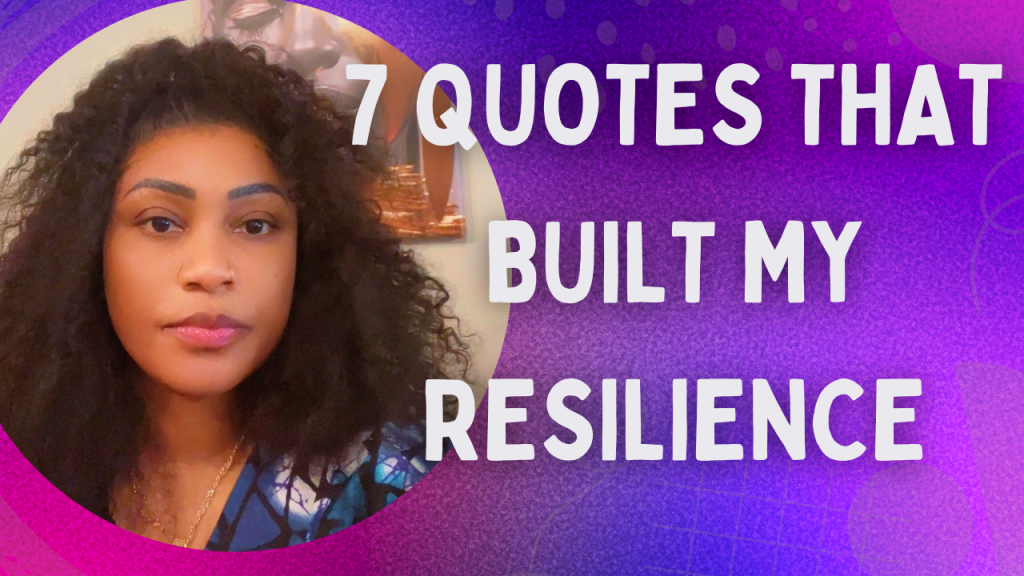
     7 Quotes That Built My Resilience (When Life Tried to Break Me)

    Have you ever felt like you were barely holding it together — like life just kept hitting you, again and again, with no break?

    Yeah. Me too.

    There were seasons where I genuinely didn’t know how I’d get back up. Times when burnout, grief, heartbreak, or just plain exhaustion made me question everything. What saved me wasn’t some grand moment of transformation — it was a handful of words.

    These 7 quotes didn’t just inspire me — they held me together. They reminded me that resilience isn’t about being bulletproof. It’s about bending, falling, failing — and still choosing to rise.

    So whether you’re deep in the mud or just looking to build your inner strength, I hope one of these speaks to your heart the way it did to mine.

    1. “Fall seven times, stand up eight.” – Japanese Proverb

    Resilience isn’t about never falling. It’s about always getting back up.

    When I lost my father, this quote reminded me that getting out of bed, brushing my teeth, showing up — even in pain — was a victory.

    2. “You don’t drown by falling in the water. You drown by staying there.” – Edwin Louis Cole

    Pain isn’t the enemy. Staying stuck is.

    I learned that after a soul-crushing breakup that left me grieving who I thought I was. Healing began when I stopped marinating in misery and chose to move forward, one small action at a time.

    3. “No mud, no lotus.” – Thich Nhat Hanh

    Burnout brought me to my knees. But that season taught me boundaries, self-worth, and healing.

    Lotuses grow from mud. So does strength.

    4. “She stood in the storm, and when the wind did not blow her way, she adjusted her sails.” – Elizabeth Edwards

    There is power in the pivot.

    I thought strength meant pushing through everything. But sometimes, the strongest thing you can do is adjust.

    5. “I can be changed by what happens to me. But I refuse to be reduced by it.” – Maya Angelou

    Life has changed me — deeply.

    But I’m not broken. I’m refined. This quote reminded me that we can be shaped by pain… without letting it define us.

    6. “It’s not the load that breaks you down. It’s the way you carry it.” – Lena Horne

    Carrying the weight of the world alone? That’s what nearly broke me.

    Learning to rest, to delegate, to ask for help — that’s what made me unbreakable.

    7. “Sometimes when you’re in a dark place, you think you’ve been buried. But you’ve actually been planted.” – Christine Caine

    Dark seasons aren’t the end. Sometimes, they’re the beginning of something new growing inside you.

    So what’s the takeaway?

    Resilience isn’t about looking strong.

    It’s about choosing to keep going, even when you don’t feel strong at all.

    Let these words become your anchors.

    Write them down. Speak them. Keep them close.

    You don’t have to rise perfectly — you just have to rise.

    Your Turn:

    Which quote spoke to your soul the most?

    Leave a comment, or better yet — write it somewhere you’ll see it every day. Let it become your reminder that no matter what life throws at you…

    You are still standing. And you are not alone.

    📌 Ready to build deeper resilience?

    Check out my youtube channel for more tools and resouces. Until next time, stay radiant and take care of your beautiful mind and body.

    With love and light, Christabel (HerRadiantMind)

    Stay Radiant- Join the list

  • How to Build Emotional Resilience  When You Feel Weak or Overwhelmed

    How to Build Emotional Resilience When You Feel Weak or Overwhelmed

    We often think of resilience as something reserved for the strong. The superheroes. The people who rise from ashes with flawless grace. But here’s the truth no one really talks about:

    Resilience isn’t about strength. It’s about willingness.

    Willingness to keep showing up — even when you’re tired.

    Willingness to try again — even after falling apart.

    Willingness to believe that something better is still possible — even when everything feels like it’s falling apart.

    The Quiet Kind of Resilience

    Let me tell you a quick story.

    A few years ago, I was sitting alone in my car after a long, emotionally draining day. My hands were on the steering wheel, frozen. I had nothing left in the tank. I didn’t want to go home and pretend everything was fine. I didn’t want to make dinner, fold the laundry, or do the routine things that suddenly felt like mountains.

    But even in that numb, exhausted state… I got out of the car.

    Not because I was strong. But because I was willing.

    Willing to take one more step.

    Willing to just get through that evening.

    Willing to believe that maybe — just maybe — tomorrow could feel a little lighter.

    That’s resilience. Not the flashy kind. Not the Instagrammable kind. But the real kind.

    We’ve Been Misled About What Resilience Looks Like

    We live in a world that praises strength — the kind that looks bold, busy, and loud. But real resilience doesn’t always look like power poses and motivational quotes. Sometimes, it looks like brushing your teeth after three days of depression. Sometimes, it looks like sending that scary “Can we talk?” text. Sometimes, it’s just making it out of bed.

    The American Psychological Association defines resilience as “the process of adapting well in the face of adversity, trauma, tragedy, threats, or significant sources of stress.”

    It doesn’t say “never breaks down” or “never cries in the car.”

    In other words: you don’t need to be unshakable to be resilient. You just need to be willing to come back after being shaken.

    Why Willingness is More Powerful Than Strength

    Let’s shift the lens.

    Strength is something you build.

    Willingness is something you choose.

    Willingness says:

    • “I don’t have all the answers, but I’ll take the next step.”
    • “I’m scared, but I’ll try anyway.”
    • “This hurts, but I’ll stay present with it instead of running away.”

    There’s a story about bamboo that perfectly captures this idea. When bamboo is planted, you don’t see anything for years. Nothing seems to grow. But underground, it’s developing a deep and wide root system. And then, in its fifth year, it shoots up almost 90 feet in just a few weeks.

    That’s what resilience looks like: invisible, slow, deeply rooted, and fueled by quiet, daily willingness.

    What Willingness Looks Like in Real Life

    Here are a few examples of how willingness shows up in small but mighty ways:

    1. Willingness to Feel Discomfort

    Resilient people aren’t numb to pain — they just don’t avoid it. They’re willing to feel sadness, grief, anger, and fear, knowing these feelings don’t make them weak. They make them real.

    2. Willingness to Ask for Help

    Resilience isn’t about going it alone. It’s about knowing when to reach out, when to lean in, and when to say, “I can’t do this by myself.” That takes courage — and trust.

    3. Willingness to Start Again

    Every time you get back up, even if it’s slowly… even if you need help… that’s resilience in motion. Falling is human. Getting up is willingness.

    The Problem With Waiting to Feel “Strong”

    So many of us fall into the trap of thinking, “I’ll start once I feel strong.”

    But here’s the twist: strength doesn’t come first — action does.

    You build resilience by doing, not waiting. It’s like trying to get better at swimming by standing on the shore and reading books about it. At some point, you have to get in the water.

    You’ll mess up. You’ll feel awkward. You might even panic.

    But over time? You’ll float. You’ll swim.

    You’ll stop drowning and start moving — even if it’s slow.

    Real-Life Resilience Isn’t Always Loud

    I once worked with a woman who was battling depression, burnout, and physical illness. She couldn’t hold down a job. She felt like a burden to her family. She told me she hated how “weak” she had become.

    But she kept showing up. Week after week.

    Some days she journaled. Some days she just sat in silence.

    But every single time, she was willing. Willing to try. Willing to heal. Willing to believe.

    That’s what changed everything for her.

    Not an overnight transformation — but a daily practice of staying in the game.

    The Bottom Line

    Resilience isn’t a superhero trait.

    It doesn’t require you to be fearless, unbreakable, or perfect.

    It just asks you to be willing.

    Willing to:

    • Stay with your pain instead of burying it.
    • Ask for help instead of suffering in silence.
    • Start over, again and again and again.

    If no one else has told you today — you’re already doing it. Every breath, every step, every time you say “not today, but maybe tomorrow” — you are building resilience.

    And it’s not because you’re strong.

    It’s because you’re willing.

    Looking for More?

    If this resonated with you, don’t stop here.

    Check out my other blog posts!

    And remember: even the smallest seed can grow into something extraordinary — if it’s just willing to keep reaching for the light.

    Until next time, Stay Radiant and take care of your beautiful mind & body⭐️

    Christabel E. (HerRadiantMind)

    Stay Radiant- Join the list