Tag: mindfulness

  • Healing the Busy Woman Wound: Why Rest Feels Unsafe & How to Relearn It Without Guilt

    Healing the Busy Woman Wound: Why Rest Feels Unsafe & How to Relearn It Without Guilt

    Ever find yourself lying in bed, heart pounding, mind racing, with a to-do list screaming louder than any lullaby?

    Rest sounds like a dream — yet somehow it feels like stepping into quicksand, something unsafe, indulgent, or undeserved.

    If that hits a little too close to home, you’re not alone.

    So many women carry what I call the “Busy Woman” Wound — a deep inner knot of guilt, fear, and hypervigilance around slowing down.

    This blog is your gentle map to unravelling that knot and learning how real, soulful rest isn’t just healing… it’s transformational.

    The Busy Woman Wound: When Rest Feels Like a Trap

    Maybe you grew up with an unspoken rule:

    “If you’re not working, doing, or hustling… you’re falling behind.”

    This is the Busy Woman Wound.

    It’s not just exhaustion — it’s the way rest feels unsafe, weak, or even dangerous.

    Your nervous system might still be stuck in survival mode, whispering:

    “If you stop, everything will fall apart.”

    Even when your mind knows you need rest, your body remembers something different:

    Keep going. Stay alert. Be useful. Don’t let anyone down.

    This wound hides beneath the surface, leaving you feeling “off” the moment you try to slow down.

    You may feel restless, anxious, or heavy with guilt, convinced that stillness equals failure.

    When Rest Becomes the Enemy Instead of the Medicine

    Here’s a compassionate truth:

    Your brain and body don’t automatically know how to rest when they’ve spent years running at full speed.

    Chronic busyness rewires your nervous system into constant alertness.

    When rest finally comes, peace feels foreign — even threatening.

    Instead of sinking into stillness, your body may respond with:

    • racing thoughts
    • tension in the chest
    • the urge to get up and “do something”
    • the automatic pull to scroll, clean, or work

    Not because you don’t want rest…

    but because your system doesn’t feel safe in rest.

    Movement feels familiar.

    Quiet feels overwhelming.

    The Neurobiology of Rest Resistance: What’s Really Happening in Your Brain and Body

    If you’ve ever wondered why you struggle to rest even when you’re exhausted, there’s a deeply scientific reason — and it has everything to do with your nervous system, your brain’s protective wiring, and the hormones your body has learned to depend on for survival.

    Rest resistance isn’t a personality flaw.

    It’s biology.

    1. Your Nervous System May Be Stuck in Survival Mode (Hyperarousal)

    When your body spends years in “go-mode,” it adapts to that pace. The sympathetic nervous system  your fight-or-flight state  becomes your baseline.

    So when you try to rest, your body may respond with:

    • racing heart
    • muscle tension
    • intrusive thoughts
    • the urge to get up and “do something”

    Your nervous system is simply doing what it believes keeps you safe.

    2. Cortisol and Adrenaline Become Your Fuel

    Chronic busyness floods your body with stress hormones designed to keep you alert. Over time, your system becomes dependent on them.

    When you slow down, these hormones drop…

    and your body panics because high alert has become its “normal.”

    Stillness feels like withdrawal.

    3. The Brain Associates Rest with Vulnerability

    If rest was never modeled as safe in childhood or adulthood, your limbic system can associate it with danger or disapproval.

    Even when you want to rest, a deeper part of your brain whispers:

    • “You’re disappointing someone.”
    • “You’re falling behind.”
    • “You’re being lazy.”

    These beliefs aren’t logic — they’re protection patterns.

    4. The Prefrontal Cortex Shuts Down During Stress

    When you’re overwhelmed, the calm-thinking part of your brain goes offline. Instead of relaxing, you may experience:

    • looping thoughts
    • overthinking
    • worst-case scenarios
    • emotional heaviness

    Your brain isn’t sabotaging you — it’s trying to keep you safe with the tools it knows.

    5. Your Body Remembers What Your Mind Forgot

    Trauma, chronic stress, and generational conditioning live in the body.

    Even if you mentally know you deserve rest, your body may still carry memories of times when rest wasn’t possible or welcome.

    This is why rest requires gentleness, repetition, and safety — not pressure.

    Signs You’re Carrying the Busy Woman Wound

    • You feel anxious the moment you sit down.
    • Rest comes with guilt, shame, or discomfort.
    • You find “productive” distractions instead of relaxing.
    • Your mind races at night even when exhausted.
    • You feel more alive when busy than when still.
    • Caring for yourself feels selfish or indulgent.

    If any of this resonates, consider it a compassionate invitation — not a diagnosis.

    Relearning Rest: Small, Soulful Steps Forward

    Healing this wound isn’t about flipping a switch.

    It’s about nervous system re-training — tiny moments of safety layered over time.

    1. Celebrate Mini-Breaks Like Big Victories

    Start with one-minute pauses.

    Breathe deeply.

    Feel your feet on the ground.

    Allow stillness to become familiar again.

    2. Create a Rest Ritual That Speaks Your Soul’s Language

    Rest should invite you, not shame you.

    • tea
    • soft music
    • stretching
    • journaling
    • quiet moments under the sky

    Find what feels like comfort and let it become sacred.

    3. Name the Guilt and Gently Talk Back

    Ask yourself:

    • Where did this story come from?
    • Is it true?
    • Does this belief belong to me, or did I inherit it?

    Respond with softness.

    4. Protect Your Rest Like a Non-Negotiable

    Treat rest like a meeting with your future self.

    Honor it.

    Defend it.

    Nurture it.

    A Story of Rest Reclaimed

    A client once told me she was terrified of naps because her inner voice screamed:

    “You’re lazy! You’re failing!”

    We started with five quiet minutes a day.

    No pressure.

    No expectations.

    Just breath and presence.

    Months later she shared:

    “Rest doesn’t drain me anymore — it restores me.”

    Because rest didn’t weaken her.

    It brought her back to herself.

    Soulful Rest Is Radical Self-Love — Not Laziness

    Soulful rest is rebellion against burnout culture.

    It’s saying:

    “I deserve softness. I deserve peace. My worth is not measured by my productivity.”

    Rest heals your nervous system.

    It fuels clarity, creativity, and emotional stability.

    It brings you back into your body in the gentlest way.

    With time, your body learns what your soul already knows:

    Rest is home.

    Your Invitation: Choose Rest as Your Radical Act Today

    Dear beautiful soul reading this — with the full schedule and tender heart…

    What would it feel like to rest without guilt?

    To rewrite the story you tell yourself about slowing down?

    To let your body feel safe, supported, and held?

    At HerRadiantMind, I guide women through this exact transformation — from survival mode to soulful living, from burnout to radiance.

    If the Busy Woman Wound echoes in your journey, you don’t have to walk this path alone.

    Together, we can explore:

    ✨ your unique rest rituals

    ✨ nervous system regulation

    ✨ releasing guilt and old narratives

    ✨ reclaiming rest as your birthright

    Rest is waiting.

    Your softness is waiting.

    Your radiance is waiting.

    Will you answer?

    Thank you for spending this time with me.

    Remember—healing isn’t linear, and growth doesn’t have to be loud to be powerful.

    Keep choosing yourself, one gentle moment at a time.💖

    Until next time, stay radiant and take tender care of your beautiful mind and body.

    With love,

    — Christabel, HerRadiantMind
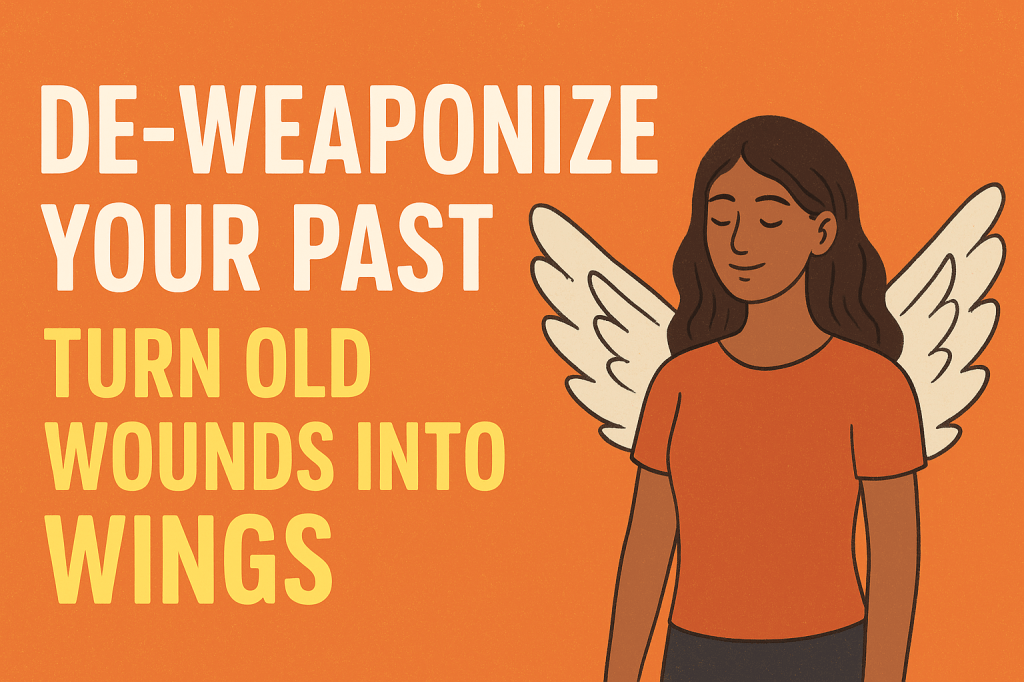
  • De-Weaponize Your Past—Turn Old Wounds into Wings of Empowerment

    De-Weaponize Your Past—Turn Old Wounds into Wings of Empowerment

    Your past is not a prison—it’s a teacher. When you learn to lay down your sword, you discover wings.

    Let’s be real for a moment.

    Your past isn’t a prison sentence.

    It’s a teacher — sometimes a tough one, sometimes a gentle one.

    And the moment you stop swinging old weapons at yourself, something incredible happens:

    your wounds grow wings.

    Picture this with me:

    A warrior comes home from battle. The war is over, but the sword is still in their hand — heavy, familiar, almost comforting. Every scar tells a story. But now, walking through everyday life, that same sword that once kept them safe starts cutting them instead.

    That’s what our past does when we don’t put the sword down.

    Pain that once protected us ends up slicing into our joy, relationships, and dreams.

    But here’s the truth:

    You can set the sword down. You can heal. You can rise.

    Why We Hold On to the Past

    Sometimes our past clings to us like ivy — beautiful in memory, but wrapped so tightly it slows our growth.

    Take Emma, for example.

    She grew up in a home where love had conditions and approval was currency. Now, as an adult, every bit of criticism feels like childhood all over again. Her past wasn’t just following her — it was speaking for her.

    Your past may have helped you survive.

    But if you’re not careful, it can start sabotaging your present.

    How Old Wounds Turn Into Weapons

    Old wounds often show up as automatic reactions that feel bigger than the moment.

    Common triggers:

    • Someone raises their voice → feels like childhood criticism
    • Rejection at work → feels like you’re failing again
    • Achieve something → still feel unworthy

    Quick science moment:

    Trauma gets stuck in the brain’s alarm system (the amygdala). When something reminds you of the past, your body reacts before your mind can even think.

    Try this:

    When you feel triggered, say internally:

    “This is an old weapon activating.”

    That tiny pause helps your nervous system calm down.

    Mapping Your Inner Weapons

    Healing starts with awareness.

    Step 1 — Make Your “Weapon Inventory”

    Grab your journal and write down patterns you notice.

    Examples:

    • Betrayal → you shut down
    • Abandonment → you over-give
    • Perfectionism → you beat yourself up

    Step 2 — Name the Weapons

    This makes them less scary:

    • The Hypervigilance Sword — always on guard
    • The Shame Grenade — explodes after every mistake
    • The People-Pleasing Rifle — saying yes to stay safe

    When you understand your triggers, you stop getting blindsided by them.

    The Four Pillars of De-Weaponization

    1. Safety First

    Before anything else — feel safe in your body.

    Try grounding: feet on the floor, hand on your belly, slow breathing.

    This literally calms your nervous system.

    2. Witness Without War

    Look at your past, but don’t fight it.

    Write for 10 minutes about the wound, then 10 minutes about how you survived it.

    It’s like reading an old diary: no judgment, just awareness.

    3. Strength Forging

    Every old wound hides a superpower.

    Examples:

    • Fear of abandonment → deep empathy and loyalty
    • Perfectionism → incredible attention to detail

    4. Ritual Release

    Write down the “weapon” on a piece of paper.

    Burn it safely, breathe deeply, release it.

    “Every flame, every exhale, signifies liberation.”

    Turning Scars Into Superpowers

    Did you know? About 70% of trauma survivors develop deeper empathy, resilience, and purpose once they work through it.

    Your wounds aren’t proof of weakness.

    They’re proof you lived, learned, and kept going.

    Daily Rituals to Support Your Healing

    • Morning Reset: 5-minute body scan
    • Midday Mantra: “My past informs me, but it doesn’t imprison me.”
    • Evening Reflection: Celebrate one win
    • Weekly Audit: Look at your patterns + progress
    • Share Safely: Talk about your journey in a judgment-free space

    Give yourself 21 days.

    It’s wild how much can change.

    When You Slip Back — Be Gentle

    Healing isn’t linear.

    Some days you’ll feel strong. Some days you’ll feel triggered.

    But relapses aren’t failures — they’re feedback.

    Say this to yourself:

    “I am human. I am healing. This moment is refinement.”

    Real People. Real Healing. Real Transformation.

    There’s Maya, who spent years doubting herself.

    Once she mapped her inner weapons and practiced daily grounding, she found her voice again.

    Jordan, who thought failure defined him.

    His perfectionism turned into a thriving project.

    Lisa, who was raised to stay silent.

    Now she teaches young women how to speak their truth.

    Your story can shift just like theirs.

    Your Past Isn’t Your Enemy — It’s Your Training Ground

    Your past doesn’t define you.

    It equips you.

    It sharpens your intuition.

    Deepens your compassion.

    Strengthens your boundaries.

    And guides you toward purpose.

    Your scars are not the end of your story —

    they’re the beginning of your becoming.

    If you’re ready to truly de-weaponize your past and step into your power, I’d love to walk that journey with you.

    Book a 1:1 Coaching Session at HerRadiantMind — let’s map your patterns, unlock your strengths, and build your wings.

    Thank you for spending this time with me.

    Healing doesn’t have to be loud to be powerful.

    Choose yourself gently, daily, and bravely.

    Until next time, stay radiant and take tender care of your beautiful mind and body.

    — Christabel, HerRadiantMind

  • Your Past Is Not Your Enemy—It’s the Key to Healing and Growth.

    Your Past Is Not Your Enemy—It’s the Key to Healing and Growth.

    There’s a hush that settles over the world at dawn—the moment before light pours onto the earth, when everything seems to pause, to listen. Picture yourself in that stillness, fingertips curled around a steaming mug, wrapped in the quiet comfort of morning. You watch as grey becomes rose, as darkness dissolves into gentle gold. And as the new day awakens, so does something within you—a flood of memories: the “could-have-beens,” the heartbreaks, the words unsaid.

    If your chest clenches at that recollection, you’re far from alone. The past can haunt like an uninvited shadow, whispering, “You’re behind,” “You should be further,” “It’s too late for me.” The soul grows weary under that weight, caught in the tug-of-war between wistful nostalgia and painful regret.

    But let’s pause. What if the past isn’t an enemy lurking in the shadows? What if it is, in fact, your wisest companion—your teacher, not your jailer?

    This gentle unraveling is the journey we’re embarking on today. In this post, you’ll discover why the story you carry is not a chain but a compass, and how your greatest struggles can become stepping stones. Through metaphors, real-life stories, science-backed insights, and loving action steps, you’ll feel empowered to embrace your history, release self-limiting beliefs, and transform your life by reclaiming your power.

    The Weight of Carrying History

    Life has a way of layering experiences, moment by moment, year by year, much like a tree that silently accumulates rings beneath its bark. Each ring—sunlit days or storm-tossed months—tells a part of your story. Yet, so often, we carry the past not as beautiful history, but as a burden.

    Imagine hiking up a mountain with a backpack. With every disappointment, every misstep, another stone slips inside. Sometimes, that weight is obvious—like betrayal or loss. Other times, it’s subtle: a glance of disapproval, a childhood expectation, an old dream deferred. Eventually, the backpack becomes heavy. We find ourselves out of breath, legs quivering—not from the climb but from the invisible load.

    When Past Mistakes Dictate Today

    Do you notice yourself hesitating at the brink of something new—a romance, a creative leap, a career aspiration—chilled by echoes of old failures? Maybe a voice pipes up: “Remember when you tried and failed?” That voice is your history, showing up without an invitation. But remember: history is not destiny.

    Picture the past as a wise, if sometimes awkward, tutor trailing beside you. Every misstep, heartbreak, or missed opportunity is not a condemnation—it’s data. It’s insight. The voice that reminds you of your setbacks can also highlight your growth if you listen with compassion, not criticism.

    The Enemy Misconception

    Why do so many of us treat our past as a villain? Society rarely celebrates the beauty in our bruises. From early childhood, we learn that perfection is rewarded and mistakes quietly shamed. Family stories, well-meaning advice, and even the fast-paced highlight reels on social media conspire to convince us: “If you’re still struggling, you’re failing.”

    But this is a myth. You are not the sum of your mistakes. You are the sum of the courage it took to keep going.

    Think of a mosaic crafted from shattered glass. Alone, each shard is sharp, perhaps even dangerous. Combined thoughtfully, those once-broken pieces refract the light in ways smooth glass never could. Your mosaic—your history—gives you depth, complexity, and beauty.

    How the Past Becomes a Teacher

    When you breathe, step back, and observe your story with curiosity instead of dread, transformation takes root. The lens through which you view your past can turn thorny brambles into blooming gardens.

    Recognizing Lessons Hidden in Pain

    Every difficult experience contains a treasure—sometimes buried, but always there.

    • A failed relationship may be your first lesson in boundaries or reveal a deep yearning for authenticity.
    • A career disappointment may illuminate your neglected passions or expose values misaligned with your path.
    • Emotional wounds may spotlight self-defeating patterns, inviting you to choose differently.

    Consider how a forest fire, devastating as it may seem, clears space for new life to flourish. Likewise, pain burns away illusions and makes way for resilience.

    Instead of the disempowering “Why did this happen to me?” gently shift the question: “What can I learn here? What is this experience showing me about what I truly want, and who I’m becoming?”

    Transforming Regret into Guidance

    Regret often feels like an endless storm—a sky dark with the weight of “I should have…” But recall that even the wildest thunderstorm brings rain to seeds buried beneath the surface.

    Suppose you passed up a long-desired opportunity years ago. The regret gnaws at you. But ask: Did that decision teach you about discernment? Did it reveal old fears you are now brave enough to challenge? Reframed, regret transforms from a tormentor into a beacon, illuminating what you truly value and what you’re at last ready to choose.

    The Science Behind Learning from the Past

    This isn’t just airy inspiration—psychology confirms what intuition whispers. Science tells us that reflective self-examination actually changes the structure of our brains.

    Researchers call it “narrative reframing.” When you consciously reinterpret past events, you soften their emotional grip, reduce stress, and boost resilience. The brain begins building new neural pathways. Over time, you learn to meet present challenges more like a seasoned guide than a frightened wanderer.

    Think of your brain as a garden. For years, you may have watered the weeds of shame and fear. But with intention, you can cultivate wisdom, plant seeds of compassion, and harvest clarity—one day, one reflection, at a time.

    Practical Steps to Embrace Your Past

    So, how do you turn experience into fuel, not fear? Here are gentle, actionable ways to transform your narrative and let your history be your greatest mentor.

    1. Journal Your Lessons

    Set aside time weekly to write out difficult memories or regrets. Under each, list at least one thing the experience taught you (even indirectly). Did a broken friendship teach you to value honesty? Did a missed chance reveal your true priorities? Journaling provides objectivity—like seeing your life story as a compassionate observer, not a judge.

    2. Reframe Your Narrative

    Words have magic. Instead of “I failed,” try, “I learned.” Instead of “I’m broken,” whisper, “I’m evolving.” When you change your self-talk, you rewire your brain and lighten your spirit.

    3. Practice Gratitude for Growth

    Gratitude works backward, too. See if you can thank your past for resilience, even if you’re not ready to thank it for the pain itself.

    • “I’m grateful that betrayal showed me my strength.”
    • “Thank you, setback—you introduced me to my creative fire.”

    4. Seek the Silver Lining

    Ask: “What hidden gifts did my most painful moments deliver?” Maybe fear of failure built your resourcefulness. Maybe loss awakened compassion for others. Over time, you transform each burden into a stone of wisdom to pave your path forward.

    5. Integrate Reflection Into Daily Life

    Each morning, spend a few minutes recalling a hard moment and identify one thing it taught you. This tiny ritual dissolves the unconscious power old shame holds over you.

    Letting Go of the “Behind” Mentality

    Too often, we measure our progress by someone else’s yardstick. It’s the comparison trap: “She’s more successful, he’s happier, I should be further along.” But life is not a race—it’s a garden, and every blossom follows its own clock.

    Imagine two trees—one on a sun-kissed hill, another tucked deep in the forest shade. One bursts into flower in spring; the other roots down, quietly gathering strength. Is the latter “behind,” or simply aligning with its own rhythm? Similarly, your journey doesn’t have an expiration date. Growth is growth, no matter how slow.

    Release the urge to compare. Embrace your unique timeline. Each season, each step, is part of what makes your results yours—irreplaceable and beautiful.

    Real-Life Example: Turning History Into Growth

    Meet Mary—a woman with a heart full of dreams and hands callused by attempts that didn’t pan out. After her bakery failed, she shrank from new risks. Each morning, the echo of “what if” drowned out hope. But with support, Mary began journaling her lessons—not the losses, but what they had given her: grit, creativity, courage.

    She started a new venture, wiser and more attuned to her values. When doubts arose, instead of, “I failed,” she reminded herself, “I learned how to adapt. I learned what matters.” Success found her not despite her past, but because of how she honored it.

    The Role of Self-Compassion

    Embracing your past as a teacher is possible only when you lay down the whip of self-recrimination. Guilt might have kept you cautious, but it cannot foster growth. Compassion does.

    Treat yourself as you would a beloved child: with patience, tenderness, and belief in the possibility of change.

    • Speak kindly to yourself, as you would to a friend.
    • Recognize your courage to continue, even through hardship.
    • Celebrate each step, regardless of how awkward or slow.

    Self-compassion softens old scars and opens space for new learning and radiant transformation.

    Using Your Past as a Launchpad

    Once you begin seeing your past as a mentor, you gather power. Ask gentle questions to turn insights into action:

    • What patterns keep repeating, and how can I shift them now?
    • Which strengths have I grown from past struggles—a resilience, a tenderness, a fierce determination?
    • What choices, informed by these lessons, will I make today?

    Reflection without action stirs up stagnation; action without reflection repeats old mistakes. Together, they create momentum for a life fully alive.

    Daily Practices to Strengthen the Teacher Mindset

    • Morning reflection: Spend 5 minutes revisiting a challenge and uncovering its lesson.
    • Reframe your language: Counter self-critical words with learning-focused mantras.
    • Gratitude journaling: Write nightly about one way your past has refined your resilience.
    • Mindful pauses: When old pain resurfaces, ask, “What wisdom is this moment offering me?”
    • Share your story: Speak or write your experiences—externalizing them transforms shame into learning.

    A Gentle Reminder

    Your past is not a chain but a compass, tuned to your unique north star. Every stone you carry can be set down, examined, and—if you wish—transformed into one of the stepping stones toward who you are becoming.

    Today, if your backpack feels impossibly heavy, know that each “stone” you unpack is a lesson reclaimed. Healing and growth ask not to erase your history, but to honor and learn from it. As dawn breaks each day, let your past light instead of shadow your path.

    Take the First Step Toward Transformation

    Ready to turn your history from a weight into wings? At HerRadiantMind, guidance and compassion walk beside you. Together, we will harvest the wisdom from your story, loosen the grip of self-limiting beliefs, and ignite your journey into authenticity and power.

    🌱 Book a 1:1 Coaching Session Today—and let your past become your wisest mentor.

    Looking Ahead: Part 2

    In Part 2, we’ll explore how to stop using your history against yourself and start letting it propel you forward. You’ll learn actionable steps to de-weaponize your past, uncover hidden strengths, and embrace a mindset that transforms old wounds into fuel for your most empowered life.

    Thank you for spending this time with me.

    Remember—healing isn’t linear, and growth doesn’t have to be loud to be powerful.

    Keep choosing yourself, one gentle moment at a time.💖

    Until next time, stay radiant and take tender care of your beautiful mind and body.

    With love & light

    — Christabel, HerRadiantMind

    Stay Radiant-Join the list!

  • The Inner Child Speaks: Connecting with the Wounded Younger You

    The Inner Child Speaks: Connecting with the Wounded Younger You

    Opening the Door to Your Inner Child’s Voice

    Imagine that inside you—quietly tucked beneath the layers of adult life—lives a younger version of yourself.

    This little one carries the echoes of joy and wonder, but also the pain and unmet needs of childhood.

    For many of us, those early wounds silently shape our relationships, self-worth, and emotional well-being in adulthood.

    But what if you could finally hear that inner child’s voice—the one that’s been waiting patiently to be seen, heard, and held?

    This post invites you on a heartfelt journey to meet your wounded younger self, listen deeply, and begin the transformative work of inner child healing—a path toward wholeness, peace, and radiant self-compassion.

    The Silent Cry: A Story of Lost Innocence

    Once upon a winter night, a little girl sat curled beside a frosted window, watching the snowflakes swirl.

    She wished for warmth, for safety, for someone to notice the silent tears that slipped down her cheeks.

    That little girl grew up, carrying that quiet ache into adulthood.

    Maybe that same little girl—or boy—still lives quietly inside you, waiting to be noticed, to be held, to be loved.

    Understanding Your Inner Child: The Keeper of Childhood Memories

    Your inner child is a deeply authentic part of you that holds memories, emotions, and experiences from your earliest years.

    Like a worn diary, it carries both joy and sorrow—moments that continue to shape how you see yourself and the world.

    If your childhood included neglect, trauma, or emotional pain, your inner child may still feel unsafe or unheard—carrying those unmet needs into your adult life.

    But this part of you isn’t just wounded—it’s also wonder-filled: creative, spontaneous, and full of light.

    Reconnecting with your inner child means learning to meet that vulnerability with patience, kindness, and warmth.

    Why Connecting Matters: How a Wounded Inner Child Shapes Adult Life

    Unhealed childhood pain can quietly influence your behaviors and emotions in surprising ways:

    • Fear of abandonment
    • Chronic people-pleasing
    • Difficulty trusting others
    • Deep shame or guilt
    • Overreactions to small disappointments

    These patterns aren’t flaws—they’re echoes of early wounds asking to be healed.

    When you listen to your inner child, you begin to recognize emotional triggers as messages from your past, not failures in your present. This awareness is where healing begins.

    How to Hear Your Inner Child’s Voice

    1. Acknowledge Their Presence

    Simply start by recognizing that your inner child exists.

    It may feel unfamiliar, but imagine greeting a shy part of yourself that has been waiting for your attention all along.

    2. Listen with Open Ears and Heart

    When emotions feel intense—anger, sadness, anxiety—pause and ask:

    “Is this my inner child trying to speak?”

    Reflect on what your younger self might be feeling beneath those reactions. Offer validation instead of judgment.

    3. Engage in Loving Dialogue Through Writing

    Write a heartfelt letter to your inner child.

    Offer reassurance, explain what happened from your adult perspective, and give the comfort you once needed.

    Ask gentle questions like:

    “How do you feel?”

    “What do you need from me right now?”

    Writing creates a bridge between your present self and your younger self—one built on empathy and love.

    4. Heal Through Meditation and Visualization

    Visualize a safe, nurturing space and imagine your younger self there.

    Speak softly, offer warmth, and let them know they are loved and protected.

    This meditative practice helps regulate emotions and fosters a sense of inner safety over time.

    5. Express Through Play and Creativity

    Revisit childhood joys—painting, dancing, singing, or playing in nature.

    These acts awaken your inner child’s creativity and remind them that it’s safe to feel joy again.

    You might also journal as your inner child, letting their voice speak freely.

    6. Practice Compassionate Reparenting

    Healing often means learning to “reparent” yourself—offering the love, structure, and safety you may have missed.

    Set healthy boundaries, honor your needs, and remind yourself daily:

    “I deserve care, rest, and understanding.”

    Inner Child Healing as a Path to Growth and Recovery

    For many, inner child work is life-changing.

    It can ease anxiety, improve relationships, and restore emotional stability.

    When you begin nurturing this inner connection, you break generational patterns and reclaim your authentic, radiant self.

    A Personal Story: From Darkness to Light

    Consider Maya’s story.

    She grew up feeling invisible, often blamed for conflicts she didn’t cause. As an adult, she battled anxiety and self-doubt—until she realized her wounded inner child was still calling for safety and love.

    Through writing, meditation, and creative expression, Maya learned to comfort that little girl within.

    Over time, the fog lifted. Confidence and peace replaced fear.

    Her story reminds us: when you heal the child within, you awaken the woman you were always meant to become.

    Embracing Healing as a Lifelong Journey

    Healing your inner child isn’t a one-time task—it’s a relationship you nurture over time.

    As deeper layers surface, meet them with gentleness and patience.

    If the process feels heavy, therapy or compassionate coaching can help you navigate it with expert care and emotional safety.

    Invitation to Your Radiant Healing Journey

    Your wounded younger self is waiting—with open arms and endless hope.

    When you choose to connect, you open the door to profound transformation and radiant self-compassion.

    At HerRadiantMind, compassionate coaching offers personalized guidance to help you heal, rebuild trust with yourself, and live with more authenticity and peace.

    ✨ Take the first step today.

    Embrace your inner child’s voice.

    Begin your radiant journey toward wholeness and self-love—because your story deserves to be heard, and your radiant mind is ready to shine. 🌷

    Thank you for spending this time with me.

    Remember—healing isn’t linear, and growth doesn’t have to be loud to be powerful.

    Keep choosing yourself, one gentle moment at a time.💖

    Until next time, stay radiant and take tender care of your beautiful mind and body.

    With love,

    — Christabel, HerRadiantMind

  • 3 Steps to Clarity & Self-Trust When You’re Stuck in Doubt  

    3 Steps to Clarity & Self-Trust When You’re Stuck in Doubt  

    Lost in the Fog of Your Own Mind?

    Have you ever felt like you’re wandering through a dense fog—a heavy mist that blurs your vision and clouds your every thought?

    For many of us, that fog is self-doubt—wrapping around us so tightly that it’s hard to even hear our own inner voice. Maybe you’ve tried to find clarity, only to hear those old whispers of “not good enough” or “what if I fail?” creeping back in.

    Imagine standing on the edge of a new path, but each step feels uncertain—as if the ground beneath you might disappear. That’s the reality of self-doubt. It challenges your clarity and puts your self-trust to the test every single day.

    But what if you could gently clear that fog? What if self-trust didn’t feel like a distant dream, but a steady presence—something that grows quietly as you reconnect with your inner truth?

    This isn’t about perfection or quick motivation. It’s about small, intentional shifts that slowly lead you back to clarity, calm, and confidence.

    Recognizing the Fog of Self-Doubt

    Self-doubt is more than a fleeting thought—it’s a subtle, powerful fog that clouds your perception. It might look like hesitation before a decision, overanalyzing simple choices, or that quiet inner voice whispering you’re not capable enough.

    This fog blocks your inner guidance by filling your mind with “what-ifs” and “buts.” It severs your connection to your intuition—the compass that already knows your direction. Without clarity, trusting yourself feels impossible.

    The good news? The fog isn’t permanent. With the right tools, patience, and awareness, you can clear it—one mindful breath at a time.

    Step 1: Ground Yourself in the Present Moment

    What Is Grounding?

    Grounding is the practice of returning your awareness to now. When self-doubt spirals, grounding brings you back from the storm of worry into calm awareness.

    Simple Grounding Techniques

    • 5-4-3-2-1 Technique: Name 5 things you see, 4 you can touch, 3 you hear, 2 you smell, and 1 you taste.
    • Intentional Breathing: Inhale for four counts, hold for four, exhale for six.
    • Feel Your Feet: Notice the texture beneath your feet. Let the earth steady you.

    Why Grounding Builds Clarity and Trust

    Grounding clears the noise of uncertainty and anchors you to what’s real. Each moment of presence reminds you: You are safe. You are capable. You are here. When that truth sinks in, clarity follows—and with it, trust in your resilience.

    Step 2: Name Your Emotions Without Judgment

    The Power of Emotional Awareness

    Self-doubt thrives on suppression. When you ignore your emotions, they grow wild and distort your clarity. But naming a feeling—fear, overwhelm, disappointment—instantly lightens its pull. Awareness brings understanding, and understanding restores calm.

    How to Identify and Name Your Emotions

    • Pause and take one slow, conscious breath.
    • Ask gently, “What am I feeling right now?”
    • Choose specific words for your emotions.
    • Allow each feeling to exist without needing to fix it.

    How This Builds Self-Trust

    When you name emotions instead of resisting them, you learn that nothing inside you is too much to handle. That realization becomes the soil where confidence quietly grows.

    Step 3: Cultivate Kindness in Your Inner Dialogue

    Why Self-Talk Matters

    Your inner voice sets the tone of your entire inner world. When it’s harsh, doubt deepens. When it’s gentle, courage grows.

    How to Transform Negative Self-Talk

    • Notice your automatic thoughts and take a pause.
    • Replace self-criticism with curiosity.
    • Ask, “Would I speak this way to someone I love?”
    • Repeat affirmations such as “I trust my process” or “I’m learning as I go.”

    Affirmations as Mental Nourishment

    Affirmations are daily doses of compassion. Over time, they train your brain to look for what’s right instead of what’s wrong. They don’t erase doubt—they remind you of your strength in the midst of it.

    Bringing It All Together: A Daily Clarity Practice

    Integrating grounding, emotional honesty, and self-kindness can completely transform how you move through uncertainty. You don’t need hours—just consistency.

    Start small:

    • Take three mindful breaths before checking your phone.
    • Name what you’re feeling when fear arises.
    • Speak a kind word to yourself before sleep.

    These small rituals weave an invisible thread of trust through your days. The fog begins to lift. You begin to see yourself clearly—not as doubting or broken, but as human and growing.

    Why Self-Trust Is Transformational

    Self-trust is the root of authentic confidence. It gives you permission to take imperfect action and believe that you can handle whatever arises.

    When you trust yourself, you:

    • Make decisions with calm conviction.
    • Respond instead of react.
    • Show up rooted in your truth instead of fear.

    This is the quiet power of clarity—it doesn’t shout; it guides.

    Reflective Journaling: Reconnecting with Your Inner Voice

    Take five minutes each evening to reconnect with your inner guidance:

    1. When do I feel most disconnected from myself?
    2. What practices help me return to presence?
    3. What emotion do I need to acknowledge today?
    4. In what area of life do I need to extend more grace to myself?
    5. What is one small act of self-trust I can take tomorrow?

    No judgment—just truth and tenderness. Over time, your journal becomes a living map of your clarity and courage.

    You don’t have to wait for the fog to clear before you take the first step.

    Each kind breath, each grounded pause—is the clearing.

    Start where you are.

    Trust what you know now.

    Your next moment of clarity begins here. 

    Thank you for spending this time with me.

    Remember—healing isn’t linear, and growth doesn’t have to be loud to be powerful.

    Keep choosing yourself, one gentle moment at a time.💖

    Until next time, stay radiant and take tender care of your beautiful mind and body.

    With love and light,

    — Christabel, HerRadiantMind

  • The Healing Era: Choosing Rest, Boundaries, and Self-Trust Over Hustle

    The Healing Era: Choosing Rest, Boundaries, and Self-Trust Over Hustle

    You were never meant to run on fumes.

    The alarm screams before sunrise. You’re already listing the tasks — emails, deadlines, lunch prep, meetings — before your feet even touch the floor. Somewhere between exhaustion and autopilot, your inner voice whispers: “I can’t keep doing this.”

    But still, you do.  

    Because hustle culture trained you to equate busyness with worth. Slowing down feels like failure. Rest feels like a reward — one you never quite earn.

    Here’s the truth: the more you chase calm, the further it runs. Maybe the problem isn’t that you’re not doing enough — maybe you’ve been doing *too much for too long.

    Welcome to **The Healing Era** — a quiet revolution where women redefine success, reclaim their energy, and finally choose rest, boundaries, and self-trust over relentless hustle.

    We’re Not Just Tired — We’re Soul-Tired

    It’s not just about physical fatigue.  

    It’s that slow, invisible drain — the one that makes even joy feel heavy.

    Picture this:  

    You’re driving home after a long day, your hands tight on the steering wheel. The music’s on, but you’re not listening. You’re so far from yourself you can’t even remember what peace feels like.

    That’s not failure. That’s survival mode.

    We’ve lived there too long — proving, performing, people-pleasing. But there’s a shift happening. Women everywhere are whispering a quiet rebellion:

    “I’m done abandoning myself to keep everyone else comfortable.”

    That’s where healing begins.

    What The Healing Era Really Means

    It’s not about doing less — it’s about doing what matters in ways that nourish rather than deplete.

    The Healing Era is about coming home to yourself. It’s slow mornings with coffee and silence instead of scrolling. It’s no longer postponing your peace until you’ve “earned” it.

    Its foundation rests on three simple, sacred truths:

    • Rest is a necessity — not a luxury.
    • Boundaries are self-respect — not selfishness. 
    • Self-trust is your inner compass — not a luxury for the confident.

    These are not ideals. They’re invitations.

    Rest: The Most Radical Resistance

    Let’s be honest — resting feels rebellious.

    You wake up on a Sunday and think, “Maybe I’ll do nothing today.” Then guilt creeps in like a shadow. You remember laundry, emails, the unfinished list taped to the fridge.

    But rest is not the absence of productivity — it’s the presence of peace.

    Think of yourself as a garden. You can’t bloom on dry soil.  

    Yet we water everything — jobs, friendships, families — while our roots crack with neglect.

    Rest isn’t quitting.  It’s remembering you are human before you are useful.

    Small rest rituals can be your rebellion:

    • Five deep breaths before checking your phone.
    •  A walk without headphones, just listening to your thoughts.
    • A ten-minute “pause pocket” blocked on your calendar, non-negotiable.  

    Rest is a reunion with your body — and that’s where healing starts.

    Boundaries: How You Speak Self-Respect

    •  I hear it all the time:
    •  “I don’t want to seem rude.”
    • “What if they’re upset?”
    • “It’s easier to just say yes.”

    But every “yes” that costs your peace is a debt you’ll later pay with exhaustion.

    Boundaries are not walls — they are riverbanks. They direct your energy, keeping it flowing with intention instead of flooding everywhere.

    Story snapshot:  

    A client once told me she said yes to planning a big family event even though she was overwhelmed. She spent weeks resentful and burnt out. The next time, she kindly said no — and waited for disappointment that never came. Instead, her mom said, “I’m proud of you for resting.”  

    That’s the kind of ripple boundaries create.

    Try these:

    • When resentment tugs at you, pause — a boundary is calling.
    • Keep scripts simple: “That doesn’t work for me right now.”
    • Celebrate small boundary wins like milestones. They’re proof of growth.

    Self-Trust: The Quietest Revolution

    You’ve been taught to trust everyone but yourself — teachers, bosses, social media, “experts.” But your intuition never left; it’s just buried under obedience and overthinking.

    Learning self-trust starts small.

    One woman told me she stopped running every decision by her partner — she began asking her “gut” first. Soon, she realized her inner voice wasn’t reckless; it was wise.  

    That’s what happens when you start believing your own voice again.

    Self-trust practices:

    • Ask your body, not your calendar, when it’s time to rest.
    • Follow your cravings for stillness instead of guilt.
    • Honor the instinct that whispers “not this” — even when logic says yes.

    Each decision rooted in self-trust becomes an anchor.  

    Little by little, you stop abandoning yourself.

    The Hustle Illusion

    Hustle culture stole more than time; it stole intimacy — with yourself, your purpose, your joy.  

    You were never built for constant motion. Nature doesn’t bloom year-round, and neither should you.

    Burnout isn’t evidence of ambition.

    It’s evidence of disconnection.

    What if pausing didn’t mean falling behind?  

    What if it meant falling into alignment?

    When you allow rest and rhythms, your body and spirit sync. Clarity returns. Creativity flows. Progress accelerates.

    You stop chasing — and peace starts finding you.

    The Guilt Spiral

    “If I stop, everything falls apart.”

    That thought has haunted so many of us. But hear this: guilt doesn’t mean you’re doing something wrong; it means you’re rewriting what’s normal.

    Every time you rest without apology, your nervous system learns a new language. It stops scanning for danger. It starts trusting stillness.

    Healing is not passive — it’s powerful.  

    It’s the inner shift from chaos to coherence.

    Living the Healing Era: Where to Start

    Healing isn’t a one-day event. It’s a practice of remembering — daily, messily, imperfectly — that you deserve to feel safe inside your own body.

    Start here:

    1. Morning Stillness: Before you scroll, place a hand on your heart and ask, “What do I need today?”

    2. Schedule Blank Space: Give yourself time that doesn’t have to be productive. That’s where creativity blooms.

    3. Redefine Success: Replace “Did I do enough?” with “Did I honour myself?”

    4. Say No with Grace: “No” is a complete sentence — and sometimes the most loving one.

    5. Celebrate Every Micro-Win: Rested instead of hustled? That’s progress. Said no without guilt? That’s healing in action.

    The Ripple Effect: What Happens When You Choose Healing

    I once prided myself on doing it all — nurse, coach, parent, perfectionist. My planner was colour-coded, but my spirit was cracked.  

    One morning, sitting in my car before a shift, I whispered, “I can’t do this anymore.”

    That moment broke me open. Slowly, I began choosing rest before collapse. I started saying “no” — not as rebellion, but as devotion. My nights grew quieter, my mornings slower. And in that stillness, I finally met myself again.

    Since then, *HerRadiantMind* has become my mission — to guide other women home to themselves too.

    The Healing Era Isn’t Coming — It’s Here

    When you choose rest, boundaries, and self-trust — everything shifts:

    • Your body relaxes; energy feels abundant instead of scarce.
    • Relationships deepen; you connect from presence, not pressure.
    • Work feels meaningful again; you operate from clarity, not chaos.
    • And your life starts to mirror your peace.
    • You become magnetic — not for what you do, but for who you are becoming.

    Your Invitation Into The Healing Era

    If something in your chest softened as you read this, it’s because your soul recognizes truth.

    At HerRadiantMind, I help women heal emotional burnout, rebuild trust in their bodies, and reconnect with their intuition through gentle coaching that works with your nervous system, not against it.

    Book a free Clarity Call  let’s find what’s keeping you stuck and how to move toward sustainable healing.  

    Join the Radiant Reset Coaching Experience— a 1:1 journey to reclaim your energy, peace, and power.  

    Subscribe to the HerRadiantMind Newsletter  weekly reflections and reminders to rest and rise.

    You deserve a life that feels soft, grounded, and radiantly yours.  

    This is your season to breathe.  

    Your season to trust.  

    Your season to heal.  

    Welcome — to The Healing Era.

  • Healing Emotional Blocks & Manifestation Practices That Actually Work

    Healing Emotional Blocks & Manifestation Practices That Actually Work

    “You can see it, almost touch it — yet a quiet voice whispers, ‘Not yet. Not you.’”

    If you’ve ever felt this invisible wall holding you back from your dreams, relationships, or new chapters, you’re not alone. Manifestation isn’t just about asking the Universe — it’s about becoming energetically ready to receive. And that starts with healing the emotional blocks standing in your way.

    This guide is your tender, practical, and transformative roadmap to untangling what holds you back and stepping fully into your power to manifest with ease.

    1. What Are Emotional Blocks?

    Emotional blocks are unconscious patterns, unprocessed feelings, and fears that limit your ability to receive.

    Signs you may have them:

    ✅ You set intentions but feel doubtful or unworthy

    ✅ You self-sabotage or procrastinate before progress

    ✅ You repeat patterns in love, career, or finances

    ✅ You feel disconnected from joy or excitement

    Think of your mind and heart as a garden. Emotional blocks are rocks in the soil. Healing is clearing the rocks so your manifestations can grow without resistance.

    2. The Roots of Emotional Blocks

    • Childhood Conditioning: Messages you absorbed about love, worthiness, and success.
    • Past Relationship Wounds: Heartbreaks or betrayals that leave imprints on your sense of receiving.
    • Trauma & Unprocessed Grief: Unreleased stories quietly limit how much joy you allow.
    • Limiting Beliefs About Deservingness: Thoughts like “I don’t deserve this” or “It’s selfish to want more”.

    Healing isn’t about erasing the past — it’s about creating space for your future.

    3. Why Healing Matters for Manifestation

    Manifestation is energetic alignment. You attract what matches your frequency.

    • Fear, scarcity, or mistrust block your desires
    • Healing creates inner safety, allowing joy, love, and abundance to flow naturally

    Manifestation isn’t perfection — it’s readiness.

    4. Healing Emotional Blocks: Step-by-Step

    Step 1: Inner Dialogue Awareness

    1️⃣ Write your goal

    2️⃣ Journal immediate thoughts

    3️⃣ Gently challenge “I can’t” or “I’m not ready” statements

    Step 2: Somatic Release

    • Shake therapy, yoga, or breathwork to release stored tension
    • Mindful exhalations to signal safety to your nervous system

    Step 3: Inner Child Work

    • Speak to your younger self who first felt the fear
    • Ask what she needs; offer reassurance and compassion

    Step 4: Emotional Alchemy

    • Sit with emotions instead of pushing them away
    • Ask: “What is this emotion protecting me from?”
    • Thank it for its service, then guide it toward release

    Tip: Healing + manifestation = Magnetic Congruence. Heart, mind, and energy all saying yes.

    5. Manifestation Practices That Work

    1. Clarity Mapping

    • Write desires in sensory detail
    • Anchor them in why, not just what

    2. Embodied Visualization

    • Live inside the vision — posture, breath, emotions as if already real
    • Add gratitude to amplify energy

    3. Frequency Alignment Rituals

    • Morning or evening rituals to attune energy

    Music, movement, or dance that mimics joy

    4. The Release Method

    • After setting intentions, engage in joy-filled activities
    • Use the mantra: “It’s already mine; I give it space to arrive.”

    5. Quantum Affirmations

    • Speak in the tense of already having:
      • “I am surrounded by love and support.”
      • “Money flows to me with ease.”

    “I am rooted in my worth; my desires manifest effortlessly.”

    6. Common Mistakes & How to Avoid Them

    ❌ Doing Without Feeling: Energy drops when the routine is mechanical

    ✅ Infuse sincerity and joy

    ❌ Skipping Inner Work: Vision boards can’t override deep wounds

    ✅ Prioritize healing first

    ❌ Micromanaging the Universe: Obsessing over “Where is it?” creates doubt

    ✅ Trust timing and the path

    7. Advanced Practices: Take Manifestation Deeper

    • Timeline Healing: Visualize past, present, future selves connecting in love
    • Manifestation Through Service: Ask, “How can my desire serve others?”
    • Energy Hygiene: Cleanse regularly with sage, sound, or salt baths

    8. Real Story: Healing Changed Everything

    A client wanted love. She lit candles, wrote lists, visualized — nothing shifted. Beneath it all, she believed: I’m not lovable.

    Through inner child work and safety-anchoring meditations, she slowly untangled that belief. Weeks later, a message arrived unexpectedly, leading her straight to a place that felt like home.

    She hadn’t forced magic — she had become ready to receive.

    9. Integrate Healing & Manifestation Daily

    Morning Alignment: Affirmation + breath practice

    Emotional Check-In: Pause midday, notice feelings before they calcify

    Celebrate Wins: Joy fuels more joy

    Small daily acts = big energetic shifts.

    10. Your Invitation

    Healing emotional blocks is tender yet transformative. When paired with aligned manifestation practices, life responds differently. You’ll feel the deep shift of I am safe to have what I want.

    At HerRadiantMind, I guide women through compassionate, body-based healing and soul-aligned manifestation work. Together, we dissolve old patterns and co-create the life you’ve been longing for.

    Are you ready to meet the version of yourself who receives with ease?

    Step into your radiant mind today.

    Thank you for spending this time with me.

    Remember—healing isn’t linear, and growth doesn’t have to be loud to be powerful.

    Keep choosing yourself, one gentle moment at a time.💖

    Until next time, stay radiant and take tender care of your beautiful mind and body.

    With love,

    — Christabel, HerRadiantMind
  • From Fear to Freedom: Rewriting the Story of Your Life

    From Fear to Freedom: Rewriting the Story of Your Life

    Flip the Script on Fear: How to Move from Fearful Living to Soulful Living

    What if I told you that fear isn’t here to destroy you—it’s here to teach you?

    Most of us spend years trying to outrun fear, silence it, or bury it under busyness. But the more we fight it, the louder it gets. Fear shows up as that knot in your stomach before change, the voice that whispers “you’re not ready,” or the invisible wall that keeps you living smaller than your soul longs for.

    Here’s the twist: fear isn’t the villain. It’s a storyteller. And when you learn to flip the script, fear becomes a powerful guide—leading you toward soulful living, emotional resilience, and the freedom to thrive.

    Today, let’s reframe the way you see fear—not as a cage, but as a compass.

    Fear as a Script We’ve Inherited

    Imagine your mind as a theater. On stage, fear takes the lead role, armed with cautionary tales of everything that could go wrong. It shouts about failure, rejection, and disappointment — and because fear is persuasive, you listen.

    This is what keeps so many women stuck in cycles of overthinking, exhaustion, or hesitation — afraid to rest because rest feels “unproductive,” or afraid to dream bigger because failure feels too risky. Fear convinces us that safety is in the small, the predictable, the known.

    But here’s the catch: fear’s script was written for protection, not for how to thrive.

    Thousands of years ago, fear kept us alive by warning us of predators. But in today’s world, the “predators” often look like career change, heartbreak, or starting your own business. Fear hasn’t updated its lines — and it keeps you living on repeat, always bracing for danger, even when there’s none.

    Why Staying in Fear Isn’t the Goal

    When fear takes center stage, your nervous system stays on high alert. You feel restless, anxious, or maybe even numb. Every decision feels heavy, like one wrong move will unravel it all.

    Sound familiar?

    Fear might help you get through — but it won’t help you become.

    Think of it like a seed buried in the soil. Fear is the rain that keeps it from drying out. Necessary, yes. But without sunlight and space, that seed will never sprout. Without flipping the script on fear, we stay underground, never rising into the light of our own possibility.

    Flipping the Script: A Mindset Shift

    So how do we rewrite fear’s narrative? It begins with a mindset shift.

    Instead of asking, “What if I fail?” start asking, “What if I fly?”

    This doesn’t mean ignoring risks or pretending challenges don’t exist. It means giving yourself permission to step out of the shadows and explore the soulful living you’ve been craving.

    When fear says, “Don’t rest, you’ll fall behind,” your new script can say, “Rest is how I build strength for what’s ahead.”

    When fear whispers, “Don’t try, you’ll embarrass yourself,” your new script can counter, “Every step forward is a win, even if I stumble.”

    This is where emotional resilience grows — not by silencing fear, but by choosing to respond differently to it.

    Storytime: The Cliffhanger of Living in Fear

    One of my clients, let’s call her Sarah, came to me exhausted—running on empty as a professional, a mother, and a woman who felt she had to hold it all together. Fear had her in a chokehold, whispering: “You can’t slow down. If you do, everything will fall apart.”

    So she pushed harder. She stayed up later. She smiled on the outside while quietly unraveling on the inside. Her body started sending warning signs, but her fear kept telling her to ignore them.

    One night, after yet another overwhelming day, she broke down and asked herself: “If I keep letting fear write my story, where does this end?”

    That was her cliffhanger moment. The point where she realized she had a choice: keep living small, trapped in fear’s script, or step into a new story—one of healing, truth, and real freedom.

    With support, she chose to flip the script. Not perfectly. Not overnight. But step by step, she began to reclaim her energy, her joy, and her sense of self. And that choice changed everything.

    The Three Scripts of Fear

    Let’s break down the most common “scripts” fear uses — and how you can rewrite them:

    1. The Scarcity Script

    Fear says: “There’s not enough — not enough time, not enough money, not enough love.”

    Flip it to: “Abundance exists, and I can align with it by making space for what matters most.”

    When you embrace abundance, you shift into soulful living by focusing on presence, gratitude, and trust.

    2. The Perfection Script

    Fear says: “Don’t try unless you can do it perfectly.”

    Flip it to: “Progress matters more than perfection.”

    Perfection is fear’s way of keeping you stuck. Emotional resilience grows when you take imperfect action.

    3. The Comparison Script

    Fear says: “She’s doing better than you. Why bother?”

    Flip it to: “Her path isn’t mine. My journey has its own timeline and beauty.”

    Comparison drains your energy. Flipping this script allows you to root into your own story and thrive.

    Building Emotional Resilience Through Script-Flipping

    Flipping the script isn’t about bravado; it’s about emotional resilience.

    Resilience isn’t pretending you’re fine when you’re not. It’s saying, “I’m afraid, but I’ll still take the next step.”

    It’s giving yourself permission to rest during burnout recovery, knowing that stillness is part of healing.

    It’s trusting that setbacks aren’t proof you’re failing — they’re proof you’re learning.

    Resilience builds each time you acknowledge fear without letting it dictate your choices.

    How to Thrive Beyond Fear

    So how do you move from fear-driven living into true thriving? Here are five practical steps:

    1. Name the Fear

    Write it down. Say it out loud. Fear loses its grip when you bring it into the light.

    2. Reframe the Narrative

    Ask: “What else could be true?” Instead of “I’ll never succeed,” try, “I’m learning every day and growing stronger.”

    3. Anchor in the Present

    Fear thrives in the “what ifs.” Pull yourself back to the present by noticing your breath, your body, and the moment you’re in.

    4. Create Safe Rest

    Build rituals that tell your body it’s safe to relax — a warm bath, journaling, or even mindful walks. This helps rewire your nervous system into calm.

    5. Surround Yourself with Support

    You don’t have to rewrite fear’s script alone. Community, coaching, and soulful conversations are powerful tools for how to thrive.

    Metaphor: Fear as the Overprotective Friend

    Think of fear as that overprotective friend who loves you but always assumes the worst. They tell you not to travel because planes crash, not to love because hearts break, not to dream because you might fall.

    Yes, they’re trying to keep you safe — but if you only listen to them, you’ll never taste adventure, connection, or possibility.

    Flipping the script means thanking fear for caring, but gently telling it: “I’ve got this. I’m choosing a bigger life.”

    Fear and Burnout Recovery

    If you’ve been through burnout, you know how fear lingers. Fear of burning out again. Fear of saying yes. Fear of saying no.

    Recovery isn’t just physical — it’s rewriting fear’s role in your life. Instead of letting it trap you in exhaustion, you can use it as a compass. Fear often points to where your growth and healing are waiting.

    The Invitation to Radiant Living

    Fear asks, “What if it goes wrong?”

    Soulful living responds, “What if this is the path to everything I’ve been craving?”

    When you flip the script, life stops being about white-knuckling through the day. It becomes about savoring the present, taking aligned risks, and trusting yourself to handle whatever comes.

    That’s the essence of how to thrive.

    Final Thoughts: Your Script, Your Story

    Fear will always have a voice. But it doesn’t have to hold the pen.

    The script you live by is yours to write. And when you choose to flip the script on fear, you’re choosing to live not as a prisoner of “what ifs,” but as an author of possibility, resilience, and joy.

    Ready to Flip Your Script?

    If you’re tired of letting fear dictate your story and you’re ready to step into a life of soulful living, resilience, and freedom — you don’t have to do it alone.

    At HerRadiantMind, I help women  move beyond fear, heal from burnout, and create a life that feels aligned, empowered, and radiant.

    Let’s flip the script together.

    Thank you for spending this time with me.

    Remember—healing isn’t linear, and growth doesn’t have to be loud to be powerful.

    Keep choosing yourself, one gentle moment at a time.💖

    Until next time, stay radiant and take tender care of your beautiful mind and body.

    With love and light

    — Christabel, HerRadiantMind

  • Mental Detox: How to Cleanse Negative Thoughts

    Mental Detox: How to Cleanse Negative Thoughts

    Picture this: you’re hiking with a backpack meant only for the essentials. At first, it’s light—then you start to add in some stuff. Just a few small pebbles of self-doubt, a stone or two from past mistakes. But as time goes on, you keep adding more. A rock of criticism from someone you trusted. A heavy boulder of guilt that was never truly yours to carry. Before long, the load is so crushing that every step feels less like living and more like just trying to survive.
    Sound familiar?

    That’s what negative thoughts do. They pile up silently until you wake up one day feeling drained, burned out, and unsure how to thrive. But here’s the truth: just as we cleanse our bodies with nourishing food and rest, our minds deserve a detox too. A mental detox isn’t about “never having negative thoughts again”—it’s about learning how to release the ones that don’t serve you and creating space for emotional resilience, clarity, and soulful living.

    This post will walk you through exactly how to do that—step by step—so you can stop shrinking under the weight of your thoughts and start reclaiming the vibrant life you were meant to live.

    Why Negative Thoughts Stick Like Glue

    Negative thoughts are like burrs in the forest—they cling, they poke, and they don’t let go easily. Why? Because your brain is wired for survival, not happiness.

    When our ancestors heard a rustle in the bushes, it was safer to assume “danger” than “just the wind.” That same wiring keeps you replaying the one piece of criticism from your boss while forgetting the ten compliments you got that day. It’s your brain’s outdated way of keeping you safe.

    But when left unchecked, this survival mode becomes a trap. Instead of protecting you, it drains you, leading to:

    • Burnout: Constant overthinking wears out your emotional energy.
    • Anxiety loops: Your mind keeps “what if-ing” until you can’t rest.
    • Low self-worth: Negative beliefs start feeling like truths.

    The good news? You can rewire your brain. A mental detox is like pressing reset on your inner world.

    What Is a Mental Detox?

    A mental detox is the intentional process of cleansing your mind from toxic thoughts, patterns, and emotional clutter. Think of it as spring cleaning for your soul. Just like you wouldn’t live in a home filled with dust and broken furniture, your mind deserves to be refreshed, reorganized, and filled only with what supports your growth.

    Mental Detox vs. Mindset Shift

    • Mental detox is the release—letting go of what doesn’t serve you.
    • Mindset shift is the rebuild—planting healthier thoughts in the cleared space.

    Both work together like exhaling and inhaling. You can’t thrive without doing both.

    The 5 Steps of a Mental Detox

    1. Notice the Clutter

    Imagine walking into a room so messy you don’t know where to start. That’s what happens when you ignore your thoughts.

    Start by noticing:

    • What thoughts repeat daily?
    • Which ones make you feel heavy, small, or stuck?
    • Do certain situations or people trigger negativity?

    👉 Tip: Keep a thought journal for one week. Write down the thoughts that make you feel drained. Awareness is the first step to cleansing

    2. Name the Survival Mode Patterns

    So many of us live on autopilot, reacting instead of consciously choosing. Common patterns include:

    • Catastrophizing: Always expecting the worst.
    • People-pleasing: Sacrificing your peace for others.
    • Comparison trap: Measuring yourself against impossible standards.

    Naming the pattern takes away its power. When you say, “That’s just my brain slipping into survival mode,” you create distance between you and the thought.

    3. Release with Intention

    Releasing isn’t about ignoring or suppressing. It’s about letting go with clarity.

    • Breathwork: Exhale deeply while imagining the thought leaving your body.
    • Visualization: Picture your thought as a cloud drifting away.
    • Writing ritual: Write down the negative belief, then rip it up or burn it safely.

    These small acts send your brain the message: I don’t need to carry this anymore.

    4. Reframe into Healing Narratives

    A mental detox creates empty space. Now it’s time to fill it intentionally.

    Instead of “I’ll never be good enough,” try:

    • “I am learning and growing every day.”
    • “I release perfection; I embrace progress.”

    Reframing doesn’t mean pretending everything is perfect. It means choosing words that heal instead of harm. This is how emotional resilience is built—thought by thought.

    5. Protect Your Peace with Boundaries

    A clean room will get messy again if you let people dump their clutter inside. Same with your mind.

    Boundaries aren’t walls; they’re filters. They allow love in while keeping toxicity out. That might mean:

    • Saying no without over-explaining.
    • Limiting time with draining people.
    • Creating sacred time for rest, reflection, and soulful living.

    Boundaries are the locks on the door to your peace.

    The Science of Mental Detox

    Research shows that consistent mental detox practices reduce cortisol (the stress hormone) and improve overall brain health. Neuroplasticity—the brain’s ability to rewire—means you’re not stuck with your current thought patterns. With every reframe, every release, you’re literally creating new pathways of peace and possibility.

    It’s not magic; it’s science meeting intention.

    Metaphors to Remember

    • The Backpack: Every negative thought is a rock you don’t have to carry.
    • The Garden: Your mind is soil—weed out the thoughts that choke growth, plant seeds of resilience.
    • The Mirror: Detoxing your mind lets you see your true reflection, not the distorted one created by fear.

    How to Thrive After Burnout

    If you’ve been through burnout, your system is especially sensitive to negativity. You’ve already been running on empty, giving more than you had. A mental detox helps you transition from survival mode to soulful living by:

    • Resetting your nervous system through calm practices.
    • Rebuilding confidence with mindset shifts.
    • Learning how to thrive, not just cope.

    This isn’t about bouncing back—it’s about bouncing forward into a new way of being.

    Daily Practices for a Mental Detox

    Here are small but powerful practices to weave into your day:

    Morning Rituals

    • 5 minutes of journaling your intentions.
    • Affirmations that align with your worth.
    • A short meditation to clear your mental space.

    Midday Resets

    • A walk outside to reconnect with your body.
    • Deep breaths to reset your nervous system.
    • Gratitude check-in: name 3 things going right.

    Evening Cleansing

    • Write down lingering worries and release them.
    • Disconnect from social media at least 1 hour before bed.
    • Gentle stretches or tea to signal safety to your body.

    Each practice is a reminder: I am worthy of peace.

    The Ripple Effect of a Mental Detox

    When you detox your thoughts, everything shifts:

    • Your energy feels lighter.
    • Relationships improve as you show up with clarity.
    • Decisions become easier because you’re not clouded by fear.

    Most importantly, you stop just surviving and begin living a life that feels aligned, radiant, and free.

    Final Thoughts: You Deserve a Mind That Loves You Back

    Your mind can be your loudest critic—or your most loyal cheerleader. A mental detox is your invitation to clear the noise and return to your truth.

    Remember:

    • You’re not your negative thoughts.
    • You don’t have to live in survival mode.
    • You can cultivate emotional resilience and step into soulful living.

    Every time you release a thought that hurts and choose one that heals, you’re building a life where you don’t just recover from burnout—you rise, stronger and clearer than before.

    Thank you for spending this time with me.

    Remember—healing isn’t linear, and growth doesn’t have to be loud to be powerful.

    Keep choosing yourself, one gentle moment at a time.💖

    Until next time, stay radiant and take tender care of your beautiful mind and body.

    With love & light,

    — Christabel, HerRadiantMind

  • How to Stop Overthinking: 5 Mindset Shifts to Reclaim Your Peace and Confidence

    How to Stop Overthinking: 5 Mindset Shifts to Reclaim Your Peace and Confidence

    You don’t need more time to decide. You need to stop running mental marathons over simple stuff.

    If you’re constantly stuck in your head — replaying conversations, analyzing every outcome, and feeling paralyzed by even the smallest decision — this post is for you.

    Let’s break down what’s really keeping you stuck in the spiral of overthinking — and how to get out.

    Why You Can’t Stop Overthinking (Even When You Want To)

    If your brain feels like it has 47 tabs open — and none of them are loading — you’re not alone.

    Overthinking:

    • Steals your peace.
    • Wrecks your confidence.
    • Turns small decisions into massive stress triggers.

    But here’s the truth most people miss:

    Overthinking is not who you are. It’s a habit. A pattern.

    And habits can be changed.

    In this post, I’m sharing 5 powerful mindset shifts that will help you stop overthinking and start trusting yourself again.

    The third one? It’s the one no one talks about — and it’s probably what’s keeping you up at night.

    Mindset Shift #1: Your Brain is Wired for Survival — Not Clarity

    Your brain’s #1 job is to keep you alive, not to keep you calm.

    That’s why it constantly scans for potential threats — even in everyday situations like a meeting or text message.

    Ever find yourself replaying a weird interaction from three days ago at 2 a.m.?

    Yeah. That’s your survival brain doing its thing.

    🧠 Fun fact: A study in Science showed we make over 35,000 decisions per day.

    No wonder we’re mentally fried.

    ✨ The Shift:

    Ask yourself:

    “Is this a real problem… or am I just trying to avoid a bad feeling?”

    Fear doesn’t bring clarity. Calling out the fear does.

    Mindset Shift #2: Overthinking = Self-Doubt in Disguise

    Let’s talk about Leila.

    She’d spend 30 minutes editing a 2-sentence email. Rewrite a text 6 times. Obsess over whether her outfit was “too much.”

    What she was really saying was:

    “I don’t trust myself to get it right.”

    We often confuse overthinking with being “thorough” or “careful.”

    But underneath it? It’s self-doubt.

    ✨ The Shift:

    You don’t need to be 100% certain to move forward.

    You’re allowed to get it wrong and still be worthy.

    Confidence isn’t the absence of overthinking — it’s the courage to act despite it.

    Mindset Shift #3: You’re Not Looking for the Perfect Decision — You’re Looking for Control

    Let this one land for a moment.

    When we say, “I just need more time,” what we really mean is,

    “I’m afraid to mess this up.”

    We think if we analyze everything perfectly, we’ll avoid regret or pain.

    But perfection?

    It’s an illusion.

    ✨ The Shift:

    Ask:

    “What’s the best next step I can take with the info I have right now?”

    This shift moves you from paralysis to progress.

    From fear to curiosity.

    From control to courage.

    Mindset Shift #4: You Don’t Need More Thinking — You Need More Action

    This one might sting a little:

    You don’t need another journal entry, checklist, or heart-to-heart with your best friend.

    You need to take the next small, messy step.

    We get stuck thinking we need to figure it all out before we move.

    But clarity comes from doing, not thinking.

    💡 A study in the Journal of Behavioral Decision Making found that people who took action, even small imperfect ones, had more confidence and less regret than those who stayed in indecision.

    ✨ The Shift:

    Say this instead:

    “Let me take one small step and see how it feels.”

    Confidence isn’t born in your head — it’s built through lived experience.

    Mindset Shift #5: You Are Not Your Thoughts

    Here’s a truth bomb most people never learn:

    You are not your thoughts. You’re the one thinking them.

    Thoughts like:

    • “I’m not good enough.”
    • “They probably hate me.”
    • “I’ll never get this right.”

    …aren’t facts. They’re stories shaped by fear and conditioning.

    🧠 According to Cognitive Behavioral Therapy (CBT), one of the most powerful ways to stop overthinking is to challenge automatic thoughts, not believe them blindly.

    ✨ The Shift:

    Ask yourself:

    • Is this thought helpful?
    • Is it kind?
    • Is it even true?

    When you realize thoughts are suggestions — not instructions — you reclaim your power.

    What’s Actually Keeping You Stuck

    Most people think overthinking is about avoiding the wrong decision.

    But the real issue is this:

    Overthinking disconnects you from yourself.

    You start ignoring your gut.

    You stop trusting your own wisdom.

    You outsource your power to Google searches, Reddit threads, and opinions from people who don’t live your life.

    Why Do We Overthink in the First Place?

    Let’s break it down:

    • We were taught to fear failure.
    • We were shamed for making “wrong” choices.
    • We think being decisive means being reckless.
    • And sometimes? We just want to feel in control of a chaotic world.

    But guess what?

    ❌ Overthinking doesn’t protect you.

    ❌ It doesn’t help you grow.

    ❌ And it definitely doesn’t make life easier.

    People who build bold, fulfilling lives don’t have more certainty.

    They have more trust in themselves.

    Here’s your permission slip:

    There is no perfect decision.

    The “right” decision is not something you find.

    It’s something you create — through action, trust, and small course corrections.

    Imagine this:

    What if you dropped the need to be perfect, and started living like you could handle whatever came your way?

    Because you can.

    Final Thoughts: How to Stop Overthinking and Start Living

    Here’s a quick recap of the 5 mindset shifts to break free from overthinking:

    1. 🧠 Your brain is wired for protection, not peace.
    2. ❓ Overthinking is usually self-doubt wearing a logical mask.
    3. 🎯 You’re chasing control, not clarity.
    4. 🚶‍♀️ Action is the antidote to anxiety.
    5. 💭 You are not your thoughts — question them.

    You don’t need to overthink less.

    You just need to start trusting yourself more.

    Every decision doesn’t need to be perfect.

    It just needs to be yours.

    Remember you are not alone!

    Until next time, stay radiant!

    With love and light Christabel

    🔗 Stay connected:
    Instagram | @HerRadiantMind
    📌 Pinterest: Herradiantmind
    🌍 Website: http://www.herradiantmind.com

    Youtube: https://youtube.com/@herradiantmind?si=BkXhtAw1ABGA–k2
    Elevate your well-being with One of my coaching programs—personalized support , and exclusive resources.

    Stay Radiant—Join the List