Tag: mental wellness coach

  • Why You Feel Behind in Life—and How to Trust Your Own Timeline

    Why You Feel Behind in Life—and How to Trust Your Own Timeline

    It’s November, and as the year slowly draws to a close, you may find yourself reflecting on everything you hoped to accomplish.

    Perhaps you started the year with big dreams, fresh intentions, and a vision of how different your life would look by now. You imagined making progress in your career, improving your finances, finding love, becoming healthier, or finally feeling more confident in yourself.

    But somewhere between January and November, life happened.

    Some plans changed. Some opportunities didn’t work out. Some goals took longer than expected. And now, as you look back, you might find yourself wondering:

    Why am I not further along?

    Maybe you feel like everyone around you is moving forward while you’re still trying to figure things out. Perhaps you’re questioning your decisions, comparing your progress, or quietly worrying that time is passing you by.

    If any of this feels familiar, I want you to pause for a moment and consider something:

    What if you’re not behind? What if you’re simply moving through life at a pace that is different from what you expected?

    Feeling behind doesn’t mean you’re failing. Sometimes, it simply means you’ve been measuring your progress against expectations that were never meant to define your journey.

    And learning to let go of those expectations can be one of the most freeing things you do for yourself.

    Why the End of the Year Can Make You Feel Behind

    There is something about November and December that naturally encourages reflection.

    As the year comes to an end, we begin taking inventory of our lives. We think about the goals we achieved, the opportunities we missed, the plans we postponed, and the things we hoped would be different by now.

    Reflection can be valuable because it helps us recognize where we are and where we want to go. However, when reflection turns into self-criticism, it can leave us feeling discouraged rather than inspired.

    Instead of acknowledging how much we’ve grown, we focus on what remains unfinished.

    Instead of celebrating the challenges we’ve overcome, we question why we haven’t accomplished more.

    And instead of appreciating how far we’ve come, we start measuring ourselves against where we think we should be.

    Before long, what began as an opportunity for reflection becomes another reason to doubt ourselves.

    But here’s something worth remembering: You cannot accurately measure your progress by looking only at what you haven’t accomplished.

    There may be things you haven’t achieved yet, but that doesn’t erase the lessons you’ve learned, the strength you’ve developed, or the personal growth that has taken place along the way.

    Not all progress is visible. Sometimes, the most meaningful changes happen quietly within us.

    The Comparison Trap: When Everyone Else Seems Ahead

    One of the biggest reasons we feel behind in life is comparison.

    It’s human nature to look at the people around us and use their experiences to evaluate our own. Psychologists refer to this as social comparison, a process through which we assess ourselves by comparing our circumstances, achievements, and abilities with those of others.

    While occasional comparison is natural, it can become emotionally draining when we constantly measure our lives against what other people appear to have accomplished.

    Think about how easily this happens.

    You see someone announce a promotion, and suddenly you question your career.

    A friend gets married, and you begin wondering why your relationship hasn’t progressed.

    Someone buys a beautiful home, starts a successful business, or shares exciting travel experiences, and you find yourself wondering when your own life will start looking the way you imagined.

    Social media can make these feelings even stronger.

    We are constantly exposed to carefully selected moments from other people’s lives. We see their celebrations, milestones, achievements, and exciting new beginnings, often without seeing the challenges, sacrifices, disappointments, or uncertainties behind them.

    Research on social comparison suggests that comparing ourselves with people who appear more successful or accomplished can negatively affect our emotions and self-evaluations.

    The problem is that we begin comparing our entire lives, including our private struggles, with someone else’s most polished moments.

    And that’s rarely a fair comparison.

    You are seeing their highlight moments while experiencing your entire journey.

    A Gentle Reminder: Everyone Has a Different Journey

    Consider a woman named Amara.

    At the beginning of the year, Amara decided she wanted to make a career change. She felt ready for something different and imagined that by November, she would be settled into a new role.

    She updated her résumé, enrolled in an online course, and started applying for opportunities. She was making progress, even if it wasn’t happening as quickly as she had hoped.

    Then, in October, she received news that she hadn’t been selected for a position she really wanted.

    Around the same time, a former colleague announced a promotion, a friend purchased her first home, and someone she went to school with launched a successful business.

    Suddenly, Amara began questioning herself.

    She looked at everything she had accomplished that year and dismissed it. The résumé she updated, the course she completed, and the courage it took to pursue something new no longer seemed significant.

    In her mind, she was still in the same place.

    But was she really?

    Amara had gained new skills, taken meaningful steps toward a different future, and learned more about what she wanted from her career. Although she hadn’t reached her original destination, she was no longer standing where she started.

    Her progress simply looked different from what she had imagined.

    Sometimes, we become so focused on the destination that we fail to appreciate the growth happening along the way.

    And that’s something worth paying attention to.

    Your Timeline Is Not a Race

    From an early age, many of us absorb expectations about where we should be at certain stages of life.

    By a certain age, you should have established your career.

    You should be financially secure, married, raising a family, owning a home, or living a particular version of success.

    These expectations can become deeply ingrained, making us feel as though we’re falling behind whenever our lives don’t follow the expected sequence.

    But who decided there was only one acceptable timeline?

    Life doesn’t unfold according to a universal schedule.

    Some people discover their purpose early, while others spend years exploring different paths before finding what feels right.

    Some build their careers in their twenties, while others reinvent themselves in their forties or fifties.

    Some experience significant achievements early in life, while others find their greatest opportunities much later.

    There is no single formula for a meaningful or fulfilling life.

    We all have different starting points, responsibilities, circumstances, opportunities, and challenges.

    You may be rebuilding after a difficult season, navigating unexpected changes, caring for loved ones, recovering from disappointment, or learning to believe in yourself again.

    These experiences matter, even when they don’t translate into achievements you can easily share with others.

    Your life doesn’t have to follow someone else’s timeline to be meaningful.

    You are allowed to take a different path. You are allowed to change direction. And you are allowed to begin again at any stage of life.

    What If Feeling Behind Is Actually an Invitation to Reflect?

    Sometimes, feeling behind isn’t necessarily a sign that something is wrong.

    It may be an invitation to look more closely at your life and understand what you truly need.

    Perhaps you’ve outgrown certain expectations. Maybe the goals you set no longer reflect the person you’re becoming. Or perhaps you’ve been so busy meeting everyone else’s needs that you’ve lost touch with your own desires.

    Feeling behind can sometimes reveal that you are ready for something different.

    Instead of immediately criticizing yourself, consider what the feeling might be trying to tell you.

    Maybe you need:

    • More clarity about what you genuinely want.
    • Permission to release expectations that no longer serve you.
    • Rest after spending too much time pushing yourself.
    • Support as you navigate a difficult season.
    • Confidence to pursue something you’ve been postponing.
    • Space to recognize and appreciate how far you’ve already come.

    Not every season of life is about achieving more. Some seasons are about healing, learning, rebuilding, and finding your way back to yourself.

    And those seasons deserve just as much respect.

    5 Gentle Ways to Stop Feeling Behind and Start Trusting Your Timeline

    Learning to trust your own timeline doesn’t mean abandoning your dreams or pretending you don’t want more from life.

    It means pursuing what matters to you without allowing comparison, unrealistic expectations, or self-criticism to determine your worth.

    Here are five gentle ways to begin.

    1. Reflect on How Far You’ve Come, Not Just How Far You Have to Go

    When you feel behind, your attention naturally gravitates toward everything you haven’t accomplished.

    But what about everything you have overcome?

    Before the year ends, give yourself permission to reflect on your journey without judging it.

    Think about the difficult moments you navigated, the lessons you learned, the boundaries you established, and the small decisions that helped you grow.

    Consider writing down:

    • Three challenges you overcame this year.
    • Three things you learned about yourself.
    • Three moments when you showed courage.
    • Three ways you’ve grown emotionally or personally.
    • One thing you’re proud of, even if nobody else noticed.

    You may discover that you’ve made more progress than you’ve been giving yourself credit for.

    Remember, growth isn’t always measured by promotions, financial milestones, relationships, or completed goals.

    Sometimes, growth looks like choosing yourself, speaking up, walking away from what no longer feels right, or learning to treat yourself with more kindness.

    Those things count, too.

    2. Stop Using Someone Else’s Life as a Measure of Your Success

    It’s difficult to appreciate your own journey when you’re constantly looking at someone else’s.

    If you find yourself feeling inadequate after scrolling through social media or comparing your circumstances with those around you, consider creating a little distance.

    You don’t have to know what everyone else is doing.

    You don’t have to keep up with their achievements.

    And you certainly don’t need to use someone else’s milestones to determine whether you’re doing enough.

    Try being more intentional about what you consume.

    Unfollow accounts that consistently trigger feelings of inadequacy, limit mindless scrolling, and surround yourself with messages and people who encourage growth without making you feel pressured to compete.

    Most importantly, remind yourself that someone else’s success doesn’t diminish your potential.

    There is room for you to grow, succeed, and experience beautiful things without comparing your journey to anyone else’s.

    3. Focus on the Next Step Instead of the Entire Journey

    Sometimes, feeling behind becomes overwhelming because we’re looking at everything we haven’t accomplished at once.

    You want to change careers, improve your health, become financially secure, build meaningful relationships, and feel more confident.

    When you look at everything together, it can feel impossible to know where to begin.

    Instead of trying to figure out your entire future, bring your attention back to what you can do today.

    If you want to change careers, start by updating your résumé.

    If you want to improve your health, begin with small, sustainable habits.

    If you want to feel more confident, practice keeping the promises you make to yourself.

    If you want to improve your finances, start by reviewing your spending and identifying one area where you can make a change.

    Research on motivation has also highlighted the importance of making progress toward meaningful goals.

    You don’t need to make dramatic changes overnight.

    Small, consistent actions can help you build momentum and remind you that you are capable of moving forward.

    4. Give Yourself Permission to Change Your Plans

    One reason we sometimes feel behind is that we become attached to the version of life we imagined for ourselves.

    We hold on to expectations about where we should be, what we should have accomplished, and how our lives should look by a particular age.

    But people change. Circumstances change. Priorities evolve.

    And sometimes, the life you once wanted no longer reflects who you are today.

    Give yourself permission to reassess your goals.

    Ask yourself:

    • Do I still genuinely want this?
    • Am I pursuing this because it matters to me or because I feel pressured?
    • Does this goal reflect the person I’m becoming?
    • What would I choose if I stopped worrying about other people’s expectations?

    Changing direction doesn’t mean you’ve failed.

    Sometimes, it means you’ve become more self-aware.

    You are allowed to outgrow old dreams and make room for new possibilities.

    5. Practice Being Kinder to Yourself Along the Way

    The way you speak to yourself matters.

    If your inner dialogue is constantly filled with criticism, comparison, and disappointment, even meaningful progress can begin to feel insignificant.

    Instead of telling yourself you’re too late, remind yourself that you’re still learning.

    Instead of focusing on what you haven’t achieved, acknowledge what you’re doing to move forward.

    And instead of treating every setback as evidence that you’re failing, allow yourself the grace to be human.

    You don’t have to have everything figured out.

    You don’t have to be productive every day.

    And you don’t have to turn every difficult experience into an immediate lesson.

    Sometimes, you simply need to pause, breathe, and give yourself permission to take things one step at a time.

    Self-compassion doesn’t mean giving up on yourself. It means learning to support yourself even when life doesn’t go according to plan.

    A Gentle Reminder as the Year Comes to an End

    As November unfolds and another year approaches, resist the temptation to turn reflection into a reason to criticize yourself.

    You don’t need to rush into a new year feeling as though you have something to prove.

    You don’t need to accomplish everything on your list before December arrives.

    And you don’t need to become a completely different person to feel proud of the life you’re building.

    Take a moment to acknowledge the version of yourself who made it through this year.

    The one who kept going despite uncertainty.

    The one who navigated challenges that others may never fully understand.

    The one who tried again, even when things didn’t work out as planned.

    That version of you deserves recognition, too.

    Perhaps this season isn’t asking you to do more. Perhaps it’s inviting you to slow down, reflect, release unnecessary pressure, and reconnect with what truly matters.

    You can still have dreams. You can still desire growth. You can still work toward a different future.

    But you can do all of that without making yourself feel inadequate in the present.

    So, if you’ve been feeling behind, take a breath and remind yourself:

    You are not running out of time. You are not failing because your journey looks different. And you are not any less worthy because you haven’t reached every milestone you imagined.

    Your journey is unfolding one step at a time.

    Trust your pace. Honour your growth. Give yourself permission to begin again whenever you need to.

    You are not behind. You are becoming. And there is beauty in allowing yourself to grow at your own pace.

    If this message resonated with you, remember that you don’t have to navigate every season of life by yourself.

    At HerRadiantMind, we believe in helping women move beyond self-doubt, reconnect with their inner strength, and build the confidence to create lives that feel meaningful and fulfilling.

    You deserve a life that feels good on the inside, not just one that looks successful on the outside.

    Keep growing, keep believing, and above all, keep choosing yourself.

    Thank you for spending this time with me.

    Remember—healing is not linear, and growth doesn’t have to be loud to be powerful.

    Keep choosing yourself, one gentle moment at a time.💖

    Until next time, stay radiant and take tender care of your beautiful mind and body.

    With love,
    HerRadiantMind 💗

    Don’t forget to subscribe!

  • The Soft Life Myth vs. Reality: What Protecting Your Peace Really Looks Like for Ambitious Women

    The Soft Life Myth vs. Reality: What Protecting Your Peace Really Looks Like for Ambitious Women

    There’s a version of the “soft life” that looks beautiful on social media.

    A quiet morning.

    A warm cup of tea.

    Linen pajamas.
    A clean home.
    A slow morning with nowhere to be.

    No overflowing inbox.
    No impossible deadlines.
    No pressure to constantly produce, achieve, or prove yourself.

    And honestly?

    It looks lovely.

    But what happens when you’re a woman who also has dreams?

    You want the promotion.

    You want to grow the business.

    You want financial freedom.

    You want to create something meaningful.

    You want to become the woman you’ve been envisioning for yourself.

    You may even enjoy working toward big goals.

    So sometimes, the conversation around the “soft life” can leave ambitious women wondering:

    Can I really have peace and still want more?

    Do I have to slow down my dreams to slow down my life?

    Do I have to become less ambitious to become more peaceful?

    No.

    Because protecting your peace was never supposed to mean shrinking your life.

    It means learning how to build a life where your ambition doesn’t require you to abandon yourself.

    And that is where the real conversation begins.

    The Soft Life Myth: Peace Means Doing Less

    Somewhere along the way, the soft life became associated with a very specific aesthetic.

    Slow mornings.

    Beautiful spaces.

    Spa days.

    Candles.

    Quiet weekends.

    Saying no.

    Taking long walks.

    And while there is absolutely nothing wrong with any of those things, peace is much deeper than an aesthetic.

    Because you can have the candles and still be anxious.

    You can take the vacation and still feel guilty for resting.

    You can turn your notifications off and still spend the entire evening thinking about everything you haven’t accomplished.

    You can look peaceful on the outside while internally feeling like you’re running a marathon you never agreed to enter.

    Peace isn’t simply what your life looks like.

    It’s also how safe you feel being yourself within your life.

    It’s being able to pause without feeling worthless.

    It’s knowing your limits without apologizing for them.

    It’s trusting yourself enough to say no.

    It’s understanding that your productivity is not a measure of your value.

    And perhaps most importantly:

    It’s knowing you don’t have to exhaust yourself to deserve the life you’re working toward.

    The Reality: You Can Be Ambitious and Still Protect Your Peace

    Let’s clear something up.

    Ambition isn’t the enemy of peace.

    Wanting more isn’t automatically a sign that you’re dissatisfied with what you have.

    You can be grateful for your life and still desire growth.

    You can love where you are and still be excited about where you’re going.

    You can appreciate the present while building the future.

    There is nothing inherently wrong with wanting a bigger career, a thriving business, a healthier bank account, meaningful relationships, creative fulfillment, or a life that feels expansive.

    The question isn’t:

    “How do I become less ambitious?”

    The better question is:

    “How can I pursue my ambition without abandoning myself in the process?”

    That changes everything.

    Because sometimes the problem isn’t the goal.

    It’s the way we’re pursuing it.

    When Ambition Becomes Self-Abandonment

    Think about the woman who is constantly saying:

    “I’ll rest when this project is finished.”

    “I’ll slow down when things settle down.”

    “I’ll take care of myself once I reach this goal.”

    “I just need to push through this season.”

    “I can sleep later.”

    “I’ll deal with how I’m feeling when I have more time.”

    Maybe you’ve said some of these things yourself.

    And sometimes, pushing through is necessary.

    There will be seasons when life asks more of you.

    There will be deadlines.

    There will be responsibilities.

    There will be moments when you have to show up even when you’re tired.

    That’s life.

    But there is a difference between moving through a demanding season and building your entire life around depletion.

    When exhaustion becomes your normal, you may eventually stop asking:

    “Is this working for me?”

    And start asking:

    “How much more can I tolerate?”

    That’s where ambition can quietly turn into self-abandonment.

    Not because you have big dreams.

    But because you’ve decided your dreams are more important than the woman who is carrying them.

    They aren’t.

    Protecting Your Peace Means Protecting Your Energy

    Your energy is not unlimited.

    Your attention isn’t unlimited.

    Your emotional capacity isn’t unlimited.

    And neither is your time.

    Yet many ambitious women distribute these precious resources as though they are.

    Another meeting.

    Another favor.

    Another obligation.

    Another late night.

    Another “yes.”

    Another person who needs something.

    Another task added to an already impossible list.

    Eventually, you wake up and realize you’ve spent so much of yourself responding to everyone else’s priorities that you’ve barely had the capacity to tend to your own.

    Protecting your peace sometimes means asking:

    “Is this actually mine to carry?”

    Not every problem needs your solution.

    Not every opportunity deserves a yes.

    Not every message requires an immediate response.

    Not every invitation needs your attendance.

    Not every expectation needs to become your responsibility.

    And not every goal needs to be pursued right now.

    That’s not laziness.

    That’s discernment.

    What Protecting Your Peace Actually Looks Like

    Real peace isn’t always glamorous.

    Sometimes it looks like closing your laptop when there’s still more work you could do.

    It looks like telling someone, “I can’t take that on right now.”

    It looks like disappointing someone because you finally stopped disappointing yourself.

    It looks like asking for help.

    It looks like changing your schedule.

    It looks like taking a slower morning without trying to “make up” for it later.

    It looks like leaving some emails unanswered until tomorrow.

    It looks like choosing sleep over another hour of productivity.

    It looks like realizing that being available to everyone doesn’t make you more valuable.

    And sometimes, protecting your peace means making a difficult decision that nobody else understands.

    Peace isn’t always comfortable.

    Sometimes peace requires boundaries.

    Sometimes it requires change.

    Sometimes it requires letting go of something you desperately wanted to work.

    And sometimes it requires admitting:

    “The way I’ve been doing this isn’t sustainable anymore.”

    That’s not failure.

    That’s self-awareness.

    You Don’t Have to Earn Rest

    This one is worth sitting with.

    You do not have to finish everything before you’re allowed to rest.

    There will always be another email.

    Another load of laundry.

    Another business idea.

    Another goal.

    Another room to clean.

    Another thing to improve.

    Another person who could use your help.

    If rest is something you only give yourself once everything is finished, you may never truly rest.

    Because life doesn’t have a final to-do list.

    There will always be something.

    Rest isn’t a reward for being productive enough.

    Rest is part of being human.

    And when you allow yourself to rest before you’re completely depleted, you’re not giving up on your goals.

    You’re creating space to return to them with more clarity, presence, and intention.

    Ambition Doesn’t Need an Apology

    There is a version of “healing” that can make women feel guilty for wanting more.

    As though being content means you shouldn’t desire growth.

    As though wanting financial success means you’re materialistic.

    As though being career-driven means you’re neglecting your feminine energy.

    As though wanting recognition means you’re seeking validation.

    But your desires deserve curiosity, not shame.

    Ask yourself:

    Why do I want this?

    Is it because I genuinely desire it?

    Does it reflect who I’m becoming?

    Does it excite me?

    Does it allow me to express my gifts?

    Or am I chasing it because I believe finally achieving it will prove that I’m enough?

    That’s an important distinction.

    Because there’s nothing wrong with ambition.

    But there is a difference between building from self-trust and building from self-worth that is constantly up for negotiation.

    You don’t have to stop wanting more.

    You simply get to stop believing that more will finally make you enough.

    You already are.

    The Soft Life Isn’t About a Smaller Life

    Maybe this is where we’ve misunderstood the whole conversation.

    A soft life doesn’t have to mean a small life.

    It doesn’t mean giving up your goals.

    It doesn’t mean becoming passive.

    It doesn’t mean avoiding responsibility.

    It doesn’t mean never being uncomfortable.

    And it certainly doesn’t mean creating a beautiful life for Instagram while quietly struggling behind the scenes.

    A truly peaceful life may still be full.

    Full of goals.

    Full of work.

    Full of parenting.

    Full of creativity.

    Full of leadership.

    Full of growth.

    Full of meaningful challenges.

    The difference is that you are no longer at war with yourself while living it.

    You learn to move with intention instead of constantly operating from urgency.

    You learn to pause.

    You learn to listen to yourself.

    You learn to recognize when enough is enough.

    You learn that boundaries aren’t barriers to your success.

    They’re part of how you sustain it.

    5 Gentle Ways to Protect Your Peace Without Shrinking Your Ambition

    1. Stop saying yes automatically.

    Before agreeing to something, pause.

    Ask yourself:

    “Do I actually have the capacity for this?”

    Not whether you could squeeze it in.

    Whether you genuinely have the capacity.

    There’s a difference.

    2. Create a stopping point.

    You don’t need to finish every task before your day can end.

    Choose a realistic time to close your laptop, put away your work, and transition back into your life.

    Your work deserves your focus.

    So does your life outside of work.

    3. Let your goals have seasons.

    You don’t have to pursue every dream simultaneously.

    Some goals can wait.

    Some priorities can change.

    Some seasons may be about building.

    Others may be about healing, family, rest, learning, or simply being.

    You are allowed to evolve.

    4. Stop confusing guilt with responsibility.

    Feeling guilty doesn’t automatically mean you’ve done something wrong.

    Sometimes guilt simply means you’re doing something unfamiliar.

    Like setting a boundary.

    Saying no.

    Asking for help.

    Choosing yourself.

    Letting someone else be responsible for their own feelings.

    5. Check in with yourself before you check the world.

    Before opening social media.

    Before answering messages.

    Before looking at your to-do list.

    Before asking everyone else what they think.

    Ask yourself:

    “What do I need today?”

    Maybe the answer is productivity.

    Maybe it’s rest.

    Maybe it’s connection.

    Maybe it’s quiet.

    Maybe it’s courage.

    Maybe it’s simply permission to take the next step gently.

    You Can Have the Dream and the Deep Breath

    You can want the promotion and want your evenings back.

    You can build a business and take a Sunday off.

    You can pursue financial freedom and enjoy what you already have.

    You can be a leader and ask for help.

    You can have big goals and have boundaries.

    You can be deeply ambitious and deeply at peace.

    You don’t have to choose between becoming successful and becoming well.

    The goal isn’t to make your life look soft.

    The goal is to make your life feel sustainable.

    Because what good is reaching the top of the mountain if you had to abandon yourself to get there?

    A Gentle Reminder for the Ambitious Woman

    You don’t need to become less.

    Less driven.

    Less passionate.

    Less curious.

    Less successful.

    Less powerful.

    You simply deserve to stop believing that more effort is always the answer.

    Sometimes the next level isn’t about doing more.

    It’s about doing what matters.

    Sometimes growth looks like expansion.

    Sometimes it looks like release.

    Sometimes it’s saying yes.

    Sometimes it’s saying no.

    Sometimes it’s moving forward.

    And sometimes it’s sitting still long enough to hear yourself again.

    Your peace is not something you have to sacrifice for your dreams.

    And your dreams are not something you have to sacrifice for your peace.

    You can build.

    You can rest.

    You can grow.

    You can pause.

    You can begin again.

    You can want more while appreciating what you already have.

    And you can become the woman you’re meant to be without abandoning the woman you are today.

    That’s the real soft life.

    Not a life without pressure.

    Not a life without ambition.

    Not a life without challenges.

    A life where you no longer have to lose yourself in order to create it.

    🌸 Your Radiant Reminder

    Peace isn’t about wanting less.
It’s about abandoning yourself less.

    You don’t have to earn rest.

    You don’t have to apologize for your ambition.

    And you don’t have to shrink your dreams to make room for your wellbeing.

    You are allowed to build a beautiful life—and feel good while living it.

    💗 A Gentle Invitation

    If you’ve been feeling caught between doing more and needing more space to breathe, this may be your reminder to pause and ask yourself:

    Where am I pursuing something important to me—and where am I simply pushing myself because I don’t know how to stop?

    Take a few quiet minutes today.

    Journal about it.

    Be honest with yourself.

    And choose one small way to protect your peace this week.

    If you’re ready to move from burnout, self-doubt, and constant pressure toward greater self-trust, resilience, and inner calm, explore the Radiant Reset Toolkit—a collection of practical tools and reflective exercises designed to help you slow down, reconnect with yourself, and begin again with intention.

    Your ambition doesn’t need to disappear.
    It just needs a healthier place to live.

    Thank you for spending this time with me.

    Remember—healing is not linear, and growth doesn’t have to be loud to be powerful.

    Keep choosing yourself, one gentle moment at a time.💖

    Until next time, stay radiant and take tender care of your beautiful mind and body.

    With love,

    — Christabel, HerRadiantMind

  • Good Girl Conditioning: Signs, Causes & How to Break Free

    Good Girl Conditioning: Signs, Causes & How to Break Free

    Have you ever felt guilty for saying no?

    Do you apologize even when you’ve done nothing wrong? Do you put everyone else’s needs ahead of your own—and then wonder why you’re exhausted?

    If so, you may be experiencing good girl conditioning.

    From an early age, many women are taught that being “good” means being agreeable, helpful, selfless, and easy to please. While these qualities aren’t inherently negative, they can become harmful when they teach you to ignore your own needs, silence your voice, and measure your worth by how comfortable you make everyone else.

    If this feels familiar, you’re not alone.

    And more importantly—you don’t have to stay stuck here.

    What Is Good Girl Conditioning?

    Good girl conditioning is the collection of beliefs, expectations, and social messages that teach girls and women to prioritize pleasing others over honoring themselves.

    It often sounds like:

    • Be nice.
    • Don’t make people uncomfortable.
    • Don’t be too emotional.
    • Don’t be difficult.
    • Put others first.
    • Keep the peace.

    Over time, these messages become internalized.

    Instead of asking yourself:

    “What do I need?”

    You begin asking:

    “What will make everyone else happy?”

    Eventually, pleasing others stops feeling like a choice—and starts feeling like your identity.

    Where Does Good Girl Conditioning Come From?

    Good girl conditioning rarely comes from one source.

    It often develops through a combination of:

    • Family expectations
    • Cultural beliefs
    • Religious messages
    • School experiences
    • Gender stereotypes
    • Childhood environments where love felt conditional
    • Trauma or emotionally unpredictable relationships

    Sometimes no one explicitly tells you to ignore yourself.

    You simply learn that being easy to love feels safer than being fully authentic.

    Signs You’re Living with Good Girl Conditioning

    Many women don’t realize how deeply this conditioning affects everyday life.

    You might notice yourself:

    ✔ People-pleasing even when you’re overwhelmed

    ✔ Feeling guilty whenever you rest

    ✔ Constantly apologizing

    ✔ Avoiding conflict at all costs

    ✔ Overthinking every text or email

    ✔ Needing reassurance before making decisions

    ✔ Feeling responsible for everyone else’s emotions

    ✔ Saying yes when every part of you wants to say no

    ✔ Struggling to set healthy boundaries

    If several of these resonate with you, know that these patterns were learned—not who you truly are.

    How Good Girl Conditioning Leads to Burnout

    One of the biggest consequences of good girl conditioning is chronic emotional exhaustion.

    When you’re constantly:

    • monitoring other people’s reactions,
    • anticipating their needs,
    • suppressing your feelings,
    • avoiding disappointing anyone,

    your nervous system rarely gets a chance to rest.

    Many women experiencing burnout aren’t simply doing “too much.”

    They’re carrying emotional responsibilities that were never theirs to begin with.

    This constant hypervigilance can contribute to:

    • chronic stress
    • anxiety
    • perfectionism
    • resentment
    • decision fatigue
    • low self-worth
    • emotional exhaustion

    Why Breaking Free Feels So Uncomfortable

    If setting boundaries makes you anxious, there’s nothing “wrong” with you.

    Your nervous system learned that:

    If I’m good, I’m safe.

    If I’m agreeable, I’m accepted.

    So when you begin saying no or expressing your needs, your brain may interpret it as danger—even when you’re perfectly safe.

    That discomfort isn’t proof you’re making a mistake.

    It’s evidence that you’re challenging old survival patterns.

    What Healing from Good Girl Conditioning Really Looks Like

    Healing isn’t about becoming selfish.

    It’s about becoming authentic.

    Instead of asking:

    “Will everyone approve?”

    You begin asking:

    “Does this align with who I am?”

    Healing means:

    • Setting boundaries without excessive guilt
    • Speaking honestly with kindness
    • Resting without earning it
    • Trusting your intuition
    • Letting others experience their own emotions
    • Recognizing your needs as equally important

    You don’t stop being compassionate.

    You simply stop abandoning yourself.

    7 Gentle Ways to Break Free from Good Girl Conditioning

    1. Pause Before Saying Yes

    Ask yourself:

    “Would I still say yes if guilt wasn’t involved?”

    2. Practice Simple Boundaries

    Instead of lengthy explanations, try:

    “I can’t this time.”

    That sentence is complete.

    3. Replace Automatic Apologies

    Instead of:

    “I’m sorry I’m late.”

    Try:

    “Thank you for waiting.”

    Small language shifts create powerful mindset shifts.

    4. Notice Whose Voice You’re Hearing

    Ask yourself:

    “Is this my belief—or something I was taught?”

    Awareness weakens old conditioning.

    5. Get Comfortable Disappointing People

    Not everyone will understand your boundaries.

    That doesn’t mean they’re wrong.

    6. Reconnect with Your Own Preferences

    Ask yourself throughout the day:

    • What do I want?
    • What feels good to me?
    • What would support me right now?

    These tiny questions rebuild self-trust.

    7. Celebrate Every Small Act of Self-Trust

    Every boundary.

    Every honest conversation.

    Every moment you choose yourself.

    These aren’t small victories.

    They’re evidence that you’re creating a new way of living.

    You Don’t Have to Earn Your Worth

    You are worthy before you achieve.

    Before you help.

    Before you sacrifice.

    Before you say yes.

    Your value has never depended on how easy you are for other people to love.

    The healthiest relationships won’t require you to disappear.

    They’ll make room for the real you.

    Frequently Asked Questions

    Is good girl conditioning the same as people-pleasing?

    Not exactly. Good girl conditioning is the belief system that often creates people-pleasing behaviors. People-pleasing is one way the conditioning shows up.

    Can men experience similar conditioning?

    Yes. While the term “good girl conditioning” is most often used to describe the social expectations placed on women, many men experience similar conditioning around emotional suppression, perfectionism, or always appearing strong.

    Can therapy or coaching help?

    Absolutely. Working with a therapist or coach can help you recognize old patterns, regulate your nervous system, strengthen boundaries, and reconnect with your authentic self.

    Final Thoughts

    You were never meant to spend your life earning permission to exist.

    You don’t have to shrink to be loved.

    You don’t have to over-explain your boundaries.

    You don’t have to carry everyone else’s emotional weight.

    The life waiting for you isn’t found in becoming a “better” version of who others expect you to be.

    It’s found in becoming more fully yourself.

    One honest choice.

    One courageous boundary.

    One quiet moment of self-trust at a time.

    If you’ve been nodding along, it’s time to take the next step. The Radiant Reset is my 12-week coaching program designed to help women just like you reclaim energy, confidence, and resilience. 

    Thank you for spending this time with me.

    Remember—healing is not linear, and growth doesn’t have to be loud to be powerful.

    Keep choosing yourself, one gentle moment at a time.💖

    Until next time, stay radiant and take tender care of your beautiful mind and body.

    With love,

    — Christabel, HerRadiantMind

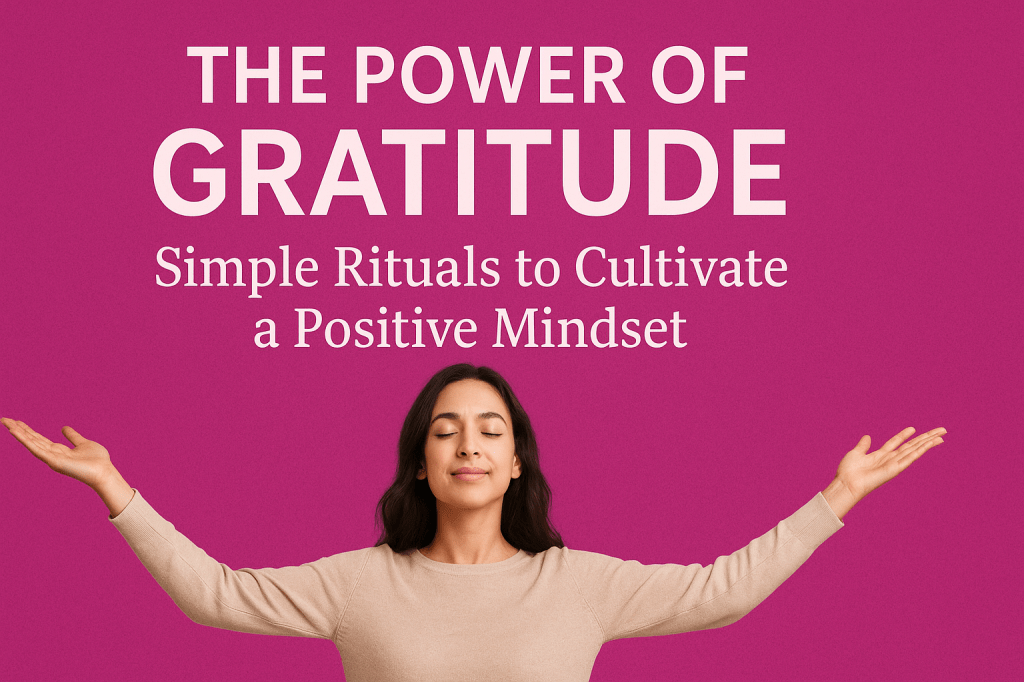
  • The Power of Gratitude: Simple Rituals to Cultivate a Positive Mindset

    The Power of Gratitude: Simple Rituals to Cultivate a Positive Mindset

    Imagine waking up each morning feeling lighter, brighter, and more grounded—even if the world outside feels a little shaky. What if the secret to that instant mood lift wasn’t a fancy gadget, a spa day, or a tropical getaway, but something as simple—and powerful—as gratitude? That quiet, unassuming feeling tucked inside you can flip your mindset faster than you can say, “good vibes only.”

    Gratitude isn’t just a trendy wellness buzzword. It’s transformative—like a ray of sunshine breaking through storm clouds. Let’s explore why gratitude works its magic and how simple, daily rituals can invite more positivity, peace, and joy into your life.

    What Is Gratitude, Really?

    Gratitude is more than politely saying “thank you” when someone holds the door. It’s about noticing the good in your life, even when things feel messy. Picture it as tuning into your favorite radio station—the one playing uplifting music instead of static noise.

    Science backs it up, too. Gratitude lights up the brain’s reward centers, boosting mood and even improving physical health. It’s like your brain giving you a high-five for focusing on what’s working rather than what’s missing.

    The Gratitude Mindset: Your Secret Superpower

    A gratitude mindset is a way of seeing the world that highlights silver linings, celebrates small wins, and cherishes everyday blessings. It doesn’t erase challenges—but it gives you a mental flashlight when the path feels dark.

    Practicing gratitude can reduce stress, improve sleep, and strengthen relationships. And here’s the best part—it’s contagious. Your gratitude can inspire someone else, sparking a ripple effect of positivity.

    Simple Gratitude Rituals to Boost Your Positive Mindset

    Ready to invite this mindset into your life? Here are a few easy, science-backed rituals that require nothing more than a few mindful minutes each day.

    1. Morning Gratitude List

    Before your feet even touch the floor, think of three things you’re thankful for. Maybe it’s the aroma of freshly brewed coffee, the warmth of your cozy bed, or the smile from a friend yesterday.

    Keep a gratitude journal by your bedside. Writing these down transforms fleeting thoughts into tangible seeds—seeds that grow into a flourishing garden of positivity.

    2. The Two-Minute Pause: A Daily Reset

    Life moves fast. The two-minute pause is your mini mindfulness break. Close your eyes, take a deep breath, and notice three things around you that spark calm or joy.

    This tiny ritual snaps you out of autopilot, reconnecting you to the present moment—where gratitude truly lives. Even on chaotic days, it serves as an anchor for your mind.

    3. Send a Gratitude Message

    Take a moment to let someone know you appreciate them. A quick text, a voice note, or even a heartfelt emoji can make their day—and yours.

    Small gestures like this strengthen social bonds, boost your mood, and spread positivity like sunshine spilling through a window. It’s an effortless win-win.

    4. Evening Reflection: Gratitude Before Bed

    End your day by reflecting on three positive things that happened. Perhaps it’s a compliment you received, a goal you nudged forward, or a meal that made you smile.

    This practice helps your brain store happy memories instead of ruminating thoughts, paving the way for restful sleep and a refreshed morning mindset.

    How Gratitude Supports Your Mental Wellness Journey

    If you’re on a path of self-care and mental wellness (hello, HerRadiantMind community!), gratitude is like a trusted companion—one who gently reminds you to pause, breathe, and notice the good, even amidst challenges.

    By weaving gratitude into your daily routine, you nurture a mindset that amplifies every positive habit you’re already practicing. It’s not a quick fix—it’s a steady, long-term relationship with joy and resilience.

    A Real-Life Story: Finding Gratitude When You Feel “Behind”

    I once coached a woman named Marisa who struggled deeply with gratitude. On paper, she was doing great—steady job, loving partner, decent health—but inside, she constantly felt like she was behind. Every scroll through social media left her deflated. Her friends seemed to be moving faster—buying homes, launching businesses, starting families—and she was stuck comparing her timeline to everyone else’s highlight reel.

    During our sessions, I invited her to start a simple gratitude ritual. Not a forced “just be positive” approach—but a daily moment to anchor herself in what was already good. At first, she resisted. “How can I be grateful when I’m not where I want to be yet?” she asked.

    So, we started small. Each morning, she wrote down one thing that brought her comfort—a warm shower, a kind text, the quiet peace of her morning walk. No pressure. No perfection. Just noticing.

    Weeks later, she came to me smiling. “I realized I’ve been so busy chasing the next thing that I forgot to appreciate what’s right here,” she said. Gratitude didn’t dull her ambition—it gave her peace in the process.

    By the end of our time together, Marisa’s mindset had transformed. She no longer measured her worth by comparison but by her capacity to stay present and thankful. Gratitude became her compass—guiding her toward progress that felt authentic, not rushed.

    When Gratitude Feels Hard

    Life isn’t always sunshine and rainbows. Some days, gratitude can feel impossible. And that’s okay. Practicing gratitude isn’t about ignoring hardships—it’s about finding tiny sparks, even in dark moments.

    Start small: your breath, the warmth of your favorite sweater, or a pet’s wagging tail. These little acknowledgments can soften life’s rough edges and help you regain your footing.

    Your First Step Toward a Brighter Mindset

    Gratitude is a simple yet powerful tool. By turning everyday moments into opportunities for appreciation, you set the stage for a happier, healthier mindset. And the best part? You don’t need to wait for a perfect moment—your journey begins wherever you are, right now.

    Curious to go deeper and cultivate a steady, radiant mindset that stands strong through life’s ups and downs? That’s where coaching with HerRadiantMind comes in. Together, we’ll create a personalized plan tailored to your life, goals, and challenges—sprinkled with love, laughter, and plenty of gratitude.

    Ready to start? Reach out today. Your radiant mind is waiting.

    Thank you for spending this time with me.

    Remember—healing isn’t linear, and growth doesn’t have to be loud to be powerful.

    Keep choosing yourself, one gentle moment at a time.💖

    Until next time, stay radiant and take tender care of your beautiful mind and body.

    With love,

    — Christabel, HerRadiantMind

  • Flipping the Script on Limiting Beliefs

    Flipping the Script on Limiting Beliefs

    Subscribe to continue reading

    Subscribe to get access to the rest of this post and other subscriber-only content.