Tag: Mental Health

  • How to Rebuild Your Confidence After Years of Playing Small

    How to Rebuild Your Confidence After Years of Playing Small

    Introduction

    Let’s be real: playing small doesn’t protect you — it just makes you feel like a smaller version of yourself. If you’ve been living in the shadows, shrinking your voice, your power, or your presence just to feel safe or accepted… this is your reminder: you were never meant to play small. You were made to take up space — confidently, boldly, and unapologetically.

    In this blog post, we’re breaking down how to rebuild your confidence — even if it feels like you’ve lost it for good.

    Why You Started Playing Small (And Why It’s Not Your Fault)

    You didn’t wake up one day and decide to dim your light. Playing small often starts with little moments — being told you’re too loud, too ambitious, too much. It’s reinforced by criticism, rejection, and social conditioning, especially for women and marginalized voices.

    Over time, you internalize it. You start second-guessing yourself, holding back, people-pleasing — until your confidence feels like a distant memory.

    But confidence isn’t something you’re born with. It’s something you build — and you can rebuild it.

    Step 1: Reconnect With Yourself

    Before you can rebuild your confidence, you have to get reacquainted with the real you.

    Start by asking:

    • When did I feel most alive?

    • What parts of myself have I been hiding?

    • What lights me up — even if no one else is watching?

    Begin a daily habit of writing 3 things you admire about yourself. These can be traits, experiences, or small wins. Over time, you’ll start to rebuild the internal proof that you are enough — and always have been.

    Step 2: Take Micro-Risks Every Day

    Confidence doesn’t come from waiting. It comes from doing.

    Start taking small actions that stretch you:

    • Speak up when you’d normally stay quiet.

    • Share your ideas, even if they feel imperfect.

    • Say no to things that drain your energy.

    These “micro-risks” teach your nervous system that you can take up space and still be safe. The more you practice, the stronger your inner confidence becomes.

    Step 3: Rewrite the Old Narrative

    The voice in your head telling you you’re not good enough? That’s not your voice. It’s the echo of old experiences, conditioning, or fear-based thinking.

    Start by identifying your most common self-doubt stories. Then, actively rewrite them.

    For example:

    Old thought: “I’m not ready.”

    New belief: “I might be nervous, but I’m capable.”

    Confidence doesn’t require perfection — just the willingness to keep showing up, even when your inner critic gets loud.

    Step 4: Surround Yourself With People Who Reflect Your Light

    Confidence doesn’t grow in isolation — it grows in safe, supportive environments.

    Find your people:

    • Join communities that reflect your values.

    • Limit time with energy-drainers and confidence-shrinkers.

    • Follow creators and mentors who help you feel empowered, not insecure.

    Think of your confidence like a garden. The right people are the sunlight and water it needs to bloom.

    The Hard Truth: Stop Waiting for Permission

    Most people stay stuck because they’re waiting for a green light — someone to say, “Go ahead, it’s your turn.” But here’s the truth:

    No one is coming to give you permission.

    You have to give it to yourself.

    That doesn’t mean you’ll never be afraid. It means you’ll choose to act even with fear in the passenger seat.

    Final Thoughts

    Confidence is not about being the loudest person in the room.

    It’s about being so rooted in who you are that you no longer feel the need to perform, prove, or please.

    If you’ve been playing small, it’s not too late.

    You haven’t missed your chance.

    You just forgot how powerful you are.

    Now’s the time to remember — and rise.

    👉 Ready for the next step?

    Check out this post: [https://youtu.be/6gcrJLP16gQ?si=RV1lxbCfCzTnDszs”] — it’s the perfect next step if you’re reclaiming your confidence.

    Take a deep breath—you’re doing better than you think.
    With love and light,
    Christabel (HerRadiantMind)

    Stay Radiant—Join the List 

  • How to Stop Overthinking: 5 Mindset Shifts to Reclaim Your Peace and Confidence

    How to Stop Overthinking: 5 Mindset Shifts to Reclaim Your Peace and Confidence

    You don’t need more time to decide. You need to stop running mental marathons over simple stuff.

    If you’re constantly stuck in your head — replaying conversations, analyzing every outcome, and feeling paralyzed by even the smallest decision — this post is for you.

    Let’s break down what’s really keeping you stuck in the spiral of overthinking — and how to get out.

    Why You Can’t Stop Overthinking (Even When You Want To)

    If your brain feels like it has 47 tabs open — and none of them are loading — you’re not alone.

    Overthinking:

    • Steals your peace.
    • Wrecks your confidence.
    • Turns small decisions into massive stress triggers.

    But here’s the truth most people miss:

    Overthinking is not who you are. It’s a habit. A pattern.

    And habits can be changed.

    In this post, I’m sharing 5 powerful mindset shifts that will help you stop overthinking and start trusting yourself again.

    The third one? It’s the one no one talks about — and it’s probably what’s keeping you up at night.

    Mindset Shift #1: Your Brain is Wired for Survival — Not Clarity

    Your brain’s #1 job is to keep you alive, not to keep you calm.

    That’s why it constantly scans for potential threats — even in everyday situations like a meeting or text message.

    Ever find yourself replaying a weird interaction from three days ago at 2 a.m.?

    Yeah. That’s your survival brain doing its thing.

    🧠 Fun fact: A study in Science showed we make over 35,000 decisions per day.

    No wonder we’re mentally fried.

    ✨ The Shift:

    Ask yourself:

    “Is this a real problem… or am I just trying to avoid a bad feeling?”

    Fear doesn’t bring clarity. Calling out the fear does.

    Mindset Shift #2: Overthinking = Self-Doubt in Disguise

    Let’s talk about Leila.

    She’d spend 30 minutes editing a 2-sentence email. Rewrite a text 6 times. Obsess over whether her outfit was “too much.”

    What she was really saying was:

    “I don’t trust myself to get it right.”

    We often confuse overthinking with being “thorough” or “careful.”

    But underneath it? It’s self-doubt.

    ✨ The Shift:

    You don’t need to be 100% certain to move forward.

    You’re allowed to get it wrong and still be worthy.

    Confidence isn’t the absence of overthinking — it’s the courage to act despite it.

    Mindset Shift #3: You’re Not Looking for the Perfect Decision — You’re Looking for Control

    Let this one land for a moment.

    When we say, “I just need more time,” what we really mean is,

    “I’m afraid to mess this up.”

    We think if we analyze everything perfectly, we’ll avoid regret or pain.

    But perfection?

    It’s an illusion.

    ✨ The Shift:

    Ask:

    “What’s the best next step I can take with the info I have right now?”

    This shift moves you from paralysis to progress.

    From fear to curiosity.

    From control to courage.

    Mindset Shift #4: You Don’t Need More Thinking — You Need More Action

    This one might sting a little:

    You don’t need another journal entry, checklist, or heart-to-heart with your best friend.

    You need to take the next small, messy step.

    We get stuck thinking we need to figure it all out before we move.

    But clarity comes from doing, not thinking.

    💡 A study in the Journal of Behavioral Decision Making found that people who took action, even small imperfect ones, had more confidence and less regret than those who stayed in indecision.

    ✨ The Shift:

    Say this instead:

    “Let me take one small step and see how it feels.”

    Confidence isn’t born in your head — it’s built through lived experience.

    Mindset Shift #5: You Are Not Your Thoughts

    Here’s a truth bomb most people never learn:

    You are not your thoughts. You’re the one thinking them.

    Thoughts like:

    • “I’m not good enough.”
    • “They probably hate me.”
    • “I’ll never get this right.”

    …aren’t facts. They’re stories shaped by fear and conditioning.

    🧠 According to Cognitive Behavioral Therapy (CBT), one of the most powerful ways to stop overthinking is to challenge automatic thoughts, not believe them blindly.

    ✨ The Shift:

    Ask yourself:

    • Is this thought helpful?
    • Is it kind?
    • Is it even true?

    When you realize thoughts are suggestions — not instructions — you reclaim your power.

    What’s Actually Keeping You Stuck

    Most people think overthinking is about avoiding the wrong decision.

    But the real issue is this:

    Overthinking disconnects you from yourself.

    You start ignoring your gut.

    You stop trusting your own wisdom.

    You outsource your power to Google searches, Reddit threads, and opinions from people who don’t live your life.

    Why Do We Overthink in the First Place?

    Let’s break it down:

    • We were taught to fear failure.
    • We were shamed for making “wrong” choices.
    • We think being decisive means being reckless.
    • And sometimes? We just want to feel in control of a chaotic world.

    But guess what?

    ❌ Overthinking doesn’t protect you.

    ❌ It doesn’t help you grow.

    ❌ And it definitely doesn’t make life easier.

    People who build bold, fulfilling lives don’t have more certainty.

    They have more trust in themselves.

    Here’s your permission slip:

    There is no perfect decision.

    The “right” decision is not something you find.

    It’s something you create — through action, trust, and small course corrections.

    Imagine this:

    What if you dropped the need to be perfect, and started living like you could handle whatever came your way?

    Because you can.

    Final Thoughts: How to Stop Overthinking and Start Living

    Here’s a quick recap of the 5 mindset shifts to break free from overthinking:

    1. 🧠 Your brain is wired for protection, not peace.
    2. ❓ Overthinking is usually self-doubt wearing a logical mask.
    3. 🎯 You’re chasing control, not clarity.
    4. 🚶‍♀️ Action is the antidote to anxiety.
    5. 💭 You are not your thoughts — question them.

    You don’t need to overthink less.

    You just need to start trusting yourself more.

    Every decision doesn’t need to be perfect.

    It just needs to be yours.

    Remember you are not alone!

    Until next time, stay radiant!

    With love and light Christabel

    🔗 Stay connected:
    Instagram | @HerRadiantMind
    📌 Pinterest: Herradiantmind
    🌍 Website: http://www.herradiantmind.com

    Youtube: https://youtube.com/@herradiantmind?si=BkXhtAw1ABGA–k2
    Elevate your well-being with One of my coaching programs—personalized support , and exclusive resources.

    Stay Radiant—Join the List 

  • How to Let Go of Guilt and Choose Yourself

    How to Let Go of Guilt and Choose Yourself

    Have you ever said “no” to something and immediately felt a pang of guilt?

    Or taken a break—only to find your brain whispering, “You should be doing more”?

    You’re not alone.

    So many of us have been conditioned to believe that choosing ourselves is selfish. But here’s the truth that can change everything:

    Self-love is not a betrayal of others. It’s a reunion with yourself.

    There’s a version of you underneath all the guilt—the one who knows her worth, who honours her boundaries, who doesn’t apologize for taking up space.

    You don’t have to keep breaking yourself into pieces to make other people comfortable.

    You are allowed to choose yourself without the guilt, the shame, or the apology.

    And if no one has told you this today—you’re not selfish. You’re healing.

    And that’s the most courageous thing you can do.

    Why We Feel Guilty for Choosing Ourselves

    From a young age, we’re taught to put others first. We’re praised for being agreeable, helpful, selfless.

    But what happens when being selfless leads to self-abandonment?

    Over time, the message becomes internalized:

    • “Good people give everything.”
    • “Love means sacrifice.”
    • “Your needs come last.”

    And when we finally start reclaiming our time, our boundaries, or our energy—the guilt kicks in.

    But that guilt isn’t truth. It’s conditioning.

    Here’s what guilt says:

    • “If I say no, they’ll be mad at me.”
    • “If I take time for myself, I’m letting people down.”
    • “If I put myself first, that makes me selfish.”

    Here’s what self-love says:

    • “I can love people and still choose myself.”
    • “My needs matter too.”
    • “Boundaries aren’t walls. They’re doors to healthier relationships.”

    My Breaking Point

    I hit a wall years ago—emotionally, physically, and spiritually drained. I was giving to everyone but myself.

    And then one night, I sat in my car, completely numb. I had nothing left. That’s when I realized:

    No one was going to give me permission to rest—I had to give it to myself.

    That was the first step of my self-love journey. It was messy. It was emotional. But it was necessary.

    3 Areas Where Guilt Shows Up—and How to Shift It

    1. Saying No: Your peace matters. Saying no doesn’t make you selfish—it makes you self-aware. You’re not responsible for managing other people’s emotions.
    2. Taking Rest: We glorify hustle, but healing comes through rest. Rest isn’t laziness—it’s medicine.
    3. Putting Yourself First: You’re allowed to be the main character in your life. You don’t owe anyone your constant availability.

    How to Start Releasing Guilt

    • Question the guilt: Ask yourself, “Is this guilt coming from love—or from old programming?”
    • Practice mirror affirmations: Try, “I’m allowed to choose myself without guilt.”
    • Surround yourself with safe people: Healthy people respect your boundaries.
    • Do something every day that centers you—without apologizing.

    Final Thoughts

    Releasing guilt isn’t easy. But choosing yourself is the beginning of healing—not just for you, but for every woman watching you rewrite the rules.

    Releasing guilt isn’t easy. But choosing yourself is the beginning of healing—not just for you, but for every woman watching you rewrite the rules.

    You are not selfish.

    You are worthy.

    And you deserve to take up space—guilt-free.


    Stay Radiant—Join the List 

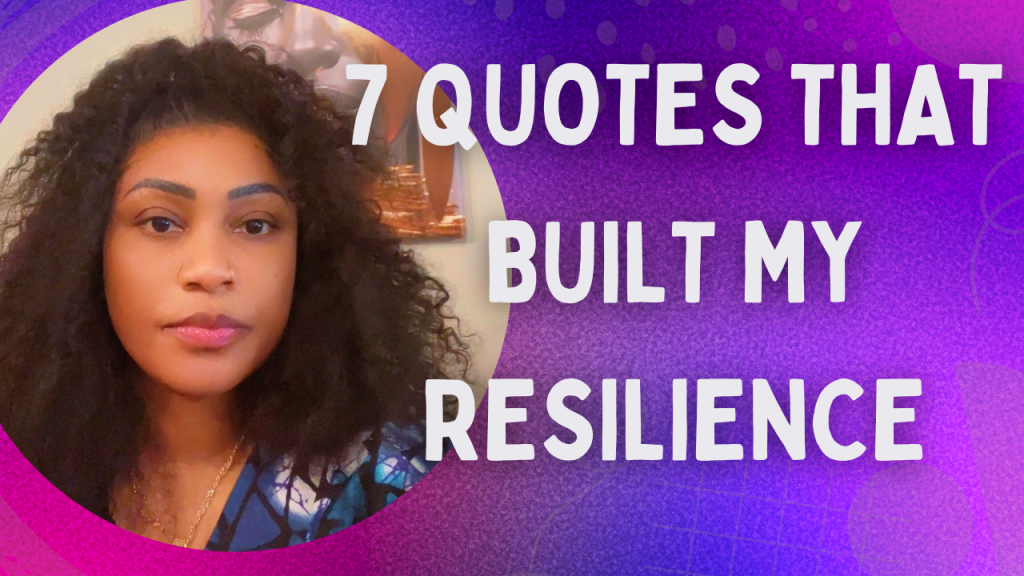
  •  7 Quotes That Built My Resilience (When Life Tried to Break Me)

     7 Quotes That Built My Resilience (When Life Tried to Break Me)

    Have you ever felt like you were barely holding it together — like life just kept hitting you, again and again, with no break?

    Yeah. Me too.

    There were seasons where I genuinely didn’t know how I’d get back up. Times when burnout, grief, heartbreak, or just plain exhaustion made me question everything. What saved me wasn’t some grand moment of transformation — it was a handful of words.

    These 7 quotes didn’t just inspire me — they held me together. They reminded me that resilience isn’t about being bulletproof. It’s about bending, falling, failing — and still choosing to rise.

    So whether you’re deep in the mud or just looking to build your inner strength, I hope one of these speaks to your heart the way it did to mine.

    1. “Fall seven times, stand up eight.” – Japanese Proverb

    Resilience isn’t about never falling. It’s about always getting back up.

    When I lost my father, this quote reminded me that getting out of bed, brushing my teeth, showing up — even in pain — was a victory.

    2. “You don’t drown by falling in the water. You drown by staying there.” – Edwin Louis Cole

    Pain isn’t the enemy. Staying stuck is.

    I learned that after a soul-crushing breakup that left me grieving who I thought I was. Healing began when I stopped marinating in misery and chose to move forward, one small action at a time.

    3. “No mud, no lotus.” – Thich Nhat Hanh

    Burnout brought me to my knees. But that season taught me boundaries, self-worth, and healing.

    Lotuses grow from mud. So does strength.

    4. “She stood in the storm, and when the wind did not blow her way, she adjusted her sails.” – Elizabeth Edwards

    There is power in the pivot.

    I thought strength meant pushing through everything. But sometimes, the strongest thing you can do is adjust.

    5. “I can be changed by what happens to me. But I refuse to be reduced by it.” – Maya Angelou

    Life has changed me — deeply.

    But I’m not broken. I’m refined. This quote reminded me that we can be shaped by pain… without letting it define us.

    6. “It’s not the load that breaks you down. It’s the way you carry it.” – Lena Horne

    Carrying the weight of the world alone? That’s what nearly broke me.

    Learning to rest, to delegate, to ask for help — that’s what made me unbreakable.

    7. “Sometimes when you’re in a dark place, you think you’ve been buried. But you’ve actually been planted.” – Christine Caine

    Dark seasons aren’t the end. Sometimes, they’re the beginning of something new growing inside you.

    So what’s the takeaway?

    Resilience isn’t about looking strong.

    It’s about choosing to keep going, even when you don’t feel strong at all.

    Let these words become your anchors.

    Write them down. Speak them. Keep them close.

    You don’t have to rise perfectly — you just have to rise.

    Your Turn:

    Which quote spoke to your soul the most?

    Leave a comment, or better yet — write it somewhere you’ll see it every day. Let it become your reminder that no matter what life throws at you…

    You are still standing. And you are not alone.

    📌 Ready to build deeper resilience?

    Check out my youtube channel for more tools and resouces. Until next time, stay radiant and take care of your beautiful mind and body.

    With love and light, Christabel (HerRadiantMind)

    Stay Radiant- Join the list

  • Step-by-Step Nervous System Reset: How to Calm Anxiety, Reduce Stress & Find Inner Balance.

    Step-by-Step Nervous System Reset: How to Calm Anxiety, Reduce Stress & Find Inner Balance.

    Welcome, Radiant Soul!

    If you’re feeling overwhelmed, anxious, or constantly on edge, you’re not alone. Many of us experience the effects of a dysregulated nervous system in our daily lives, especially when we’re dealing with stress, trauma, or emotional burnout. The good news is that your nervous system can be regulated and restored to balance. In this post, I’m going to walk you through some practical and accessible ways to bring your body and mind back to a place of safety, calm, and healing.

    What Is the Nervous System?

    The nervous system is your body’s communication system. It controls everything from your heartbeat to how you feel in a stressful situation. There are two primary parts to it:

    • Sympathetic Nervous System (SNS): This is your “fight or flight” mode. It kicks in when you’re faced with a perceived threat and prepares your body to act quickly.
    • Parasympathetic Nervous System (PNS): This is your “rest and digest” mode, where your body recovers, calms down, and restores itself.

    In everyday life, it’s natural for the SNS to activate when you’re under stress. But when it stays activated for too long, it leads to dysregulation—often leaving you feeling exhausted, anxious, or emotionally triggered. That’s when we need to focus on regulating our nervous system.

    Signs Your Nervous System Needs Regulation

    How do you know if your nervous system is out of balance? Here are some common signs:

    • Feeling on edge or constantly in “fight or flight” mode
    • Overwhelm by small things that wouldn’t normally bother you
    • Sleep disturbances (trouble falling or staying asleep)
    • Emotional reactivity (feeling triggered or easily upset)
    • Disconnection or numbness in your body or emotions

    These signs tell you that your body is stuck in survival mode, and it needs some care and attention to restore balance. The good news is, with some simple tools, you can begin to heal and regulate your nervous system.

    5 Effective Tools to Regulate Your Nervous System

    Now let’s dive into 5 powerful tools that you can start using today to help bring your nervous system back into balance. These practices are all simple, yet incredibly effective, and can be done anytime, anywhere.

    1. Grounding Through the Body

    The first step in regulating your nervous system is connecting with your body. When we’re anxious or stressed, our thoughts can spiral, and we can lose touch with the present moment. Grounding helps you reconnect and brings you back to safety.

    Here’s a simple grounding technique to try:

    • The 5-4-3-2-1 Grounding Method:
      • 5 things you can see
      • 4 things you can touch
      • 3 things you can hear
      • 2 things you can smell
      • 1 thing you can taste

    This technique uses your senses to bring you back into the present, calming your nervous system and reminding your body that it’s safe.

    2. Breathwork: Your Superpower for Calm

    Your breath is one of the easiest and most powerful ways to regulate your nervous system. When you consciously slow your breath, you activate your parasympathetic nervous system, which helps you calm down and relax.

    Try this simple breathing exercise:

    • Box Breathing:
      • Inhale for 4 counts
      • Hold for 4 counts
      • Exhale for 6 counts
      • Repeat 3–5 times

    This technique triggers the calming response in your nervous system, helping you feel more centered and grounded.


    3. Co-Regulation: Connect with Others

    You don’t have to regulate your nervous system alone. Co-regulation happens when you connect with someone you trust—whether that’s a friend, family member, or even a pet. Our bodies can feel safer when we’re in the presence of another calm, regulated person.

    Spend time with a loved one today. Whether it’s a hug, a conversation, or just sitting in silence together, you’ll find that being around someone who feels safe helps bring your nervous system back into balance.


    4. Movement: Release Tension

    Your body stores stress and tension, often without you even realizing it. Gentle movement can help release that pent-up energy and allow your nervous system to reset.

    Try these movements:

    • Stretching: Gently stretch your arms, legs, and neck.
    • Shaking: Stand up and shake your limbs out, letting go of any built-up tension.
    • Walking: A slow walk outdoors can help calm your nervous system and bring a sense of peace.

    Even just a few minutes of movement can have a powerful impact on how you feel.


    5. Nervous System Affirmations & Vagus Nerve Support

    Positive affirmations are a great way to signal to your body that it is safe to relax. Your body listens to what you tell it, so using calming, supportive language can help you shift from survival mode to a place of peace.

    Try saying these affirmations:

    • “I am safe now.”
    • “It’s okay to rest.”
    • “I trust my body to heal and restore itself.”

    You can also activate the vagus nerve, which plays a key role in calming your nervous system. Try humming, gargling, or gently stretching your neck to stimulate this nerve and help bring relaxation to your body.

    A Final Word: Be Gentle with Yourself

    Regulating your nervous system is not about perfection—it’s about progress and compassion. If you’re feeling overwhelmed, take a moment to pause, breathe, and try one of these tools. Be patient with yourself and know that healing takes time.

    If you’ve tried any of these tools or have your own to share, drop a comment below—I’d love to hear how you’re supporting your nervous system.

    Don’t forget to share this post with someone who might need it. And if you found this helpful, be sure to sign up for more resources and support from me right here at HerRadiantMind.

    Until next time Stay Radiant. You’ve got this!

  • Redefining Success – Choosing Joy Over Perfection

    Title: Redefining Success: Choosing Joy Over Perfection

    Author: Christabel | Mental Wellness & Resilience Coach

    Have you ever hit a milestone, looked around, and thought… “Why doesn’t this feel like enough?”

    I’ve been there. The job, the goals, the perfect-looking life—and yet, a lingering emptiness that whispered, “Is this really it?”

    It took years (and some breakdowns) for me to realize that I had been chasing a version of success shaped by perfectionism, not peace. And that version? It was burning me out.

    The Trap of Perfectionism

    Perfectionism tells us we have to earn our worth—through performance, productivity, and approval.

    It says we’re only successful if we’re constantly “on,” constantly achieving. But all it really does is leave us anxious, disconnected, and exhausted.

    We lose ourselves trying to meet impossible standards… while joy slowly slips through the cracks.

    The Moment Everything Changed

    For me, it wasn’t one big epiphany. It was a slow unraveling.

    A quiet voice that asked, “What if success could feel like exhaling?”

    That was the beginning of my healing—and my new definition of success.

    My New Definition of Success

    Success isn’t a title, a number, or a perfect plan.

    It’s…

    • Waking up without dread.
    • Laughing with my son.
    • Saying yes to things that light me up—and no to what drains me.
    • Taking naps without guilt.
    • Choosing joy, even when life is messy.

    It’s not about getting it all right—it’s about feeling right in your body, your mind, and your soul.

    5 Ways to Choose Joy Over Perfection

    1. Daily Joy Journaling – Write 3 small things that made you smile.
    2. Replace “Should” with “Want” – Reclaim your own voice.
    3. Celebrate Small Wins – Progress is enough. You are enough.
    4. Let Stillness Be Productive – Rest is not laziness.
    5. Use Joy-Focused Affirmations – Try: “I am worthy of a joyful life.”

    Final Thoughts: You Get to Choose

    You don’t have to live by someone else’s definition of success.

    You get to choose.

    You get to define.

    And you, my friend, get to thrive.

    So today, I’m inviting you to choose joy. Not perfection. Not pressure. Just joy.

    Say it with me:

    “I choose joy—and that’s more than enough.”

    Ready to heal, rise, and live radiant?

    Join me on YouTube, the HerRadiantMind podcast, or in my private coaching space.

    Let’s rewrite the story together.

    With Love & Light

    Christabel E.

  • From Surviving to Thriving: Rewriting Your Story After Trauma

    From Surviving to Thriving: Rewriting Your Story After Trauma

    Trauma doesn’t have to be the end of your story. It can be the very place your healing begins.

    Rewriting your narrative after trauma isn’t about forgetting—it’s about reclaiming your voice and choosing to live empowered, not imprisoned.

    The Science Behind Trauma’s Impact

    Trauma alters the brain, especially in areas like the amygdala, hippocampus, and prefrontal cortex. According to research published in The Journal of Neuroscience, trauma can over-activate the amygdala (the brain’s fear center) and reduce activity in the prefrontal cortex (responsible for decision-making and reasoning).

    This biological shift explains why trauma survivors may feel “stuck” in survival mode—reactive, anxious, and emotionally exhausted—even when the threat has passed.

    But here’s the hopeful part:

    Thanks to neuroplasticity, the brain can rewire itself. With intentional self-care, therapy, and mindfulness, healing isn’t just possible—it’s physiological.

    Affirmation:

    “My brain and body are capable of healing. I am not broken—I am becoming whole.”

    Why Rewriting Your Story Matters

    Your subconscious mind stores trauma as a pattern, which means your brain may still interpret present-day situations through a past lens. But when you intentionally reframe your narrative, you begin to create new neural pathways and emotional responses.

    You are not erasing your pain—you are giving it new meaning.

    Affirmation:

    “I am the author of my life. Every chapter, even the hard ones, have led me to this strength.”

    Steps to Rewrite Your Story and Thrive

    1. Acknowledge, Don’t Avoid

    Denial deepens the wound. Healing begins when we shine light on our pain.

    “What you resist, persists. What you feel, you can heal.” — Carl Jung

    2. Name Your Emotions

    According to Dr. Dan Siegel, “naming it to tame it” helps regulate the nervous system. Journaling or talking to a therapist helps shift emotional overwhelm into clarity.

    Affirmation:

    “I give myself permission to feel and to heal.”

    3. Reconnect with Your Body

    Trauma disconnects us from our bodies. Practices like breathwork, yoga, or grounding techniques help bring us back to the present and restore safety.

    Try This:

    • Inhale for 4 counts

    • Hold for 4 counts

    • Exhale for 6 counts

    • Repeat 3 times

    Affirmation:

    “In this moment, I am safe. My body is my ally.”

    4. Cultivate Self-Compassion

    Dr. Kristin Neff’s research shows that self-compassion is linked to reduced PTSD symptoms and improved emotional resilience. Be kind to yourself in the same way you would be to a friend.

    Affirmation:

    “I am worthy of love, healing, and peace—just as I am.”

    5. Visualize a New Identity

    Visualization activates the same neural networks as real experience. By imagining a thriving version of yourself, you condition your mind to step into that reality.

    Affirmation:

    “I choose to see myself not through the lens of trauma, but through the light of transformation.”

    Raising the Stakes: Why It Matters Now

    Unresolved trauma doesn’t just affect your mental health—it impacts your relationships, work, physical well-being, and overall sense of joy. The longer we carry unprocessed pain, the more it seeps into every decision and connection.

    But thriving is possible. You’ve already survived. Now it’s time to live fully.

    Affirmation:

    “I am more than what happened to me. I am creating a new path forward.”

    Closing Thought: You Are the Rewrite

    Healing doesn’t happen overnight—but with every small act of courage, you’re turning survival into strength. You’re rewriting your story—not to forget, but to reclaim your power.

    Affirmation:

    “My healing is not linear, but it is unfolding. I am becoming my most radiant self—one moment, one breath, one breakthrough at a time.”

    Healing isn’t linear—it’s layered, sacred, and deeply personal. If you’ve spent years simply surviving, know this: thriving isn’t just possible—it’s your birthright. Your trauma doesn’t define you, but your courage to face it and rewrite your story does.

    As you continue walking this path, may you give yourself permission to grow beyond survival. To love yourself through the process. To feel worthy of peace, joy, and wholeness—not after you’ve healed, but as you heal.

    You are not alone in this journey. I’m walking it with you, one breath, one breakthrough at a time.

    With so much light and love,

    Christabel

    Your Radiant Mind-Body Coach

  • Flipping the Script on Limiting Beliefs

    Flipping the Script on Limiting Beliefs

    Subscribe to continue reading

    Subscribe to get access to the rest of this post and other subscriber-only content.

  • Unlocking the Power of the Mind-Body Connection: How Tuning Into Yourself Can Transform Your Life

    Unlocking the Power of the Mind-Body Connection: How Tuning Into Yourself Can Transform Your Life

    Have you ever felt physically drained after an emotionally tough day? Or noticed how a positive mindset can boost your energy? That’s the mind-body connection at work—a powerful relationship between your thoughts, emotions, and physical health.

    As a Mental Wellness & Mindset Coach, I’ve seen firsthand how nurturing this connection can reduce stress, improve mental clarity, and create lasting emotional balance. But before I started this journey, I didn’t fully realize how much my mind was controlling my body—and how much my body was speaking back.

    Here’s how I discovered the transformative power of the mind-body connection—and how you can, too.

    My Personal Story: From Burnout to Balance

    A few years ago, I found myself trapped in a cycle of exhaustion. I was constantly overwhelmed, juggling work, family, and the pressure to “keep it all together.” I ignored the tension headaches and fatigue, telling myself to push through.

    But my body had other plans.

    One day, after weeks of ignoring the signs, I woke up feeling completely depleted—physically and emotionally. Simple tasks felt impossible. That’s when I realized: I wasn’t just tired. I was burnt out. My mind and body were screaming for attention.

    I knew something had to change.

    I began researching the mind-body connection and started making small, intentional shifts:

    ✅ Mindful Breathing: I began practicing deep breathing exercises to calm my nervous system. Within weeks, I felt more grounded and present.

    ✅ Body Awareness: I started tuning into how my body felt throughout the day—releasing tension and giving myself permission to rest.

    ✅ Positive Thought Patterns: I challenged the negative self-talk and began affirming my worth, which eased my anxiety and boosted my confidence.

    The results were undeniable. As I nurtured my mind, my body responded with renewed energy. I wasn’t just surviving—I was thriving.

    What Is the Mind-Body Connection (And Why Does It Matter)?

    The mind-body connection refers to the link between your thoughts, emotions, and physical well-being. Science shows us that mental and emotional states directly impact your physical health. For example:

    • Stress & Anxiety can trigger headaches, digestive issues, and insomnia.
    • Positive Emotions like gratitude and joy can boost your immune system and improve heart health.
    • Mindful Practices such as meditation can lower cortisol (the stress hormone) and promote emotional balance.

    Understanding this connection allows you to take control of your well-being from the inside out.

    3 Simple Ways to Strengthen Your Mind-Body Connection

    1. Practice Mindful Movement

    Incorporate gentle activities like yoga, stretching, or nature walks to release stress and reconnect with your body.

    1. Reframe Negative Thoughts

    When negative self-talk arises, pause and challenge it. Ask yourself, “Is this thought true? Is it serving me?” Replacing negative patterns with empowering affirmations can shift both your mindset and physical response.

    1. Listen to Your Body’s Signals

    Your body is always communicating. Instead of pushing through fatigue, ask yourself what you truly need—rest, nourishment, or even emotional support.

    Your Mind and Body Deserve Care—Here’s How I Can Help

    At HerRadiantMind, I guide women just like you in reconnecting with their minds and bodies through personalized coaching. My 1:1 programs focus on:

    ✔️ Managing stress and anxiety with holistic techniques

    ✔️ Building emotional resilience through mindset work

    ✔️ Creating sustainable self-care routines for long-term wellness

    You don’t have to navigate this alone.

    ✨ Ready to nurture your mind-body connection and reclaim your balance?

    👉 Book Your Free Discovery Call Today!(radiantinsightcoaching@gmail.com)

    Your most radiant, balanced life starts now!

  • How to Avoid Holiday Stress: Simple Mindfulness Tips for a Peaceful Season

    How to Avoid Holiday Stress: Simple Mindfulness Tips for a Peaceful Season

    The holidays arrive every year wrapped in twinkling lights, cozy gatherings, and a collective rush to make everything “just right.” But for many, behind the ribbons and recipes lies something far more fragile — the quiet hum of overwhelm.

    The season that’s meant to fill our hearts often ends up draining our energy. Between endless shopping lists, family dynamics, financial strain, and social expectations, it’s easy to feel stretched thin.

    Yet beneath all that noise, the true heart of the season still beats softly — a steady invitation to slow down, reconnect, and breathe.

    This year, maybe you’re ready to do it differently. Maybe you’re craving peace more than perfection.

    Let’s explore how to gently step back from the chaos and step into a holiday filled with calm, clarity, and presence.

    1. Plan Ahead with Intention

    Trade last-minute frenzy for gentle flow.

    When we let the season happen “to us,” we often end up in reactive mode — scrambling, overcommitting, overspending. But when we plan intentionally, we create space for peace.

    Start by mapping your December from a place of ease. Instead of obsessing over every to-do, ask yourself:

    “What truly matters to me this year?”

    Maybe it’s quality time with loved ones. Maybe it’s solitude, reflection, or rest. Once you know your priorities, you can structure plans that honor your energy instead of depleting it.

    Bring your plan to life without rigidity:

    • Create a compassionate schedule. Block out time for shopping, meal prep, or family events — and still leave breathing room. Downtime isn’t laziness; it’s sustainability.
    • Set a heart-aligned budget. Overspending often stems from wanting to show love or “keep up,” but presence is more valuable than presents. Gift thoughtfully within your means.
    • Prep early, release often. The earlier you begin, the more flexible you can be if plans shift. When they do, breathe instead of panic — flexibility is part of the plan.

    Mindful planning stops the holidays from controlling you and invites you to co-create a rhythm that supports your peace.

    2. Simplify the Season

    Less pressure. More presence.

    Every year seems to bring a new layer of “more” — more traditions, decorations, commitments, expectations. This accumulation can lead not to joy but to exhaustion.

    Simplifying isn’t giving up the magic; it’s rediscovering it.

    Ask yourself: Which traditions light me up — and which feel like obligations? You have permission to release what no longer fits.

    Ways to simplify without guilt:

    • Choose quality over quantity. Instead of dozens of events, select a few meaningful ones that energize you.
    • Share the load. Let others cook, decorate, or host alongside you. Holiday magic is a shared experience, not a solo performance.
    • Declutter the extras. Not every surface needs to sparkle. Sometimes a single candle or evergreen sprig can set the tone better than a house full of tinsel.
    • Let go of elaborate expectations. Cozy, imperfect evenings laughing over cocoa often matter more than a magazine-perfect table.

    When you strip the season back to its essentials, what remains is real — connection, love, and gratitude.

    3. Protect Your Energy with Self-Care

    Because peace begins within.

    The holidays evoke every emotion — joy, nostalgia, sadness, anxiety. With so many moving parts, your energy can scatter quickly. Make self-care your anchor.

    Think of yourself as a candle: if you keep burning without rewaxing the flame, eventually you go out.

    Ways to rekindle your inner light:

    • Move your body gently. Even a short yoga session, a brisk walk, or stretching in sunlight releases mental clutter and resets your mood.
    • Feed your nervous system calm. Choose nourishing meals, slow sips of water, and moments of stillness. Calm comes from caring for your inner state, not controlling the chaos.
    • Limit sensory overload. Music, lights, and conversation can quickly turn from joyful to overstimulating. Step outside to reset your senses.
    • Honor your emotions. If grief or loneliness visits, don’t suppress it. The holidays can hold both joy and sorrow — and that’s okay.

    Self-care is sacred, not selfish. The fuller your well, the more radiant and present you become for others.

    4. Set Heart-Centered Boundaries

    Peace requires protection.

    Holiday gatherings, though joyful, can stir tension — old family dynamics, triggering comments, or social fatigue. Boundaries become your shelter, not your wall.

    Before attending events, ask yourself:

    • What level of energy do I have to give today?
    • Which interactions nourish me, and which drain me?
    • What do I need to stay grounded if things get tense?

    Practical ways to uphold gentle boundaries:

    • Say no with love. Decline gatherings or tasks that don’t align with your bandwidth. Graceful phrases like, “Thank you for understanding that I’m keeping things simple this year,” work beautifully.
    • Plan emotional exits. Have a brief walk, bathroom break, or step outside for five deep breaths when tension arises.
    • Guard your digital space. Social media can amplify comparison and insecurity. Take digital breaks to maintain your rhythm.

    Boundaries protect not just your time, but your peace of mind — a gift only you can give yourself.

    5. Anchor Yourself in Gratitude

    When stress grows, gratitude steadies the soul.

    Gratitude acts like a compass — guiding attention back to what’s already abundant. It doesn’t ignore stress; it transforms how you hold it.

    Small practices with deep ripple effects:

    • Start or end your day with gratitude. Write down three sparks of joy — a snowfall, laughter, a warm drink.
    • Express appreciation aloud. Thank friends, partners, or loved ones for small kindnesses. Gratitude spoken deepens connection.
    • Savor sensory joys. Notice cinnamon aroma, candle glow, or rustling wrapping paper. Micro-moments of awareness nurture peace.

    With daily attention, gratitude softens worry and reawakens wonder, letting overwhelm lose its hold.

    6. Navigate Family Dynamics with Grace

    You can’t control others — but you can center yourself.

    Family brings comfort, nostalgia, and love — but also tension and triggers. Staying grounded is an act of strength and tenderness.

    Before gatherings:

    1. Set clear intentions. Decide how you want to feel — calm, compassionate, or detached from drama. Naming your goal gives your energy direction.
    2. Visualize peace. Take deep breaths in the car before entering charged spaces.
    3. Release the need to fix others. You are only responsible for your own energy.

    During tension:

    • Excuse yourself for a walk.
    • Quietly help with dishes.
    • Step outside for a moment of peace.

    Grace isn’t pretending; it’s balancing empathy with emotional safety. You can love and protect your peace simultaneously.

    7. Embrace Imperfection

    The most beautiful memories are rarely the perfect ones.

    Every ad, social post, and holiday movie paints perfect families, flawless meals, and sparkling homes. It’s easy to chase impossible expectations — and perfection steals the soul of the season.

    What people remember most isn’t flawless decor — it’s how they felt. The laughter, connection, and realness.

    Give yourself permission to:

    • Mess up a recipe — and laugh about it.
    • Forget an errand — and let it go.
    • Take shortcuts — and call it wisdom.

    Imperfection is life’s storyteller. Spilled cocoa, lopsided trees, and snowstorms keeping everyone close — these become the moments you’ll cherish forever. Let the story unfold naturally. The imperfection is the magic.

    8. Stay Present Through Mindfulness

    Because joy lives in the now.

    Holiday stress thrives on multitasking, perfectionism, and speed — mindfulness is its gentle antidote. Slowing down doesn’t mean doing less; it means experiencing more fully.

    Anchor presence during the holiday rush:

    • Pause for conscious breathing. Before reacting, take slow inhales and exhales. Breathe as if peace were flowing in.
    • Observe, don’t absorb. Notice crowded malls or family bickering without taking it in. Imagine calm as an invisible shield of light.
    • Savor small joys. Clinking mugs, twinkle lights, or a warm blanket — stay awake to sensory details.
    • Meditate for five minutes daily. Even brief mindfulness resets your nervous system.

    The more present you are, the slower life feels, and the frantic becomes sacred.

    A Holiday Mindset Shift: From Doing to Being

    Every year, the world urges us to do — decorate, shop, attend, impress. But the soul whispers: Just be.

    Being doesn’t mean abandoning traditions or people. It means moving with awareness, choosing calm even in busyness, and letting love lead the way.

    Pause and imagine the December that would truly nourish you:

    • What if you released half your to-do list?
    • What if connection mattered more than control?
    • What if your greatest gift was your grounded, radiant, unhurried presence?

    Final Reflections: The Season of Enough

    You are enough.

    This season doesn’t ask for perfection — only for gentle participation as you are.

    When stress rises, return to this mantra:

    “I release the pressure. I choose peace.”

    Let December remind you that joy isn’t found in how much you do — it’s in how deeply you breathe, listen, and love.

    Take a deep breath. You’ve got this.

    Show up fully present, heart open, and watch the beauty unfold.

    Ready to cultivate more calm, clarity, and radiant presence this season (and beyond)? HerRadiantMind offers soulful coaching to help you slow down, set boundaries, and live in alignment with what truly matters.

    Let this be the year you choose peace not pressure.

    With love and light

    Christabel (HerRadiantMind)