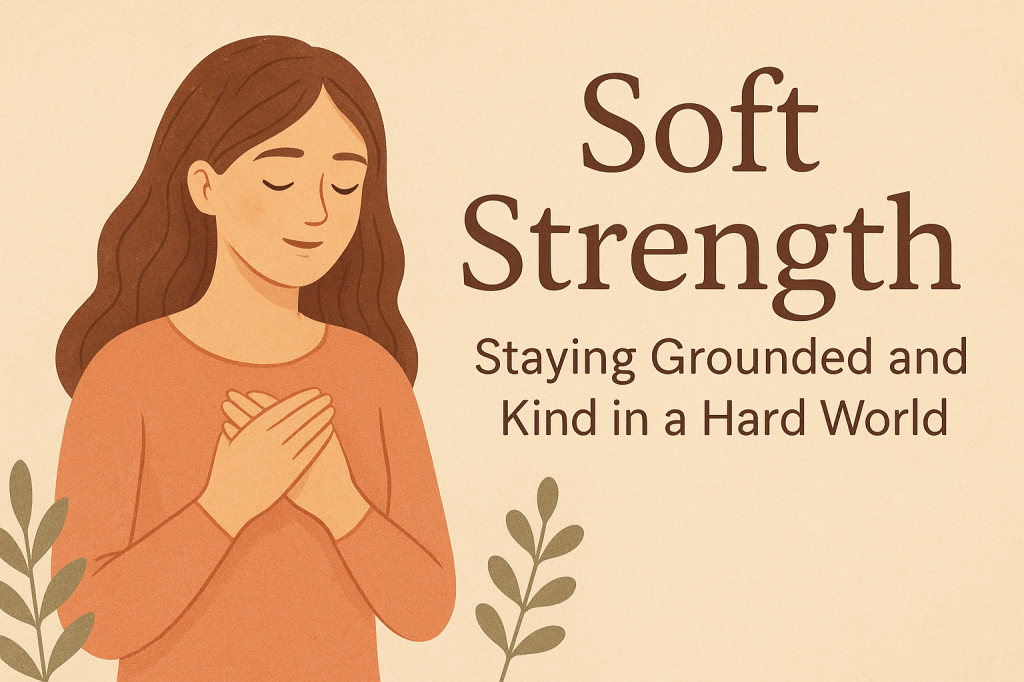
The Quiet Power of Soft Strength
In a world that often feels cold, hard, and unyielding, there is a hidden kind of power—soft strength.
Imagine a willow tree by a raging river. It bends in the storm but never breaks. Its roots are deep, its branches flexible, its presence serene.
This is the essence of staying grounded and kind in a hard world: a resilience that flows like water—gentle yet unshakable.
Have you ever felt the world’s weight pressing down on you, tempting you to harden your heart or lose your calm? The challenge isn’t to become unbreakable; it’s to discover how to be strong and kind, firm and tender.
How do we cultivate this soft strength when the noise of stress, fear, and exhaustion threatens to overwhelm us?
Let’s walk that journey together—one rooted in authenticity, compassion, and grounded resilience.
What Is Soft Strength?
When most people think of strength, they picture rigid toughness or unyielding force.
Soft strength, however, is the ability to stay emotionally balanced and compassionate while facing life’s challenges.
It’s the strength that allows you to remain deeply connected—to yourself and to others—without shutting down or lashing out.
The Power of Gentleness in Turbulent Times
Think of the contrast between a mountain and the ocean:
The mountain stands unmoving—majestic but isolating.
The ocean moves with grace and power—ever-changing, yet vast and deep.
Soft strength is ocean energy—graceful, adaptable, yet profoundly strong.
It’s the art of holding firm values and boundaries while embracing vulnerability and kindness.
Why We Need Soft Strength Now More Than Ever
The modern world bombards us with stressors—fast-paced change, uncertainty, and endless social comparison. The pressure to perform, protect, and prove ourselves can lead to emotional exhaustion, burnout, and a disconnection from our inner calm.
The Cost of Hardening
When we respond by toughening our exterior—ignoring our feelings, pushing through pain, or guarding our hearts too tightly—we might look strong on the surface.
But inside, this hardness often drains our joy and disconnects us from the very emotions that make us human.
- Emotional isolation can increase anxiety and depression.
- Hardness creates barriers to intimacy and authentic connection.
- Chronic stress weakens both our emotional and physical health.
Soft strength offers an alternative: the courage to remain open, compassionate, and grounded.
Cultivating Soft Strength: Practices for Staying Grounded and Kind
Building soft strength takes intentional practice.
It’s about nurturing habits that support your mental, emotional, and physical well-being.
1️⃣ Embrace Mindful Presence
Being fully present anchors you in reality instead of the swirl of thoughts and worries.
Mindfulness calms the mind and roots you in the now, helping you respond rather than react.
- Begin with just five minutes of mindfulness meditation each morning.
- Notice your breath, your body sensations, and the space around you.
- When anxiety strikes, ground yourself—feel your feet on the floor, notice three things you can see, and breathe.
2️⃣ Practice Self-Compassion
Soft strength flourishes when you are gentle with yourself.
Notice how often your inner dialogue is critical rather than kind. Then soften it.
- Journal affirmations like “I am enough” or “It’s okay to rest.”
- Allow yourself to feel emotions without labeling them as “bad.”
- Speak to yourself as you would to someone you love.
3️⃣ Set Loving Boundaries
Boundaries are not walls—they are bridges that honor your capacity to give and receive love.
They protect your energy so your softness doesn’t lead to depletion.
- Say no without guilt when something doesn’t serve your peace.
- Communicate your needs calmly, without over-explaining.
- Remember: boundaries are self-respect in action.
4️⃣ Connect With Nature
Nature mirrors soft strength in every form—trees swaying, rivers flowing, flowers blooming after storms.
- Spend time outdoors: walk barefoot, sit beneath a tree, or breathe in sunrise air.
- Let the cycles of nature remind you that resilience is not about resistance—it’s about flow.
5️⃣ Foster Supportive Relationships
Soft strength grows in safe spaces.
Surround yourself with people who uplift kindness and authenticity.
- Seek friendships where you can show up unfiltered.
- Practice empathy and active listening with loved ones.
- Remember, connection is a mirror for your inner gentleness.
Story: A Willow’s Lesson in Soft Strength
Meet Naomi—a woman balancing a demanding job, city chaos, and complex family responsibilities.
During a particularly stressful week, she notices herself snapping at loved ones, feeling drained and detached.
That weekend, Naomi wanders into a park and pauses beneath a willow tree by the river. The tree bends and sways in the wind but never breaks.
Something in that image awakens her.
Over the next few weeks, Naomi practices soft strength—breathing before reacting, saying no to unnecessary demands, and allowing vulnerability with a close friend.
Slowly, her tension eases. She laughs more. She feels less like she’s bracing for life and more like she’s flowing with it.
Softness didn’t make her weaker—it made her wiser, lighter, and freer.
Common Myths About Soft Strength
Myth 1: Softness Is Weakness
Softness is not weakness—it’s wisdom in motion.
It takes far more courage to remain open in a world that numbs itself with hardness.
Myth 2: Boundaries Are Cold and Rigid
Loving boundaries create safety for compassion to thrive.
They say, “I can love you and still honor myself.”
Myth 3: Staying Grounded Means Suppressing Emotions
Grounding isn’t about avoidance—it’s about anchoring.
It means feeling emotions fully but not letting them carry you away. That’s emotional mastery, not suppression.
How to Stay Grounded in Everyday Life
Staying grounded means remaining anchored in your values and body, even amid chaos.
Here are simple daily tools:
Mindful Breathing
Inhale calm, exhale tension.
Even three conscious breaths can reset your nervous system.
Sensory Awareness
Engage your senses—listen to sounds, feel textures, notice colors and scents.
Presence pulls you out of anxiety and back into reality.
Movement
Gentle yoga, stretching, or walking reconnects you to your body, releasing stored stress and grounding your energy.
The Ripple Effects of Soft Strength
When you embody soft strength, your presence becomes medicine:
- Your calm energy invites others to soften.
- Your kindness inspires empathy in your community.
- Your boundaries model emotional maturity and self-respect.
Final Thoughts: Your Soft Strength Is Your Superpower
Soft strength doesn’t just heal you—it quietly transforms those around you.
Being soft in a hard world is not a weakness—it’s a quiet revolution.
It’s courage, grace, and emotional wisdom all at once.
Like the willow tree, you don’t have to fight every storm. You can bend, breathe, and still remain deeply rooted.
So today, choose one act of softness:
✨ a breath before reacting
✨ a boundary that honors your peace
✨ a kind word to yourself
Watch how your world shifts when you meet it with tenderness instead of tension.
Because your radiant mind deserves to be nurtured with gentleness.
And your soft strength—that calm, grounded, luminous power—just might be your greatest superpower.
Thank you for spending this time with me.
Remember—healing isn’t linear, and growth doesn’t have to be loud to be powerful.
Keep choosing yourself, one gentle moment at a time.💖
Until next time, stay radiant and take tender care of your beautiful mind and body.
With love,
— Christabel, HerRadiantMind

 herradiantmind