Category: General

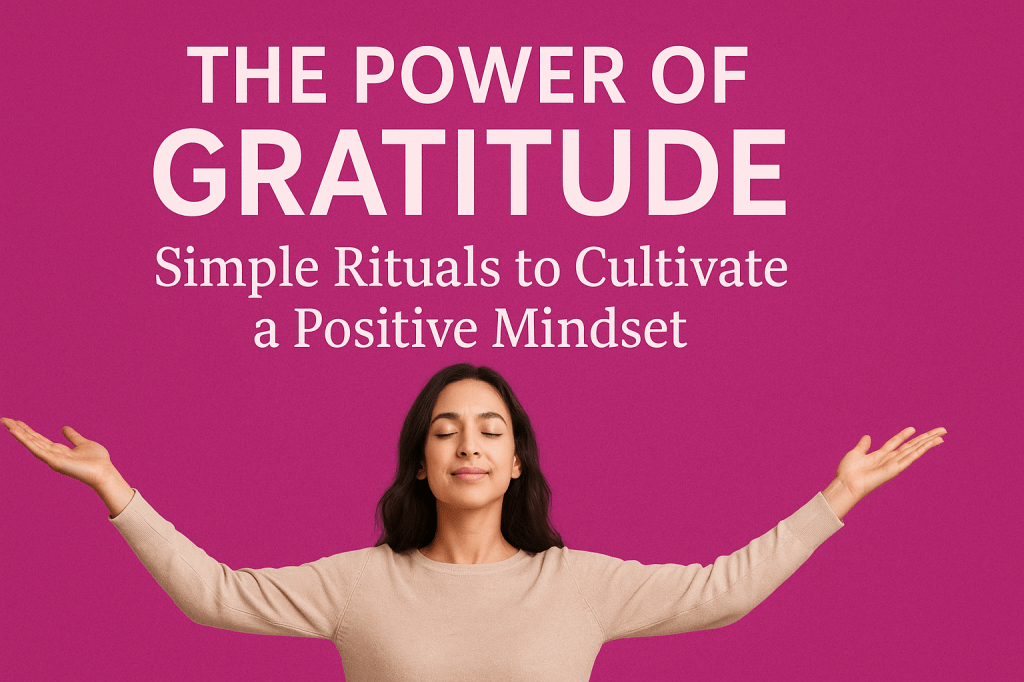
  • The Power of Gratitude: Simple Rituals to Cultivate a Positive Mindset

    The Power of Gratitude: Simple Rituals to Cultivate a Positive Mindset

    Imagine waking up each morning feeling lighter, brighter, and more grounded—even if the world outside feels a little shaky. What if the secret to that instant mood lift wasn’t a fancy gadget, a spa day, or a tropical getaway, but something as simple—and powerful—as gratitude? That quiet, unassuming feeling tucked inside you can flip your mindset faster than you can say, “good vibes only.”

    Gratitude isn’t just a trendy wellness buzzword. It’s transformative—like a ray of sunshine breaking through storm clouds. Let’s explore why gratitude works its magic and how simple, daily rituals can invite more positivity, peace, and joy into your life.

    What Is Gratitude, Really?

    Gratitude is more than politely saying “thank you” when someone holds the door. It’s about noticing the good in your life, even when things feel messy. Picture it as tuning into your favorite radio station—the one playing uplifting music instead of static noise.

    Science backs it up, too. Gratitude lights up the brain’s reward centers, boosting mood and even improving physical health. It’s like your brain giving you a high-five for focusing on what’s working rather than what’s missing.

    The Gratitude Mindset: Your Secret Superpower

    A gratitude mindset is a way of seeing the world that highlights silver linings, celebrates small wins, and cherishes everyday blessings. It doesn’t erase challenges—but it gives you a mental flashlight when the path feels dark.

    Practicing gratitude can reduce stress, improve sleep, and strengthen relationships. And here’s the best part—it’s contagious. Your gratitude can inspire someone else, sparking a ripple effect of positivity.

    Simple Gratitude Rituals to Boost Your Positive Mindset

    Ready to invite this mindset into your life? Here are a few easy, science-backed rituals that require nothing more than a few mindful minutes each day.

    1. Morning Gratitude List

    Before your feet even touch the floor, think of three things you’re thankful for. Maybe it’s the aroma of freshly brewed coffee, the warmth of your cozy bed, or the smile from a friend yesterday.

    Keep a gratitude journal by your bedside. Writing these down transforms fleeting thoughts into tangible seeds—seeds that grow into a flourishing garden of positivity.

    2. The Two-Minute Pause: A Daily Reset

    Life moves fast. The two-minute pause is your mini mindfulness break. Close your eyes, take a deep breath, and notice three things around you that spark calm or joy.

    This tiny ritual snaps you out of autopilot, reconnecting you to the present moment—where gratitude truly lives. Even on chaotic days, it serves as an anchor for your mind.

    3. Send a Gratitude Message

    Take a moment to let someone know you appreciate them. A quick text, a voice note, or even a heartfelt emoji can make their day—and yours.

    Small gestures like this strengthen social bonds, boost your mood, and spread positivity like sunshine spilling through a window. It’s an effortless win-win.

    4. Evening Reflection: Gratitude Before Bed

    End your day by reflecting on three positive things that happened. Perhaps it’s a compliment you received, a goal you nudged forward, or a meal that made you smile.

    This practice helps your brain store happy memories instead of ruminating thoughts, paving the way for restful sleep and a refreshed morning mindset.

    How Gratitude Supports Your Mental Wellness Journey

    If you’re on a path of self-care and mental wellness (hello, HerRadiantMind community!), gratitude is like a trusted companion—one who gently reminds you to pause, breathe, and notice the good, even amidst challenges.

    By weaving gratitude into your daily routine, you nurture a mindset that amplifies every positive habit you’re already practicing. It’s not a quick fix—it’s a steady, long-term relationship with joy and resilience.

    A Real-Life Story: Finding Gratitude When You Feel “Behind”

    I once coached a woman named Marisa who struggled deeply with gratitude. On paper, she was doing great—steady job, loving partner, decent health—but inside, she constantly felt like she was behind. Every scroll through social media left her deflated. Her friends seemed to be moving faster—buying homes, launching businesses, starting families—and she was stuck comparing her timeline to everyone else’s highlight reel.

    During our sessions, I invited her to start a simple gratitude ritual. Not a forced “just be positive” approach—but a daily moment to anchor herself in what was already good. At first, she resisted. “How can I be grateful when I’m not where I want to be yet?” she asked.

    So, we started small. Each morning, she wrote down one thing that brought her comfort—a warm shower, a kind text, the quiet peace of her morning walk. No pressure. No perfection. Just noticing.

    Weeks later, she came to me smiling. “I realized I’ve been so busy chasing the next thing that I forgot to appreciate what’s right here,” she said. Gratitude didn’t dull her ambition—it gave her peace in the process.

    By the end of our time together, Marisa’s mindset had transformed. She no longer measured her worth by comparison but by her capacity to stay present and thankful. Gratitude became her compass—guiding her toward progress that felt authentic, not rushed.

    When Gratitude Feels Hard

    Life isn’t always sunshine and rainbows. Some days, gratitude can feel impossible. And that’s okay. Practicing gratitude isn’t about ignoring hardships—it’s about finding tiny sparks, even in dark moments.

    Start small: your breath, the warmth of your favorite sweater, or a pet’s wagging tail. These little acknowledgments can soften life’s rough edges and help you regain your footing.

    Your First Step Toward a Brighter Mindset

    Gratitude is a simple yet powerful tool. By turning everyday moments into opportunities for appreciation, you set the stage for a happier, healthier mindset. And the best part? You don’t need to wait for a perfect moment—your journey begins wherever you are, right now.

    Curious to go deeper and cultivate a steady, radiant mindset that stands strong through life’s ups and downs? That’s where coaching with HerRadiantMind comes in. Together, we’ll create a personalized plan tailored to your life, goals, and challenges—sprinkled with love, laughter, and plenty of gratitude.

    Ready to start? Reach out today. Your radiant mind is waiting.

    Thank you for spending this time with me.

    Remember—healing isn’t linear, and growth doesn’t have to be loud to be powerful.

    Keep choosing yourself, one gentle moment at a time.💖

    Until next time, stay radiant and take tender care of your beautiful mind and body.

    With love,

    — Christabel, HerRadiantMind

  • The Inner Child Speaks: Connecting with the Wounded Younger You

    The Inner Child Speaks: Connecting with the Wounded Younger You

    Opening the Door to Your Inner Child’s Voice

    Imagine that inside you—quietly tucked beneath the layers of adult life—lives a younger version of yourself.

    This little one carries the echoes of joy and wonder, but also the pain and unmet needs of childhood.

    For many of us, those early wounds silently shape our relationships, self-worth, and emotional well-being in adulthood.

    But what if you could finally hear that inner child’s voice—the one that’s been waiting patiently to be seen, heard, and held?

    This post invites you on a heartfelt journey to meet your wounded younger self, listen deeply, and begin the transformative work of inner child healing—a path toward wholeness, peace, and radiant self-compassion.

    The Silent Cry: A Story of Lost Innocence

    Once upon a winter night, a little girl sat curled beside a frosted window, watching the snowflakes swirl.

    She wished for warmth, for safety, for someone to notice the silent tears that slipped down her cheeks.

    That little girl grew up, carrying that quiet ache into adulthood.

    Maybe that same little girl—or boy—still lives quietly inside you, waiting to be noticed, to be held, to be loved.

    Understanding Your Inner Child: The Keeper of Childhood Memories

    Your inner child is a deeply authentic part of you that holds memories, emotions, and experiences from your earliest years.

    Like a worn diary, it carries both joy and sorrow—moments that continue to shape how you see yourself and the world.

    If your childhood included neglect, trauma, or emotional pain, your inner child may still feel unsafe or unheard—carrying those unmet needs into your adult life.

    But this part of you isn’t just wounded—it’s also wonder-filled: creative, spontaneous, and full of light.

    Reconnecting with your inner child means learning to meet that vulnerability with patience, kindness, and warmth.

    Why Connecting Matters: How a Wounded Inner Child Shapes Adult Life

    Unhealed childhood pain can quietly influence your behaviors and emotions in surprising ways:

    • Fear of abandonment
    • Chronic people-pleasing
    • Difficulty trusting others
    • Deep shame or guilt
    • Overreactions to small disappointments

    These patterns aren’t flaws—they’re echoes of early wounds asking to be healed.

    When you listen to your inner child, you begin to recognize emotional triggers as messages from your past, not failures in your present. This awareness is where healing begins.

    How to Hear Your Inner Child’s Voice

    1. Acknowledge Their Presence

    Simply start by recognizing that your inner child exists.

    It may feel unfamiliar, but imagine greeting a shy part of yourself that has been waiting for your attention all along.

    2. Listen with Open Ears and Heart

    When emotions feel intense—anger, sadness, anxiety—pause and ask:

    “Is this my inner child trying to speak?”

    Reflect on what your younger self might be feeling beneath those reactions. Offer validation instead of judgment.

    3. Engage in Loving Dialogue Through Writing

    Write a heartfelt letter to your inner child.

    Offer reassurance, explain what happened from your adult perspective, and give the comfort you once needed.

    Ask gentle questions like:

    “How do you feel?”

    “What do you need from me right now?”

    Writing creates a bridge between your present self and your younger self—one built on empathy and love.

    4. Heal Through Meditation and Visualization

    Visualize a safe, nurturing space and imagine your younger self there.

    Speak softly, offer warmth, and let them know they are loved and protected.

    This meditative practice helps regulate emotions and fosters a sense of inner safety over time.

    5. Express Through Play and Creativity

    Revisit childhood joys—painting, dancing, singing, or playing in nature.

    These acts awaken your inner child’s creativity and remind them that it’s safe to feel joy again.

    You might also journal as your inner child, letting their voice speak freely.

    6. Practice Compassionate Reparenting

    Healing often means learning to “reparent” yourself—offering the love, structure, and safety you may have missed.

    Set healthy boundaries, honor your needs, and remind yourself daily:

    “I deserve care, rest, and understanding.”

    Inner Child Healing as a Path to Growth and Recovery

    For many, inner child work is life-changing.

    It can ease anxiety, improve relationships, and restore emotional stability.

    When you begin nurturing this inner connection, you break generational patterns and reclaim your authentic, radiant self.

    A Personal Story: From Darkness to Light

    Consider Maya’s story.

    She grew up feeling invisible, often blamed for conflicts she didn’t cause. As an adult, she battled anxiety and self-doubt—until she realized her wounded inner child was still calling for safety and love.

    Through writing, meditation, and creative expression, Maya learned to comfort that little girl within.

    Over time, the fog lifted. Confidence and peace replaced fear.

    Her story reminds us: when you heal the child within, you awaken the woman you were always meant to become.

    Embracing Healing as a Lifelong Journey

    Healing your inner child isn’t a one-time task—it’s a relationship you nurture over time.

    As deeper layers surface, meet them with gentleness and patience.

    If the process feels heavy, therapy or compassionate coaching can help you navigate it with expert care and emotional safety.

    Invitation to Your Radiant Healing Journey

    Your wounded younger self is waiting—with open arms and endless hope.

    When you choose to connect, you open the door to profound transformation and radiant self-compassion.

    At HerRadiantMind, compassionate coaching offers personalized guidance to help you heal, rebuild trust with yourself, and live with more authenticity and peace.

    ✨ Take the first step today.

    Embrace your inner child’s voice.

    Begin your radiant journey toward wholeness and self-love—because your story deserves to be heard, and your radiant mind is ready to shine. 🌷

    Thank you for spending this time with me.

    Remember—healing isn’t linear, and growth doesn’t have to be loud to be powerful.

    Keep choosing yourself, one gentle moment at a time.💖

    Until next time, stay radiant and take tender care of your beautiful mind and body.

    With love,

    — Christabel, HerRadiantMind

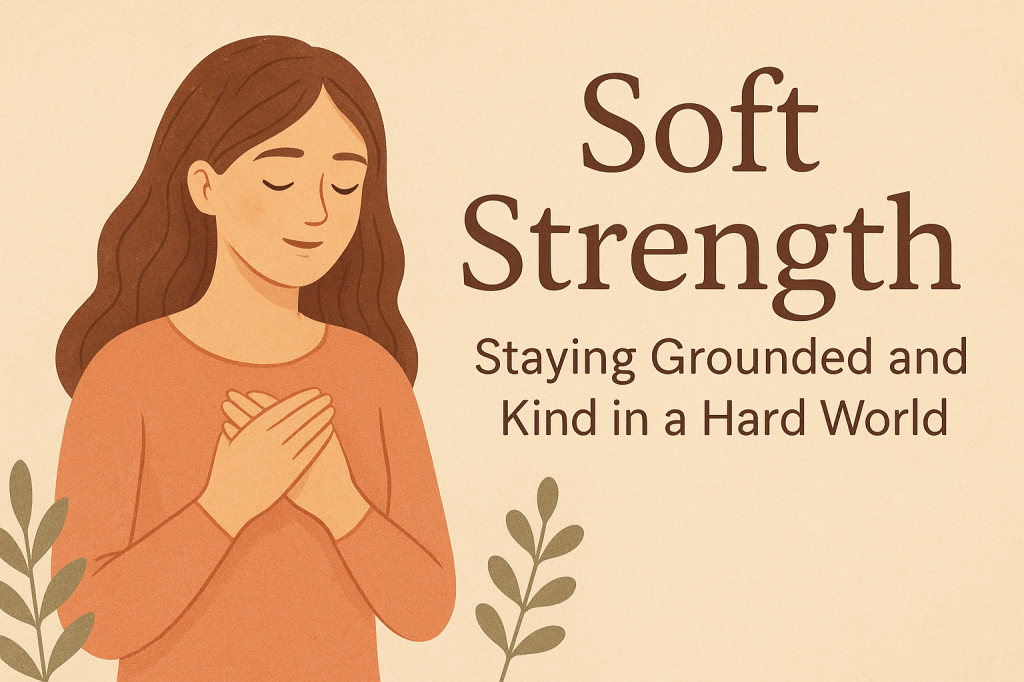
  • Soft Strength: Staying Grounded and Kind in a Hard World

    Soft Strength: Staying Grounded and Kind in a Hard World

    The Quiet Power of Soft Strength

    In a world that often feels cold, hard, and unyielding, there is a hidden kind of power—soft strength.

    Imagine a willow tree by a raging river. It bends in the storm but never breaks. Its roots are deep, its branches flexible, its presence serene.

    This is the essence of staying grounded and kind in a hard world: a resilience that flows like water—gentle yet unshakable.

    Have you ever felt the world’s weight pressing down on you, tempting you to harden your heart or lose your calm? The challenge isn’t to become unbreakable; it’s to discover how to be strong and kind, firm and tender.

    How do we cultivate this soft strength when the noise of stress, fear, and exhaustion threatens to overwhelm us?

    Let’s walk that journey together—one rooted in authenticity, compassion, and grounded resilience.

    What Is Soft Strength?

    When most people think of strength, they picture rigid toughness or unyielding force.

    Soft strength, however, is the ability to stay emotionally balanced and compassionate while facing life’s challenges.

    It’s the strength that allows you to remain deeply connected—to yourself and to others—without shutting down or lashing out.

    The Power of Gentleness in Turbulent Times

    Think of the contrast between a mountain and the ocean:

    The mountain stands unmoving—majestic but isolating.

    The ocean moves with grace and power—ever-changing, yet vast and deep.

    Soft strength is ocean energy—graceful, adaptable, yet profoundly strong.

    It’s the art of holding firm values and boundaries while embracing vulnerability and kindness.

    Why We Need Soft Strength Now More Than Ever

    The modern world bombards us with stressors—fast-paced change, uncertainty, and endless social comparison. The pressure to perform, protect, and prove ourselves can lead to emotional exhaustion, burnout, and a disconnection from our inner calm.

    The Cost of Hardening

    When we respond by toughening our exterior—ignoring our feelings, pushing through pain, or guarding our hearts too tightly—we might look strong on the surface.

    But inside, this hardness often drains our joy and disconnects us from the very emotions that make us human.

    • Emotional isolation can increase anxiety and depression.
    • Hardness creates barriers to intimacy and authentic connection.
    • Chronic stress weakens both our emotional and physical health.

    Soft strength offers an alternative: the courage to remain open, compassionate, and grounded.

    Cultivating Soft Strength: Practices for Staying Grounded and Kind

    Building soft strength takes intentional practice.

    It’s about nurturing habits that support your mental, emotional, and physical well-being.

    1️⃣ Embrace Mindful Presence

    Being fully present anchors you in reality instead of the swirl of thoughts and worries.

    Mindfulness calms the mind and roots you in the now, helping you respond rather than react.

    • Begin with just five minutes of mindfulness meditation each morning.
    • Notice your breath, your body sensations, and the space around you.
    • When anxiety strikes, ground yourself—feel your feet on the floor, notice three things you can see, and breathe.

    2️⃣ Practice Self-Compassion

    Soft strength flourishes when you are gentle with yourself.

    Notice how often your inner dialogue is critical rather than kind. Then soften it.

    • Journal affirmations like “I am enough” or “It’s okay to rest.”
    • Allow yourself to feel emotions without labeling them as “bad.”
    • Speak to yourself as you would to someone you love.

    3️⃣ Set Loving Boundaries

    Boundaries are not walls—they are bridges that honor your capacity to give and receive love.

    They protect your energy so your softness doesn’t lead to depletion.

    • Say no without guilt when something doesn’t serve your peace.
    • Communicate your needs calmly, without over-explaining.
    • Remember: boundaries are self-respect in action.

    4️⃣ Connect With Nature

    Nature mirrors soft strength in every form—trees swaying, rivers flowing, flowers blooming after storms.

    • Spend time outdoors: walk barefoot, sit beneath a tree, or breathe in sunrise air.
    • Let the cycles of nature remind you that resilience is not about resistance—it’s about flow.

    5️⃣ Foster Supportive Relationships

    Soft strength grows in safe spaces.

    Surround yourself with people who uplift kindness and authenticity.

    • Seek friendships where you can show up unfiltered.
    • Practice empathy and active listening with loved ones.
    • Remember, connection is a mirror for your inner gentleness.

    Story: A Willow’s Lesson in Soft Strength

    Meet Naomi—a woman balancing a demanding job, city chaos, and complex family responsibilities.

    During a particularly stressful week, she notices herself snapping at loved ones, feeling drained and detached.

    That weekend, Naomi wanders into a park and pauses beneath a willow tree by the river. The tree bends and sways in the wind but never breaks.

    Something in that image awakens her.

    Over the next few weeks, Naomi practices soft strength—breathing before reacting, saying no to unnecessary demands, and allowing vulnerability with a close friend.

    Slowly, her tension eases. She laughs more. She feels less like she’s bracing for life and more like she’s flowing with it.

    Softness didn’t make her weaker—it made her wiser, lighter, and freer.

    Common Myths About Soft Strength

    Myth 1: Softness Is Weakness

    Softness is not weakness—it’s wisdom in motion.

    It takes far more courage to remain open in a world that numbs itself with hardness.

    Myth 2: Boundaries Are Cold and Rigid

    Loving boundaries create safety for compassion to thrive.

    They say, “I can love you and still honor myself.”

    Myth 3: Staying Grounded Means Suppressing Emotions

    Grounding isn’t about avoidance—it’s about anchoring.

    It means feeling emotions fully but not letting them carry you away. That’s emotional mastery, not suppression.

    How to Stay Grounded in Everyday Life

    Staying grounded means remaining anchored in your values and body, even amid chaos.

    Here are simple daily tools:

    Mindful Breathing

    Inhale calm, exhale tension.

    Even three conscious breaths can reset your nervous system.

    Sensory Awareness

    Engage your senses—listen to sounds, feel textures, notice colors and scents.

    Presence pulls you out of anxiety and back into reality.

    Movement

    Gentle yoga, stretching, or walking reconnects you to your body, releasing stored stress and grounding your energy.

    The Ripple Effects of Soft Strength

    When you embody soft strength, your presence becomes medicine:

    • Your calm energy invites others to soften.
    • Your kindness inspires empathy in your community.
    • Your boundaries model emotional maturity and self-respect.

    Final Thoughts: Your Soft Strength Is Your Superpower

    Soft strength doesn’t just heal you—it quietly transforms those around you.

    Being soft in a hard world is not a weakness—it’s a quiet revolution.

    It’s courage, grace, and emotional wisdom all at once.

    Like the willow tree, you don’t have to fight every storm. You can bend, breathe, and still remain deeply rooted.

    So today, choose one act of softness:

    ✨ a breath before reacting

    ✨ a boundary that honors your peace

    ✨ a kind word to yourself

    Watch how your world shifts when you meet it with tenderness instead of tension.

    Because your radiant mind deserves to be nurtured with gentleness.

    And your soft strength—that calm, grounded, luminous power—just might be your greatest superpower.

    Thank you for spending this time with me.

    Remember—healing isn’t linear, and growth doesn’t have to be loud to be powerful.

    Keep choosing yourself, one gentle moment at a time.💖

    Until next time, stay radiant and take tender care of your beautiful mind and body.

    With love,

    — Christabel, HerRadiantMind

  • 3 Steps to Clarity & Self-Trust When You’re Stuck in Doubt  

    3 Steps to Clarity & Self-Trust When You’re Stuck in Doubt  

    Lost in the Fog of Your Own Mind?

    Have you ever felt like you’re wandering through a dense fog—a heavy mist that blurs your vision and clouds your every thought?

    For many of us, that fog is self-doubt—wrapping around us so tightly that it’s hard to even hear our own inner voice. Maybe you’ve tried to find clarity, only to hear those old whispers of “not good enough” or “what if I fail?” creeping back in.

    Imagine standing on the edge of a new path, but each step feels uncertain—as if the ground beneath you might disappear. That’s the reality of self-doubt. It challenges your clarity and puts your self-trust to the test every single day.

    But what if you could gently clear that fog? What if self-trust didn’t feel like a distant dream, but a steady presence—something that grows quietly as you reconnect with your inner truth?

    This isn’t about perfection or quick motivation. It’s about small, intentional shifts that slowly lead you back to clarity, calm, and confidence.

    Recognizing the Fog of Self-Doubt

    Self-doubt is more than a fleeting thought—it’s a subtle, powerful fog that clouds your perception. It might look like hesitation before a decision, overanalyzing simple choices, or that quiet inner voice whispering you’re not capable enough.

    This fog blocks your inner guidance by filling your mind with “what-ifs” and “buts.” It severs your connection to your intuition—the compass that already knows your direction. Without clarity, trusting yourself feels impossible.

    The good news? The fog isn’t permanent. With the right tools, patience, and awareness, you can clear it—one mindful breath at a time.

    Step 1: Ground Yourself in the Present Moment

    What Is Grounding?

    Grounding is the practice of returning your awareness to now. When self-doubt spirals, grounding brings you back from the storm of worry into calm awareness.

    Simple Grounding Techniques

    • 5-4-3-2-1 Technique: Name 5 things you see, 4 you can touch, 3 you hear, 2 you smell, and 1 you taste.
    • Intentional Breathing: Inhale for four counts, hold for four, exhale for six.
    • Feel Your Feet: Notice the texture beneath your feet. Let the earth steady you.

    Why Grounding Builds Clarity and Trust

    Grounding clears the noise of uncertainty and anchors you to what’s real. Each moment of presence reminds you: You are safe. You are capable. You are here. When that truth sinks in, clarity follows—and with it, trust in your resilience.

    Step 2: Name Your Emotions Without Judgment

    The Power of Emotional Awareness

    Self-doubt thrives on suppression. When you ignore your emotions, they grow wild and distort your clarity. But naming a feeling—fear, overwhelm, disappointment—instantly lightens its pull. Awareness brings understanding, and understanding restores calm.

    How to Identify and Name Your Emotions

    • Pause and take one slow, conscious breath.
    • Ask gently, “What am I feeling right now?”
    • Choose specific words for your emotions.
    • Allow each feeling to exist without needing to fix it.

    How This Builds Self-Trust

    When you name emotions instead of resisting them, you learn that nothing inside you is too much to handle. That realization becomes the soil where confidence quietly grows.

    Step 3: Cultivate Kindness in Your Inner Dialogue

    Why Self-Talk Matters

    Your inner voice sets the tone of your entire inner world. When it’s harsh, doubt deepens. When it’s gentle, courage grows.

    How to Transform Negative Self-Talk

    • Notice your automatic thoughts and take a pause.
    • Replace self-criticism with curiosity.
    • Ask, “Would I speak this way to someone I love?”
    • Repeat affirmations such as “I trust my process” or “I’m learning as I go.”

    Affirmations as Mental Nourishment

    Affirmations are daily doses of compassion. Over time, they train your brain to look for what’s right instead of what’s wrong. They don’t erase doubt—they remind you of your strength in the midst of it.

    Bringing It All Together: A Daily Clarity Practice

    Integrating grounding, emotional honesty, and self-kindness can completely transform how you move through uncertainty. You don’t need hours—just consistency.

    Start small:

    • Take three mindful breaths before checking your phone.
    • Name what you’re feeling when fear arises.
    • Speak a kind word to yourself before sleep.

    These small rituals weave an invisible thread of trust through your days. The fog begins to lift. You begin to see yourself clearly—not as doubting or broken, but as human and growing.

    Why Self-Trust Is Transformational

    Self-trust is the root of authentic confidence. It gives you permission to take imperfect action and believe that you can handle whatever arises.

    When you trust yourself, you:

    • Make decisions with calm conviction.
    • Respond instead of react.
    • Show up rooted in your truth instead of fear.

    This is the quiet power of clarity—it doesn’t shout; it guides.

    Reflective Journaling: Reconnecting with Your Inner Voice

    Take five minutes each evening to reconnect with your inner guidance:

    1. When do I feel most disconnected from myself?
    2. What practices help me return to presence?
    3. What emotion do I need to acknowledge today?
    4. In what area of life do I need to extend more grace to myself?
    5. What is one small act of self-trust I can take tomorrow?

    No judgment—just truth and tenderness. Over time, your journal becomes a living map of your clarity and courage.

    You don’t have to wait for the fog to clear before you take the first step.

    Each kind breath, each grounded pause—is the clearing.

    Start where you are.

    Trust what you know now.

    Your next moment of clarity begins here. 

    Thank you for spending this time with me.

    Remember—healing isn’t linear, and growth doesn’t have to be loud to be powerful.

    Keep choosing yourself, one gentle moment at a time.💖

    Until next time, stay radiant and take tender care of your beautiful mind and body.

    With love and light,

    — Christabel, HerRadiantMind

  • The Healing Era: Choosing Rest, Boundaries, and Self-Trust Over Hustle

    The Healing Era: Choosing Rest, Boundaries, and Self-Trust Over Hustle

    You were never meant to run on fumes.

    The alarm screams before sunrise. You’re already listing the tasks — emails, deadlines, lunch prep, meetings — before your feet even touch the floor. Somewhere between exhaustion and autopilot, your inner voice whispers: “I can’t keep doing this.”

    But still, you do.  

    Because hustle culture trained you to equate busyness with worth. Slowing down feels like failure. Rest feels like a reward — one you never quite earn.

    Here’s the truth: the more you chase calm, the further it runs. Maybe the problem isn’t that you’re not doing enough — maybe you’ve been doing *too much for too long.

    Welcome to **The Healing Era** — a quiet revolution where women redefine success, reclaim their energy, and finally choose rest, boundaries, and self-trust over relentless hustle.

    We’re Not Just Tired — We’re Soul-Tired

    It’s not just about physical fatigue.  

    It’s that slow, invisible drain — the one that makes even joy feel heavy.

    Picture this:  

    You’re driving home after a long day, your hands tight on the steering wheel. The music’s on, but you’re not listening. You’re so far from yourself you can’t even remember what peace feels like.

    That’s not failure. That’s survival mode.

    We’ve lived there too long — proving, performing, people-pleasing. But there’s a shift happening. Women everywhere are whispering a quiet rebellion:

    “I’m done abandoning myself to keep everyone else comfortable.”

    That’s where healing begins.

    What The Healing Era Really Means

    It’s not about doing less — it’s about doing what matters in ways that nourish rather than deplete.

    The Healing Era is about coming home to yourself. It’s slow mornings with coffee and silence instead of scrolling. It’s no longer postponing your peace until you’ve “earned” it.

    Its foundation rests on three simple, sacred truths:

    • Rest is a necessity — not a luxury.
    • Boundaries are self-respect — not selfishness. 
    • Self-trust is your inner compass — not a luxury for the confident.

    These are not ideals. They’re invitations.

    Rest: The Most Radical Resistance

    Let’s be honest — resting feels rebellious.

    You wake up on a Sunday and think, “Maybe I’ll do nothing today.” Then guilt creeps in like a shadow. You remember laundry, emails, the unfinished list taped to the fridge.

    But rest is not the absence of productivity — it’s the presence of peace.

    Think of yourself as a garden. You can’t bloom on dry soil.  

    Yet we water everything — jobs, friendships, families — while our roots crack with neglect.

    Rest isn’t quitting.  It’s remembering you are human before you are useful.

    Small rest rituals can be your rebellion:

    • Five deep breaths before checking your phone.
    •  A walk without headphones, just listening to your thoughts.
    • A ten-minute “pause pocket” blocked on your calendar, non-negotiable.  

    Rest is a reunion with your body — and that’s where healing starts.

    Boundaries: How You Speak Self-Respect

    •  I hear it all the time:
    •  “I don’t want to seem rude.”
    • “What if they’re upset?”
    • “It’s easier to just say yes.”

    But every “yes” that costs your peace is a debt you’ll later pay with exhaustion.

    Boundaries are not walls — they are riverbanks. They direct your energy, keeping it flowing with intention instead of flooding everywhere.

    Story snapshot:  

    A client once told me she said yes to planning a big family event even though she was overwhelmed. She spent weeks resentful and burnt out. The next time, she kindly said no — and waited for disappointment that never came. Instead, her mom said, “I’m proud of you for resting.”  

    That’s the kind of ripple boundaries create.

    Try these:

    • When resentment tugs at you, pause — a boundary is calling.
    • Keep scripts simple: “That doesn’t work for me right now.”
    • Celebrate small boundary wins like milestones. They’re proof of growth.

    Self-Trust: The Quietest Revolution

    You’ve been taught to trust everyone but yourself — teachers, bosses, social media, “experts.” But your intuition never left; it’s just buried under obedience and overthinking.

    Learning self-trust starts small.

    One woman told me she stopped running every decision by her partner — she began asking her “gut” first. Soon, she realized her inner voice wasn’t reckless; it was wise.  

    That’s what happens when you start believing your own voice again.

    Self-trust practices:

    • Ask your body, not your calendar, when it’s time to rest.
    • Follow your cravings for stillness instead of guilt.
    • Honor the instinct that whispers “not this” — even when logic says yes.

    Each decision rooted in self-trust becomes an anchor.  

    Little by little, you stop abandoning yourself.

    The Hustle Illusion

    Hustle culture stole more than time; it stole intimacy — with yourself, your purpose, your joy.  

    You were never built for constant motion. Nature doesn’t bloom year-round, and neither should you.

    Burnout isn’t evidence of ambition.

    It’s evidence of disconnection.

    What if pausing didn’t mean falling behind?  

    What if it meant falling into alignment?

    When you allow rest and rhythms, your body and spirit sync. Clarity returns. Creativity flows. Progress accelerates.

    You stop chasing — and peace starts finding you.

    The Guilt Spiral

    “If I stop, everything falls apart.”

    That thought has haunted so many of us. But hear this: guilt doesn’t mean you’re doing something wrong; it means you’re rewriting what’s normal.

    Every time you rest without apology, your nervous system learns a new language. It stops scanning for danger. It starts trusting stillness.

    Healing is not passive — it’s powerful.  

    It’s the inner shift from chaos to coherence.

    Living the Healing Era: Where to Start

    Healing isn’t a one-day event. It’s a practice of remembering — daily, messily, imperfectly — that you deserve to feel safe inside your own body.

    Start here:

    1. Morning Stillness: Before you scroll, place a hand on your heart and ask, “What do I need today?”

    2. Schedule Blank Space: Give yourself time that doesn’t have to be productive. That’s where creativity blooms.

    3. Redefine Success: Replace “Did I do enough?” with “Did I honour myself?”

    4. Say No with Grace: “No” is a complete sentence — and sometimes the most loving one.

    5. Celebrate Every Micro-Win: Rested instead of hustled? That’s progress. Said no without guilt? That’s healing in action.

    The Ripple Effect: What Happens When You Choose Healing

    I once prided myself on doing it all — nurse, coach, parent, perfectionist. My planner was colour-coded, but my spirit was cracked.  

    One morning, sitting in my car before a shift, I whispered, “I can’t do this anymore.”

    That moment broke me open. Slowly, I began choosing rest before collapse. I started saying “no” — not as rebellion, but as devotion. My nights grew quieter, my mornings slower. And in that stillness, I finally met myself again.

    Since then, *HerRadiantMind* has become my mission — to guide other women home to themselves too.

    The Healing Era Isn’t Coming — It’s Here

    When you choose rest, boundaries, and self-trust — everything shifts:

    • Your body relaxes; energy feels abundant instead of scarce.
    • Relationships deepen; you connect from presence, not pressure.
    • Work feels meaningful again; you operate from clarity, not chaos.
    • And your life starts to mirror your peace.
    • You become magnetic — not for what you do, but for who you are becoming.

    Your Invitation Into The Healing Era

    If something in your chest softened as you read this, it’s because your soul recognizes truth.

    At HerRadiantMind, I help women heal emotional burnout, rebuild trust in their bodies, and reconnect with their intuition through gentle coaching that works with your nervous system, not against it.

    Book a free Clarity Call  let’s find what’s keeping you stuck and how to move toward sustainable healing.  

    Join the Radiant Reset Coaching Experience— a 1:1 journey to reclaim your energy, peace, and power.  

    Subscribe to the HerRadiantMind Newsletter  weekly reflections and reminders to rest and rise.

    You deserve a life that feels soft, grounded, and radiantly yours.  

    This is your season to breathe.  

    Your season to trust.  

    Your season to heal.  

    Welcome — to The Healing Era.

  • Healing Emotional Blocks & Manifestation Practices That Actually Work

    Healing Emotional Blocks & Manifestation Practices That Actually Work

    “You can see it, almost touch it — yet a quiet voice whispers, ‘Not yet. Not you.’”

    If you’ve ever felt this invisible wall holding you back from your dreams, relationships, or new chapters, you’re not alone. Manifestation isn’t just about asking the Universe — it’s about becoming energetically ready to receive. And that starts with healing the emotional blocks standing in your way.

    This guide is your tender, practical, and transformative roadmap to untangling what holds you back and stepping fully into your power to manifest with ease.

    1. What Are Emotional Blocks?

    Emotional blocks are unconscious patterns, unprocessed feelings, and fears that limit your ability to receive.

    Signs you may have them:

    ✅ You set intentions but feel doubtful or unworthy

    ✅ You self-sabotage or procrastinate before progress

    ✅ You repeat patterns in love, career, or finances

    ✅ You feel disconnected from joy or excitement

    Think of your mind and heart as a garden. Emotional blocks are rocks in the soil. Healing is clearing the rocks so your manifestations can grow without resistance.

    2. The Roots of Emotional Blocks

    • Childhood Conditioning: Messages you absorbed about love, worthiness, and success.
    • Past Relationship Wounds: Heartbreaks or betrayals that leave imprints on your sense of receiving.
    • Trauma & Unprocessed Grief: Unreleased stories quietly limit how much joy you allow.
    • Limiting Beliefs About Deservingness: Thoughts like “I don’t deserve this” or “It’s selfish to want more”.

    Healing isn’t about erasing the past — it’s about creating space for your future.

    3. Why Healing Matters for Manifestation

    Manifestation is energetic alignment. You attract what matches your frequency.

    • Fear, scarcity, or mistrust block your desires
    • Healing creates inner safety, allowing joy, love, and abundance to flow naturally

    Manifestation isn’t perfection — it’s readiness.

    4. Healing Emotional Blocks: Step-by-Step

    Step 1: Inner Dialogue Awareness

    1️⃣ Write your goal

    2️⃣ Journal immediate thoughts

    3️⃣ Gently challenge “I can’t” or “I’m not ready” statements

    Step 2: Somatic Release

    • Shake therapy, yoga, or breathwork to release stored tension
    • Mindful exhalations to signal safety to your nervous system

    Step 3: Inner Child Work

    • Speak to your younger self who first felt the fear
    • Ask what she needs; offer reassurance and compassion

    Step 4: Emotional Alchemy

    • Sit with emotions instead of pushing them away
    • Ask: “What is this emotion protecting me from?”
    • Thank it for its service, then guide it toward release

    Tip: Healing + manifestation = Magnetic Congruence. Heart, mind, and energy all saying yes.

    5. Manifestation Practices That Work

    1. Clarity Mapping

    • Write desires in sensory detail
    • Anchor them in why, not just what

    2. Embodied Visualization

    • Live inside the vision — posture, breath, emotions as if already real
    • Add gratitude to amplify energy

    3. Frequency Alignment Rituals

    • Morning or evening rituals to attune energy

    Music, movement, or dance that mimics joy

    4. The Release Method

    • After setting intentions, engage in joy-filled activities
    • Use the mantra: “It’s already mine; I give it space to arrive.”

    5. Quantum Affirmations

    • Speak in the tense of already having:
      • “I am surrounded by love and support.”
      • “Money flows to me with ease.”

    “I am rooted in my worth; my desires manifest effortlessly.”

    6. Common Mistakes & How to Avoid Them

    ❌ Doing Without Feeling: Energy drops when the routine is mechanical

    ✅ Infuse sincerity and joy

    ❌ Skipping Inner Work: Vision boards can’t override deep wounds

    ✅ Prioritize healing first

    ❌ Micromanaging the Universe: Obsessing over “Where is it?” creates doubt

    ✅ Trust timing and the path

    7. Advanced Practices: Take Manifestation Deeper

    • Timeline Healing: Visualize past, present, future selves connecting in love
    • Manifestation Through Service: Ask, “How can my desire serve others?”
    • Energy Hygiene: Cleanse regularly with sage, sound, or salt baths

    8. Real Story: Healing Changed Everything

    A client wanted love. She lit candles, wrote lists, visualized — nothing shifted. Beneath it all, she believed: I’m not lovable.

    Through inner child work and safety-anchoring meditations, she slowly untangled that belief. Weeks later, a message arrived unexpectedly, leading her straight to a place that felt like home.

    She hadn’t forced magic — she had become ready to receive.

    9. Integrate Healing & Manifestation Daily

    Morning Alignment: Affirmation + breath practice

    Emotional Check-In: Pause midday, notice feelings before they calcify

    Celebrate Wins: Joy fuels more joy

    Small daily acts = big energetic shifts.

    10. Your Invitation

    Healing emotional blocks is tender yet transformative. When paired with aligned manifestation practices, life responds differently. You’ll feel the deep shift of I am safe to have what I want.

    At HerRadiantMind, I guide women through compassionate, body-based healing and soul-aligned manifestation work. Together, we dissolve old patterns and co-create the life you’ve been longing for.

    Are you ready to meet the version of yourself who receives with ease?

    Step into your radiant mind today.

    Thank you for spending this time with me.

    Remember—healing isn’t linear, and growth doesn’t have to be loud to be powerful.

    Keep choosing yourself, one gentle moment at a time.💖

    Until next time, stay radiant and take tender care of your beautiful mind and body.

    With love,

    — Christabel, HerRadiantMind

  • From Fear to Freedom: Rewriting the Story of Your Life

    From Fear to Freedom: Rewriting the Story of Your Life

    Flip the Script on Fear: How to Move from Fearful Living to Soulful Living

    What if I told you that fear isn’t here to destroy you—it’s here to teach you?

    Most of us spend years trying to outrun fear, silence it, or bury it under busyness. But the more we fight it, the louder it gets. Fear shows up as that knot in your stomach before change, the voice that whispers “you’re not ready,” or the invisible wall that keeps you living smaller than your soul longs for.

    Here’s the twist: fear isn’t the villain. It’s a storyteller. And when you learn to flip the script, fear becomes a powerful guide—leading you toward soulful living, emotional resilience, and the freedom to thrive.

    Today, let’s reframe the way you see fear—not as a cage, but as a compass.

    Fear as a Script We’ve Inherited

    Imagine your mind as a theater. On stage, fear takes the lead role, armed with cautionary tales of everything that could go wrong. It shouts about failure, rejection, and disappointment — and because fear is persuasive, you listen.

    This is what keeps so many women stuck in cycles of overthinking, exhaustion, or hesitation — afraid to rest because rest feels “unproductive,” or afraid to dream bigger because failure feels too risky. Fear convinces us that safety is in the small, the predictable, the known.

    But here’s the catch: fear’s script was written for protection, not for how to thrive.

    Thousands of years ago, fear kept us alive by warning us of predators. But in today’s world, the “predators” often look like career change, heartbreak, or starting your own business. Fear hasn’t updated its lines — and it keeps you living on repeat, always bracing for danger, even when there’s none.

    Why Staying in Fear Isn’t the Goal

    When fear takes center stage, your nervous system stays on high alert. You feel restless, anxious, or maybe even numb. Every decision feels heavy, like one wrong move will unravel it all.

    Sound familiar?

    Fear might help you get through — but it won’t help you become.

    Think of it like a seed buried in the soil. Fear is the rain that keeps it from drying out. Necessary, yes. But without sunlight and space, that seed will never sprout. Without flipping the script on fear, we stay underground, never rising into the light of our own possibility.

    Flipping the Script: A Mindset Shift

    So how do we rewrite fear’s narrative? It begins with a mindset shift.

    Instead of asking, “What if I fail?” start asking, “What if I fly?”

    This doesn’t mean ignoring risks or pretending challenges don’t exist. It means giving yourself permission to step out of the shadows and explore the soulful living you’ve been craving.

    When fear says, “Don’t rest, you’ll fall behind,” your new script can say, “Rest is how I build strength for what’s ahead.”

    When fear whispers, “Don’t try, you’ll embarrass yourself,” your new script can counter, “Every step forward is a win, even if I stumble.”

    This is where emotional resilience grows — not by silencing fear, but by choosing to respond differently to it.

    Storytime: The Cliffhanger of Living in Fear

    One of my clients, let’s call her Sarah, came to me exhausted—running on empty as a professional, a mother, and a woman who felt she had to hold it all together. Fear had her in a chokehold, whispering: “You can’t slow down. If you do, everything will fall apart.”

    So she pushed harder. She stayed up later. She smiled on the outside while quietly unraveling on the inside. Her body started sending warning signs, but her fear kept telling her to ignore them.

    One night, after yet another overwhelming day, she broke down and asked herself: “If I keep letting fear write my story, where does this end?”

    That was her cliffhanger moment. The point where she realized she had a choice: keep living small, trapped in fear’s script, or step into a new story—one of healing, truth, and real freedom.

    With support, she chose to flip the script. Not perfectly. Not overnight. But step by step, she began to reclaim her energy, her joy, and her sense of self. And that choice changed everything.

    The Three Scripts of Fear

    Let’s break down the most common “scripts” fear uses — and how you can rewrite them:

    1. The Scarcity Script

    Fear says: “There’s not enough — not enough time, not enough money, not enough love.”

    Flip it to: “Abundance exists, and I can align with it by making space for what matters most.”

    When you embrace abundance, you shift into soulful living by focusing on presence, gratitude, and trust.

    2. The Perfection Script

    Fear says: “Don’t try unless you can do it perfectly.”

    Flip it to: “Progress matters more than perfection.”

    Perfection is fear’s way of keeping you stuck. Emotional resilience grows when you take imperfect action.

    3. The Comparison Script

    Fear says: “She’s doing better than you. Why bother?”

    Flip it to: “Her path isn’t mine. My journey has its own timeline and beauty.”

    Comparison drains your energy. Flipping this script allows you to root into your own story and thrive.

    Building Emotional Resilience Through Script-Flipping

    Flipping the script isn’t about bravado; it’s about emotional resilience.

    Resilience isn’t pretending you’re fine when you’re not. It’s saying, “I’m afraid, but I’ll still take the next step.”

    It’s giving yourself permission to rest during burnout recovery, knowing that stillness is part of healing.

    It’s trusting that setbacks aren’t proof you’re failing — they’re proof you’re learning.

    Resilience builds each time you acknowledge fear without letting it dictate your choices.

    How to Thrive Beyond Fear

    So how do you move from fear-driven living into true thriving? Here are five practical steps:

    1. Name the Fear

    Write it down. Say it out loud. Fear loses its grip when you bring it into the light.

    2. Reframe the Narrative

    Ask: “What else could be true?” Instead of “I’ll never succeed,” try, “I’m learning every day and growing stronger.”

    3. Anchor in the Present

    Fear thrives in the “what ifs.” Pull yourself back to the present by noticing your breath, your body, and the moment you’re in.

    4. Create Safe Rest

    Build rituals that tell your body it’s safe to relax — a warm bath, journaling, or even mindful walks. This helps rewire your nervous system into calm.

    5. Surround Yourself with Support

    You don’t have to rewrite fear’s script alone. Community, coaching, and soulful conversations are powerful tools for how to thrive.

    Metaphor: Fear as the Overprotective Friend

    Think of fear as that overprotective friend who loves you but always assumes the worst. They tell you not to travel because planes crash, not to love because hearts break, not to dream because you might fall.

    Yes, they’re trying to keep you safe — but if you only listen to them, you’ll never taste adventure, connection, or possibility.

    Flipping the script means thanking fear for caring, but gently telling it: “I’ve got this. I’m choosing a bigger life.”

    Fear and Burnout Recovery

    If you’ve been through burnout, you know how fear lingers. Fear of burning out again. Fear of saying yes. Fear of saying no.

    Recovery isn’t just physical — it’s rewriting fear’s role in your life. Instead of letting it trap you in exhaustion, you can use it as a compass. Fear often points to where your growth and healing are waiting.

    The Invitation to Radiant Living

    Fear asks, “What if it goes wrong?”

    Soulful living responds, “What if this is the path to everything I’ve been craving?”

    When you flip the script, life stops being about white-knuckling through the day. It becomes about savoring the present, taking aligned risks, and trusting yourself to handle whatever comes.

    That’s the essence of how to thrive.

    Final Thoughts: Your Script, Your Story

    Fear will always have a voice. But it doesn’t have to hold the pen.

    The script you live by is yours to write. And when you choose to flip the script on fear, you’re choosing to live not as a prisoner of “what ifs,” but as an author of possibility, resilience, and joy.

    Ready to Flip Your Script?

    If you’re tired of letting fear dictate your story and you’re ready to step into a life of soulful living, resilience, and freedom — you don’t have to do it alone.

    At HerRadiantMind, I help women  move beyond fear, heal from burnout, and create a life that feels aligned, empowered, and radiant.

    Let’s flip the script together.

    Thank you for spending this time with me.

    Remember—healing isn’t linear, and growth doesn’t have to be loud to be powerful.

    Keep choosing yourself, one gentle moment at a time.💖

    Until next time, stay radiant and take tender care of your beautiful mind and body.

    With love and light

    — Christabel, HerRadiantMind

  • Mental Detox: How to Cleanse Negative Thoughts

    Mental Detox: How to Cleanse Negative Thoughts

    Picture this: you’re hiking with a backpack meant only for the essentials. At first, it’s light—then you start to add in some stuff. Just a few small pebbles of self-doubt, a stone or two from past mistakes. But as time goes on, you keep adding more. A rock of criticism from someone you trusted. A heavy boulder of guilt that was never truly yours to carry. Before long, the load is so crushing that every step feels less like living and more like just trying to survive.
    Sound familiar?

    That’s what negative thoughts do. They pile up silently until you wake up one day feeling drained, burned out, and unsure how to thrive. But here’s the truth: just as we cleanse our bodies with nourishing food and rest, our minds deserve a detox too. A mental detox isn’t about “never having negative thoughts again”—it’s about learning how to release the ones that don’t serve you and creating space for emotional resilience, clarity, and soulful living.

    This post will walk you through exactly how to do that—step by step—so you can stop shrinking under the weight of your thoughts and start reclaiming the vibrant life you were meant to live.

    Why Negative Thoughts Stick Like Glue

    Negative thoughts are like burrs in the forest—they cling, they poke, and they don’t let go easily. Why? Because your brain is wired for survival, not happiness.

    When our ancestors heard a rustle in the bushes, it was safer to assume “danger” than “just the wind.” That same wiring keeps you replaying the one piece of criticism from your boss while forgetting the ten compliments you got that day. It’s your brain’s outdated way of keeping you safe.

    But when left unchecked, this survival mode becomes a trap. Instead of protecting you, it drains you, leading to:

    • Burnout: Constant overthinking wears out your emotional energy.
    • Anxiety loops: Your mind keeps “what if-ing” until you can’t rest.
    • Low self-worth: Negative beliefs start feeling like truths.

    The good news? You can rewire your brain. A mental detox is like pressing reset on your inner world.

    What Is a Mental Detox?

    A mental detox is the intentional process of cleansing your mind from toxic thoughts, patterns, and emotional clutter. Think of it as spring cleaning for your soul. Just like you wouldn’t live in a home filled with dust and broken furniture, your mind deserves to be refreshed, reorganized, and filled only with what supports your growth.

    Mental Detox vs. Mindset Shift

    • Mental detox is the release—letting go of what doesn’t serve you.
    • Mindset shift is the rebuild—planting healthier thoughts in the cleared space.

    Both work together like exhaling and inhaling. You can’t thrive without doing both.

    The 5 Steps of a Mental Detox

    1. Notice the Clutter

    Imagine walking into a room so messy you don’t know where to start. That’s what happens when you ignore your thoughts.

    Start by noticing:

    • What thoughts repeat daily?
    • Which ones make you feel heavy, small, or stuck?
    • Do certain situations or people trigger negativity?

    👉 Tip: Keep a thought journal for one week. Write down the thoughts that make you feel drained. Awareness is the first step to cleansing

    2. Name the Survival Mode Patterns

    So many of us live on autopilot, reacting instead of consciously choosing. Common patterns include:

    • Catastrophizing: Always expecting the worst.
    • People-pleasing: Sacrificing your peace for others.
    • Comparison trap: Measuring yourself against impossible standards.

    Naming the pattern takes away its power. When you say, “That’s just my brain slipping into survival mode,” you create distance between you and the thought.

    3. Release with Intention

    Releasing isn’t about ignoring or suppressing. It’s about letting go with clarity.

    • Breathwork: Exhale deeply while imagining the thought leaving your body.
    • Visualization: Picture your thought as a cloud drifting away.
    • Writing ritual: Write down the negative belief, then rip it up or burn it safely.

    These small acts send your brain the message: I don’t need to carry this anymore.

    4. Reframe into Healing Narratives

    A mental detox creates empty space. Now it’s time to fill it intentionally.

    Instead of “I’ll never be good enough,” try:

    • “I am learning and growing every day.”
    • “I release perfection; I embrace progress.”

    Reframing doesn’t mean pretending everything is perfect. It means choosing words that heal instead of harm. This is how emotional resilience is built—thought by thought.

    5. Protect Your Peace with Boundaries

    A clean room will get messy again if you let people dump their clutter inside. Same with your mind.

    Boundaries aren’t walls; they’re filters. They allow love in while keeping toxicity out. That might mean:

    • Saying no without over-explaining.
    • Limiting time with draining people.
    • Creating sacred time for rest, reflection, and soulful living.

    Boundaries are the locks on the door to your peace.

    The Science of Mental Detox

    Research shows that consistent mental detox practices reduce cortisol (the stress hormone) and improve overall brain health. Neuroplasticity—the brain’s ability to rewire—means you’re not stuck with your current thought patterns. With every reframe, every release, you’re literally creating new pathways of peace and possibility.

    It’s not magic; it’s science meeting intention.

    Metaphors to Remember

    • The Backpack: Every negative thought is a rock you don’t have to carry.
    • The Garden: Your mind is soil—weed out the thoughts that choke growth, plant seeds of resilience.
    • The Mirror: Detoxing your mind lets you see your true reflection, not the distorted one created by fear.

    How to Thrive After Burnout

    If you’ve been through burnout, your system is especially sensitive to negativity. You’ve already been running on empty, giving more than you had. A mental detox helps you transition from survival mode to soulful living by:

    • Resetting your nervous system through calm practices.
    • Rebuilding confidence with mindset shifts.
    • Learning how to thrive, not just cope.

    This isn’t about bouncing back—it’s about bouncing forward into a new way of being.

    Daily Practices for a Mental Detox

    Here are small but powerful practices to weave into your day:

    Morning Rituals

    • 5 minutes of journaling your intentions.
    • Affirmations that align with your worth.
    • A short meditation to clear your mental space.

    Midday Resets

    • A walk outside to reconnect with your body.
    • Deep breaths to reset your nervous system.
    • Gratitude check-in: name 3 things going right.

    Evening Cleansing

    • Write down lingering worries and release them.
    • Disconnect from social media at least 1 hour before bed.
    • Gentle stretches or tea to signal safety to your body.

    Each practice is a reminder: I am worthy of peace.

    The Ripple Effect of a Mental Detox

    When you detox your thoughts, everything shifts:

    • Your energy feels lighter.
    • Relationships improve as you show up with clarity.
    • Decisions become easier because you’re not clouded by fear.

    Most importantly, you stop just surviving and begin living a life that feels aligned, radiant, and free.

    Final Thoughts: You Deserve a Mind That Loves You Back

    Your mind can be your loudest critic—or your most loyal cheerleader. A mental detox is your invitation to clear the noise and return to your truth.

    Remember:

    • You’re not your negative thoughts.
    • You don’t have to live in survival mode.
    • You can cultivate emotional resilience and step into soulful living.

    Every time you release a thought that hurts and choose one that heals, you’re building a life where you don’t just recover from burnout—you rise, stronger and clearer than before.

    Thank you for spending this time with me.

    Remember—healing isn’t linear, and growth doesn’t have to be loud to be powerful.

    Keep choosing yourself, one gentle moment at a time.💖

    Until next time, stay radiant and take tender care of your beautiful mind and body.

    With love & light,

    — Christabel, HerRadiantMind

  • From Overwhelmed to Empowered: How Mindset Coaching Transforms Your Life

    From Overwhelmed to Empowered: How Mindset Coaching Transforms Your Life

    The Moment Everything Feels Too Heavy

    I remember sitting in my car one rainy afternoon, hands gripping the steering wheel long after I’d parked. My chest felt tight, my mind was racing, and yet, all I could think was: “I can’t do this anymore.”

    Not just work. Not just the endless to-do lists. Not just the invisible pressure of being everything for everyone.

    I was exhausted from survival mode. From living day to day like I was just putting out fires, never actually moving forward.

    Have you ever been there? That moment where even a small decision feels overwhelming—where you’re running on empty, but the world keeps asking for more?

    This is where so many women find themselves before discovering the power of mindset coaching. And this is where transformation begins.

    Why We Get Stuck in Survival Mode

    Burnout doesn’t happen overnight. It’s like water dripping on stone—slow, steady, and relentless until you don’t recognize yourself anymore.

    You push through exhaustion because “that’s what strong women do.”

    You silence your needs because people-pleasing feels safer than saying no.

    You tell yourself, “Once things calm down, then I’ll take care of myself.”

    But here’s the truth: things rarely just “calm down.” Survival mode becomes the default setting, and over time, it erodes not just your energy—but your confidence, clarity, and joy.

    Mindset coaching is the reset button many of us never knew we needed.

    The Mindset Shift: From Powerless to Powerful

    When you’re caught in burnout, it’s easy to believe life is happening to you. That you’re powerless against the demands, the stress, the weight of expectations.

    But what if you could rewrite that story?

    This is where mindset coaching steps in—not as a quick fix, but as a profound shift in how you think, respond, and live.

    Through mindset coaching, you learn to:

    • Identify the hidden beliefs keeping you stuck in burnout.
    • Reframe challenges so they become opportunities for growth.
    • Build emotional resilience that helps you rise instead of crumble.
    • Align your choices with soulful living, not survival mode.

    It’s like turning on a light in a dark room. Suddenly, you see possibilities where before there were only walls.

    Storytime: The Kintsugi Bowl

    In Japan, there’s an art form called Kintsugi—the practice of repairing broken pottery with gold. Instead of hiding the cracks, they’re highlighted, creating something even more beautiful than before.

    At first, the bowl looks broken beyond repair. But once the gold fills the fractures, it becomes stronger, more radiant, and more valuable because of its story.

    Mindset shifts are like Kintsugi. At first, you only see the cracks—the burnout, the overwhelm, the patterns you wish you could erase. But through coaching, those very cracks become the foundation of your strength.

    One day, you realize your boundaries are your gold.

    Your resilience is your gold.

    Your story—the very one you once thought made you “too broken”—becomes your masterpiece.

    That’s empowerment. That’s the beauty of transformation.

    The Transformation: From Overwhelm to Empowerment

    So how exactly does mindset coaching take you from overwhelmed to empowered? Let’s break it down.

    🔹 1. Awareness: Shining Light on Old Patterns

    You can’t change what you can’t see. Coaching helps you uncover the beliefs and stories you’ve been carrying—like “rest is lazy” or “I have to keep everyone happy.”

    🔹 2. Reframing: Turning Obstacles Into Opportunities

    Instead of seeing challenges as proof that you’re failing, you learn to see them as part of your growth. Burnout recovery isn’t about avoiding stress completely—it’s about responding with strength and resilience.

    🔹 3. Tools & Practices: Building Your Inner Toolkit

    Through coaching, you gather practical tools—breathwork, journaling prompts, mindset shifts—that you can use daily. It’s like having a personalized playbook for soulful living.

    🔹 4. Integration: Living Your New Story

    This is where empowerment really takes root. You’re no longer just “learning tools”—you’re embodying them. You’re showing up differently in relationships, work, and life.

    The Ripple Effect of a Mindset Shift

    When you shift your mindset, the changes don’t stop with you.

    • Your relationships improve because you’re setting healthy boundaries.

    • Your career feels more aligned because you’re making choices from clarity, not fear.

    • Your body responds with more energy and vitality because you’re no longer in constant fight-or-flight.

    Empowered women create empowered communities. And that ripple effect? It’s unstoppable.

    Here’s the truth: survival mode may have kept you going—but it was never meant to be your home.

    Soulful living means reclaiming your power, your peace, and your purpose. It means moving beyond burnout into a life where you don’t just exist… you thrive.

    And the bridge between the two? Mindset coaching.

    💡 Is Mindset Coaching Right for You?

    Mindset coaching is for you if:

    ✔ You’re tired of feeling stuck in burnout.

    ✔ You want tools that create lasting change, not quick fixes.

    ✔ You’re ready to stop people-pleasing and start living authentically.

    ✔ You crave emotional resilience, clarity, and confidence.

    It’s not for you if:

    ✘ You’re looking for overnight results.

    ✘ You’re unwilling to invest in yourself.

    ✘ You’d rather keep pouring from an empty cup.

    How I Help Women Reset and Rise

    Through my 12-week program, The Radiant Reset, I help women break free from burnout and step into empowerment through personalized 1:1 coaching.

    Together, we:

    • Create a personalized roadmap for burnout recovery.
    • Build mindset shifts that stick.
    • Develop daily practices for emotional resilience.
    • Transform overwhelm into clarity, confidence, and strength.

    This isn’t about “fixing” you—because you were never broken. It’s about helping you reconnect with the empowered woman you’ve always been.

    Your Next Step: From Overwhelmed to Empowered

    If you’ve been nodding along as you read this, consider it your sign. You don’t have to stay stuck in burnout. You don’t have to keep dimming your light.

    ✨ Your reset starts now.

    👉 Click here to learn more about The Radiant Reset

    👉 Book a Free Clarity Call to explore if it’s the right fit for you.

    Because you deserve more than survival mode. You deserve to thrive.

    Thank you for spending this time with me.

    Remember—healing isn’t linear, and growth doesn’t have to be loud to be powerful.

    Keep choosing yourself, one gentle moment at a time.💖

    Until next time, stay radiant and take tender care of your beautiful mind and body.

    With love,

    — Christabel, HerRadiantMind

  • Permission to Be: Why Letting Go of “Shoulds” Sets You Free

    Permission to Be: Why Letting Go of “Shoulds” Sets You Free

    The Weight of “Should”

    I should be further ahead by now.

    I should have more energy.

    I should be happier, thinner, more successful, more patient, more everything.

    If those words hit a little too close to home, you’re not alone. For so many of us, “should” has become the soundtrack of our lives — whispering in the background as we scroll, compare, and push ourselves to fit an invisible standard.

    But here’s the truth: “should” is a thief. It robs you of joy, drains your energy, and keeps you stuck in survival mode.

    And the good news? You don’t have to live this way. You have permission — real, soul-deep permission — to let go of the “shoulds” and step into a life that feels aligned, radiant, and free.

    My Client’s Wake-Up Call

    I’ll never forget the day everything came crashing down. She was sitting in her car, hands gripping the wheel, about to start her commute… and suddenly, she couldn’t move. Her body felt like it weighed a thousand pounds, her chest tightened, and tears welled up without warning. She couldn’t even put words to why she was crying.

    What she did know was this: for years she had been chasing “shoulds”—the perfect career, the perfect schedule, the perfect version of herself. And somewhere along the way, she lost sight of who she truly was.

    That morning became her breaking point. But it was also the doorway to her breakthrough. Because it forced her to ask the question that changed everything: What if I stopped living by “shoulds”… and started living by truth?

    The Hidden Cost of Living by “Shoulds”

    Survival Mode on Repeat

    When “should” runs the show, you’re rarely present. Instead, you’re hustling, proving, and pushing, even when your body begs for rest. This is the essence of survival mode: going through the motions without actually living.

    Common signs you’re stuck here:

    • Constant exhaustion, no matter how much you sleep
    • Saying yes out of obligation instead of desire
    • Feeling guilty for slowing down
    • A nagging sense that you’re never quite enough

    Sound familiar? You’re not broken. You’re just carrying the weight of too many “shoulds.”

    Burnout Disguised as Productivity

    Here’s the trap: society applauds your burnout. We reward overachievers, perfectionists, and people who “do it all.” But underneath the praise is often emptiness — the quiet ache of disconnection from yourself.

    That ache is your soul whispering: There’s more for you than this.

    Why Letting Go Feels So Hard

    If letting go of “shoulds” was easy, we’d all be sipping coffee in hammocks right now. The truth? It feels terrifying at first.

    Because “should” gives us the illusion of safety. Following the rules, fitting the mold, chasing the next milestone — it all makes us feel like we belong. Like we’re doing life the “right” way.

    But here’s the cliffhanger: what if the very thing keeping you “safe” is the same thing keeping you stuck?

    The Soulful Shift: From Shoulds to Thriving

    Step One: Awareness Is Liberation

    The first step to soulful living is noticing the “shoulds” that run on autopilot in your mind.

    • “I should work harder.”
    • “I should be more like her.”
    • “I should have it figured out by now.”

    Every time you hear one, pause. Ask yourself: Who decided this? Who benefits from me believing it?

    it’s rarely you.

    Step Two: Redefine Success

    The world profits from your self-doubt. Which means the goalpost will always move. Lose 10 pounds? Now tone your abs. Land a promotion? Now hustle harder for the next one.

    Thriving begins when you stop running that race and instead define success on your own terms: peace, joy, connection, creativity, health — whatever your soul craves most.

    Step Three: Build Emotional Resilience

    Letting go of “shoulds” doesn’t mean life gets easy. It means you grow strong enough to weather the storms without losing yourself. This is emotional resilience — the ability to bend without breaking, to rise after setbacks, and to choose self-compassion over self-criticism.

    The Hidden Season

    There’s a season in life when it feels like nothing is moving forward. You’re showing up, doing the work, holding boundaries, and trying to care for yourself… yet on the outside, it looks like nothing is changing. It’s frustrating, even discouraging—like you’re stuck in place while the world races ahead.

    But here’s the truth: the work you’re doing in those quiet, unseen moments is building the foundation for everything that comes next. Every time you choose rest over burnout, every time you silence the inner critic with compassion, every time you honor your needs—you’re laying bricks of strength and resilience.

    And then, one day, almost without warning, it clicks. The shift happens. The growth that felt invisible suddenly shows itself, and you realize you were never stuck—you were being prepared.

    7 Ways to Start Letting Go of “Shoulds”

    Here’s where soulful living begins — practical, doable steps you can take today:

    1. Rewrite the Script
       Replace “I should” with “I choose.” Notice how it feels to claim agency instead of obligation.
    2. Honor Rest
       Rest isn’t laziness. Rest is repair. It’s the foundation of burnout recovery and thriving.
    3. Set Radiant Boundaries
       Every “no” to what drains you is a “yes” to your soul.
    4. Surround Yourself With Mirrors, Not Critics
       Spend time with people who reflect your worth, not magnify your doubts.
    5. Practice Micro-Moments of Joy
       Joy doesn’t have to be grand. It can be sunlight on your face, dancing in the kitchen, or laughing at memes. These are deposits in your emotional resilience bank.
    6. Reframe Success
       Instead of asking, “What should I do today?” ask, “What would make me feel alive today?”

    Give Yourself Permission to Be

     Not fixed. Not perfect. Not endlessly productive. Just beautifully, radiantly human.

    What Happens When You Let Go

    Here’s the secret: once you drop the “shoulds,” life doesn’t collapse. The laundry still gets done, the bills still get paid. But something else shifts: you start to breathe again.

    You find yourself savoring your morning coffee instead of rushing through it. You start saying no without apology. You begin to feel, maybe for the first time in years, that you are already enough.

    That’s the difference between survival mode and soulful living. Between burnout and thriving.

    Giving Yourself Permission

    So let me ask you: what “should” has been weighing you down the most? The one that keeps you small, tired, or afraid?

    What if you chose, right now, to set it down?

    Because the truth is, you don’t need more proving. You don’t need more striving. You don’t need another label, title, or gold star.

    You just need permission.

    Permission to rest.

    Permission to be.

    Permission to live, fully and freely, as yourself.

    Your Invitation to Thrive

    Letting go of “shoulds” isn’t a one-time decision. It’s a practice. Some days you’ll catch yourself falling back into old patterns, and that’s okay. What matters is that you return, again and again, to the truth:

    ✨ You were never meant to just survive.

    ✨ You were born to thrive.

    ✨ And every time you choose yourself, you step closer to soulful living.

    If this resonates, and you’re ready to move beyond burnout and step into a life of radiance and freedom, I’d love to walk alongside you.

    👉 Explore The Radiant Reset — my 1:1 coaching experience designed to help women release the “shoulds,” reclaim their energy, and create soulful, thriving lives.

    Because you don’t just deserve permission to be. You deserve permission to shine.


    Thank you for spending this time with me.

    Remember—healing isn’t linear, and growth doesn’t have to be loud to be powerful.

    Keep choosing yourself, one gentle moment at a time.💖

    Until next time, stay radiant and take tender care of your beautiful mind and body.

    With love,

    — Christabel, HerRadiantMind