Author: herradiantmind

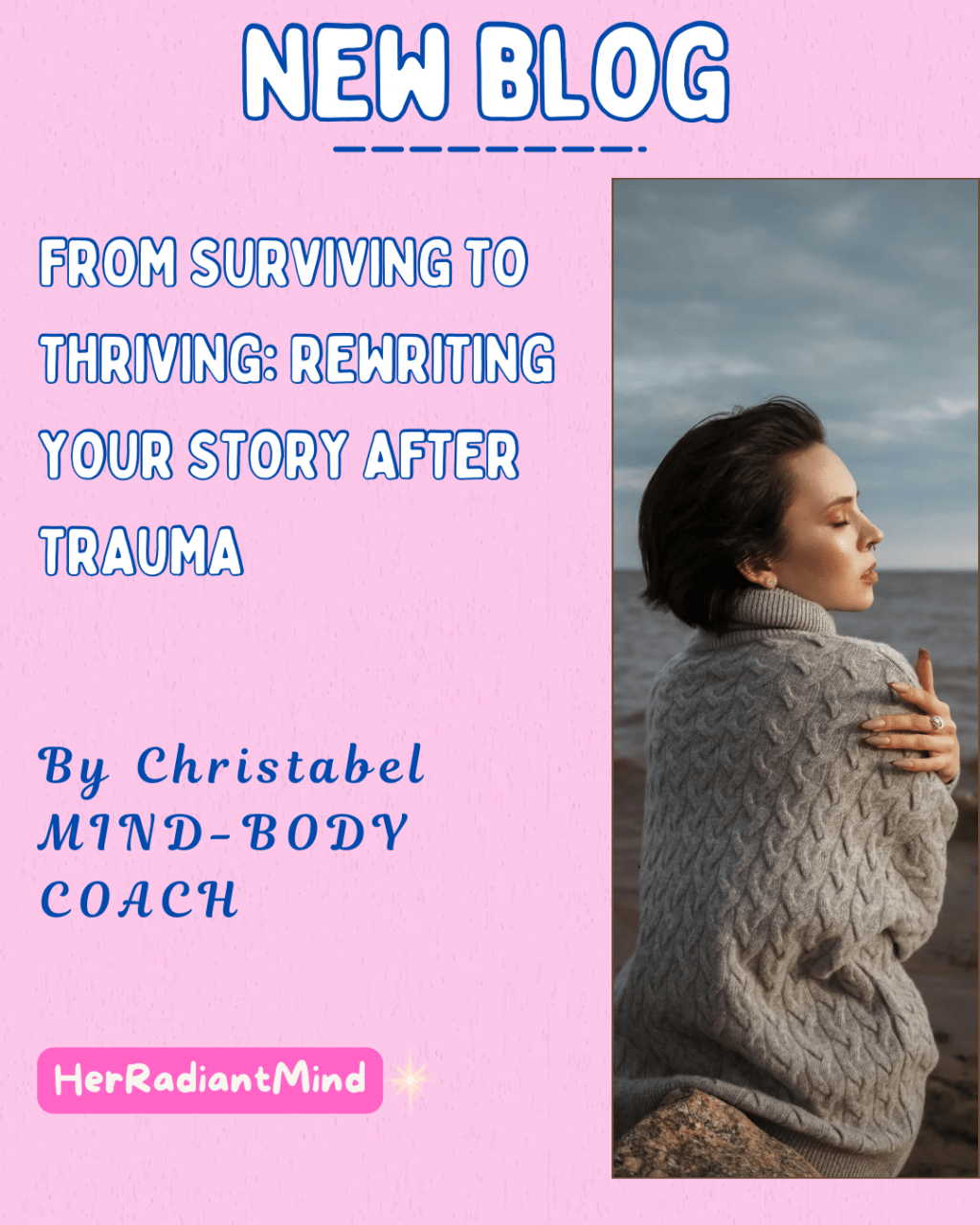
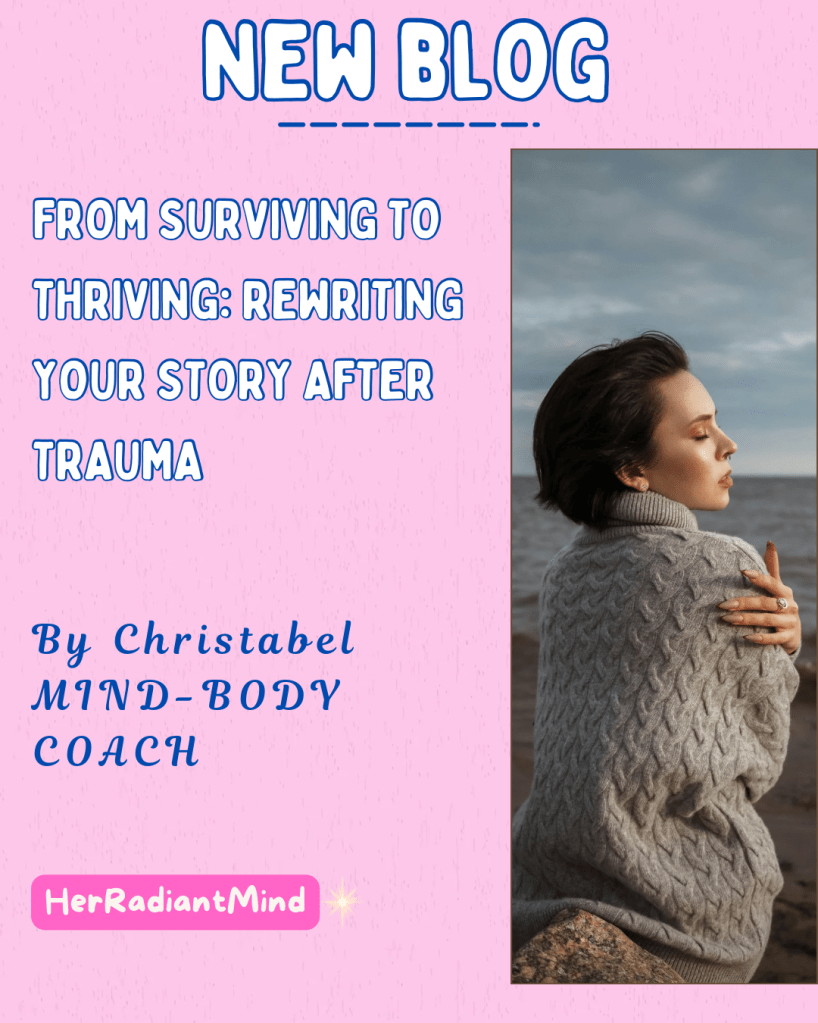
  • From Surviving to Thriving: Rewriting Your Story After Trauma

    From Surviving to Thriving: Rewriting Your Story After Trauma

    Trauma doesn’t have to be the end of your story. It can be the very place your healing begins.

    Rewriting your narrative after trauma isn’t about forgetting—it’s about reclaiming your voice and choosing to live empowered, not imprisoned.

    The Science Behind Trauma’s Impact

    Trauma alters the brain, especially in areas like the amygdala, hippocampus, and prefrontal cortex. According to research published in The Journal of Neuroscience, trauma can over-activate the amygdala (the brain’s fear center) and reduce activity in the prefrontal cortex (responsible for decision-making and reasoning).

    This biological shift explains why trauma survivors may feel “stuck” in survival mode—reactive, anxious, and emotionally exhausted—even when the threat has passed.

    But here’s the hopeful part:

    Thanks to neuroplasticity, the brain can rewire itself. With intentional self-care, therapy, and mindfulness, healing isn’t just possible—it’s physiological.

    Affirmation:

    “My brain and body are capable of healing. I am not broken—I am becoming whole.”

    Why Rewriting Your Story Matters

    Your subconscious mind stores trauma as a pattern, which means your brain may still interpret present-day situations through a past lens. But when you intentionally reframe your narrative, you begin to create new neural pathways and emotional responses.

    You are not erasing your pain—you are giving it new meaning.

    Affirmation:

    “I am the author of my life. Every chapter, even the hard ones, have led me to this strength.”

    Steps to Rewrite Your Story and Thrive

    1. Acknowledge, Don’t Avoid

    Denial deepens the wound. Healing begins when we shine light on our pain.

    “What you resist, persists. What you feel, you can heal.” — Carl Jung

    2. Name Your Emotions

    According to Dr. Dan Siegel, “naming it to tame it” helps regulate the nervous system. Journaling or talking to a therapist helps shift emotional overwhelm into clarity.

    Affirmation:

    “I give myself permission to feel and to heal.”

    3. Reconnect with Your Body

    Trauma disconnects us from our bodies. Practices like breathwork, yoga, or grounding techniques help bring us back to the present and restore safety.

    Try This:

    • Inhale for 4 counts

    • Hold for 4 counts

    • Exhale for 6 counts

    • Repeat 3 times

    Affirmation:

    “In this moment, I am safe. My body is my ally.”

    4. Cultivate Self-Compassion

    Dr. Kristin Neff’s research shows that self-compassion is linked to reduced PTSD symptoms and improved emotional resilience. Be kind to yourself in the same way you would be to a friend.

    Affirmation:

    “I am worthy of love, healing, and peace—just as I am.”

    5. Visualize a New Identity

    Visualization activates the same neural networks as real experience. By imagining a thriving version of yourself, you condition your mind to step into that reality.

    Affirmation:

    “I choose to see myself not through the lens of trauma, but through the light of transformation.”

    Raising the Stakes: Why It Matters Now

    Unresolved trauma doesn’t just affect your mental health—it impacts your relationships, work, physical well-being, and overall sense of joy. The longer we carry unprocessed pain, the more it seeps into every decision and connection.

    But thriving is possible. You’ve already survived. Now it’s time to live fully.

    Affirmation:

    “I am more than what happened to me. I am creating a new path forward.”

    Closing Thought: You Are the Rewrite

    Healing doesn’t happen overnight—but with every small act of courage, you’re turning survival into strength. You’re rewriting your story—not to forget, but to reclaim your power.

    Affirmation:

    “My healing is not linear, but it is unfolding. I am becoming my most radiant self—one moment, one breath, one breakthrough at a time.”

    Healing isn’t linear—it’s layered, sacred, and deeply personal. If you’ve spent years simply surviving, know this: thriving isn’t just possible—it’s your birthright. Your trauma doesn’t define you, but your courage to face it and rewrite your story does.

    As you continue walking this path, may you give yourself permission to grow beyond survival. To love yourself through the process. To feel worthy of peace, joy, and wholeness—not after you’ve healed, but as you heal.

    You are not alone in this journey. I’m walking it with you, one breath, one breakthrough at a time.

    With so much light and love,

    Christabel

    Your Radiant Mind-Body Coach
  • Letting Go of Guilt and Shame: Two Heavyweights of Unresolved Trauma.

    Letting Go of Guilt and Shame: Two Heavyweights of Unresolved Trauma.

    Subscribe to continue reading

    Subscribe to get access to the rest of this post and other subscriber-only content.

  • Flipping the Script on Limiting Beliefs

    Flipping the Script on Limiting Beliefs

    Subscribe to continue reading

    Subscribe to get access to the rest of this post and other subscriber-only content.

  • Unlocking the Power of the Mind-Body Connection: How Tuning Into Yourself Can Transform Your Life

    Unlocking the Power of the Mind-Body Connection: How Tuning Into Yourself Can Transform Your Life

    Have you ever felt physically drained after an emotionally tough day? Or noticed how a positive mindset can boost your energy? That’s the mind-body connection at work—a powerful relationship between your thoughts, emotions, and physical health.

    As a Mental Wellness & Mindset Coach, I’ve seen firsthand how nurturing this connection can reduce stress, improve mental clarity, and create lasting emotional balance. But before I started this journey, I didn’t fully realize how much my mind was controlling my body—and how much my body was speaking back.

    Here’s how I discovered the transformative power of the mind-body connection—and how you can, too.

    My Personal Story: From Burnout to Balance

    A few years ago, I found myself trapped in a cycle of exhaustion. I was constantly overwhelmed, juggling work, family, and the pressure to “keep it all together.” I ignored the tension headaches and fatigue, telling myself to push through.

    But my body had other plans.

    One day, after weeks of ignoring the signs, I woke up feeling completely depleted—physically and emotionally. Simple tasks felt impossible. That’s when I realized: I wasn’t just tired. I was burnt out. My mind and body were screaming for attention.

    I knew something had to change.

    I began researching the mind-body connection and started making small, intentional shifts:

    ✅ Mindful Breathing: I began practicing deep breathing exercises to calm my nervous system. Within weeks, I felt more grounded and present.

    ✅ Body Awareness: I started tuning into how my body felt throughout the day—releasing tension and giving myself permission to rest.

    ✅ Positive Thought Patterns: I challenged the negative self-talk and began affirming my worth, which eased my anxiety and boosted my confidence.

    The results were undeniable. As I nurtured my mind, my body responded with renewed energy. I wasn’t just surviving—I was thriving.

    What Is the Mind-Body Connection (And Why Does It Matter)?

    The mind-body connection refers to the link between your thoughts, emotions, and physical well-being. Science shows us that mental and emotional states directly impact your physical health. For example:

    • Stress & Anxiety can trigger headaches, digestive issues, and insomnia.
    • Positive Emotions like gratitude and joy can boost your immune system and improve heart health.
    • Mindful Practices such as meditation can lower cortisol (the stress hormone) and promote emotional balance.

    Understanding this connection allows you to take control of your well-being from the inside out.

    3 Simple Ways to Strengthen Your Mind-Body Connection

    1. Practice Mindful Movement

    Incorporate gentle activities like yoga, stretching, or nature walks to release stress and reconnect with your body.

    1. Reframe Negative Thoughts

    When negative self-talk arises, pause and challenge it. Ask yourself, “Is this thought true? Is it serving me?” Replacing negative patterns with empowering affirmations can shift both your mindset and physical response.

    1. Listen to Your Body’s Signals

    Your body is always communicating. Instead of pushing through fatigue, ask yourself what you truly need—rest, nourishment, or even emotional support.

    Your Mind and Body Deserve Care—Here’s How I Can Help

    At HerRadiantMind, I guide women just like you in reconnecting with their minds and bodies through personalized coaching. My 1:1 programs focus on:

    ✔️ Managing stress and anxiety with holistic techniques

    ✔️ Building emotional resilience through mindset work

    ✔️ Creating sustainable self-care routines for long-term wellness

    You don’t have to navigate this alone.

    ✨ Ready to nurture your mind-body connection and reclaim your balance?

    👉 Book Your Free Discovery Call Today!(radiantinsightcoaching@gmail.com)

    Your most radiant, balanced life starts now!